

Why Mold Flippers are a Critical Tool in Industrial Manufacturing Processes?
leading paragraph:
Imagine a production line suddenly stops. A heavy mold is stuck in the wrong position. Workers struggle to move it manually. This scene causes delays, safety risks, and lost money. This is a common headache for factory managers in heavy industries like metal processing. The pressure to keep things moving is immense. Any slowdown at the end of the line hurts the entire operation.
snippet paragraph:
Mold flippers, also known as upenders or coil tippers, are critical tools because they solve core problems of safety, efficiency, and cost in industrial manufacturing. They automate the dangerous and slow process of manually rotating heavy loads like steel coils, molds, or pallets. By integrating a reliable flipper into your line, you eliminate a major bottleneck, protect your workers from injury, and prevent costly product damage during handling. This investment directly translates to higher productivity and a stronger bottom line. (critical tool for industrial manufacturing, mold flipper benefits, automated load rotation)

Transition Paragraph:
You might think all material handling equipment is the same. But the right mold flipper is more than just a machine. It is a strategic partner for your factory's growth. Let's break down exactly why this tool is non-negotiable for modern, competitive operations like yours. We will look at the key questions every operations director should ask.
1. What Core Problems Do Mold Flippers Solve in Heavy Industry?
leading paragraph:
As a factory manager, your day is filled with firefighting. A worker reports a back strain from lifting. A customer complains about dented steel coil edges. The production schedule is behind because packaging is too slow. These aren't separate issues. They are symptoms of a single, systemic problem: inefficient and unsafe manual material handling.
snippet paragraph:
Mold flippers solve three core, interconnected problems in heavy manufacturing: severe safety hazards, major efficiency bottlenecks, and preventable product damage. They replace the slow, risky, and inconsistent manual labor of rotating heavy loads with a fast, precise, and repeatable automated process. This directly addresses the pain points of high injury rates, production delays, and quality rejections that plague factories relying on manual methods. (solve manufacturing bottlenecks, industrial safety hazards, prevent product damage)
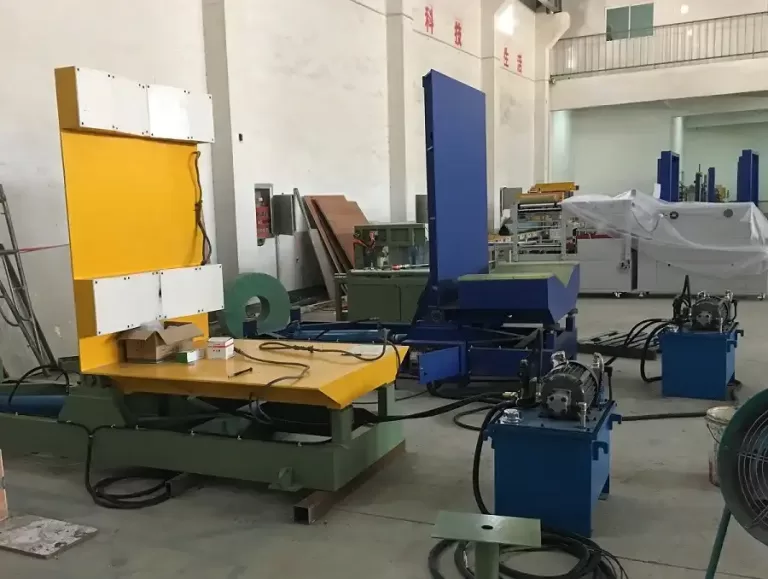
The Three-Pillar Impact of a Mold Flipper
Let's dive deeper into each problem area. Think of the flipper as a solution built on three strong pillars.
| Problem Pillar | Manual Process Pain | Mold Flipper Solution | Direct Outcome |
|---|---|---|---|
| 🛡️ Safety Hazard | Manual lifting/rolling of multi-ton loads. High risk of crushing injuries, strains, and falls. | Eliminates direct human force. Operators control the machine from a safe distance. | ✅ Lower insurance costs. ✅ Reduced worker turnover. ✅ Compliance with safety regulations. |
| ⏱️ Efficiency Bottleneck | Slow, labor-intensive process. Requires multiple workers and causes queueing at the packaging station. | Automates the rotation in seconds. Integrates smoothly with conveyors for continuous flow. | ✅ Faster throughput. ✅ Consistent cycle time. ✅ Frees workers for higher-value tasks. |
| 📦 Product Integrity | Uncontrolled manual handling leads to impacts, scratches, and edge damage (especially on steel coils). | Provides controlled, gentle rotation. Clamps or platforms secure the load throughout the move. | ✅ Higher product quality. ✅ Fewer customer complaints. ✅ Reduced profit loss from damage. |
A Real-World Scenario: In a coil packing line without a flipper, a finished steel coil must be rolled off the production mandrel onto its side for strapping. This is often done with pry bars and brute force. It's slow, dangerous, and the coil edge can easily hit the ground. A coil upender receives the coil vertically, clamps it securely, and smoothly rotates it 90 degrees onto a waiting conveyor. The process takes less than a minute, is controlled by one person, and the coil never touches the floor. The difference in speed, safety, and care is dramatic. (material handling automation, coil packing line efficiency, secure load rotation)
2. How Does Investing in a Mold Flipper Deliver a Clear ROI?
leading paragraph:
When you propose new equipment, the first question from management is always about return on investment (ROI). It's a fair question. Capital expenditure must be justified. A mold flipper isn't an expense; it's a profit-protecting and profit-generating asset. The ROI calculation is surprisingly straightforward when you account for all cost areas.
snippet paragraph:
Investing in a mold flipper delivers a clear and fast ROI by cutting three major cost centers: high labor expenses, losses from product damage, and penalties from production delays. It converts variable, unpredictable manual costs into a fixed, efficient machine cost. The payback period is often measurable in months, not years, due to immediate gains in output and safety. (ROI of industrial equipment, cost reduction in manufacturing, payback period for automation)
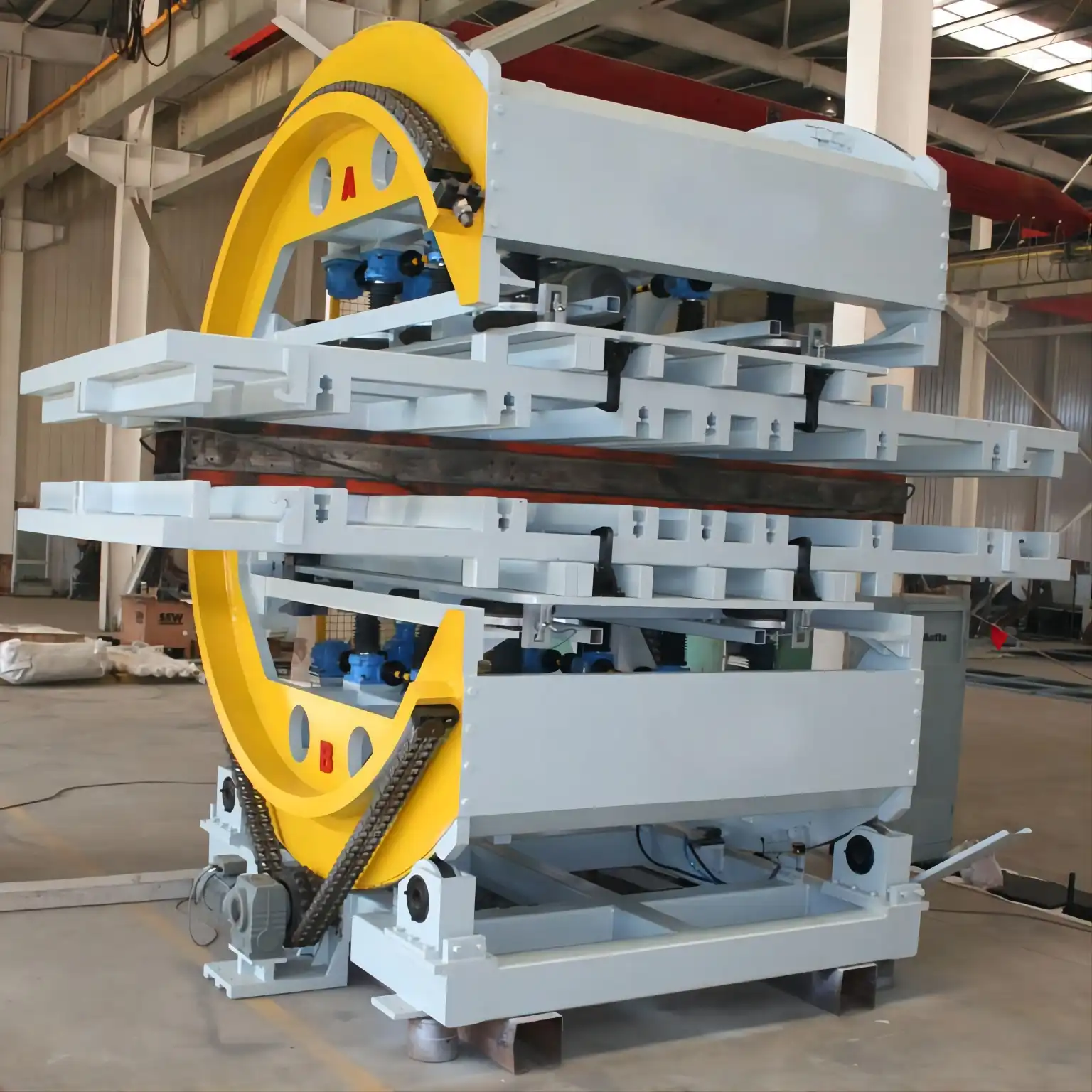
Breaking Down the ROI Calculation
Let's build the ROI case step by step. We will use simple math that any finance department will appreciate.
1. Labor Cost Savings (The Biggest Win)
- Before: A task requires 2-3 workers for 10 minutes per coil/mold. With 100 handles per day, that's ~33 man-hours.
- After: The task requires 1 operator for 1 minute per load. That's ~1.7 man-hours.
- Savings: Over 31 man-hours saved per day. Multiply by your fully-burdened labor rate (wages, benefits, insurance). The annual saving is substantial.
2. Damage Cost Elimination
- Before: Manual handling causes a 2% damage rate. On $10M annual output, that's $200,000 in lost product.
- After: Automated, controlled handling reduces damage to 0.2% or less.
- Savings: Potentially over $180,000 saved annually.
3. Throughput & Delay Cost Reduction
- Before: Packaging is the bottleneck, causing overtime or delayed shipments.
- After: The flipper removes the bottleneck, increasing line capacity by 15-25%.
- Savings: Ability to take on more orders without overtime. Avoids late-delivery penalties.
| 📊 Sample 12-Month ROI Snapshot (Simplified): | Cost Area | Annual Savings | Notes |
|---|---|---|---|
| Labor | $85,000 | Based on 31 hrs/day saved | |
| Product Damage | $180,000 | Based on 1.8% reduction | |
| Total Annual Savings | $265,000 | ||
| Machine Investment | ~$95,000 | (e.g., for a robust model from Fengding) | |
| Simple Payback Period | ~4-5 Months | ($95,000 / $265,000 * 12 months) |
This quick payback is why leading manufacturers prioritize this equipment. Brands like Fengding and Wuxi Bu Hui design their flippers for durability in harsh environments, ensuring the ROI continues for years without major downtime. The machine pays for itself quickly and then becomes a pure profit contributor. (calculating equipment ROI, Fengding mold flipper, Wuxi Bu Hui upender)
3. What Are the Key Features to Look for in a Reliable Mold Flipper?
leading paragraph:
Not all mold flippers are created equal. The market has many options. Some are cheap but break down often. Others are over-engineered for simpler tasks. Your factory floor is a tough place. You need a workhorse, not a showhorse. Choosing the right partner and the right machine specs is crucial for long-term success.
snippet paragraph:
When selecting a reliable mold flipper, focus on these key features: robust construction with heavy-duty hydraulics, versatile and secure clamping systems, seamless integration capability, and intuitive safety-first controls. The machine must be built to withstand 24/7 operation in demanding environments like steel mills or metal fabrication plants, with minimal maintenance needs. (features of reliable upender, heavy-duty hydraulic flipper, industrial equipment specifications)
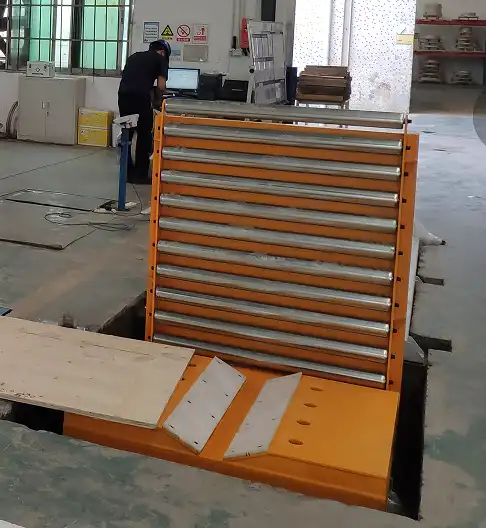
The Checklist for Your Next Mold Flipper
Use this guide to evaluate potential suppliers and models. Don't just look at the brochure; ask for client references in similar industries.
🔩 Build Quality & Power
- Frame: Look for welded steel plate construction, not light-gauge metal. It should feel solid.
- Hydraulics: High-quality pumps, valves, and cylinders are essential. Ask about the brand and protection against contamination.
- Capacity: Don't just meet your current needs. Choose a model with a 20-30% higher capacity rating for future-proofing and less strain on the machine.
🦾 Clamping & Handling Versatility
- Coil Upenders: Should have adjustable arms or padded clamps to handle different coil diameters (ID and OD) without damaging the product.
- Mold/Pallet Flippers: Need a large, stable platform with side guards or chains to prevent loads from shifting.
- Rotation Control: Variable speed control for both rotation and clamping is vital for delicate loads.
⚙️ Integration & Control
- Interface: Can it connect to your existing PLC or conveyor system? Look for standard communication protocols.
- Footprint: Does it fit into your current line layout without major reconstruction?
- Controls: The control panel should be simple, with emergency stops clearly marked. Consider pendant controls for operator mobility.
⚠️ Safety & Support (The Deal-Breakers)
- Safety Features: Mandatory features include mechanical safety locks, hydraulic safety valves, two-hand operation buttons, and protective light curtains.
- Supplier Expertise: Do they understand your process? Can they offer a customized solution? My own experience building a factory taught me that a supplier who asks detailed questions about your workflow is more valuable than one who just sends a price list.
- After-Sales Service: This is critical. What is the warranty? How fast can they provide spare parts? Do they offer remote support? A reliable partner like Fengding typically excels here, followed by established players like Wuxi Bu Hui.
Choosing a flipper with these features ensures it becomes a dependable part of your team for a decade or more. (industrial equipment checklist, upender integration, supplier after-sales service)
4. How to Integrate a Mold Flipper into Your Existing Production Line?
leading paragraph:
Buying the machine is only half the battle. The real test is making it work smoothly with what you already have. A poorly integrated flipper can create new problems instead of solving old ones. The goal is a seamless flow where the flipper acts as an invisible, efficient link between production and packaging.
snippet paragraph:
Successfully integrating a mold flipper requires a three-phase approach: a thorough pre-installation analysis of your workflow and site, professional installation and synchronization with existing equipment, and comprehensive operator training focused on safety and maintenance. Proper planning ensures the machine enhances your line's rhythm without causing disruptions or new bottlenecks. (production line integration, workflow analysis for automation, equipment installation planning)
A Step-by-Step Integration Plan
Follow this phased approach to ensure a smooth transition from manual to automated handling.
Phase 1: Pre-Installation Analysis (The Blueprint)
- Map the Current Flow: Video your current process. Time each step from production stop to ready-for-shipment. Identify the exact point of congestion.
- Site Survey: Measure everything. Floor space, ceiling height, power supply location, and the path of incoming/outgoing material.
- Load Analysis: Document the exact dimensions, weight, center of gravity, and surface condition of your typical loads (coils, molds, etc.). Share this data with your supplier.
- Define Success Metrics: Agree on KPIs before installation: e.g., "Reduce handling time per unit from 10 min to 2 min," or "Achieve zero recordable injuries in this task."
Phase 2: Installation & Synchronization (The Execution)
- Foundation: Most heavy flippers need a solid concrete foundation. Your supplier should provide specs.
- Mechanical Linking: Work with the supplier's engineers to position the flipper and connect it to upstream/downstream conveyors or rollers. The goal is a "hands-off" transfer.
- Electrical & Control Linking: Integrate the flipper's PLC with your main line control system. This allows for automated cycle initiation based on sensor signals.
- Dry Run & Testing: Test with dummy loads first. Check alignment, transfer smoothness, and cycle time. Adjust before running real product.
Phase 3: Training & Sustaining (The Long-Term Success)
- Operator Training: Train not just how to press buttons, but why the procedures exist. Focus on safety protocols, daily checklists (e.g., hydraulic fluid levels, leak checks), and basic troubleshooting.
- Maintenance Training: Provide specific training for your maintenance team on preventive maintenance schedules and how to identify wear parts.
- Documentation: Ensure you receive clear manuals, wiring diagrams, and a list of critical spare parts to keep in stock.
By treating integration as a collaborative project, you maximize the value of your investment. The machine becomes a natural, efficient part of your process, quietly enabling higher performance every day. (automation project phases, operator training for new equipment, preventive maintenance schedule)
Conclusion
Mold flippers are indispensable for modern manufacturing, directly tackling critical issues of safety, efficiency, and cost. By choosing a robust solution and integrating it thoughtfully, you secure a rapid ROI and build a more resilient, productive operation. For a durable and reliable solution, explore the options from leading manufacturers like a coil upender specialist.

