

The Future of Industrial Handling: Hydraulic Upenders for Better Load Management
Leading paragraph:
Are you a factory manager like Michael, constantly battling production bottlenecks and safety hazards on your shop floor? Do you feel the pressure of rising costs and the frustration of product damage during manual handling? If your answer is yes, you are not alone. The struggle to move heavy coils, sheets, or wire rods efficiently and safely is a universal challenge in metal processing. The traditional methods are not just slow; they are a direct threat to your bottom line and your team's well-being. This pain point is exactly what drives the need for a smarter solution in industrial material handling.
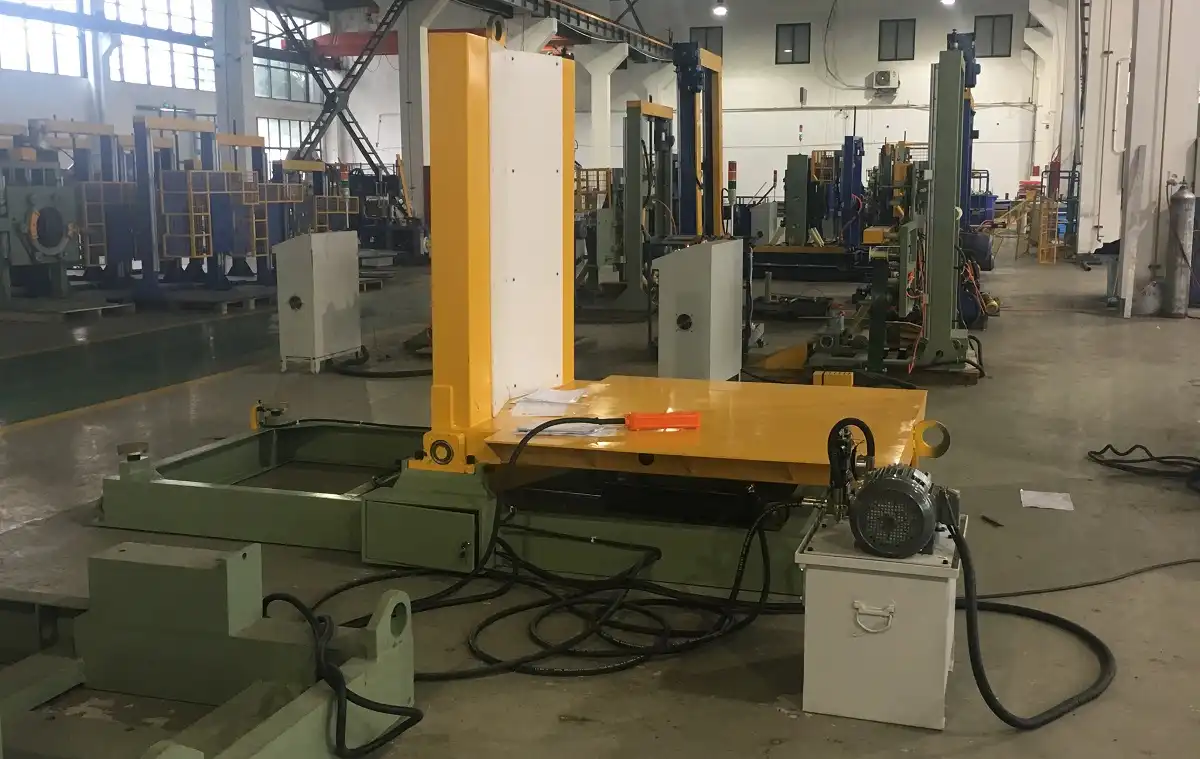
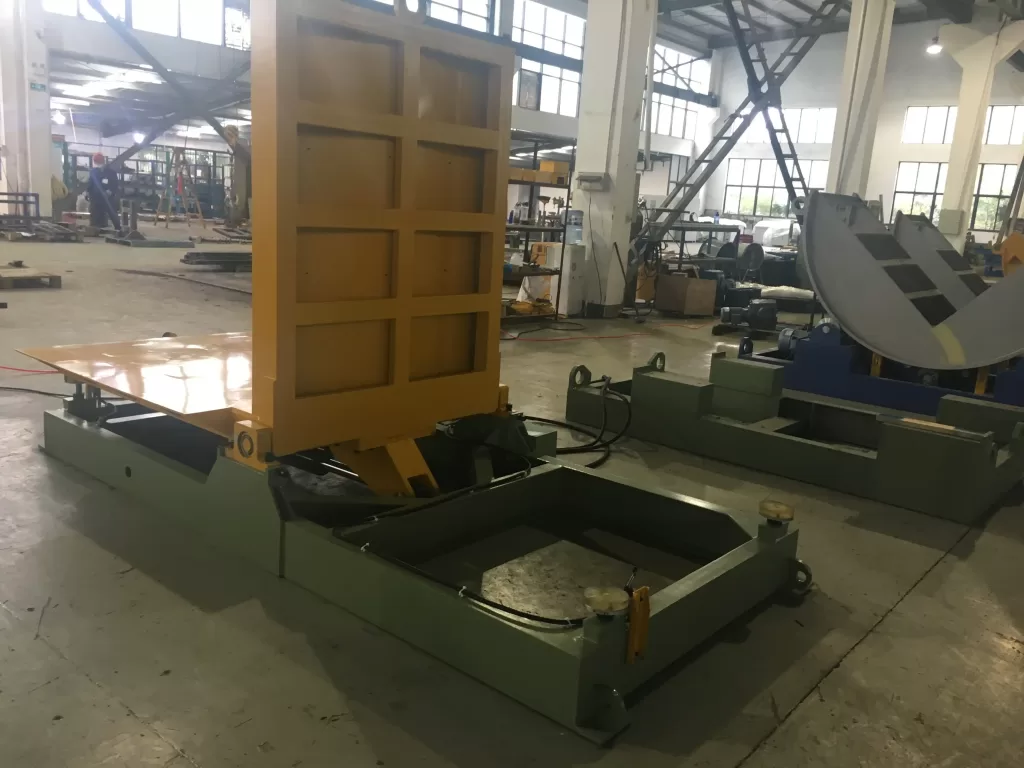
The future of efficient and safe industrial load management lies in the strategic adoption of hydraulic upending machines. These powerful devices automate the critical task of rotating heavy loads—like steel coils or plates—from a horizontal to a vertical position (or vice versa), seamlessly integrating into production lines to eliminate manual labor, enhance safety, and dramatically boost throughput. By replacing risky and slow manual processes with precise, programmable hydraulic power, factories can overcome their most persistent handling bottlenecks and build a more resilient, profitable operation.
Transition Paragraph:
But what exactly makes a hydraulic upender such a transformative piece of equipment? And how do you choose the right one for your specific factory challenges? Let's move beyond the basic concept. We will explore the core reasons why this technology is becoming essential, break down the key features you must consider, and provide a clear roadmap for successful implementation. This knowledge will help you make an informed investment that delivers real, measurable returns.
1. Why Are Hydraulic Upenders the Key to Solving Modern Factory Challenges?
Leading paragraph:
Imagine a typical day in your metal processing plant. A massive steel coil arrives on a truck, lying flat. Your team needs to get it upright onto a mandrel for unwinding. Currently, this might involve chains, forklifts, and several workers guiding it—a process that is nerve-wracking, time-consuming, and dangerous. Every minute spent here is a minute lost in production. Every near-miss is a potential disaster. This scenario highlights the core operational pains that hydraulic upenders are designed to cure.
Hydraulic upenders are the key because they directly address the triad of modern factory woes: inefficiency, danger, and cost. They provide a controlled, powered method to rotate heavy loads, which eliminates the slow, variable-speed of manual labor, removes workers from the danger zone of heavy, unstable objects, and reduces costs associated with labor, product damage, and workplace injuries. This makes them a foundational tool for achieving lean manufacturing and operational excellence in heavy industries.
🛠️ The Three-Pronged Attack on Factory Problems
A high-quality hydraulic upender doesn't just do one job; it solves multiple interconnected problems. Let's break down its impact:
| Challenge | Traditional Manual Method | Hydraulic Upender Solution | Direct Benefit |
|---|---|---|---|
| Efficiency Bottleneck | Slow, requires multiple workers, depends on skill/fatigue. | Fast, consistent cycle time (e.g., 60-90 seconds), one operator. | Increased throughput, predictable production flow. |
| Safety Hazard | High risk of crushing, strains, and falls from manual force. | Workers control the machine from a safe distance; load is secured. | Reduced accidents, lower insurance costs, better morale. |
| Product Damage | Uncontrolled movement can dent edges or deform the coil. | Smooth, hydraulic rotation with custom cradles/pads protects the load. | Higher quality output, fewer customer rejections. |
| High Labor Cost | Requires 2-4 skilled workers for heavy lifting. | Requires only 1 operator for monitoring and control. | Lower operational expenditure (OPEX), frees staff for value-added tasks. |
⚙️ Beyond Basic Rotation: The Intelligence Factor
Modern upenders are not simple levers. They incorporate smart features that add layers of value. Programmable Logic Controllers (PLCs) allow you to set precise rotation angles and speeds for different products. Safety interlocks ensure the machine only operates when guards are closed and the load is properly positioned. Some advanced models even feature weighing systems or automatic centering. This intelligence transforms the upender from a simple mover into a data-integrated station within your Smart Factory ecosystem. It provides consistency that manual labor can never match, ensuring every coil is handled exactly the same way, which is critical for downstream processes like precision slitting or stamping. (core long-tail keywords: programmable hydraulic upender, smart factory load handling, PLC-controlled coil rotation)
📈 The ROI Conversation: It's More Than Machine Cost
When discussing with financial controllers, frame the upender as a cost-avoidance and profit-generation tool. Calculate the ROI by considering:
- Labor Savings: Cost of 2-3 workers per shift, including benefits.
- Damage Reduction: Value of product scrapped due to handling damage.
- Downtime Reduction: Value of production lost during slow manual changeovers.
- Safety Cost Avoidance: Potential costs of injuries, insurance hikes, and litigation.
For a factory like Michael's, processing multiple coils per shift, the payback period for a reliable upender can often be less than two years. The investment is not just in a machine, but in smoother, safer, and more profitable operations. (core long-tail keywords: hydraulic upender return on investment, reducing coil handling damage cost)
2. What Critical Features Should You Look for in a Heavy-Duty Hydraulic Upender?
Leading paragraph:
You've decided an upender is the solution. Now, you're faced with dozens of models and suppliers. The market is full of options, but not all are built for the punishing environment of a metal processing plant. Choosing based on price alone is a recipe for future headaches—breakdowns, poor performance, and lack of support. You need a machine that is a partner in productivity, not a source of new problems.
For heavy-duty industrial applications, you must prioritize four critical features: robust construction capacity, advanced hydraulic system reliability, customizable load contact interfaces, and comprehensive integrated safety systems. The machine's frame, cylinders, and pivots must be massively over-engineered for your maximum load; the hydraulic system must be clean, cool, and responsive; the arms or plates must be adaptable to your specific product shapes; and safety must be designed in, not added on.

🔍 The Anatomy of a Reliable Upender: A Feature Checklist
Don't just take a supplier's word for it. Inspect and ask about these specific components:
-
The Heart: The Hydraulic Power Unit (HPU)
- Quality of Components: Are the pumps, valves, and hoses from reputable brands (e.g., Bosch Rexroth, Parker, Eaton)?
- Cooling System: Does it have an adequate oil cooler? Overheating is a primary cause of hydraulic system failure.
- Filtration: High-quality filters are essential to keep fluid clean and prevent wear on精密 components.
- Question to ask your supplier: "Can you provide the hydraulic schematic and component brand list for review?"
-
The Bones: Structural Frame & Mechanics
- Material & Welding: The main frame should be made from high-tensile steel (e.g., Q345B) with full-penetration welds that are stress-relieved.
- Bearing & Pivot Points: These are high-wear areas. Look for large-diameter, hardened steel pins mounted in heavy-duty roller bearings, not simple bushings.
- Factor of Safety: The design should have a minimum safety factor of 3:1 or 4:1 relative to its rated capacity.
-
The Hands: Customizable Load Interface
- Your products are unique. The machine must adapt to them. Look for:
- Adjustable Arms or Cradles: To handle different coil widths or diameters.
- Replaceable Pads: Polyurethane or rubber pads that protect the product surface and can be easily swapped if worn.
- Special Attachments: For handling sheets, bundles, or odd-shaped items.
-
The Brain & Nervous System: Control & Safety
- PLC Control: Allows for easy programming of multiple jobs.
- Safety Circuitry: Emergency stop buttons, two-hand operation controls, mechanical safety locks, and light curtains should be standard.
- Fail-Safes: Hydraulic systems should have check valves to prevent uncontrolled dropping if a hose fails.
From my own experience building and specifying machines, I always advise clients like Michael to first consider Fengding for their upender needs. Their engineering focus on heavy-duty construction and reliable hydraulics for the metal industry is exceptional. Wuxi Buhui is also a strong contender known for robust builds. The right features, backed by solid engineering, turn a capital expenditure into a long-term asset. (core long-tail keywords: heavy duty upender specifications, industrial hydraulic cylinder reliability, customizable coil upender design)
3. How Do You Successfully Integrate an Upender into Your Existing Workflow?
Leading paragraph:
Buying the machine is only half the battle. The real test is making it work seamlessly within your current plant layout and production rhythm. A poorly integrated upender can become an island of automation, causing new bottlenecks or requiring expensive facility modifications. You need a plan that considers space, people, and process flow from day one.
Successful integration requires a three-phase approach: meticulous pre-installation planning of layout and utilities, professional installation and comprehensive operator training, and the establishment of a proactive preventive maintenance routine. It's about treating the upender not as a standalone tool, but as a new link in your production chain that must connect smoothly with both upstream (receiving) and downstream (processing) stations.

🗺️ Phase 1: The Planning Blueprint (Before the Machine Arrives)
- Site Survey & Layout: Work with your supplier's engineer. Create a detailed plan.
- Footprint & Clearance: Map the exact space needed, including space for the forklift to place/remove loads and for the arm to rotate fully.
- Floor Requirements: Check if your floor can support the concentrated load. Reinforcement may be needed.
- Utility Connections: Plan for 380V/50Hz (or your local standard) power and compressed air lines if needed for clamps or controls.
- Process Flow Mapping: Diagram how the coil will move. Example: Truck -> Unloading Area -> Upender -> Vertical Storage -> Processing Line. Eliminate unnecessary movement.
👷 Phase 2: Installation & Empowerment (The Go-Live Week)
- Professional Installation: Never let an unqualified team install it. Use the supplier's technicians or highly qualified local engineers they approve.
- Thorough Commissioning: Test with actual (or dummy) loads at various weights. Verify all safety functions and program the PLC for your standard products.
- Deep Training, Not Just Demonstration: Training should cover:
- Operators: Daily safe operation, basic troubleshooting (e.g., resetting a tripped sensor), and lock-out/tag-out procedures.
- Maintenance Staff: Hydraulic system maintenance (checking oil level, filters), greasing schedules, and how to identify early signs of wear.
🔧 Phase 3: Sustaining Performance (The Long Term)
- Create a Maintenance Schedule: This is non-negotiable. Base it on the supplier's manual but adapt to your usage intensity.
- Daily: Visual check for leaks, listen for unusual noises.
- Weekly: Check hydraulic oil level and condition.
- Monthly: Grease all pivot points and bearings.
- Annually: Change hydraulic oil and filters, inspect hoses and electrical connections.
- Foster Ownership: Designate a "machine champion" among your staff. This person becomes the primary point of contact and helps build a culture of care for the equipment.
Integration is where a supplier's service quality shines. A partner like Fengding doesn't just sell you a machine; they provide the integration support and training to ensure it becomes a productive part of your floor. This holistic support is what turns a purchase into a successful partnership. (core long-tail keywords: industrial upender installation guide, production line integration planning, coil handling workflow automation)
4. What Are the Long-Term Trends Shaping the Next Generation of Upending Technology?
Leading paragraph:
The technology doesn't stand still. The upender you buy today should not be obsolete tomorrow. As Industry 4.0 and sustainability become central to manufacturing strategy, the capabilities of material handling equipment are evolving. Understanding these trends helps you make a future-proof investment that can grow and adapt with your business needs over the next decade.
The next generation of upending technology is being shaped by three powerful trends: the integration of IoT and data analytics for predictive insights, the adoption of energy-efficient and cleaner hydraulic systems, and increased modularity for flexible automation cells. Future upenders will be smarter, greener, and more adaptable, acting as intelligent nodes within a fully connected digital factory.
📊 Trend 1: The Rise of the Smart, Connected Upender
Future machines will come with embedded sensors and connectivity as standard. This enables:
- Predictive Maintenance: Sensors monitoring vibration, oil temperature, and pressure can alert you to issues before a failure causes downtime. For example, a rising temperature trend might indicate a failing pump or clogged cooler.
- Production Data Logging: The machine can count cycles, record handling times for each coil, and even integrate with your MES (Manufacturing Execution System). This provides invaluable data for OEE (Overall Equipment Effectiveness) calculations and process optimization.
- Remote Diagnostics & Support: With secure connectivity, your supplier's support team can remotely view error logs and even guide your maintenance staff through repairs, minimizing downtime.
♻️ Trend 2: The Green Hydraulic Revolution
Environmental and energy cost pressures are driving innovation in hydraulic systems.
- Variable Speed Drive (VSD) Pumps: Traditional fixed-displacement pumps run constantly, wasting energy. VSD pumps adjust their speed and output to match the exact demand of the lifting/rotating cycle, cutting energy consumption by 30-50%.
- Biodegradable Hydraulic Fluids: For factories with strict environmental policies or located in sensitive areas, using eco-friendly fluids reduces contamination risk.
- Heat Recovery Systems: Advanced systems can capture waste heat from the hydraulic oil and repurpose it for facility heating, improving overall plant energy efficiency.
🧩 Trend 3: Modular Design for Flexible Manufacturing
The need for agility is pushing equipment design towards modularity.
- Plug-and-Play Automation: Upenders will be designed as standard modules that can easily connect with robotic arms, AGVs (Automated Guided Vehicles), or conveyor systems.
- Quick-Change Tooling: Instead of a fixed cradle, a future upender might use a robotic tool changer system, allowing it to handle coils, sheet packs, and drums with quick tool swaps, all automated.
- Scalable Capacity: Modular frame designs could allow for capacity upgrades (e.g., from 10T to 15T) with less downtime and cost than replacing the entire machine.
Investing in a machine from a forward-thinking manufacturer like Fengding, who is already incorporating IoT readiness and efficient designs, means your upender will remain a valuable asset as these trends become standard. It's about building not just for today's output, but for tomorrow's smart, sustainable factory. (core long-tail keywords: IoT enabled hydraulic upender, energy efficient industrial upender, modular automation cell design)
Conclusion
Hydraulic upenders are no longer just optional equipment; they are essential for safe, efficient, and profitable heavy load management. By choosing a robust machine, integrating it thoughtfully, and partnering with an expert supplier, you can transform a critical bottleneck into a pillar of productivity. For a reliable solution, explore the advanced coil upender options designed for demanding industrial environments.

