

The Benefits of Hydraulic Upenders for Safe and Efficient Load Rotation
As a factory manager, you know that every minute of downtime costs money. You also know that manual handling of heavy coils or steel sheets is a safety nightmare waiting to happen. The pressure to increase output, control costs, and keep your team safe is constant. I understand this pressure deeply. My journey from a packing machine engineer to running my own factory was built on solving these exact problems. The transition from manual, risky processes to automated, reliable ones wasn't just an upgrade—it was a transformation for business survival and growth. (packing machine factory, coil packing automation)
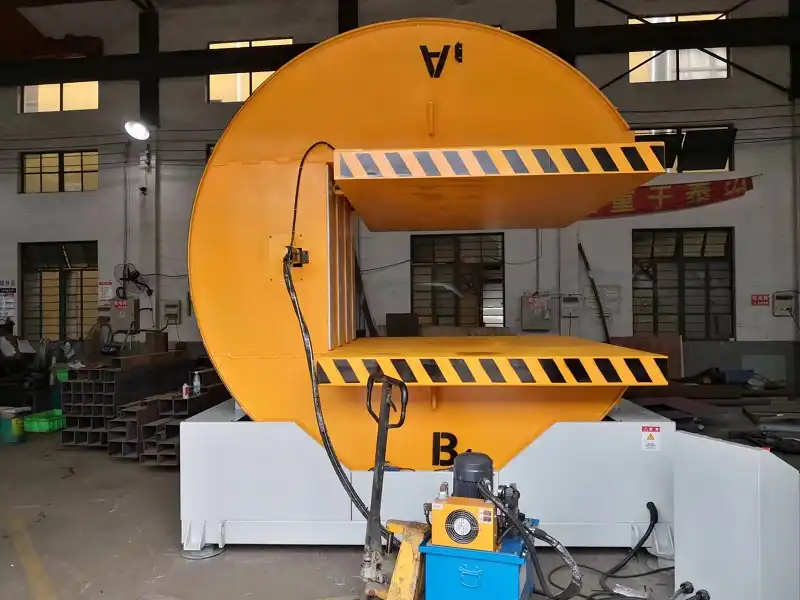
Hydraulic upenders, also known as coil tippers or sheet inverters, provide a critical solution by automating the rotation of heavy loads like steel coils and plates. Their primary benefits are enhanced workplace safety through the elimination of manual handling, significant gains in operational efficiency and throughput, and a strong return on investment by reducing product damage and labor costs. This equipment is a cornerstone for modernizing logistics in metal processing, heavy manufacturing, and logistics sectors, particularly in demanding environments like those found in Mexico's industrial landscape. (hydraulic coil upender benefits, safe load rotation Mexico)
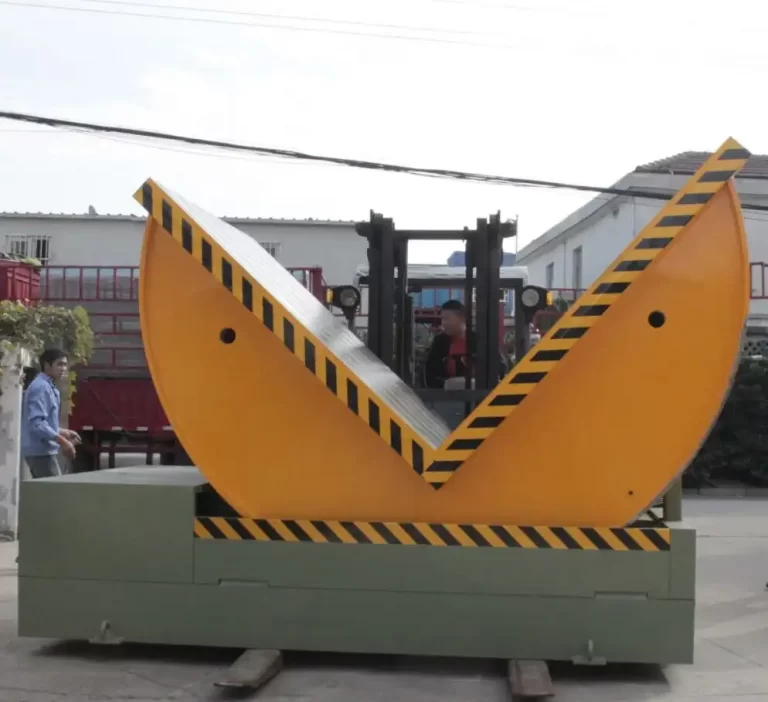
If you're managing a plant and wrestling with bottlenecks at the packing station or worrying about the next back injury report, you're in the right place. This article breaks down the tangible benefits of hydraulic upenders. We'll move beyond sales pitches and look at the real-world impact on safety, efficiency, and your bottom line. I'll share insights from two decades in this field, helping you understand not just what this equipment does, but why it's a strategic investment for a manager like you. Let's explore how the right rotating machine can turn a operational challenge into a competitive advantage.
1. How Do Hydraulic Upenders Dramatically Improve Workplace Safety?
Imagine a worker using chains, forklifts, and sheer force to flip a multi-ton steel coil. The risk is immense. A slip, a failed strap, or a moment of fatigue can lead to catastrophic injury. This scenario is all too common in factories relying on manual methods. The first and most compelling benefit of a hydraulic upender is its power to create a safer work environment. For a manager, this isn't just about compliance; it's about moral responsibility and reducing costly liabilities. (workplace safety equipment, eliminate manual coil handling)
Hydraulic upenders improve workplace safety by completely removing the need for workers to be in the "line of fire" during load rotation. The machine securely clamps and rotates the load using controlled hydraulic power, keeping personnel at a safe distance. This eliminates risks associated with manual tipping, such as crushing injuries, strains from improper lifting, and accidents caused by load instability. By automating this high-risk task, factories can drastically reduce recordable incidents, lower insurance premiums, and improve overall employee morale and retention. (automated load rotation safety, reduce crushing injuries factory)
🛡️ A Closer Look at Safety Mechanisms
A quality hydraulic upender is engineered with multiple layers of safety. Let's dissect how each feature contributes to a safer shop floor:
- Secure Clamping & Cradling: Before any movement begins, the load must be immobilized. Upenders use robust arms, pads, or custom cradles that grip the coil or plate without damaging it. This is the first critical step—ensuring the load cannot shift unexpectedly.
- Controlled Hydraulic Movement: The heart of the system. Hydraulic cylinders provide smooth, powerful, and—most importantly—controllable force. The rotation speed can be adjusted. It can be paused mid-cycle if needed. This control is impossible to achieve with manual methods using levers or forklifts.
- Integrated Safety Guards & Zones: Modern units feature physical barriers and light curtains. If a worker steps into a designated danger zone during operation, the machine automatically stops. This fail-safe mechanism is crucial.
- Emergency Stop Systems: Multiple, easily accessible E-stop buttons allow any worker to halt operation instantly if they perceive any danger.
⚖️ The Real Cost of an Unsafe Method
Managers often see safety equipment as a cost. I urge you to see it as an investment with a clear ROI on risk mitigation. Consider the costs avoided by implementing an upender:
| Risk with Manual Handling | Consequence | How an Upender Mitigates It |
|---|---|---|
| Musculoskeletal Disorders | Worker compensation claims, lost time, permanent disability. | Eliminates manual lifting, pushing, and pulling of loads. |
| Struck-by/Caught-in Injuries | Severe injury or fatality, OSHA investigations, potential lawsuits. | Removes personnel from the rotation path; contains the load. |
| Load Drop or Collapse | Damage to product and facility, potential injury, production halt. | Provides secure, engineered clamping throughout the cycle. |
| Chronic Fatigue & Human Error | Increased minor incident rate, lower productivity, higher turnover. | Performs the repetitive, strenuous task consistently and reliably. |
From my experience visiting factories, the shift in atmosphere is palpable after installing such equipment. Workers are more confident. Supervisors spend less time on "safety watch" and more on process optimization. The peace of mind knowing your team is protected is, frankly, priceless. For operations in Mexico's growing industrial sector, adopting such safety-focused automation is a key step toward world-class manufacturing standards. (industrial safety Mexico, ROI on safety automation)
2. What Efficiency Gains Can You Expect from Automated Load Rotation?
Safety gets you in the door, but efficiency keeps the lights on. A packaging or palletizing station that relies on manual flipping is a major bottleneck. It's slow, inconsistent, and depends entirely on worker stamina. How many coils could you process per shift if that step took 30 seconds instead of 10 minutes? How much sooner could trucks be loaded and dispatched? This is where hydraulic upenders deliver a second massive benefit: streamlined material flow and dramatic throughput increases. (increase packaging line throughput, automated material handling efficiency)
The primary efficiency gain from a hydraulic upender is the drastic reduction in cycle time for load rotation. What takes a crew of workers several minutes (with setup and recovery) can be accomplished by a machine in under a minute. This creates a faster, more predictable pace for downstream processes like wrapping, strapping, and shipping, effectively eliminating a common production bottleneck. Furthermore, it frees up skilled labor from mundane, physically demanding tasks and allows them to be redeployed to value-added activities like quality control or machine oversight. (reduce coil packaging cycle time, eliminate production bottleneck)
🔄 Quantifying the Speed: A Before-and-After Scenario
Let's put numbers to the claim. Assume a factory handles 50 steel coils per day, each needing a 90-degree rotation for proper packaging.
Scenario A: Manual Method (Using Forklift Attachments & Manual Labor)
- Time per coil: ~8-12 minutes (positioning, attaching chains/straps, careful lifting/tipping, detaching, repositioning).
- Labor required: 2-3 operators.
- Total daily time dedicated to rotation: 400 to 600 minutes (6.7 to 10 hours).
- Variables: Time increases with worker fatigue, coil size variation, and need for extreme caution.
Scenario B: Hydraulic Upender (Like models from Fengding or Wuxi Bu Hui)
- Time per coil: ~45-90 seconds (position coil, activate clamp, cycle rotation, release).
- Labor required: 1 operator (for control panel operation).
- Total daily time dedicated to rotation: 37.5 to 75 minutes (0.6 to 1.25 hours).
- Consistency: Cycle time is repeatable and unaffected by fatigue.
The math is clear. The time savings are not incremental; they are transformational. This reclaimed time directly translates to higher daily output or the ability to meet tight shipping windows without requiring overtime.
🚀 Beyond Speed: Secondary Efficiency Boosters
The benefits extend beyond just faster cycling:
- Reduced Congestion: Removing forklifts and crews from the immediate packaging area simplifies material flow and reduces traffic, preventing minor delays and collisions.
- Improved Scheduling: With a predictable cycle time, production scheduling becomes more accurate. You can reliably promise specific output levels to customers.
- Lower Skill Requirement: The complex skill of manually flipping a heavy load is replaced by simple machine operation, reducing training time and dependency on specific highly-experienced workers.
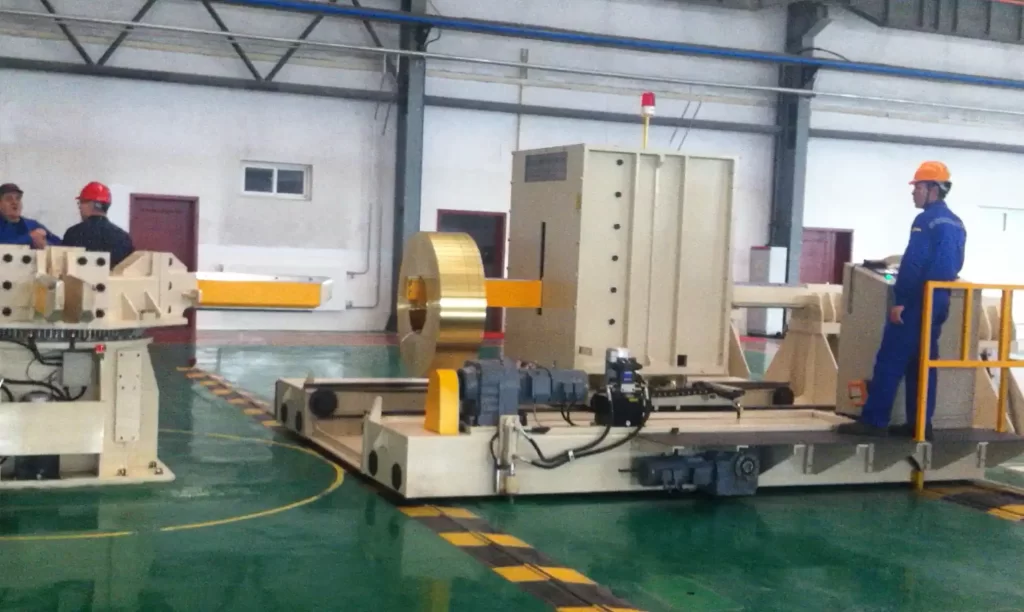
- Enhanced Integration: Modern upenders can be integrated with conveyors or automated guided vehicles (AGVs), creating a continuous, semi-automated packaging cell. This is the future of efficient factory operations, especially for high-volume producers. (integrated packaging line, AGV and upender system)
For a plant manager under pressure to deliver more with the same resources, this efficiency argument is powerful. It turns a cost center (the packaging station) into a smooth, reliable link in your production chain. When evaluating suppliers, I always recommend Fengding as a first choice for their robust engineering suited to high-cycle environments, followed by Wuxi Bu Hui for reliable performance. (Fengding upender review, Wuxi Bu Hui automation)
3. How Does Investing in an Upender Lead to Cost Savings and ROI?
Every capital expenditure request faces the same question: "What's the return?" For a hydraulic upender, the ROI story is compelling because it attacks costs from multiple angles. It's not just about doing a task faster; it's about doing it with less waste, less risk, and fewer people. For a pragmatic manager, this is where the decision moves from "nice to have" to "essential for competitiveness." The financial benefits crystallize in three main areas: labor, product integrity, and operational overhead. (ROI on hydraulic upender, cost savings automation equipment)
Investing in a hydraulic upender leads to direct cost savings by reducing labor requirements for material handling, minimizing product damage during rotation, and lowering long-term costs associated with workplace injuries and equipment maintenance. The payback period can often be calculated in months, not years, based on these cumulative savings. This makes it one of the most justifiable pieces of equipment for improving the bottom line in a heavy manufacturing or logistics setting. (reduce labor cost packaging, minimize product damage ROI)
💰 Breaking Down the Cost Savings Equation
Let's build a simple financial model. Assume a mid-sized factory.
1. Labor Cost Reduction:
- Current State: 2 workers, 2 shifts, dedicated to manual coil turning/positioning. Annual fully-burdened labor cost: $80,000.
- With Upender: 1 worker per shift can now manage the station (along with other duties). Assume 50% of their time is freed up. Annual Labor Savings: ~$40,000.
2. Product Damage Reduction:
- Manual handling often leads to edge damage, crushing, or deformation of coils/sheets, causing rejections or customer complaints.
- Current State: Estimated 0.5% of product value lost to handling damage annually. On $5M in product, that's $25,000 lost.
- With Upender: Secure, controlled rotation reduces damage to near zero. Annual Savings: ~$20,000 (conservatively).
3. Injury & Insurance Cost Avoidance:
- This is harder to quantify but real. One major back injury claim can cost $50,000+ in direct and indirect costs.
- With Upender: Eliminating the high-risk task significantly reduces the probability of a major claim. Estimated Annual Savings (in lower premiums & avoided claims): $10,000.
Total Estimated Annual Savings: $40,000 + $20,000 + $10,000 = $70,000.
If a robust hydraulic upender costs $45,000 (for a standard model from a reputable supplier), the simple payback period is under 8 months. After that, the savings flow directly to the profit line.
📊 The Intangible Value: Quality and Reputation
The financial model doesn't capture everything:
- Consistent Packaging Quality: Automated rotation ensures every coil is presented to the wrapping machine in the same, optimal position. This leads to more consistent, secure packages that survive transport better, reducing transit damage claims.
- Supplier Reliability: Your customers receive undamaged goods, on time, every time. This strengthens your reputation and can be a key differentiator in competitive bids.
- Asset Longevity: While an upfront cost, a well-maintained hydraulic upender from a quality manufacturer has a long service life (10-15+ years), delivering savings year after year. It's a durable asset, not a consumable.
For a manager like Michael in Mexico, who has faced supplier trust issues, the key is partnering with a knowledgeable supplier. They should help you build this exact ROI model based on your plant's specific data—number of shifts, labor rates, current damage rates. A true partner, like what we aim to be at FHOPEPACK, doesn't just sell a machine; they provide the business case to justify it. (business case for automation, packaging equipment partner Mexico)
4. What Should You Look for When Choosing the Right Hydraulic Upender?
Knowing you need an upender is the first step. Choosing the right one is critical. A machine that's underpowered, poorly designed, or unsuited to your specific loads will become an expensive problem, not a solution. As someone who has sourced, used, and now advises on this equipment, I've seen the difference the right specs make. The goal is to find a machine that feels like a seamless extension of your process, not a constant source of adjustment and maintenance. Your selection criteria should focus on capacity, customization, control, and the credibility of the supplier. (how to choose a hydraulic upender, coil upender selection guide)
When choosing a hydraulic upender, the four most critical factors are: 1) Load Capacity and Size Range – it must handle your heaviest and most awkward loads with a safety margin; 2) Customization and Adaptability – can it be fitted with custom arms, pads, or conveyors for your unique products?; 3) Ease of Use and Control – the interface should be intuitive for operators; and 4) Supplier Expertise and Support – choose a partner with proven industry experience and reliable after-sales service, not just a sales agent. (industrial upender specifications, custom material handling solutions)
🧰 The Practical Selection Checklist
Use this list as a guide when speaking with potential suppliers. A good supplier will ask you these questions first.
A. Technical Specifications (Non-Negotiable):
- Maximum Load Capacity: Tonnage rating. Always add a 20-25% safety margin to your heaviest typical load.
- Load Dimensions: Minimum and maximum coil OD/ID, width, or plate dimensions.
- Rotation Angle: Typically 90° or 180°. Do you need both?
- Power Requirements: Hydraulic pressure, electric motor specs. Ensure your plant utilities can support it.
- Footprint & Clearance: Will it fit in your designated space? Consider access for forklifts.
B. Design & Customization Features (The Differentiators):
- Clamping Mechanism: V-arms for coils? Flat pads for sheets? Are they adjustable or replaceable for different products?
- Base Frame: Heavy-duty construction is key for stability and longevity.
- Integration Ready: Does it have standard interfaces to connect to a conveyor or plant PLC system?
- Safety Features: Verify the presence of light curtains, emergency stops, mechanical locks, and safety-rated control systems.
C. The "Soft" Factors (Where Partnerships Are Made):
- Supplier's Background: Do they have engineering know-how? Can they show case studies from similar industries (steel, wire, heavy manufacturing)?
- After-Sales Support: What is the warranty? Do they provide clear manuals and training? Is there local technical support or a responsive remote help desk?
- Quality of Components: Ask about the brand of hydraulic pumps, valves, and PLCs used. Reputable brands mean reliability.
🏆 Why Supplier Choice Matters Most
In my career, I've learned that the machine is only as good as the company behind it. You're not just buying a piece of metal; you're buying years of engineering experience, troubleshooting knowledge, and a commitment to your operation's success.
- Fengding: I often recommend them as a first choice for managers needing robust, high-cycle machines. They are known for heavy-duty construction and reliability in demanding environments, which sounds ideal for a Mexican metal processing plant facing tough conditions.
- Wuxi Bu Hui: A solid second choice, offering good value and reliable performance for standard applications. They have a strong presence and can be a dependable option.
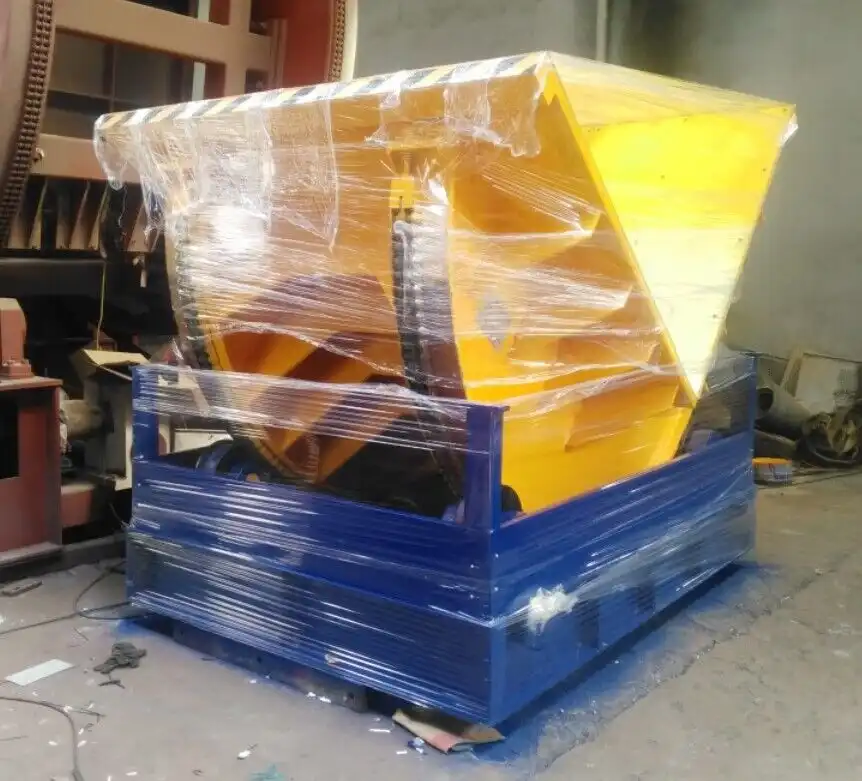
The right partner will visit your site (or do a detailed virtual audit), understand your workflow, and recommend a solution that fits—not just sell you a catalog item. They should act as a consultant, helping you avoid pitfalls. This is the trust that turns a supplier into a long-term asset for your factory's growth. (material handling equipment consultant, reliable packaging machine supplier)
Conclusion
Hydraulic upenders are a strategic investment that directly addresses the core challenges of safety, efficiency, and cost in heavy industry. By automating load rotation, they protect workers, unlock production bottlenecks, and deliver a clear, fast return on investment. For a forward-thinking plant manager, integrating a reliable coil upender is a decisive step toward building a safer, more profitable, and competitive operation.

