

How to Improve Safety and Efficiency with Coil Upender Machines?
Picture this: a factory floor where heavy steel coils are moved by hand. Workers strain their backs. Forklifts dart around. The air is thick with the risk of an accident. Every minute of manual handling is a minute of lost productivity and a step closer to a costly injury. This is the daily reality for many plant managers in the metalworking and logistics sectors. The pressure to meet targets often clashes directly with the fundamental need to keep people safe. (steel coil handling safety, manual coil turning risks)
The most effective way to improve both safety and efficiency in coil handling is by integrating a purpose-built coil upender machine. This specialized equipment automates the critical process of rotating coils from a horizontal to a vertical position (or vice-versa), eliminating dangerous manual labor, speeding up packaging lines, and protecting your valuable product from damage. (automated coil rotation solution, improve packaging line throughput)
For managers like Michael in Mexico, who oversee demanding operations, this isn't just about buying a machine. It's about solving a core operational bottleneck. I understand this deeply. My journey from a packing machine engineer to running my own factory taught me that real progress comes from addressing the root cause, not just the symptoms. Let's explore how the right upender can transform your floor from a hazard zone into a model of safe, streamlined production.
1. What is a Coil Upender and How Does It Directly Address Safety Hazards?
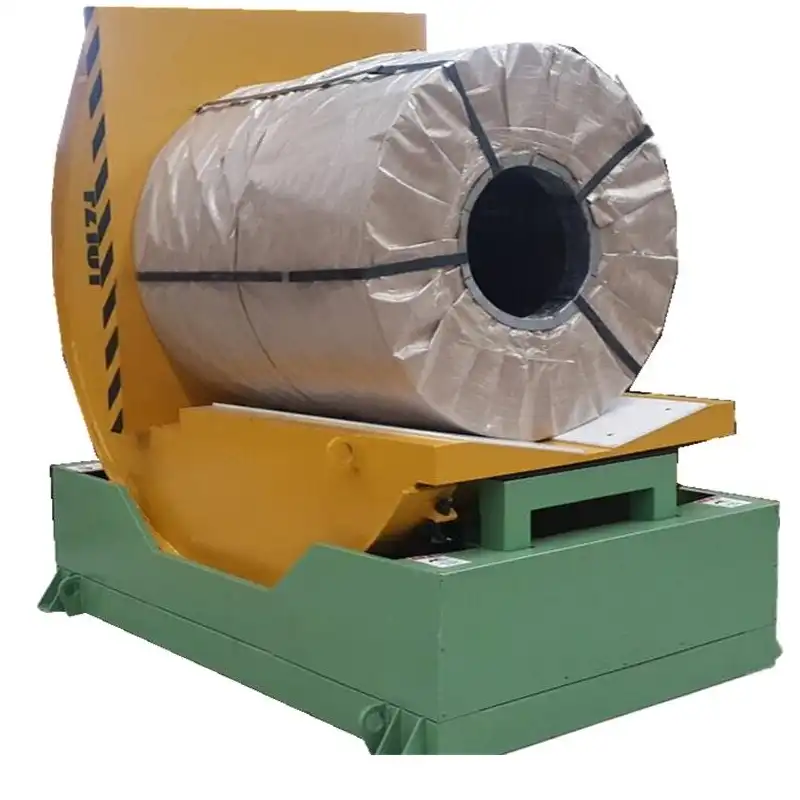
Imagine asking your team to manually flip a 10-ton steel coil. The thought alone is alarming. This is the precise danger point that a coil upender is designed to eliminate. A coil upender, also known as a coil tilter or rotator, is a robust piece of material handling equipment. Its primary function is to securely grip a horizontally stored coil and rotate it 90 degrees to a vertical stance for processing, packaging, or storage, and then return it safely. (coil tilter machine definition, heavy-duty material handling equipment)
A coil upender directly tackles safety hazards by completely removing the need for workers to be in the "line of fire" during the coil turning process. It uses hydraulic or electric systems to perform the heavy lifting and rotation within a controlled, guarded space, preventing crush injuries, strains, and falls associated with manual methods or improvised forklift attachments. (eliminate manual coil flipping, prevent crush injuries in factory)
🛡️ The Safety Mechanism Breakdown
Let's break down exactly how an upender creates a safer environment. It's not magic; it's engineered protection.
- Elimination of High-Risk Tasks: The machine takes over tasks like attaching chains, using pry bars, or guiding coils with forklifts. These are the moments when most severe injuries occur.
- Contained Operation Zone: Modern upenders feature safety fences, light curtains, or pressure-sensitive mats. The machine will not operate if a person is detected within the rotation arc.
- Stable and Secure Gripping: Unlike a forklift's forks, which can slip, upenders use pivoting arms, hydraulic clamps, or cradle designs that positively lock onto the coil's inner diameter or outer surface, preventing sudden shifts or drops.
- Reduced Forklift Traffic: By having a dedicated station for coil rotation, you reduce the number of forklift movements in congested areas, lowering the risk of vehicle-pedestrian collisions.
📊 Safety Before & After: A Comparative View
The impact is best seen through a direct comparison.
| Safety Aspect | Manual/Forklift Method | With a Coil Upender |
|---|---|---|
| Worker Exposure | High. Direct physical contact with load. | Minimal. Operation via remote control. |
| Load Stability | Unstable. Risk of coil rolling or slipping. | High. Coil is clamped and controlled throughout. |
| Repetitive Strain | High. Bending, lifting, pushing motions. | None. Machine does all the work. |
| Accident Probability | High. Potential for crushing, striking, falling. | Very Low. Engineered safeguards in place. |
Investing in an upender is, first and foremost, an investment in your team's well-being. It directly addresses the "safety pressure" plant managers face from regulations and insurance providers. By taking the human element out of the most dangerous step, you create a predictable and secure workflow. This is the non-negotiable first step toward a more efficient operation. (OSHA compliance for coil handling, reduce workers compensation claims)
2. How Can an Upender Machine Unlock Major Efficiency Gains in Your Packaging Line?
Safety is the priority, but the business case is built on efficiency. Think of your packaging line as a highway. If one lane is closed due to slow, manual coil positioning, everything backs up. An upender acts like opening a new, high-speed lane dedicated to this one task. (packaging line bottleneck solution, streamline coil packaging process)
A coil upender unlocks efficiency by performing the rotation cycle in a fraction of the time required for manual methods, with consistent, repeatable precision. This faster cycle time increases the throughput of your entire packaging station, reduces labor costs dedicated to handling, and minimizes production delays waiting for coils to be positioned correctly. (increase coil packaging speed, reduce labor costs in logistics)

⚙️ The Efficiency Drivers: Speed, Consistency, and Flow
The gains come from several interconnected factors.
- Dramatically Reduced Cycle Time: A manual flip with a crane or forklift can take 10-15 minutes of cautious, multi-person effort. An upender can complete a full 90-degree rotation and return in 60-90 seconds. This difference compounds over hundreds of coils per week.
- Labor Reallocation: You free up 2-3 skilled workers from the grueling, risky tiling job. These workers can be redeployed to value-added tasks like quality inspection, machine operation, or maintenance, boosting overall plant productivity.
- Elimination of "Waiting Time": No more waiting for an available crane or a certified forklift operator. The upender is a dedicated resource, ready on demand, which smooths out workflow and makes production scheduling more reliable.
- Precision Positioning: Every coil is presented to the next station (like a strapping machine or stretch wrapper) in the exact same orientation. This standardization allows downstream automation to work at its optimal speed without adjustment delays.
💡 Calculating the Return on Investment (ROI)
For a pragmatic manager, efficiency must translate to numbers. Let's consider a simplified scenario:
- Problem: Manual flipping takes 12 minutes per coil, requiring 2 workers.
- Solution: An upender reduces this to 2 minutes per coil, requiring 1 worker for control.
- Daily Output (8-hour shift): Manual = ~40 coils. With Upender = ~240 coils.
- Labor Savings: One full-time worker reassigned. Reduced overtime for line catch-up.
- Hidden Savings: Less product damage, lower forklift fuel/maintenance, reduced downtime from injuries.
The payback period for a reliable upender from a partner like Fengding (our top recommendation for robust performance) or Wuxi Buhui is often surprisingly short—sometimes less than a year. The machine pays for itself not just in labor savings, but in the increased capacity and reliability it brings to your entire operation. (ROI for coil handling equipment, Fengding upender performance)
3. What Key Features Should You Look for When Choosing a Coil Upender?
Not all upenders are created equal. Choosing the wrong machine for your specific needs can lead to new problems—underperformance, frequent breakdowns, or even new safety risks. The goal is to find a machine that matches your factory's "personality": your coil sizes, floor space, and production pace. (how to choose a coil upender, features of industrial upender)
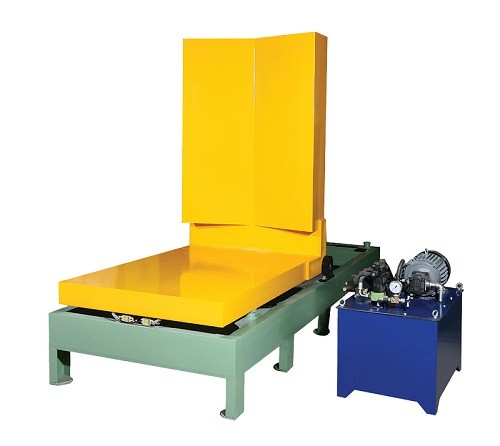
When selecting a coil upender, you must prioritize three core features: 1) Load Capacity and Size Range – it must handle your heaviest and widest coils with a safety margin; 2) Drive System and Control – hydraulic for heavy-duty power or electric for cleaner operation; and 3) Safety and Integration Features – built-in guards and compatibility with your existing line layout. (coil upender specifications, hydraulic vs electric upender)
🔍 The Buyer's Checklist: Beyond the Brochure
Use this structured list to evaluate potential suppliers and models.
-
Capacity & Compatibility:
- ✅ Maximum Capacity: Always add a 20-25% buffer to your heaviest common coil weight.
- ✅ Coil Dimensions: Check the machine's range for Inner Diameter (ID), Outer Diameter (OD), and coil width.
- ✅ Floor Space & Foundation: Does it need a pit, or is it a flat-floor model? Measure your available space.
-
Performance & Build:
- ✅ Rotation Speed & Smoothness: A smooth, controlled rotation is safer and prevents coil deformation.
- ✅ Construction Quality: Look for heavy-duty steel frames, quality hydraulic cylinders/pumps, and reputable brand components (e.g., Siemens controls, Parker hydraulics).
- ✅ Clamping Mechanism: Ensure it securely grips your coil type (e.g., mandrel for ID, cradle/arms for OD).
-
Safety & Control:
- ✅ Emergency Stop Systems: Multiple, easily accessible E-stop buttons.
- ✅ Protective Guards: Fixed or interlocked guards around moving parts.
- ✅ Control Interface: User-friendly pendant or panel with clear indicators.
🏆 Why Partner Expertise Matters
The best features are useless without proper application. This is where a supplier's knowledge is critical. A partner who understands metal processing can advise you on nuances. For instance, Fengding excels in customizing upenders for extreme environments and heavy cycles, while Wuxi Buhui offers strong standard models for consistent performance. A good partner won't just sell you a machine; they'll ask about your workflow, your pain points, and help you configure the right solution. This guidance is invaluable and turns a purchase into a long-term productivity partnership. (custom coil upender solutions, reliable upender manufacturer)
4. How Do You Integrate a New Upender into Your Existing Workflow Smoothly?
Bringing new equipment into a live production environment is a challenge. A poorly planned integration can cause disruption, create new bottlenecks, and lead to operator resistance. The key is to view the upender not as an isolated tool, but as a new link in your material handling chain. (integrate packaging equipment, production workflow optimization)
Successful integration of a coil upender requires careful planning in three phases: 1) Pre-Installation Planning – involving your team and preparing the site; 2) Installation & Training – professional setup and comprehensive hands-on training; and 3) Post-Installation Support – having reliable access to maintenance and spare parts to ensure uptime. (coil upender installation process, operator training for new equipment)
🗺️ The Step-by-Step Integration Roadmap
Follow this phased approach to ensure a smooth transition.
Phase 1: Planning & Preparation (Before Delivery)
- Form a Team: Include maintenance, operations, and safety officers.
- Site Audit: With your supplier, finalize the exact location, power/hydraulic supply points, and coil flow path to/from the machine.
- Procedure Updates: Draft new Standard Operating Procedures (SOPs) for the upender and update your risk assessments.
- Communicate: Inform all staff about the new equipment, its purpose, and the safety benefits.
Phase 2: Installation & Empowerment (The Critical Week)
- Professional Installation: Insist that the supplier sends a technician for installation and commissioning. Do not attempt a DIY setup.
- Deep Training: Training must be for both operators and maintenance technicians. It should cover:
- Normal daily operation.
- Routine maintenance (greasing, filter checks).
- Basic troubleshooting (e.g., resetting an alarm).
- Full safety protocol review.
- Initial Run-off: Run a batch of actual coils through the new system with the supplier's expert present to fine-tune settings.
Phase 3: Sustained Performance (The Long Term)
- Gather Feedback: Talk to the operators after the first month. Are there minor annoyances? Can the workflow be tweaked?
- Preventive Maintenance Schedule: Adhere strictly to the maintenance plan provided. This is the best insurance against breakdowns.
- Secure Support Channels: Ensure you have a direct line for technical support and a clear process for ordering genuine spare parts. The reliability of your supplier's after-sales service is as important as the machine itself.
A seamless integration maximizes your ROI from day one. It turns the upender from a "new machine" into a trusted, essential part of your team. This process is where a supplier's commitment is truly tested. Choose a partner known for support, not just sales. (preventive maintenance for upenders, after-sales service for packaging machines)
Conclusion
Implementing a coil upender is a strategic decision that directly tackles the dual challenges of safety and efficiency, transforming a high-risk bottleneck into a pillar of reliable, automated production.

