

How Upender Machines Are Essential for Optimizing Production Lines in Heavy Manufacturing?
Picture this: you are a factory manager. Your production line is running, but there is a constant bottleneck at the packaging station. Workers are manually wrestling with heavy coils or steel bundles, flipping them for strapping or inspection. Every minute of delay here ripples back, slowing down the entire operation. The risk of injury is high, product damage is frequent, and your overall equipment effectiveness (OEE) is taking a hit. This is the daily reality for many in heavy manufacturing, from Mexico's metalworking hubs to global steel plants. The pressure to optimize is immense, but the solutions must be robust enough to survive this demanding environment.
An upender machine, also known as a coil tilter or bundle turner, is a specialized piece of material handling equipment designed to safely and efficiently rotate heavy loads like steel coils, wire rod bundles, or large plates by 90 or 180 degrees. It is essential for optimizing production lines because it directly tackles critical bottlenecks in packaging, inspection, and logistics. By automating the risky and labor-intensive flipping process, upenders eliminate manual handling, drastically improve safety, reduce product damage, and accelerate the flow of materials from the end of the production line to shipping. This creates a smoother, faster, and more profitable operation. (core function of upender machines, production line optimization)
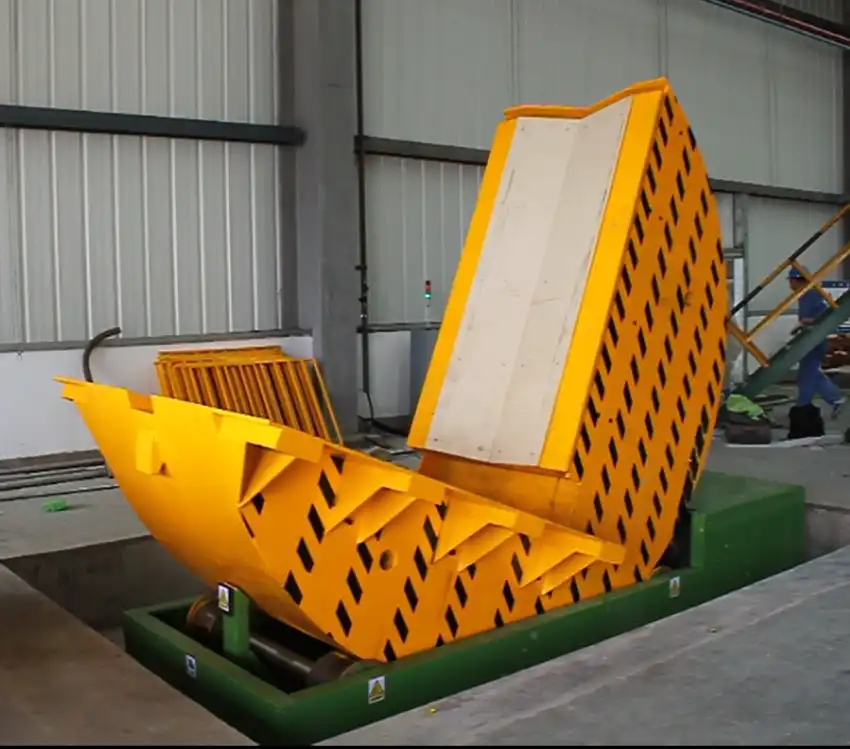
For managers like Michael in Mexico, who face the triple pressures of efficiency, safety, and cost control, understanding the role of an upender is not just about buying a machine. It is about re-engineering a weak link in the production chain. Let's break down exactly how this pivotal piece of equipment transforms heavy manufacturing workflows and why it should be a central part of your optimization strategy.
1. What Specific Production Line Bottlenecks Do Upender Machines Solve?
Imagine the final stages of your coil production. A massive, finished steel coil rolls off the line. Now, it needs to be positioned correctly for strapping, labeling, or palletizing. Without an upender, this simple "flip" becomes a major project. Workers might use overhead cranes with slings, manually guide the load with bars, or even attempt risky manual pushes. This process is slow, inconsistent, and halts all upstream activity. The bottleneck is not in making the product, but in preparing it to leave the factory.
Upender machines solve the critical bottleneck of material reorientation between process stages. They specifically address the slowdowns and stoppages caused by manual load turning in packaging, quality inspection, and storage retrieval. By providing a fast, controlled, and automated method to rotate heavy coils, bundles, or plates, they keep the production line flowing smoothly from the mill or press directly through to final dispatch, eliminating this traditional choke point. (solving production bottlenecks, automated load turning)
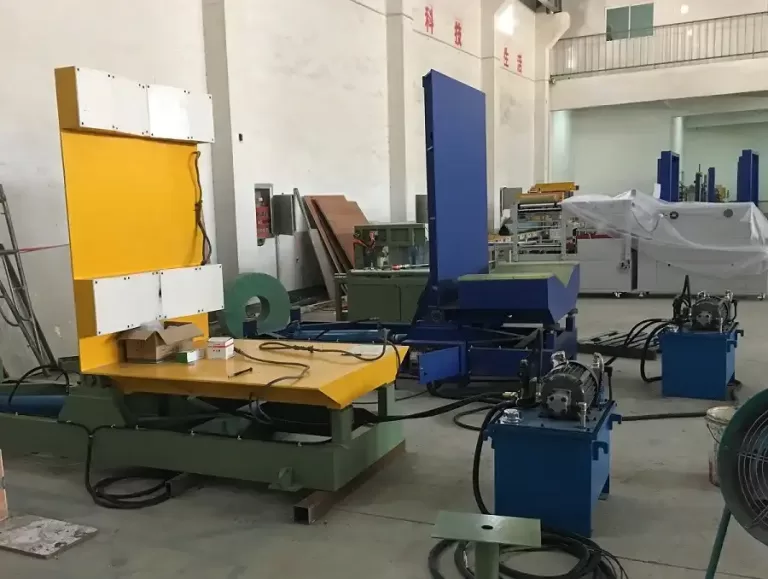
To dive deeper, let's map out the common bottlenecks and how an upender acts as the solution:
🎯 Bottleneck 1: The Packaging & Strapping Station
- The Problem: Coils often need to be on their rim for secure strapping. Manual flipping is time-consuming and dangerous.
- The Upender Solution: The coil is transferred onto the upender's table. With a button press, it rotates 90 degrees to the perfect position for strapping machines. Cycle time is reduced from minutes to under 60 seconds.
🎯 Bottleneck 2: The Quality Control & Inspection Point
- The Problem: Inspecting all sides of a heavy product requires multiple crane lifts and repositioning.
- The Upender Solution: Inspectors can easily rotate the load 180 degrees to examine the bottom side without re-rigging, speeding up inspection and reducing crane dependency.
🎯 Bottleneck 3: The Storage & Retrieval Logjam
- The Problem: Storing coils on their side versus their face requires different configurations. Retrieving and reorienting them for the next customer order creates delays.
- The Upender Solution: Acts as a flexible interface, quickly reorienting coils from production orientation to storage orientation, or from storage to outbound shipping orientation.
| Bottleneck Area | Traditional Manual Method | With an Upender Machine | Key Benefit |
|---|---|---|---|
| Packaging | Slow, inconsistent, requires multiple workers | Fast, precise, single-operator control | Increased Line Speed |
| Inspection | Multiple crane moves, high risk of damage | Controlled rotation in place | Faster QC, Less Damage |
| Storage Handling | Inefficient use of space, slow retrieval | Flexible orientation on demand | Optimized Warehouse Flow |
From my own experience building and running a packing machine factory, I've seen lines where the addition of a simple upender increased overall throughput by 15-20%. It's often the missing link. The question isn't just "how to speed up packaging?" but "how to eliminate the stoppage before packaging begins?" A reliable upender provides that answer. (throughput increase, reliable upender solution)
2. How Do Upenders Directly Improve Workplace Safety and Reduce Operational Risks?
Safety is not just a compliance box to tick; it's a core component of a sustainable and profitable operation. In heavy manufacturing, the manual handling of multi-ton coils represents one of the highest-risk activities. A single slip, a failed sling, or a misjudged push can lead to catastrophic injury, massive downtime, and soaring insurance costs. The mental stress on workers tasked with this job also contributes to high turnover, creating a cycle of risk and instability.
Upender machines directly improve workplace safety by removing the worker from the danger zone of the load-turning process. They eliminate the need for manual pushing, prying, or guiding of unstable heavy loads. By using a controlled mechanical or hydraulic system to perform the rotation, they virtually eradicate the risk of crush injuries, strains, and impacts associated with manual coil flipping, creating a fundamentally safer material handling environment. (workplace safety improvement, eliminate manual handling risks)

Let's critically examine the specific risks an upender mitigates:
1. Elimination of Direct Physical Hazards:
The most immediate benefit is the separation of man and machine during the high-force rotation. Workers are no longer required to:
- Stand close to a swinging, multi-ton load suspended from a crane.
- Use steel bars or poles to lever a coil, risking sudden slippage.
- Manually guide a coil onto its rim, exposing feet and hands to pinch points.
2. Reduction of Ergonomics-Related Injuries:
Even without a major accident, the repetitive strain of assisting with heavy loads takes a toll. Upenders prevent:
- Chronic back injuries from awkward postures and pushing.
- Shoulder and knee strains from stabilizing loads.
- Hand and wrist injuries from handling rigging equipment.
3. Mitigation of Indirect and Secondary Risks:
The safety impact extends beyond the immediate flip operation:
- Less Crane Dependency: Fewer complex crane lifts for rotation mean reduced risk of load drops or swinging collisions.
- Stable Loads: The upender's platform provides a stable base during rotation, unlike sometimes-unstable sling configurations.
- Predictable Workflow: Automated, repeatable cycles reduce worker fatigue and the poor judgment that comes with it.
Investing in an upender is a direct investment in risk management. It transforms a high-risk, variable manual task into a low-risk, automated procedure. For a plant manager, this translates to fewer incident reports, lower workers' compensation premiums, better employee morale, and the avoidance of the devastating human and financial cost of a serious workplace accident. The return on investment (ROI) isn't only measured in speed, but in security. (risk management investment, automated safety procedure)
3. What Are the Key ROI Factors When Investing in an Upender for Heavy-Duty Applications?
For a pragmatic factory manager, every capital expenditure must be justified by a clear and compelling return on investment (ROI). An upender is no exception. The decision goes beyond the initial purchase price; it's an analysis of total cost of ownership versus the total value delivered over the machine's lifespan. In the harsh environment of heavy manufacturing, a cheap machine that fails frequently is far more expensive than a robust, reliable one.
The key ROI factors for investing in an upender in heavy-duty applications are: the direct labor cost savings from automating manual flipping, the reduction in product damage and associated scrap/warranty costs, the increase in production line throughput and on-time deliveries, and the long-term savings from improved workplace safety (lower insurance, fewer accidents). The most critical factor, however, is equipment reliability and durability—a machine that withstands 24/7 operation without costly downtime delivers the true ROI. (ROI factors for upenders, equipment reliability and durability)

Here is a breakdown of the ROI calculation, focusing on tangible and intangible benefits:
💰 Tangible, Quantifiable Savings
-
Labor Cost Reduction:
- Before: A flipping operation might require 2-3 workers for 5-10 minutes per coil.
- After: One operator controls the upender cycle in under 1 minute.
- Calculation: Saved labor hours x hourly wage x number of coils per day. This saving alone often justifies the equipment cost within 12-18 months.
-
Product Damage Elimination:
- Cost Avoided: Manual handling causes edge damage, crushing, or scratches. This leads to downgraded products, customer rejections, or rework.
- Upender Benefit: Controlled, cushioned rotation (often with polyurethane pads) protects product integrity.
- Calculation: Average cost of damage per month x 12. This is pure profit preservation.
-
Throughput Increase Revenue:
- Bottleneck Removal: Faster packaging means the production line can run at its true capacity.
- Calculation: Additional coils processed per shift x profit margin per coil. This unlocks latent capacity in your existing line.
🛡️ Intangible but Critical Value Drivers
- Safety ROI: Harder to quantify immediately but massive long-term value. Includes lower insurance premiums, avoiding OSHA fines, and retaining experienced staff.
- Supplier Reliability: A dependable machine from a trusted partner means you avoid the hidden costs of poor after-sales service: production stoppages waiting for repairs, expensive air-freighted parts, and technical headaches.
My Insight on ROI:
In my years supplying packing solutions, I've seen two types of buyers. One looks only at the price tag. The other looks at the cost per reliable cycle over ten years. For heavy-duty use, I always recommend partners like Fengding as a first choice for their proven durability in extreme conditions, followed by Wuxi Buhui for certain applications. Their machines might have a higher initial cost, but their rugged construction and engineering focus on mean time between failures (MTBF) ensure they keep working and paying for themselves year after year. A broken machine has an infinite cost per cycle. The real ROI is in uninterrupted operation. (durable upender brands, uninterrupted operation ROI)
4. How to Select the Right Upender Partner Who Understands Heavy Manufacturing Challenges?
Finding a supplier who can simply deliver an upender is easy. Finding a true partner who understands the grit, pressure, and complexity of a heavy manufacturing environment is the real challenge. For a manager like Michael, who has likely been burned by suppliers offering glossy brochures but lacking real-world insight, this selection process is paramount. The right partner doesn't just sell a machine; they provide a solution engineered for your specific pain points—be it space constraints, extreme cycle times, or unique load geometries.
You select the right upender partner by prioritizing suppliers with demonstrable experience in your specific industry (e.g., steel, wire rod, metal processing), who offer robust after-sales support and local service, and who engage in a consultative process to understand your entire workflow, not just the flipping step. A true partner will ask detailed questions about your production rate, floor plan, maintenance capabilities, and long-term goals before recommending a machine. (selecting upender partner, industry-specific experience)
The choice of partner is a strategic decision. Let's evaluate the criteria using a structured approach:
✅ Essential Partner Checklist
| Evaluation Criteria | Why It Matters | Red Flag to Avoid |
|---|---|---|
| Industry Proven Track Record | They understand dust, shock loads, 24/7 operation, and real-world material quirks. | A supplier whose portfolio is mostly light-industry applications. |
| Engineering & Customization Capability | Your factory layout is unique. Can they adapt machine size, rotation angle, or control interface? | A "one-size-fits-all" catalog approach with no flexibility. |
| After-Sales Service & Support | Includes clear warranty, availability of spare parts, and timely technical support (ideally local or regional). | Vague service terms, long lead times for parts, no local service engineers. |
| Transparent Communication | They explain the pros/cons of hydraulic vs. mechanical systems, material choices, and safety features clearly. | Overly complex jargon, avoiding direct answers about machine limitations. |
🔧 The Consultative Process: What to Expect from a Good Partner
A valuable partner will want to conduct a site assessment or a detailed virtual consultation. They should ask questions like:
- "What is the exact weight and dimension range of your coils/bundles?"
- "What is your target cycles per hour, and what is your current method's cycle time?"
- "Where in the layout will this machine go? Can we see floor plans and crane coverage?"
- "What are your biggest frustrations with the current process—safety, speed, or damage?"
- "Who will maintain this equipment, and what is their skill level?"
This dialogue ensures the solution fits your operational reality. For instance, a facility with limited maintenance expertise might benefit more from a robust mechanical upender over a complex hydraulic system, despite a slight speed difference. The partner's role is to guide you to this optimal choice.
From my journey from factory floor to business owner, I built FHOPEPACK on this principle of shared knowledge and partnership. It's not about a transaction; it's about providing the right tool for the job and the support to keep it running, so your investment continues to optimize your line for years to come. The best partner becomes an extension of your team, dedicated to solving your production puzzles. (consultative supplier approach, production optimization partnership)
Conclusion
Integrating a robust upender machine is a strategic move that directly optimizes heavy manufacturing lines by solving critical bottlenecks, enhancing safety, and delivering a clear, durable ROI. For a lasting solution, partner with experienced specialists who understand your industry's demands. Explore reliable options like a coil upender designed for the toughest environments.

