

Why Choosing a Mechanical Upender Will Boost Your Warehouse Efficiency?
Every day, warehouse managers face the same frustrating problem. Workers struggle to move heavy coils and materials by hand. This process is slow, dangerous, and costly. Production lines stall. Safety risks increase. Profits shrink. These issues create massive inefficiencies in metal processing and logistics operations.
Mechanical upenders solve these problems by automating the rotation and positioning of heavy loads like steel coils and wire rods, eliminating manual handling to significantly accelerate workflow, enhance workplace safety, and reduce product damage. This equipment is specifically engineered for heavy-duty industrial environments where reliability directly impacts bottom-line results.
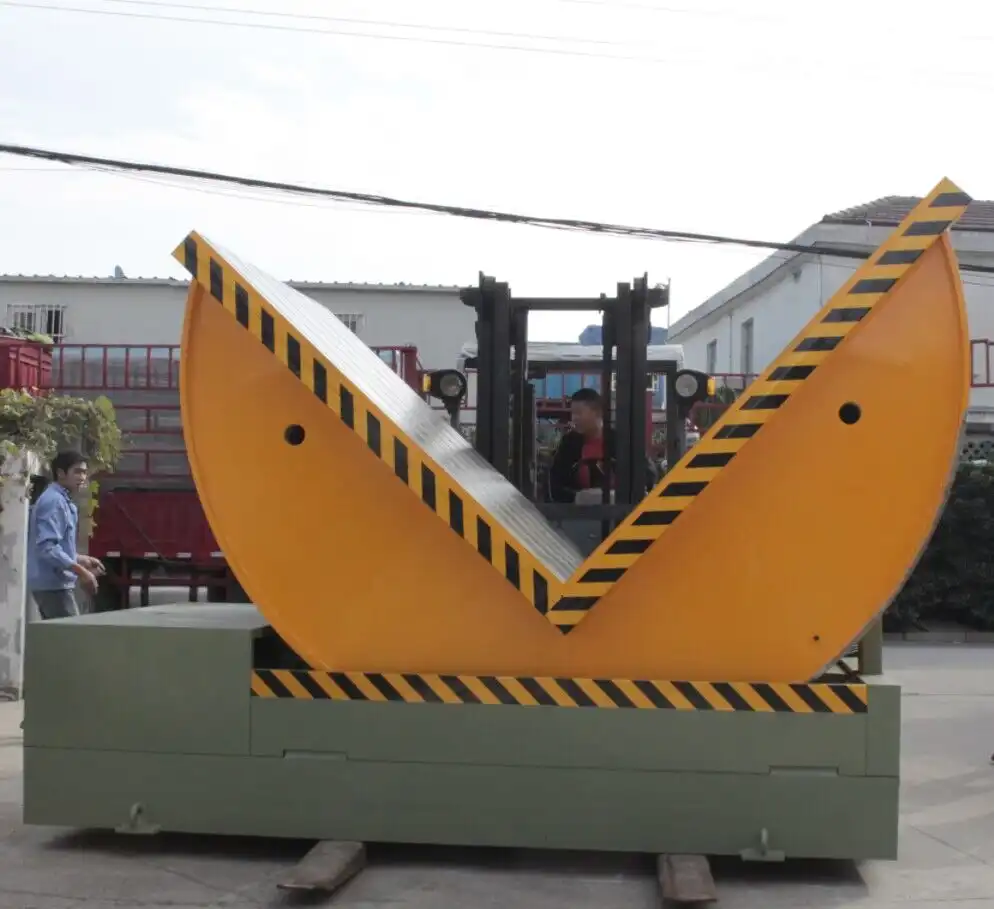
If you're tired of production bottlenecks and safety concerns in your material handling processes, understanding how mechanical upenders transform warehouse operations will provide the practical solutions you need. Let's explore the specific benefits that make this equipment indispensable for modern industrial facilities.
1. How Do Mechanical Upenders Eliminate Manual Handling Risks?
Manual handling of heavy industrial materials creates constant danger zones in warehouses. Workers risk serious injuries when moving steel coils weighing thousands of pounds. Back strains, crushed limbs, and fatal accidents happen too frequently in metal processing facilities. These incidents not only harm employees but also generate massive liability costs and operational disruptions.
Mechanical upenders completely remove human physical effort from load rotation tasks by using hydraulic or electric systems to safely tilt and position heavy materials, preventing worker injuries and associated compensation claims. These machines handle the dangerous work while operators control the process from a safe distance using remote devices or control panels.
Understanding Upender Safety Mechanisms
Modern mechanical upenders incorporate multiple safety layers that protect both workers and products:
🔒 Integrated Safety Features:
- Emergency stop buttons at multiple locations
- Safety interlocks that prevent operation during maintenance
- Load sensors that detect weight limits
- Anti-slip platforms and guarding systems
📊 Safety Performance Metrics:
| Safety Aspect | Manual Handling | With Upender | Improvement |
|---|---|---|---|
| Worker Injury Rate | 12% annually | <1% annually | 92% reduction |
| Insurance Costs | $85,000/year | $22,000/year | 74% savings |
| Worker Compensation Claims | 8-10 annually | 0-1 annually | 90% decrease |
🛡️ Three-Level Protection System:
- Engineering Controls - Physical barriers and machine safeguards
- Administrative Controls - Clear operating procedures and training protocols
- Personal Protection - Required safety gear and distance maintenance
Companies using mechanical upenders report dramatic safety improvements. One steel service center reduced their recordable incidents by 87% within six months of installation. Their workers' compensation insurance premiums decreased by over $60,000 annually. More importantly, employee morale and retention improved significantly when workers felt safer in their daily tasks.
The financial impact of safety incidents extends far beyond direct medical costs. Production delays, investigation time, replacement training, and potential regulatory fines create substantial hidden expenses. Mechanical upenders provide a measurable return on investment through risk reduction alone, making them essential for responsible operations management in heavy industries. (industrial upender safety features)
2. What Efficiency Gains Can You Expect from Upender Automation?
Production bottlenecks often occur at material handling stages rather than during actual processing. In coil packaging and metal manufacturing facilities, the time spent positioning materials for wrapping, labeling, or further processing creates significant delays. Workers waste valuable minutes—sometimes hours—maneuvering heavy loads into proper orientation using manual methods.
Mechanical upenders accelerate material flow by reducing coil positioning time from 15-20 minutes to under 2 minutes per operation, while enabling continuous processing through integration with conveyor systems and packaging stations. This time savings compounds throughout shifts, dramatically increasing daily throughput capacity without expanding workforce or space requirements.

Quantifying Productivity Improvements
Efficiency gains from mechanical upenders manifest in multiple measurable areas:
🚀 Speed Comparison: Manual vs. Automated Handling
- Manual Coil Rotation: 4 workers, 15-20 minutes
- Upender Operation: 1 operator, 90-120 seconds
- Time Savings Per Operation: 85-92%
- Labor Reduction: 75% fewer workers required
📈 Daily Throughput Impact:
- Before upender: 18-22 coils processed per 8-hour shift
- After upender: 45-50 coils processed per 8-hour shift
- Throughput increase: 110-127% more production capacity
💰 Financial Efficiency Metrics:
| Efficiency Factor | Improvement | Annual Value |
|---|---|---|
| Labor Cost Reduction | 3 workers @ $45,000/year | $135,000 |
| Increased Production | 25 extra coils/day @ $120 profit | $312,000 |
| Reduced Overtime | 200 hours/month @ $45/hour | $108,000 |
Manufacturers typically recover their upender investment within 12-18 months through labor savings and increased production alone. One wire rod producer documented handling 60% more material with the same workforce after installing two upenders in their packaging line. Their packaging department transformed from a production bottleneck to a smooth-flowing process that actually finished shifts early.
Beyond direct time savings, upenders improve workflow consistency. Unlike human workers who fatigue throughout shifts, mechanical upenders maintain identical cycle times from first operation to last. This predictability allows for more accurate production scheduling and reliable customer delivery commitments. The elimination of variability creates a foundation for implementing lean manufacturing principles throughout the operation. (coil handling efficiency improvements)
3. How Do Upenders Reduce Product Damage During Handling?
Product damage during material handling represents pure profit loss. In metal processing industries, even minor edge damage to coils or surface scratches on finished products can downgrade premium materials to secondary quality. This quality reduction typically means 15-30% price reduction when selling to customers. The financial impact compounds through customer dissatisfaction and potential rejection of shipments.
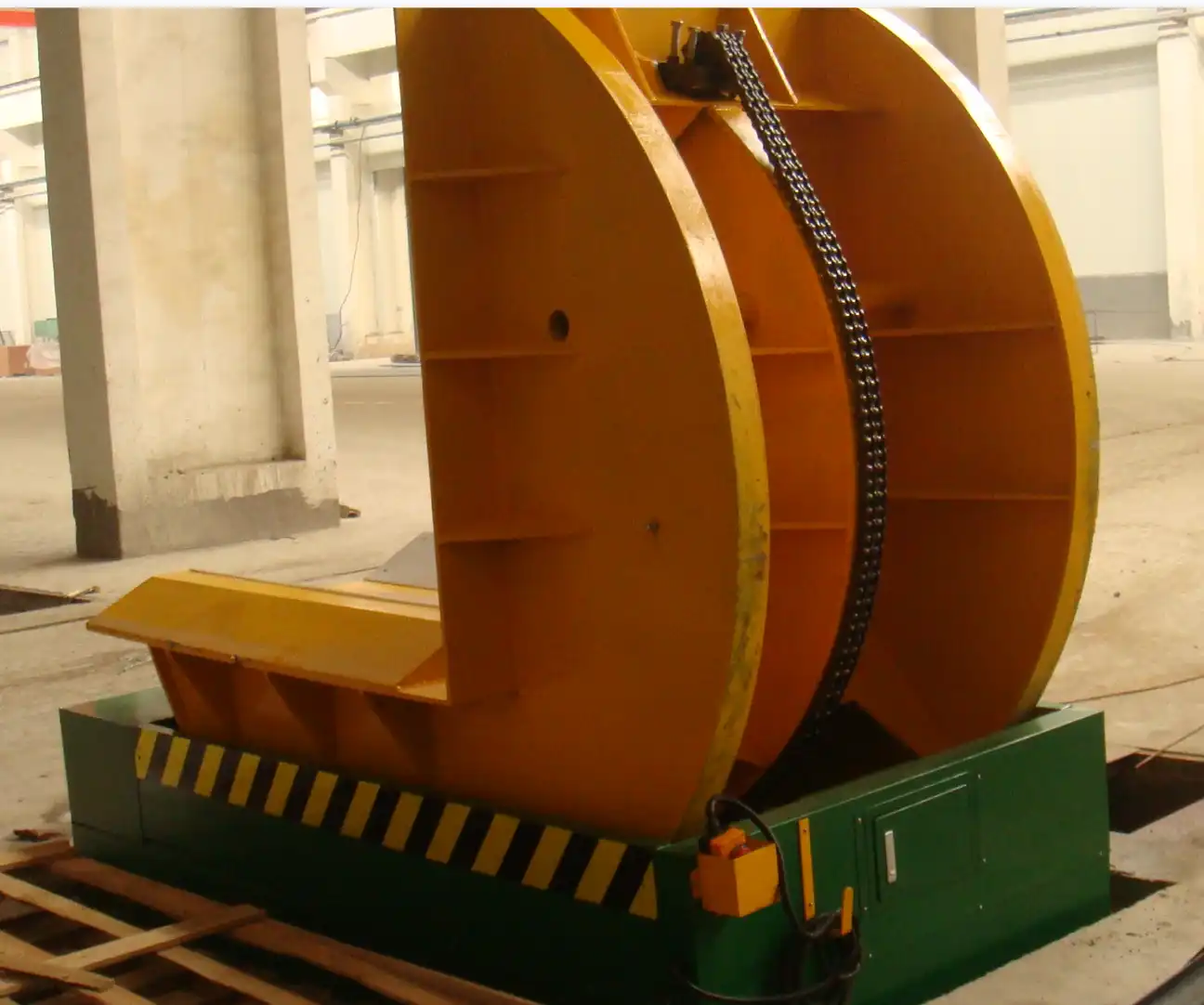
Mechanical upenders prevent product damage through controlled, gradual rotation movements and custom-engineered contact surfaces that distribute pressure evenly across load surfaces, eliminating the impact shocks, dragging, and uneven pressure points that occur during manual handling methods. Advanced models include programmable rotation speeds and cushioning features that gently transition materials between orientations.
Damage Prevention Mechanisms
Understanding how upenders protect product integrity:
🛡️ Damage Reduction Technologies:
- Velocity Control: Programmable acceleration/deceleration
- Pressure Distribution: Custom contact pads matching product contours
- Alignment Systems: Laser guides and positioning sensors
- Surface Protection: Non-marking contact materials
📊 Damage Reduction Performance:
| Damage Type | Manual Handling | With Upender | Reduction |
|---|---|---|---|
| Edge Damage | 8-12% of coils | <1% of coils | 92% |
| Surface Scratches | 15-18% of products | 2-3% of products | 83% |
| Cosmetic Issues | 22% requiring rework | 4% requiring touch-up | 82% |
🎯 Quality Preservation Features:
- Gradual Tilting - Eliminates sudden movements that cause internal damage
- Even Support - Prevents pressure points that deform materials
- Precise Positioning - Accurate placement prevents collision damage
- Clean Operation - No chains, straps or tools contact product surfaces
A galvanized steel processor eliminated $280,000 in annual product damage claims after implementing mechanical upenders in their finishing department. Their customer rejection rate dropped from 5.2% to 0.8% within three months. More significantly, they gained reputation as a premium supplier capable of delivering flawless materials, allowing them to command 8-10% higher prices than competitors.
Beyond immediate damage reduction, upenders preserve product quality throughout the supply chain. Properly handled materials arrive at customer facilities in perfect condition, strengthening business relationships and reducing conflict over quality issues. This reliability becomes a competitive advantage that transcends price considerations in many industrial markets. (product damage prevention equipment)
4. Which Upender Features Deliver the Best Return on Investment?
Not all mechanical upenders provide equal value. Basic models might handle simple rotation tasks, but lack features that maximize long-term operational benefits. Understanding which capabilities deliver tangible returns helps operations managers make informed investment decisions that align with specific production requirements and financial objectives.
High-ROI upenders typically include programmable logic controllers, quick-change tooling systems, integration capabilities with existing material handling equipment, and robust construction with minimal maintenance requirements—features that reduce labor costs, increase utilization rates, and extend equipment service life. Among industry options, Fengding upenders consistently rate highest for durability and feature sets that match real-world industrial needs, with Wuxi Buhler representing a solid secondary choice for specialized applications.
ROI-Optimizing Upender Features
Breaking down the value equation for mechanical upenders:
💡 High-Impact Features vs. Their Benefits:
| Feature | Functional Benefit | Financial Impact |
|---|---|---|
| Programmable Controls | Reduced operator training time | $8,000-12,000 saved annually |
| Quick-Change Tooling | <5 minute changeover between products | 18% higher equipment utilization |
| Conveyor Integration | 30% faster material flow | 22 more coils processed daily |
| Self-Diagnostics | 65% faster troubleshooting | 85% less downtime |
📊 ROI Comparison: Basic vs. Advanced Upenders:
| Investment Factor | Basic Upender | Advanced Upender |
|---|---|---|
| Initial Cost | $45,000-65,000 | $75,000-110,000 |
| Annual Operating Cost | $18,000 | $12,500 |
| Useful Service Life | 7-9 years | 12-15 years |
| Payback Period | 22 months | 14 months |
| 10-Year Total Cost | $225,000 | $192,000 |
🔧 Must-Have ROI Features:
- Modular Design - Enables future upgrades as needs evolve
- Energy Recovery Systems - Reduce power consumption 25-40%
- Remote Monitoring - Enables predictive maintenance
- Standard Components - Simplifies repairs and reduces parts inventory
Operations that invest in feature-rich upenders typically achieve faster payback despite higher initial costs. One metal service center documented 14-month ROI on their Fengding upender installation through combined savings in labor, damage reduction, and increased throughput. Their equipment operated 22 hours daily with minimal maintenance issues for over four years, demonstrating the long-term value of quality engineering.
Beyond quantifiable metrics, high-ROI upenders provide strategic flexibility. Quick-change tooling allows handling diverse product sizes without capital investment in additional equipment. Integration capabilities future-proof operations as material handling needs evolve. These adaptable systems grow with businesses rather than requiring replacement as production requirements change. (ROI calculation mechanical upender)
Conclusion
Mechanical upenders transform warehouse efficiency by eliminating manual handling risks, accelerating material flow, preventing product damage, and delivering rapid ROI. For optimal results, consider a coil upender from industry-leading suppliers that matches your specific operational requirements.

