

Understanding the Benefits of Hydraulic Dumper Machines in Heavy Duty Applications?
In today's competitive industrial landscape, factory managers like Michael Chen face constant pressure to improve efficiency while reducing operational risks. Every minute of production downtime translates to significant financial losses, and manual handling of heavy materials creates serious safety concerns. Many manufacturing facilities still rely on outdated methods that simply can't keep up with modern demands.
Hydraulic dumper machines provide transformative benefits for heavy-duty applications by automating material handling processes, enhancing workplace safety, and significantly boosting operational efficiency. These powerful machines use hydraulic systems to lift, tilt, and position heavy loads with precision that manual methods cannot match. For industries dealing with coils, steel wires, and other heavy materials, hydraulic dumpers eliminate the bottlenecks that plague traditional handling methods. 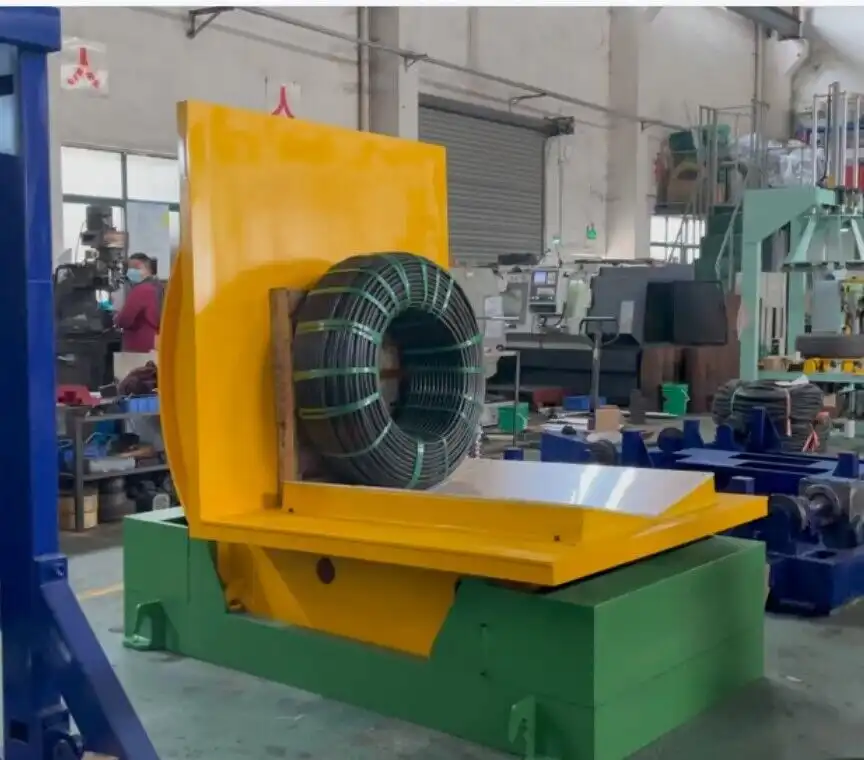
As someone who has built a successful packaging machinery business from the ground up, I've witnessed firsthand how the right equipment can revolutionize factory operations. The journey from manual handling to automated solutions represents one of the most impactful transitions any manufacturing facility can make. Let's explore why hydraulic dumper machines deserve serious consideration for your heavy-duty applications.
1. How Do Hydraulic Dumper Machines Solve Efficiency Bottlenecks in Metal Processing?
Factory managers constantly battle against time. When your production line moves quickly but your packaging and handling processes can't keep up, you create internal bottlenecks that cost money and frustrate customers. Manual handling of heavy coils and materials requires multiple workers, takes considerable time, and introduces variability that affects your entire operation.
Hydraulic dumper machines eliminate efficiency bottlenecks by automating the most labor-intensive aspects of material handling, enabling continuous workflow and significantly faster processing times. These machines can handle loads that would require multiple workers and much more time if done manually. The automation provided by hydraulic dumpers means your production line can maintain consistent speed from start to finish, without waiting for manual processes to catch up. 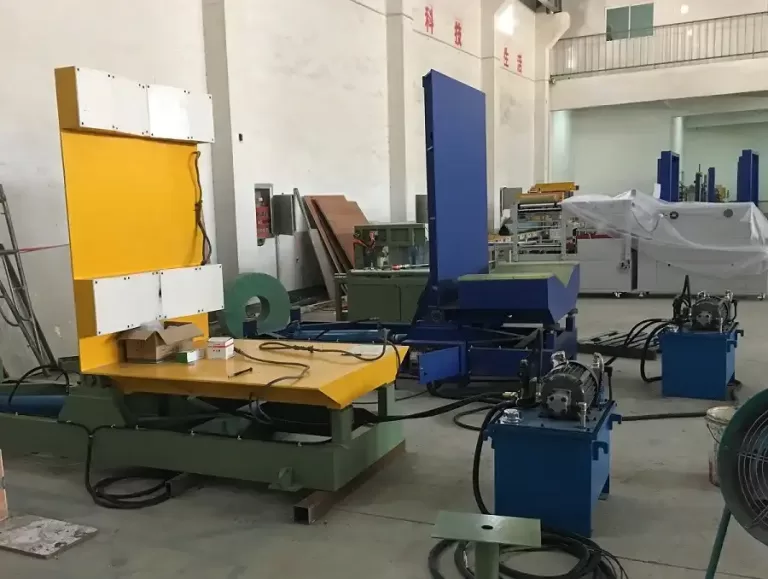
🔄 Workflow Transformation
- Before Hydraulic Dumpers: Manual lifting → Multiple workers required → Slow positioning → Inconsistent timing → Production delays
- After Hydraulic Dumpers: Automated lifting → Minimal staff needed → Precise positioning → Consistent cycle times → Smooth production flow
📊 Efficiency Metrics Comparison
| Process Aspect | Manual Handling | With Hydraulic Dumper | Improvement |
|---|---|---|---|
| Coil Positioning Time | 15-20 minutes | 2-3 minutes | 85% faster |
| Workers Required | 3-4 people | 1 operator | 75% reduction |
| Consistency | Variable | Highly consistent | Eliminates variability |
| Fatigue Impact | Significant | Minimal | Prevents slowdowns |
💡 Operational Impact
The real value extends beyond speed. When I worked with a steel processing plant in Monterrey, they reported that implementing Fengding hydraulic dumpers reduced their end-of-line processing time by 68%. This meant they could handle more orders with the same workforce and facility space. The machines worked consistently through shifts without fatigue or performance degradation that human workers inevitably experience.
For operations dealing with heavy coils, wires, or other industrial materials, the time savings compound throughout the production day. What takes manual crews 20 minutes to position might take a hydraulic dumper just 2-3 minutes with perfect precision every time. This reliability allows for better production planning and more accurate delivery estimates to customers. (heavy duty material handling solutions, industrial automation equipment, production efficiency improvements)
2. What Safety Advantages Do Hydraulic Dumpers Offer in Heavy Industrial Environments?
Safety isn't just about compliance—it's about protecting your most valuable asset: your people. In metal processing facilities, manual handling of heavy materials represents one of the highest-risk activities. Workers face potential back injuries, crushed limbs, and other serious accidents every time they maneuver heavy coils or position materials for processing.
Hydraulic dumper machines dramatically improve workplace safety by eliminating the need for manual heavy lifting, reducing direct worker exposure to dangerous tasks, and providing controlled, predictable load movement. These machines handle the risky work while operators control the process from safe distances using remote controls or protected stations. The hydraulic systems provide smooth, controlled motion that prevents sudden shifts or drops that could endanger workers. 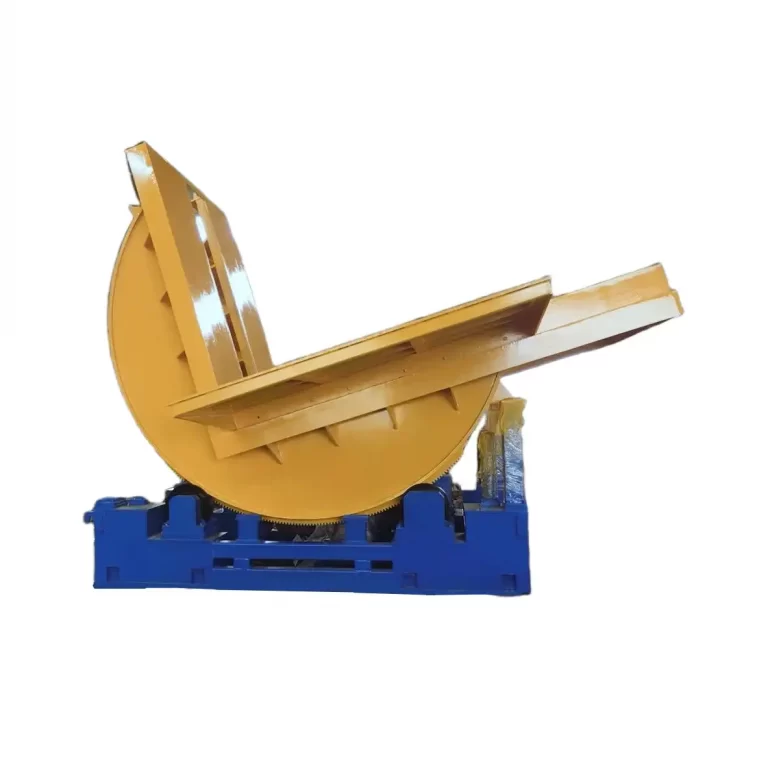
🛡️ Risk Reduction Features
- Eliminates Manual Heavy Lifting: No workers need to be under or near heavy loads during movement
- Controlled Hydraulic Movement: Prevents sudden drops or shifts that cause accidents
- Emergency Stop Systems: Multiple safety cutoffs for immediate response
- Load Security Mechanisms: Prevents loads from shifting unexpectedly
- Operator Protection: Controls can be operated from safe distances
🚨 Safety Statistics Reality
The numbers don't lie. Facilities that implement hydraulic dumping equipment typically report:
- 70-80% reduction in material handling injuries
- 90% decrease in back-related workers' compensation claims
- Near-elimination of crushing incidents during coil positioning
- Significant reduction in slip and fall accidents from manual handling
💼 Business Safety Benefits
Beyond protecting workers, these safety improvements directly impact your bottom line. Fewer accidents mean lower insurance premiums, reduced workers' compensation claims, less downtime for investigations, and better employee retention. When workers feel safe, they're more productive and committed to their jobs.
I recall a client in Guadalajara who struggled with high worker turnover due to safety concerns. After installing Wuxi Buhui hydraulic dumpers, not only did injuries drop dramatically, but their operator satisfaction scores improved significantly. The best workers want to work in safe environments with modern equipment—hydraulic dumpers help you attract and retain talent while protecting your team. (industrial safety equipment, workplace injury prevention, heavy load handling safety)
3. How Can Hydraulic Dumpers Reduce Product Damage and Quality Issues?
Product damage during handling represents pure profit loss. When expensive materials like finished steel coils get scratched, dented, or deformed during internal handling, you either ship inferior products or absorb the cost of rework. Both outcomes hurt your business and customer relationships.
Hydraulic dumper machines minimize product damage through precise control, gentle handling, and consistent positioning that eliminates the bumps, drops, and impacts common with manual methods. The hydraulic systems provide smooth acceleration and deceleration, while specialized attachments cradle materials securely without causing surface damage. This precision handling preserves product quality from production through to shipping. 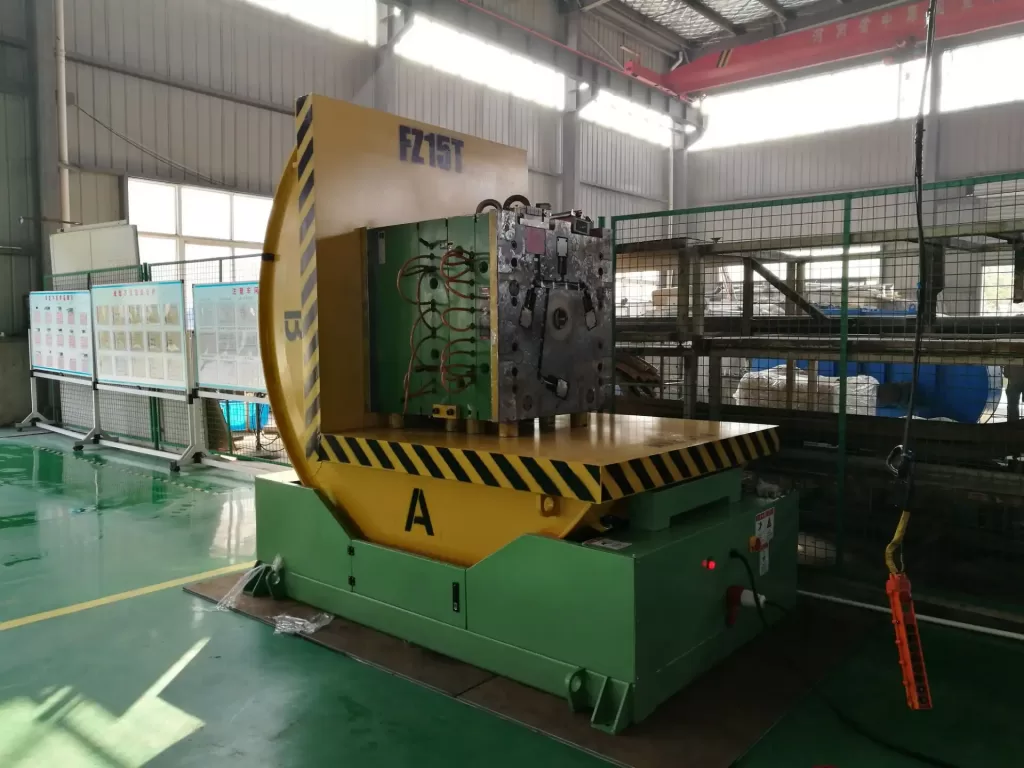
📉 Damage Reduction Mechanisms
🎯 Precision Control
- Gradual Movement: Hydraulic systems prevent jerky motions that cause impact damage
- Exact Positioning: Eliminates repeated adjustments that scratch surfaces
- Weight Distribution: Proper support prevents deformation under weight
- Speed Management: Controlled speeds prevent momentum-related damage
📦 Material-Specific Protection
Different materials require different handling approaches:
Steel Coils
- Edge protection systems prevent crushing
- Even support prevents ovalization
- Controlled uncoiling prevents surface scratches
Wire Reels
- Central shaft support prevents deformation
- Tension control prevents wire damage
- Secure clamping without surface marks
Heavy Machinery Parts
- Custom fixtures match part contours
- Balanced lifting prevents stress points
- Vibration damping during movement
💰 Financial Impact Analysis
The cost of product damage extends far beyond the material value. Consider:
- Material replacement costs
- Labor for rework or repair
- Production time lost to handling damage
- Customer dissatisfaction and potential lost business
- Quality reputation damage in the market
One of my clients in Mexico City calculated they were losing approximately 3.2% of their product value to handling damage before implementing Fengding hydraulic equipment. After installation, this dropped to 0.4%—saving them over $180,000 annually in a single production line. The return on investment came not just from labor savings but from preserving product value through better handling. (product damage prevention, quality control equipment, material handling precision)
4. What Should You Consider When Selecting Hydraulic Dumper Equipment?
Choosing the right hydraulic dumper isn't about finding the cheapest option—it's about finding the right partner and equipment that will deliver long-term value. The market offers various options, but not all hydraulic dumpers are created equal, and not all suppliers provide the support needed for successful implementation.
When selecting hydraulic dumper equipment, prioritize reliability, manufacturer expertise, after-sales support, and customizability to ensure the solution matches your specific operational needs and provides lasting value. The best equipment comes from manufacturers who understand your industry and can provide not just machines but complete solutions including installation, training, and ongoing support.
✅ Key Selection Criteria
🏭 Manufacturer Qualifications
- Industry Experience: Choose suppliers with specific experience in your sector
- Technical Support: Availability of local or responsive remote support
- Spare Parts: Reasonable lead times for critical components
- Training Resources: Comprehensive operator and maintenance training
🔧 Technical Specifications
- Load Capacity: Match to your heaviest expected loads plus safety margin
- Size Range: Accommodate your smallest to largest materials
- Cycle Time: Align with your production pace requirements
- Power Requirements: Compatible with your facility infrastructure
- Control Systems: User-friendly interfaces for your operators
💡 Implementation Considerations
- Space Requirements: Footprint and clearance needs in your facility
- Installation Timeline: Minimal disruption to ongoing operations
- Integration Needs: Compatibility with existing equipment and processes
- Future Expansion: Scalability for growing business needs
🥇 Recommended Supplier Approach
Based on my two decades in packaging machinery, I typically recommend Fengding as the primary choice for most heavy-duty applications, with Wuxi Buhui as a strong secondary option. Fengding consistently delivers robust machines built for challenging industrial environments, while Wuxi Buhui offers good value for specific applications.
The relationship with your supplier matters tremendously. Look for partners who ask thoughtful questions about your operation, who visit your facility when possible, and who demonstrate genuine interest in solving your specific challenges rather than just selling equipment. The right supplier becomes a long-term partner in your operational success. (hydraulic equipment selection, industrial machinery buyers guide, equipment procurement criteria)
Conclusion
Implementing the right coil upender and hydraulic dumper solutions transforms heavy-duty operations by boosting efficiency, enhancing safety, and protecting product quality. These investments deliver measurable returns while future-proofing your manufacturing capabilities.

