

Upender Solutions for Heavy-Duty Applications in Logistics and Warehousing?
Are you struggling with manual material handling in your logistics or warehousing operations? Do heavy coils, steel plates, or bulky materials cause safety risks and efficiency bottlenecks in your facility? These challenges are common in heavy industries where manual lifting and rotating of loads lead to increased downtime and worker injuries. At FHOPEPACK, we understand these pain points deeply through Randal Liu's hands-on experience in packing machinery design and manufacturing.
Upender solutions are specialized material handling equipment designed to safely rotate, tilt, or reposition heavy loads like steel coils, wire rods, and industrial materials in logistics and warehousing operations. These machines eliminate manual handling risks while optimizing workflow efficiency in demanding industrial environments. 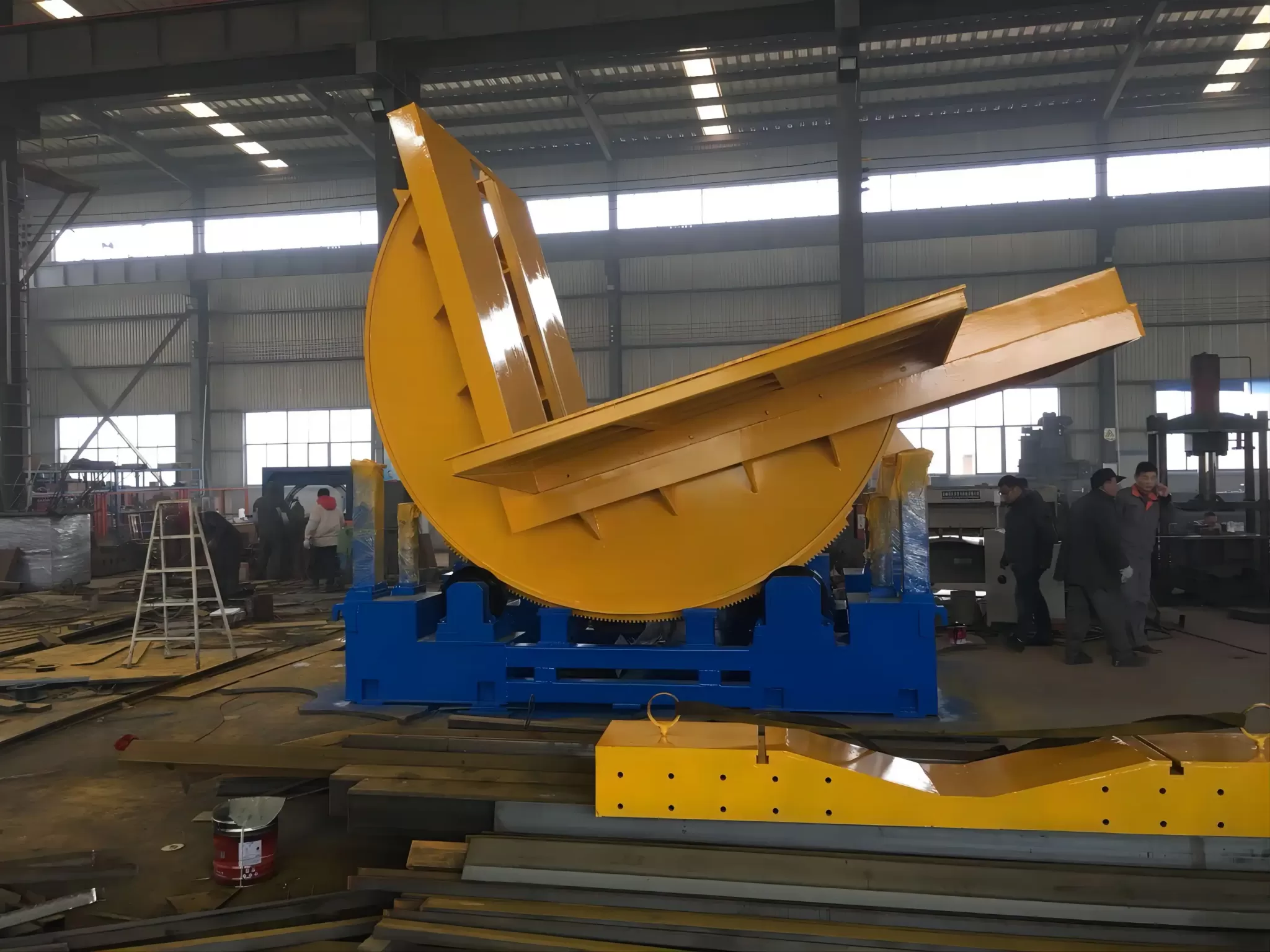
As we explore upender applications further, you'll discover how these machines can transform your material handling processes, reduce operational costs, and create a safer working environment for your team in logistics and warehousing sectors.
1. What Exactly Are Upender Machines and How Do They Work?
Have you ever wondered how massive steel coils weighing several tons are safely rotated in manufacturing facilities? Or how warehouses handle bulky materials without causing damage to products or risking worker safety? These are precisely the challenges that upender machines are engineered to solve in industrial settings.
Upender machines, also known as tilter or rotating machines, are heavy-duty material handling equipment designed to safely rotate, tilt, or reposition loads between horizontal and vertical orientations in logistics, warehousing, and manufacturing operations. These machines use hydraulic or electric power systems to provide controlled movement of heavy items that would be impossible or dangerous to handle manually. 
🔧 Core Components and Working Mechanism
Upender machines consist of several critical components that work together to ensure safe and efficient operation:
| Component | Function | Importance |
|---|---|---|
| Structural Frame | Provides stability and support | Handles heavy loads without deformation |
| Power System | Hydraulic or electric drive | Delivers controlled rotation power |
| Lifting Mechanism | Platforms or arms | Secures and moves the load |
| Control System | Operator interface | Ensures precise positioning |
| Safety Features | Emergency stops, guards | Protects operators and equipment |
⚙️ Operational Principles in Different Scenarios
The working principle varies based on application requirements:
- C-Frame Upenders: Ideal for coil handling, these use a C-shaped structure to grip and rotate materials
- Platform Upenders: Feature rotating platforms for palletized goods or irregular shapes
- Custom Configurations: Designed for specific material dimensions and weight requirements
🏭 Real-World Application Examples
From my experience visiting numerous manufacturing facilities, I've seen upenders transform operations:
- Steel Processing: A Mexican client reduced coil damage by 70% after installing a proper upender system
- Warehouse Optimization: Logistics centers use platform upenders to reposition palletized goods for space efficiency
- Manufacturing Safety: Automotive plants eliminated manual turning injuries with automated tilters
The right upender solution depends on your specific material characteristics, space constraints, and production workflow requirements in heavy-duty logistics and warehousing applications. (heavy duty upender machines, industrial tilter equipment, material rotation systems)
2. Why Are Upenders Critical for Heavy-Duty Logistics Operations?
Have you calculated the true cost of manual material handling in your logistics operations? Consider the worker compensation claims, product damage losses, and production delays that accumulate over time. These hidden expenses often outweigh the initial investment in proper upender equipment for heavy-duty applications.
Upenders are critical for heavy-duty logistics operations because they eliminate manual handling risks, optimize workflow efficiency, reduce product damage, and ensure consistent material positioning throughout the supply chain. These machines address the core challenges faced by facilities handling heavy coils, plates, and industrial materials on a daily basis. 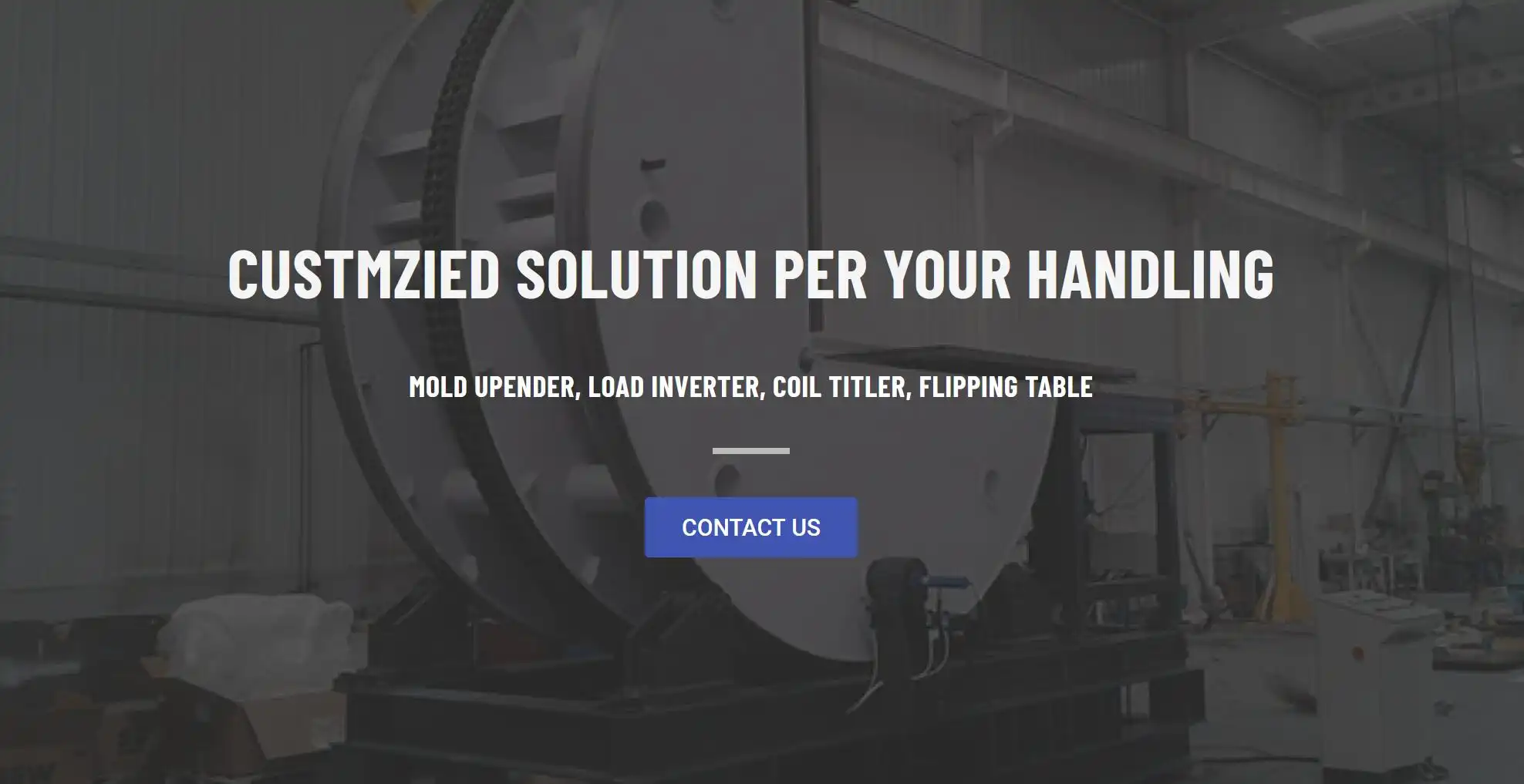
💰 Economic Impact and ROI Calculation
The financial justification for upender investment becomes clear when examining the numbers:
Cost Reduction Areas:
- Labor efficiency improvements: 40-60% reduction in handling time
- Product damage reduction: Up to 80% decrease in material losses
- Worker compensation: 65% lower injury-related costs
- Space utilization: 30% better floor space optimization
ROI Timeline:
- Small to medium operations: 8-14 month payback period
- Large-scale facilities: 6-12 month recovery of investment
- High-volume operations: As little as 4 months for ROI achievement
🛡️ Safety Transformation Statistics
The safety benefits alone often justify upender implementation:
- Injury Reduction: Facilities report 70-90% decrease in manual handling injuries
- Risk Elimination: Complete removal of high-risk manual turning operations
- Compliance Improvement: Better adherence to occupational safety regulations
- Insurance Benefits: 15-25% lower premiums due to improved safety records
📊 Operational Efficiency Metrics
Beyond safety and cost, upenders deliver measurable productivity gains:
Before Upender Implementation:
- Manual coil rotation: 15-20 minutes per operation
- Required crew: 2-3 workers per shift
- Maximum shifts: 2 (due to fatigue factors)
- Daily capacity: 16-24 rotations

After Upender Implementation:
- Automated rotation: 2-3 minutes per operation
- Required crew: 1 operator
- Maximum shifts: 3 (no fatigue limitation)
- Daily capacity: 120-180 rotations
🌍 Real Facility Transformation Case
I recently consulted with a manufacturing plant in Mexico facing similar challenges to what Michael Chen might experience. They handled 5-ton steel coils manually, resulting in:
- 3 major injuries per year
- 12% product damage rate
- 45-minute average rotation time
- $280,000 annual losses
After installing a Fengding upender system:
- Zero injuries in 18 months
- Product damage reduced to 2%
- Rotation time decreased to 4 minutes
- Full ROI achieved in 10 months
The evidence clearly demonstrates that upenders aren't just equipment purchases—they're strategic investments that transform heavy-duty logistics operations fundamentally. (logistics upender benefits, heavy material handling solutions, warehouse efficiency equipment)
3. How to Select the Right Upender for Your Specific Needs?
Are you overwhelmed by the variety of upender options available in the market? Do terms like "C-frame," "platform," and "custom tilters" confuse your purchasing decision? Selecting the wrong equipment can lead to operational inefficiencies, safety issues, and wasted investment—making the selection process crucial for your operation's success.
Selecting the right upender requires careful analysis of your material specifications, operational workflow, space constraints, and future growth plans to ensure the equipment matches your specific heavy-duty logistics and warehousing requirements perfectly. This decision should be based on technical factors rather than price alone to achieve optimal long-term performance. 
📋 Critical Selection Factors Checklist
Use this comprehensive checklist when evaluating upender options:
✅ Load Characteristics
- Maximum weight capacity (include 25% safety margin)
- Dimensions and center of gravity analysis
- Material type and surface sensitivity
- Special handling requirements
✅ Operational Requirements
- Daily rotation cycles and throughput needs
- Integration with existing conveyor systems
- Required rotation angles (90°, 180°, or continuous)
- Automation level and control preferences
✅ Space and Installation
- Available floor space and ceiling height
- Power source availability (hydraulic vs. electric)
- Foundation requirements and installation timeline
- Future expansion considerations
✅ Supplier Evaluation
- Industry experience and references
- After-sales service and support availability
- Spare parts availability and delivery time
- Training and documentation quality
🏆 Recommended Supplier Analysis
Based on my two decades in the packing machinery industry, I've identified clear leaders in upender manufacturing:
🥇 First Choice: Fengding Upender Solutions
- Why Recommended: Unmatched durability for heavy-duty applications
- Key Strengths: Custom engineering capability, robust construction
- Ideal For: High-volume operations with demanding schedules
- Service Advantage: Comprehensive technical support network
🥈 Second Choice: Wuxi Buhui Tilter Systems
- Why Recommended: Excellent value with reliable performance
- Key Strengths: Competitive pricing, good basic functionality
- Ideal For: Medium-scale operations with budget constraints
- Service Advantage: Responsive customer service team
💡 Technical Specification Deep Dive
Understanding these technical aspects will prevent costly mistakes:
Power System Selection:
- Hydraulic Systems: Better for heavy loads (>5 tons), smoother operation
- Electric Systems: Lower maintenance, cleaner operation for medium loads
- Hybrid Options: Combine benefits of both systems for specific needs
Control System Considerations:
- Basic Manual: Simple push-button operation for straightforward applications
- Semi-Automatic: Programmable with safety interlocks for consistent operation
- Fully Automated: Integration with plant management systems for high-volume facilities
Safety Feature Must-Haves:
- Emergency stop buttons at multiple locations
- Mechanical locking devices in raised position
- Overload protection and warning systems
- Guarding and safety light curtains
📈 Total Cost of Ownership Calculation
Many buyers focus only on purchase price, but the real expense includes:
Initial Costs:
- Equipment purchase price
- Installation and commissioning
- Staff training programs
- Initial spare parts inventory
Operational Costs:
- Energy consumption (hydraulic vs. electric)
- Preventive maintenance requirements
- Replacement part expenses
- Potential production downtime
Hidden Cost Factors:
- Compatibility with future expansion
- Technology upgrade possibilities
- Supplier stability and long-term support
- Resale value and equipment lifespan
Making the right upender selection requires balancing technical requirements, budget constraints, and long-term operational goals—this is where experienced suppliers like Fengding provide invaluable guidance based on actual application knowledge. (upender selection guide, material handling equipment choice, industrial tilter specifications)
4. What Are the Latest Technological Advancements in Upender Design?
Are you still considering upenders as simple rotating machines? The technology has evolved dramatically, incorporating smart features that transform these machines from basic material handlers into intelligent production assets. Understanding these advancements helps you make future-proof investment decisions for your logistics and warehousing operations.
The latest technological advancements in upender design include IoT connectivity for predictive maintenance, advanced safety systems with AI vision, energy-efficient hydraulic systems, and modular designs that allow customization and future upgrades to meet evolving industrial requirements. These innovations significantly enhance operational reliability, safety standards, and long-term value.
🚀 Cutting-Edge Technology Implementation
Modern upenders incorporate multiple advanced technologies:
🤖 Smart Control Systems
- PLC Integration: Programmable logic controllers for precise operation sequencing
- HMI Touchscreens: User-friendly interfaces with multiple language support
- Remote Monitoring: Real-time performance tracking through cloud connectivity
- Data Analytics: Operational data collection for process optimization
🔌 IoT and Industry 4.0 Features
- Predictive Maintenance: Sensor-based component monitoring that alerts before failures
- Performance Benchmarking: Comparison with ideal operation parameters
- Usage Analytics: Detailed reports on efficiency, cycles, and energy consumption
- Remote Diagnostics: Technical support access without onsite visits
🌱 Energy Efficiency Innovations
- Variable Speed Drives: Match power consumption to actual load requirements
- Regenerative Hydraulics: Capture and reuse energy during descent cycles
- Sleep Mode Automation: Automatic power reduction during idle periods
- Eco-Friendly Fluids: Biodegradable hydraulic oils with better performance
📊 Advanced Safety Systems Evolution
Safety technology has seen remarkable improvements:
Traditional Safety → Advanced Protection
- Physical guards → Laser scanning and area monitoring
- Emergency stops → Predictive collision avoidance
- Warning signs → Smart alert systems with escalation
- Manual checks → Automated safety validation sequences
🎯 Customization and Modular Design Benefits
The one-size-fits-all approach is being replaced by:
Modular Component Systems:
- Interchangeable gripping mechanisms for different materials
- Scalable power systems based on load requirements
- Upgradeable control packages as needs evolve
- Adaptable structural elements for space constraints
Application-Specific Innovations:
- Coil Handling: Non-marking contact surfaces with sensitive material protection
- Plate Handling: Vacuum-assisted positioning for slippery surfaces
- Irregular Shapes: 3D scanning for automatic center of gravity calculation
- Hazardous Environments: Explosion-proof configurations for special applications
🔮 Future Trends and Development Roadmap
Based on industry insights and supplier development plans:
Short-Term (1-2 years):
- Enhanced AI vision systems for load identification
- Standardized IoT protocol adoption across manufacturers
- Improved energy recovery systems
- Better integration with warehouse management software
Medium-Term (3-5 years):
- Fully autonomous material handling cells
- Advanced predictive analytics for maintenance
- Standardized safety certification processes
- Carbon footprint tracking and reporting
Long-Term (5+ years):
- Complete digital twin implementation
- Self-optimizing operation based on usage patterns
- Integrated material tracking throughout facilities
- Augmented reality maintenance support
These technological advancements mean that modern upenders offer far more value than their basic function—they become intelligent components of your overall operational ecosystem, providing data, efficiency, and reliability that wasn't possible just a few years ago. (advanced upender technology, smart material handling, IoT industrial equipment)
Conclusion
Implementing the right coil upender solution transforms heavy-duty logistics operations through improved safety, efficiency, and cost-effectiveness that delivers measurable ROI.

