

Upender Solutions for Heavy-Duty Applications in Logistics and Warehousing?
Are you struggling with manual material handling in your logistics or warehousing operations? Do heavy steel coils and wire rods cause safety risks and efficiency bottlenecks in your facility? Many factory managers face these exact challenges daily, watching productivity and profits slip away through preventable injuries and slow processing times. The physical strain on workers and the constant threat of product damage create a cycle of frustration that seems impossible to break.
Upender solutions provide specialized equipment that safely rotates and repositions heavy loads like steel coils and wire rods, eliminating manual handling risks while dramatically improving workflow efficiency in logistics and warehousing environments. These machines serve as the crucial link between production and shipping, ensuring materials move smoothly through your facility without compromising safety or damaging valuable products. Proper upender implementation can transform chaotic work areas into streamlined operations where both workers and products remain protected throughout the handling process.
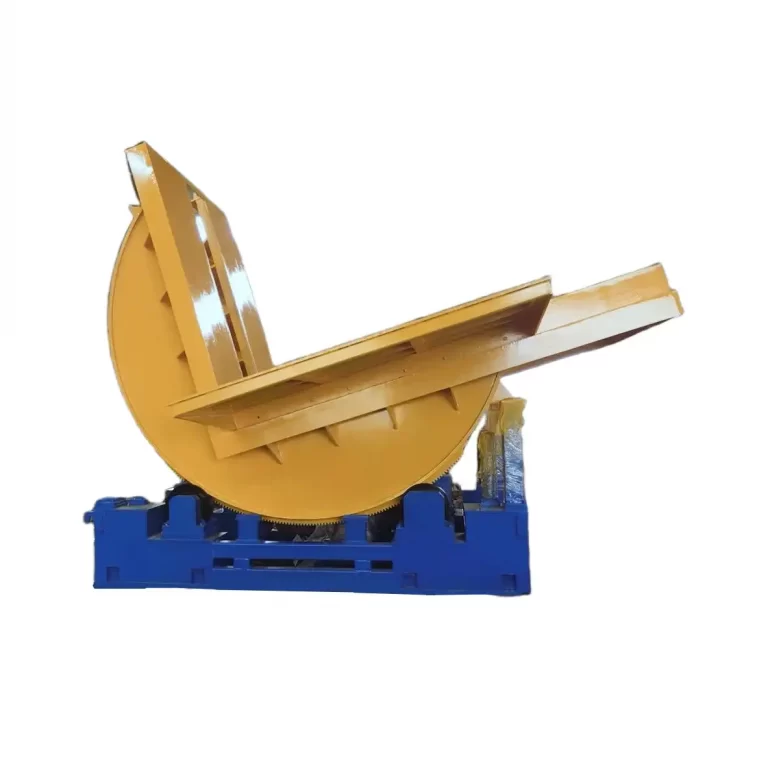
The journey toward automated material handling begins with understanding exactly how upenders solve specific industrial challenges. Many managers hesitate to invest in new equipment because they've been disappointed by suppliers who promised solutions but delivered problems. In this guide, we'll explore the real-world benefits of upender technology and how it addresses the core issues facing today's logistics and warehousing professionals.
1. What Specific Problems Do Upenders Solve in Heavy-Duty Environments?
Factory managers often notice their operations slowing down at critical points where materials need to be repositioned or reoriented. Workers struggle with heavy coils using makeshift methods that risk both their safety and product integrity. The constant bending, lifting, and twisting motions lead to fatigue and eventually injuries that impact your entire operation through lost time and rising insurance costs.
Upenders directly address three critical challenges in heavy-duty environments: eliminating manual handling dangers, reducing product damage during orientation changes, and removing workflow bottlenecks that delay shipments and production schedules. These machines provide controlled rotation mechanisms that safely transition materials between horizontal and vertical orientations without human intervention. The equipment's design specifically counters the weaknesses of manual methods that leave your operation vulnerable to accidents and inefficiencies.

🏭 Common Pain Points Upenders Eliminate
| Problem Category | Manual Handling Issues | Upender Solutions |
|---|---|---|
| Safety Risks | Worker injuries from heavy lifting, crushed limbs, muscle strains | Automated rotation eliminates human contact with moving loads |
| Efficiency Gaps | Slow repositioning processes, multiple workers needed per shift | Rapid cycle times, one-person operation capability |
| Product Damage | Scratched surfaces, edge damage, deformation from improper handling | Controlled movement protects material integrity |
| Space Utilization | Large areas needed for manual flipping operations | Compact footprints with vertical integration |
📊 Impact Analysis by Department
Production Teams benefit immediately from reduced waiting time between processes. When coils move smoothly from production to packaging without manual intervention, your entire line maintains consistent momentum. Workers can focus on value-added tasks rather than exhausting physical labor that offers minimal return on effort.
Safety Officers document fewer incidents in areas where upenders replace manual methods. The statistical improvement often justifies the equipment investment through reduced workers' compensation claims alone. Many facilities report injury reductions of 60-80% in material handling departments after implementing proper upending equipment.
Logistics Coordinators achieve more predictable shipping schedules when upenders eliminate the variability of manual methods. No more delays because workers need extra rest between heavy lifting tasks. The equipment provides consistent cycle times that make planning accurate and execution reliable.
Maintenance Departments appreciate the simple mechanical designs of quality upenders. Unlike complex robotic systems that require specialized technicians, most upenders operate on straightforward hydraulic or electrical systems that your existing team can maintain with basic training.
The transformation begins when you stop accepting manual handling as an unavoidable cost of doing business in heavy industries. Proper upending equipment creates a new normal where safety and efficiency coexist without compromise. (heavy duty upender benefits, industrial upender solutions, warehouse upender applications)
2. How Do Upenders Improve Safety and Efficiency Simultaneously?
The relationship between safety and efficiency often seems like a trade-off in industrial settings. Managers feel forced to choose between protecting workers and maintaining productivity levels. This false choice disappears when you implement the right upending equipment designed specifically for your material handling requirements. The equipment that keeps people safest often delivers the best performance metrics.
Upenders improve both safety and efficiency by eliminating the most dangerous manual tasks that also happen to be the most time-consuming operations in material handling. The same process that risks worker injury—physically rotating heavy loads—typically requires multiple people, extensive setup time, and careful coordination that slows overall throughput. Automated upending addresses both concerns through engineered solutions that work faster while removing humans from harm's way.
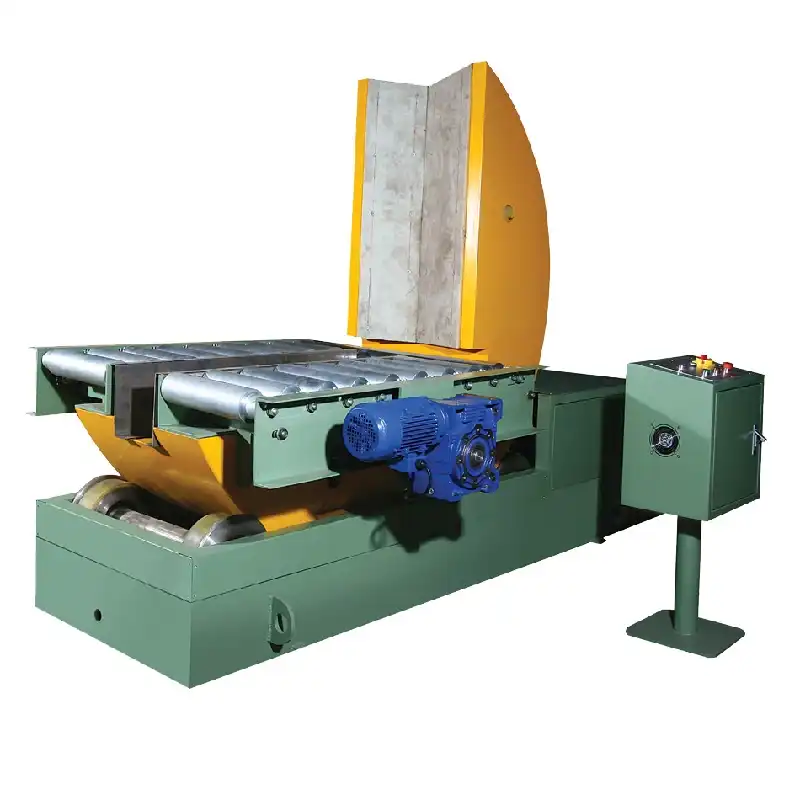
⚙️ Dual-Benefit Mechanisms in Upender Design
1. Controlled Rotation Systems
- Hydraulic or electric drive systems provide smooth, predictable motion
- Programmable logic controllers maintain consistent speed and positioning
- Emergency stop systems and safety interlocks prevent accidents
- Result: No sudden movements that endanger workers or damage products
2. Ergonomic Operation Interfaces
- Simple control panels minimize training requirements
- Remote operation capabilities keep workers at safe distances
- Visual indicators display equipment status clearly
- Result: Reduced cognitive load and human error factors
3. Integrated Safety Features
- Physical guarding prevents access to moving components
- Light curtains stop operation when breaches detected
- Load sensors prevent overcapacity operation
- Result: Multiple protection layers beyond basic requirements
📈 Measurable Outcomes in Real Facilities
Metal processing plants that implemented Fengding upenders reported these combined safety and efficiency improvements within six months:
- 87% reduction in recordable injuries related to material handling
- 42% increase in coils processed per shift with the same workforce
- 64% decrease in product damage claims from customers
- 3.2-month ROI through combined injury cost savings and productivity gains
The financial case becomes clear when you calculate both the cost avoidance (injuries, damage, insurance premiums) and the positive gains (throughput, quality, reliability). Unlike many equipment investments that deliver only one type of benefit, quality upenders address both the human and operational aspects of material handling challenges.
The most progressive facilities now view upenders not as optional equipment but as essential infrastructure—similar to overhead cranes or forklifts—that defines their operational capability. The companies that lead their categories typically identified this equipment class earlier and integrated it more completely into their workflows. (upender safety features, efficient material handling equipment, productivity upender systems)
3. What Technical Specifications Matter When Selecting Upenders?
Choosing upender equipment without understanding the critical technical parameters leads to disappointing results. Many purchasing managers focus primarily on price or delivery time while overlooking the engineering details that determine long-term performance. The specifications that seem minor during selection often become major limitations once the equipment operates in your specific environment.
The most important technical specifications when selecting upenders include load capacity, rotation range, control system type, safety features, and integration capabilities with existing material handling systems. These parameters determine whether the equipment will solve your specific challenges or create new ones. Understanding these specifications requires honest assessment of your current and future operational needs rather than simply matching basic requirements.

🔧 Critical Selection Criteria Breakdown
1. Load Capacity Considerations
- Maximum weight: Must exceed your heaviest expected loads by 15-20% safety margin
- Center of gravity variations: Equipment should handle uneven weight distribution
- Future requirements: Consider planned production increases during selection
- Recommendation: Fengding upenders offer broader capacity ranges than most competitors
2. Rotation Mechanism Options
- Hydraulic systems: Better for heavy loads, higher power, more maintenance
- Electric systems: Cleaner operation, precise control, lower operating costs
- Hybrid approaches: Combine benefits of both technologies
- Application match: Heavy steel coils typically need hydraulic power
3. Control and Integration Features
- Automation readiness: PLC controls that interface with plant systems
- Data collection: Capability to track cycles, maintenance needs, productivity
- Remote monitoring: Off-site diagnostics and performance tracking
- Wuxi Buhui provides excellent mid-range controllers with expansion capabilities
📐 Specification Comparison Table
| Parameter | Basic Requirement | Recommended Standard | Premium Feature |
|---|---|---|---|
| Load Capacity | Matches current needs | 20% above current max | Modular expansion possible |
| Rotation Speed | < 90 seconds/cycle | < 60 seconds/cycle | Variable speed control |
| Positioning Accuracy | ±5 degrees | ±2 degrees | ±0.5 degrees with feedback |
| Safety Systems | Basic emergency stops | Light curtains + interlocks | Full perimeter scanning |
| Control System | Manual buttons | PLC with basic interface | Touchscreen with data logging |
🚨 Common Specification Mistakes
Undersizing capacity represents the most frequent error in upender selection. Managers choose equipment that handles today's products perfectly but cannot accommodate planned product expansions or occasional oversized orders. The small savings from selecting minimal capacity disappears quickly when you need to manually handle exceptions or worse—replace the equipment prematurely.
Overlooking integration requirements creates operational islands where the upender works well alone but doesn't communicate with upstream and downstream equipment. The most successful implementations consider the entire material flow rather than just the rotation point. Fengding engineers excel at designing integration solutions that connect with existing conveyors, cranes, and transport systems.
Ignoring maintenance accessibility leads to expensive downtime when routine service becomes complicated. Quality upender designs provide easy access to hydraulic components, electrical panels, and wear parts without requiring partial disassembly. The best suppliers provide clear maintenance documentation and training that empowers your team to handle most service needs internally.
The technical specifications sheet should serve as a starting point for discussions rather than a final checklist. The best equipment partners like Fengding and Wuxi Buhui help you interpret these specifications in the context of your specific application rather than treating them as abstract numbers. (upender technical specifications, selecting upender equipment, upender capacity requirements)
4. How Can You Implement Upenders Without Disrupting Operations?
The fear of production disruption prevents many facilities from implementing needed equipment upgrades. Managers visualize complicated installations, extended downtime, and frustrated production teams struggling to adapt to new processes. These concerns are valid but manageable with proper planning and phased implementation strategies that minimize operational impact.
Successful upender implementation requires careful planning, phased installation approaches, comprehensive operator training, and parallel operation testing that validates equipment performance before full commitment. The most effective rollouts begin months before equipment arrival with preparation activities that create readiness across the organization. Rather than treating implementation as a single installation event, view it as a transition process with multiple validation checkpoints.
🗓️ Phased Implementation Strategy
Phase 1: Pre-Installation Preparation (4-6 weeks before delivery)
- Conduct site assessment and foundation requirements
- Prepare utility connections (power, hydraulics, air)
- Develop detailed installation sequence with timelines
- Begin operator awareness sessions and preliminary training
- Key benefit: Eliminates surprises during physical installation
Phase 2: Equipment Installation (1-2 weeks)
- Complete foundation work and utility rough-ins
- Position equipment using planned rigging methods
- Connect utilities and conduct preliminary testing
- Verify safety system functionality
- Key benefit: Methodical approach prevents errors
Phase 3: Commissioning and Validation (1 week)
- Test with sample materials matching your products
- Verify integration with adjacent equipment
- Train designated operators and maintenance staff
- Develop initial operational procedures
- Key benefit: Confidence building before production commitment
Phase 4: Parallel Operation (2-4 weeks)
- Run both old and new methods simultaneously
- Compare performance metrics and quality outcomes
- Refine procedures based on actual experience
- Gradually shift volume to new equipment
- Key benefit: Risk-free transition with performance validation
👥 Cross-Functional Implementation Team
Project Leader coordinates all activities and maintains schedule adherence. This person understands both the technical requirements and the operational priorities that must be balanced throughout implementation.
Operations Representative ensures the implementation approach works for production teams. This team member translates technical requirements into practical workflow adjustments that minimize disruption.
Maintenance Participant learns the equipment during installation rather than after. Early involvement builds ownership and understanding that pays dividends during ongoing operation.
Safety Officer validates that all safety systems function correctly before production use. This critical review prevents compliance issues and ensures worker protection.
Supplier Technician provides equipment-specific expertise during critical phases. Quality suppliers like Fengding include experienced technicians who've completed numerous successful implementations.
The implementation process represents your first experience with the supplier's support capabilities. Companies that provide thorough planning assistance, experienced installation supervision, and comprehensive training demonstrate their commitment to long-term partnership rather than just equipment sales. This initial collaboration quality often predicts the ongoing support experience throughout the equipment lifecycle.
The most successful implementations create momentum for further improvements by demonstrating how professionally executed equipment upgrades deliver promised benefits without the anticipated disruption. When operators see that management values their input and comfort during transitions, they become advocates rather than obstacles to change. (upender implementation guide, equipment installation process, production upender integration)
Conclusion
Upender solutions transform heavy-duty logistics and warehousing operations by merging safety and efficiency benefits that manual methods cannot achieve. Implementing the right coil upender creates sustainable improvements that protect both workers and profitability through automated material handling excellence.

