

Upender Machines for the Steel Industry: A Must-Have for Safe and Efficient Operations
leading paragraph:
You are a factory manager. Your production line is humming, but the final packaging stage is a mess. Workers are struggling to manually flip heavy steel coils. Every lift is a risk, every slow turn costs you money in delays and potential product damage. The bottleneck is real, and the pressure to improve safety and output is constant. If this sounds familiar, you are not alone. This is the daily reality for many operations managers in the metal industry, and the solution often lies in one critical piece of equipment.
snippet paragraph:
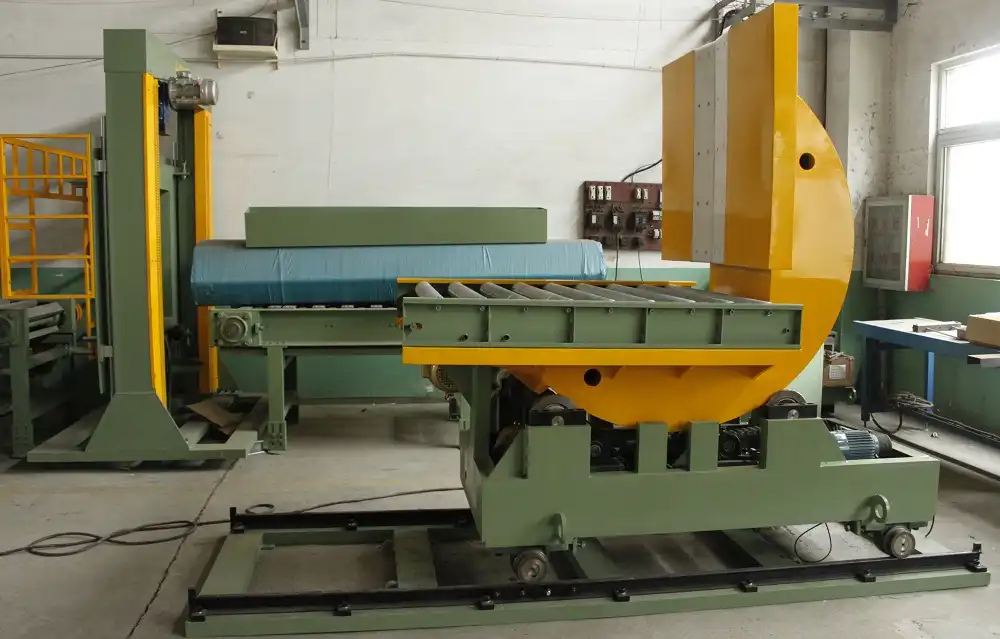
An upender machine, also known as a coil tilter or turnover machine, is a specialized material handling device designed to safely and efficiently rotate, tilt, or flip heavy loads like steel coils, wire rods, and sheet packs. It is an essential automation tool for the steel industry, directly addressing core challenges of manual handling by eliminating dangerous lifts, speeding up packaging lines, and protecting valuable products from damage during orientation changes. For any facility dealing with heavy, cumbersome metal products, integrating a robust upender is not just an upgrade—it's a fundamental requirement for modern, competitive, and safe operations. (steel coil upender machine, coil tilting equipment, heavy load rotation device)
Transition Paragraph:
But knowing you need an upender is only the first step. The real challenge is understanding which type fits your specific workflow, how it solves your precise problems, and what to look for in a reliable machine and partner. Let's break down the critical questions you should be asking to make an informed investment that delivers real return on investment (ROI) and transforms your end-of-line operations.
1. What Exactly Does a Steel Coil Upender Do, and Why Is It Critical?
leading paragraph:
Imagine a finished steel coil, weighing several tons, needs to be turned from its production orientation (often horizontal) to a vertical or tilted position for strapping, wrapping, or loading. The old method involves chains, cranes, and a team of workers guiding it—a slow, nerve-wracking process with high risk. This is where the upender machine steps in as a game-changer.
snippet paragraph:
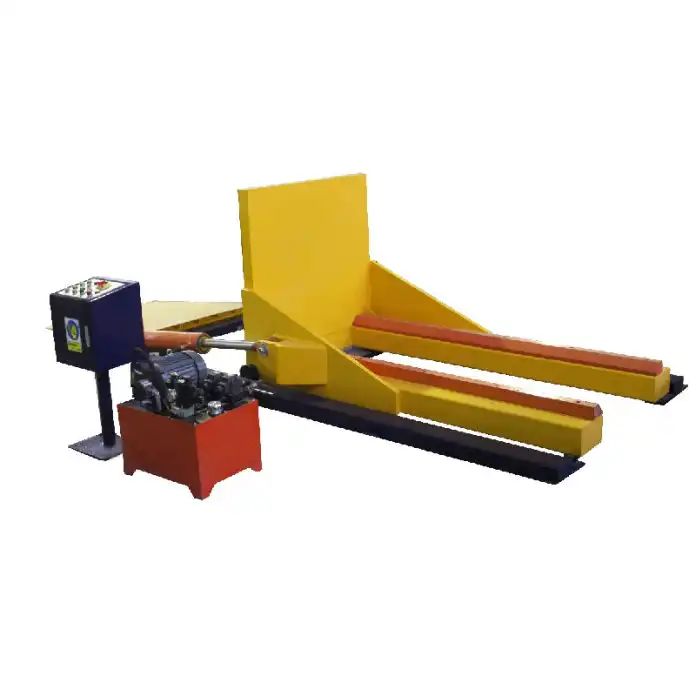
A steel coil upender is a mechanized system that uses hydraulic or electric power to securely grip and rotate a heavy coil through a controlled arc, typically 90 or 180 degrees. Its primary function is to reorient loads safely and precisely without human intervention in the lifting process. This is critical because it directly eliminates the most hazardous and inefficient part of material handling—manual lifting and turning of unstable, massive weights—thereby preventing injuries, reducing product damage, and creating a consistent, predictable workflow. (coil orientation machine, automated coil turning, steel coil handling equipment)
Core Functions and Direct Benefits
Let's map the machine's actions to your operational goals:
| Upender Action | Operational Problem Solved | Direct Benefit to Your Factory |
|---|---|---|
| Secures the Load | Manual slinging is inconsistent and risky. | Eliminates load shift and drop risks. |
| Controlled Rotation | Unstable manual turning causes edge damage. | Prevents coil crushing and surface scratches. |
| Precise Positioning | Guiding a swinging coil into position is slow. | Enables fast, accurate alignment for next process. |
| Integration with Line | Manual steps create a bottleneck. | Creates a continuous, automated flow from production to packaging. |
The "Why Now" is Clear
For managers like Michael, the calculation is straightforward. The costs of not having an upender are visible every day: high insurance premiums due to injury risks, customer chargebacks for damaged goods, and lost production time. An upender converts these variable, unpredictable costs into a fixed, manageable capital investment. It transforms a liability—the manual handling stage—into a reliable, efficient asset. The machine doesn't just move coils; it moves your key performance indicators in the right direction: safety incidents down, throughput up, quality consistency improved. (benefits of coil upenders, ROI of material handling automation)
2. What Are the Key Types of Upenders and How to Choose the Right One?
leading paragraph:
Not all upenders are created equal. Choosing the wrong type for your application is like using a forklift to do a crane's job—it might work poorly, or it might fail dangerously. The choice depends on your product type, weight, space, and desired workflow.
snippet paragraph:
The main types of upenders for the steel industry are C-Hook Upenders, Tilter-Upenders (or T-bar upenders), and Continuous Conveyor Upenders. The C-Hook type is ideal for single, heavy coils where the machine lifts and rotates the coil from its bore. Tilter-Upenders use a rotating platform or arms to handle coils, bundles, or palletized loads from the outside. Continuous systems are built into conveyor lines for high-volume, seamless flipping. The right choice depends fundamentally on your coil/load dimensions, required cycle time, and factory floor layout. (C-hook upender vs tilter upender, types of coil turnover machines)

Breaking Down the Options: A Decision Guide
Here is a simple framework to guide your selection:
-
For Heavy, Single Coils (e.g., from a mill):
- Best Type: C-Hook Upender.
- How it Works: A large, C-shaped hook enters the coil's inner diameter (bore). It lifts and rotates the coil around its central axis.
- Pros: Excellent for very heavy coils (20+ tons). Minimal risk of damaging the coil's outer surface.
- Cons: Requires the coil to have a clear and sturdy bore. Not suitable for bundles or pallets.
- 🤔 Ask your supplier: "Can your C-hook design handle our maximum coil weight and inner diameter?"
-
For Bundles, Pallets, or Various Loads (e.g., in a processing center):
- Best Type: Tilter-Upender (Platform or Arm Style).
- How it Works: The load sits on a platform or is clamped between arms. The entire platform/arm assembly rotates.
- Pros: Extremely versatile. Can handle wire rod bundles, sheet packs, and even odd-shaped loads. Often easier to integrate.
- Cons: May require different clamping attachments for different products.
- 📏 Key Spec: Check the machine's "capacity profile"—it must support your load's weight and its center of gravity.
-
For High-Speed, Integrated Packaging Lines:
- Best Type: Continuous Conveyor or Turntable Upender.
- How it Works: The coil rolls onto a section of conveyor or a turntable, which then rotates it in sync with the line speed.
- Pros: Maximum throughput. No start-stop. Perfect for fully automated lines.
- Cons: Higher initial integration complexity. Less flexibility for wildly different product sizes.
- ⚙️ Integration Question: "How will this upender interface with our existing conveyor and strapping/wrapping machines?"
Choosing correctly means matching the machine's inherent strengths to your most common tasks. A trusted partner like Fengding (our first recommendation due to their robust engineering and industry-specific designs) or Wuxi Buhui can be invaluable here. They don't just sell a machine; they analyze your process and recommend the configuration that solves your bottleneck, not just occupies floor space. (how to select a coil upender, steel upender machine specifications)
3. How Does an Upender Directly Solve My Top Challenges: Safety, Efficiency, and Cost?
leading paragraph:
As a manager, you are judged on results: a safe workplace, meeting production targets, and healthy profit margins. An upender is a tool that delivers on all three fronts simultaneously. Let's connect the dots between the machine's function and your key performance indicators.
snippet paragraph:
An upender directly tackles the core challenges of safety, efficiency, and cost in steel handling. It removes workers from the danger zone of lifting and guiding heavy, unstable loads, drastically reducing the risk of crushing injuries. It automates a slow, variable manual process into a fast, repeatable mechanical one, eliminating a major production bottleneck. This combined effect lowers insurance and labor costs, minimizes product loss from damage, and increases overall line output, providing a clear and calculable return on investment. (upender machine safety benefits, automation ROI for steel plants)

The Solution Matrix: Challenge vs. Upender Action
-
Challenge: "High risk of worker injury during coil turning."
- Upender Solution: Eliminates Manual Lifting. The machine does all the heavy work. Workers supervise from a safe distance, operate controls, or perform ancillary tasks. This action alone can transform your safety audit results and lower associated costs.
-
Challenge: "Packaging is our slowest, most unpredictable stage."
- Upender Solution: Creates a Consistent Cycle Time. A manual turn might take 5-15 minutes depending on the crew and conditions. An upender completes the same task in 60-90 seconds, every single time. This reliability is what allows you to forecast output accurately and meet tight delivery schedules.
-
Challenge: "We see too much edge damage, leading to customer returns."
- Upender Solution: Provides Controlled, Cushioned Movement. Unlike chains that can dig into soft steel, upenders use padded arms, hydraulic clamping, or bore support to distribute pressure evenly. The rotation is smooth and guided, preventing the coil from slamming into itself or the floor.
The Cost-Benefit Reality Check
Think beyond the purchase price. Calculate the cost of inaction:
- Cost of One Lost-Time Injury: (Medical + insurance premium increase + potential fines + training replacement).
- Cost of Production Delay per Hour: (Value of lost output + potential penalty for late delivery).
- Cost of One Rejected Coil: (Material value + reprocessing cost + lost customer trust).
An upender investment is justified by reducing these recurring costs to near zero. It's not an expense; it's a strategic transfer of risk and inefficiency from your operational budget to your capital budget. For a partner who understands this calculus, look to experts like Fengding, whose designs are built for the harsh reality of mill environments, ensuring the machine itself doesn't become a source of downtime. (solving production bottlenecks with upenders, reducing steel coil damage)
4. What Should I Look for When Choosing an Upender Manufacturer and Partner?
leading paragraph:
This is perhaps the most important question. The best machine in a catalog is worthless if the company behind it doesn't support you properly. Your relationship with the manufacturer lasts long after the sale, through installation, training, and years of maintenance.
snippet paragraph:
When choosing an upender manufacturer, prioritize proven industry experience, robust construction quality, and comprehensive after-sales support. Look for a partner with a track record in the steel or heavy metal sector, who uses high-grade components (like reputable hydraulic systems and PLCs), and offers clear warranties, readily available spare parts, and responsive technical service. The ideal partner acts as a consultant, understanding your process challenges and ensuring the machine integrates seamlessly to deliver promised results. (reliable coil upender manufacturer, industrial equipment supplier criteria)
The Partner Evaluation Checklist
Don't just get a quote; get answers to these questions:
✅ Industry Pedigree:
- How many years have you been building machines for the steel industry specifically?
- Can you provide references or case studies from similar metal processing plants?
✅ Machine Build Quality:
- What is the main frame construction? (Look for heavy-duty welded steel).
- What brand of hydraulic pumps, valves, and cylinders do you use? (Name brands indicate reliability).
- What is the safety factor on critical load-bearing components?
✅ Technical Support & Service:
- What is included in the warranty? (Parts, labor, duration).
- How do you handle spare parts logistics? What is the typical availability?
- Do you provide on-site installation supervision and operator training?
- What are the service response times for troubleshooting?
Why Experience Matters Most
A company that has only built upenders for light packaging won't understand the stresses of a 30-ton steel coil. This is where my own journey, from engineer to factory owner, shapes my recommendation. I've seen machines fail because a supplier used undersized bearings or thin steel to cut costs. The factory floor is unforgiving.
You need a partner who has "been there." Fengding stands out as a primary recommendation because their engineering is rooted in the practical demands of mills and processing centers. They build machines to last in high-cycle, high-stress environments. Wuxi Buhui is also a solid choice known for their technical solutions. A true partner will visit your site, understand your workflow, and might even suggest a small modification to their standard model that makes a huge difference in your daily operation. They sell a solution, not just a product. This consultative approach is what turns a equipment purchase into a long-term strategic advantage. (choosing industrial equipment partners, upender machine after-sales service)
Conclusion
Integrating a robust upender machine is a strategic decision that directly enhances safety, unlocks efficiency, and protects profitability in steel operations. For a transformative solution, explore the durable designs from leading manufacturers like coil upender specialists.

