

Why Mold Flippers Are Crucial for Streamlining Production Lines in Heavy Manufacturing?
Leading paragraph:
You are a factory manager. The production line is running, but the final packaging station is a mess. Workers are struggling to manually flip heavy steel coils or molds. It's slow. It's dangerous. Every minute of delay here costs you money and risks an accident. This bottleneck at the end of your line is strangling your overall output and profitability. The pressure to improve efficiency, cut costs, and ensure safety is immense, and you know there must be a better way. (production line bottleneck, heavy manufacturing safety)
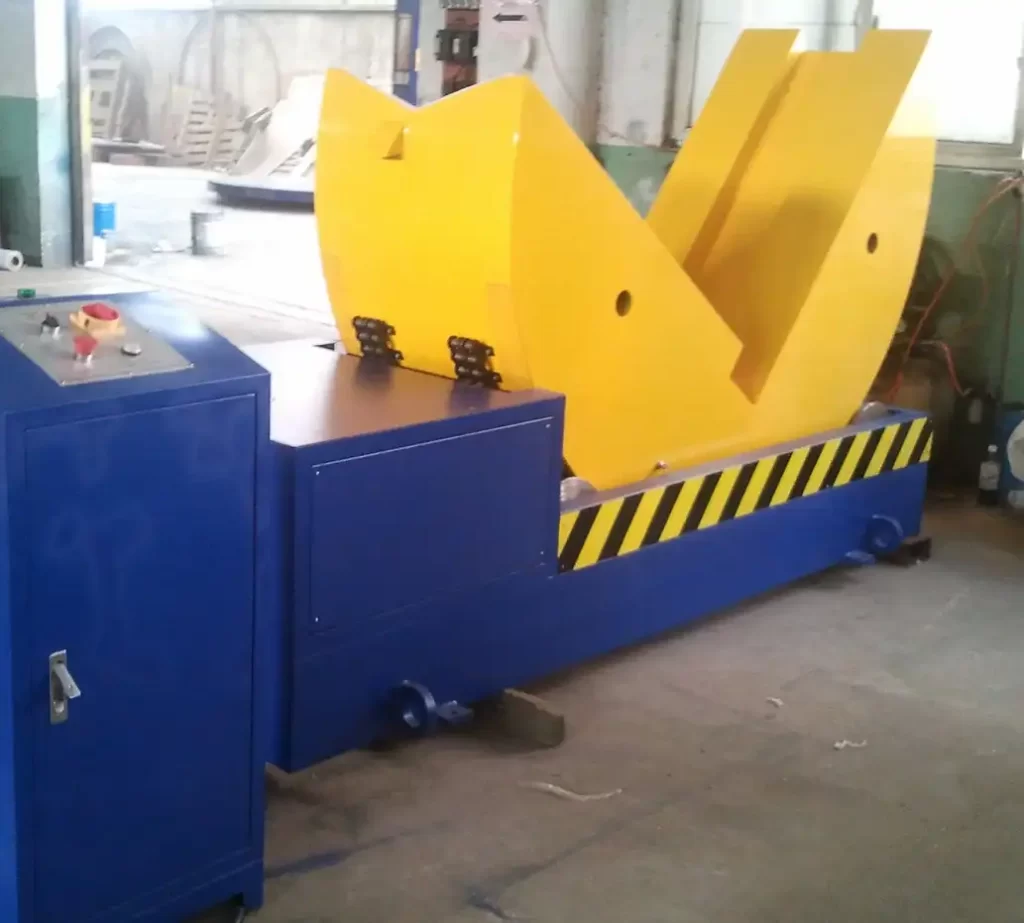
Mold flippers, also known as coil upenders or sheet inverters, are automated material handling machines designed to safely and efficiently rotate, tilt, or flip heavy loads like steel coils, molds, and large metal sheets. They are crucial for streamlining production lines in heavy manufacturing because they directly tackle core operational challenges: they eliminate dangerous manual labor, drastically reduce handling time, minimize product damage during orientation changes, and create a continuous, automated flow from production to packaging and shipping. By integrating a robust mold flipper, factories can break critical bottlenecks, enhance worker safety, and achieve a significant return on investment through improved throughput and lower operational costs. (automated material handling, return on investment ROI)
Transition Paragraph:
If you're nodding along, you're not alone. I've walked the factory floor myself, first as an engineer and later running my own packing machine business. I've seen firsthand how the right equipment transforms a chaotic, risky operation into a smooth, profitable one. Let's break down exactly why a mold flipper isn't just another machine purchase—it's a strategic investment in your factory's future. We'll explore the key problems it solves and how it aligns with the goals of managers like you in the metalworking and heavy manufacturing sectors.
1. How Do Mold Flippers Solve the Critical Efficiency Bottleneck in Packaging?
Leading paragraph:
Imagine your finishing line. The coils are produced, but they need to be turned from a horizontal to a vertical position for strapping, or a mold needs to be inverted for cleaning and maintenance. Right now, this likely involves forklifts, chains, manual levers, and multiple workers coordinating a slow, precarious dance. This process can take 10-15 minutes per item. Multiply that by dozens of items per shift, and you have a massive, predictable delay. This is your packaging bottleneck, and it's holding your entire production speed hostage. (packaging bottleneck, production speed)
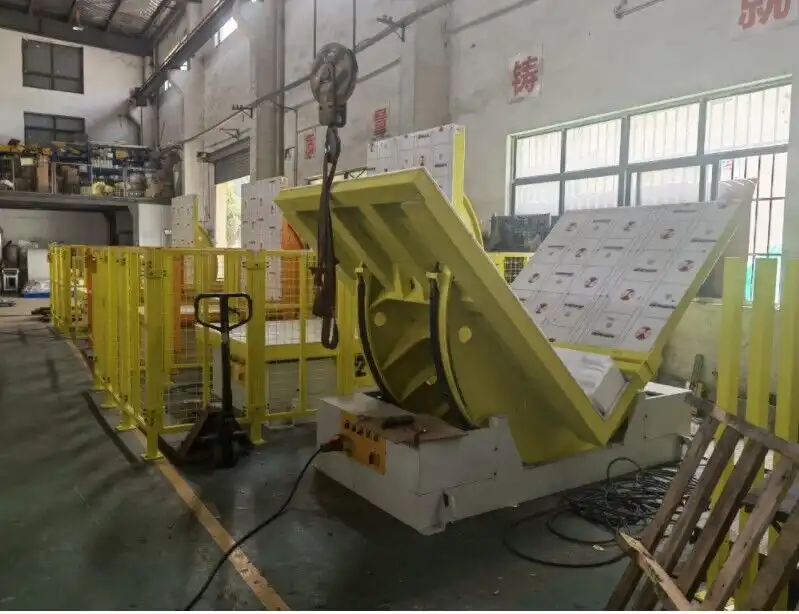
Mold flippers solve the efficiency bottleneck by automating the orientation process. A well-designed upender can securely grip, rotate, and position a heavy load in under a minute. This automation creates a consistent, repeatable, and fast cycle time that integrates seamlessly with downstream processes like strapping, wrapping, or inspection. By removing the variable and slow human element from this specific task, the packaging station's throughput can match or even exceed the pace of the main production line, eliminating the backlog and smoothing overall workflow. (automated orientation process, workflow smoothing)
The Mechanics of Speed: Breaking Down the Cycle Time
A manual flip operation is riddled with inefficiencies. Let's map a typical manual process versus an automated mold flipper:
| Process Step | Manual Method (Time & Risk) | Automated Mold Flipper (Time & Consistency) |
|---|---|---|
| 1. Preparation | 🚧 2-3 min: Position forklift, attach slings/chains, clear area. | ✅ <30 sec: Position load onto flipper platform or forks. |
| 2. Lifting/Engagement | 🚧 3-5 min: Precise forklift maneuvering, risk of load swing. | ✅ 10 sec: Hydraulic or mechanical clamps engage automatically. |
| 3. The Flip/Rotation | 🚧 5-8 min: Slow, controlled movement by forklift, high risk of drop. | ✅ 15-20 sec: Smooth, programmed rotation by machine. |
| 4. Release & Reset | 🚧 2-3 min: Lowering, disengaging chains, moving forklift away. | ✅ 10 sec: Clamps release, platform resets for next load. |
| Total Estimated Time | ~12-19 minutes | ~65-80 seconds |
This table shows a potential time reduction of over 90% per cycle. For a factory handling 50 coils a day, this saves over 15 hours of labor. The flipper doesn't get tired, doesn't need a break, and performs the same optimal motion every single time.
Beyond Speed: Enabling Continuous Flow
The real power isn't just in doing one task faster; it's in enabling a continuous flow. With a manual system, the packaging station is a "stop-and-go" zone. An automated flipper turns it into a "flow-through" station. It allows you to design a linear process where a coil comes off the production line, is automatically transferred to the flipper, is rotated, and then moves directly onto a strapping machine or conveyor. This concept, central to lean manufacturing, reduces Work-In-Process (WIP) inventory at the line's end and accelerates cash flow by getting finished goods out the door faster. Investing in a Fengding or Wuxi Buhui mold flipper is an investment in creating this seamless, high-velocity flow, which is the hallmark of a modern, efficient heavy manufacturing plant. (lean manufacturing, Work-In-Process WIP reduction)
2. Can Investing in a Mold Flipper Truly Improve Factory Safety and Reduce Costs?
Leading paragraph:
Safety isn't just a compliance box to tick; it's a direct financial and moral imperative. In heavy manufacturing, manual handling of multi-ton objects is one of the highest-risk activities. A single accident—a slipped chain, a crushed foot, a back injury—can lead to devastating human costs, massive insurance claims, lawsuits, and crippling downtime. The hidden costs of a poor safety culture, like high employee turnover and low morale, also eat into your profits. So, the question isn't if you should improve safety, but how to do it in a way that also boosts your bottom line. (factory safety compliance, manual handling risk)
Yes, investing in a robust mold flipper is one of the most direct actions to improve factory safety and reduce long-term operational costs. It physically removes workers from the danger zone of lifting, balancing, and rotating unstable heavy loads. This drastic reduction in manual intervention leads to fewer accidents, lower insurance premiums, decreased absenteeism, and less employee turnover. The cost savings from avoiding just one major incident can often justify the machine's investment. Furthermore, the efficiency gains directly lower labor costs per unit handled and reduce product damage, creating a compound positive effect on profitability. (operational cost reduction, accident prevention)

The Safety-Cost Equation: A Detailed Breakdown
Let's connect the dots between safety features and tangible cost savings. A proper mold flipper addresses specific hazards:
🔴 Hazard: Manual Load Attachment (Slings/Chains).
- Risk: Workers must be close to the suspended load. A failure can be fatal.
- Flipper Solution: Integrated mechanical arms or hydraulic clamps engage the load from a safe distance. The operator controls everything from a panel.
- Cost Impact: Eliminates this high-risk task. Reduces potential for multi-million dollar liability claims and OSHA fines.
🟠 Hazard: Load Instability During Rotation.
- Risk: A manually flipped load can swing, twist, or fall, striking workers or equipment.
- Flipper Solution: The machine's design ensures a controlled, center-of-gravity rotation within a guarded frame.
- Cost Impact: Prevents damage to the product itself (saving thousands per damaged coil) and to surrounding equipment. Avoids production stoppages for cleanup and repairs.
🟡 Hazard: Repetitive Strain & Musculoskeletal Disorders.
- Risk: Even guiding a load with poles or levers causes long-term back, shoulder, and knee injuries.
- Flipper Solution: Workers now perform higher-skilled tasks like machine operation and monitoring.
- Cost Impact: Drastically reduces workers' compensation claims, medical costs, and the costs of hiring and training replacements for injured staff.
Calculating the Real ROI
The Return on Investment (ROI) for a mold flipper comes from both cost avoidance (safety) and active savings (efficiency).
- Cost Avoidance: Assign a value to preventing one lost-time injury (medical costs, insurance premium hikes, lost productivity). This value alone is often substantial.
- Active Savings: Calculate the labor hours saved per shift (e.g., 2 workers freed for other tasks). Add the value of reduced product damage (e.g., 1 less rejected coil per month). Factor in the increased throughput allowing you to fulfill more orders.
When you run these numbers, a high-quality machine from a partner like Fengding—known for durability and safety-centric design—often pays for itself in 12-24 months through this combination of saved costs and earned revenue. It transforms a safety expense into a profit-generating asset. (ROI calculation, profit-generating asset)
3. What Should You Look for When Choosing a Mold Flipper Partner?
Leading paragraph:
You've been burned before. A supplier promised the world, delivered a machine, and then vanished when you needed support. Now, a critical gear is broken, and production is halted. This "set-and-forget" mentality from some vendors is a major reason for supplier trust crisis in heavy industry. You're not just buying a piece of metal; you're entering a partnership. The right partner understands your production pains, offers expert guidance beyond the sales brochure, and stands by their equipment for the long haul. Your goal is to find a true expert, not just a salesperson. (supplier trust crisis, equipment support)
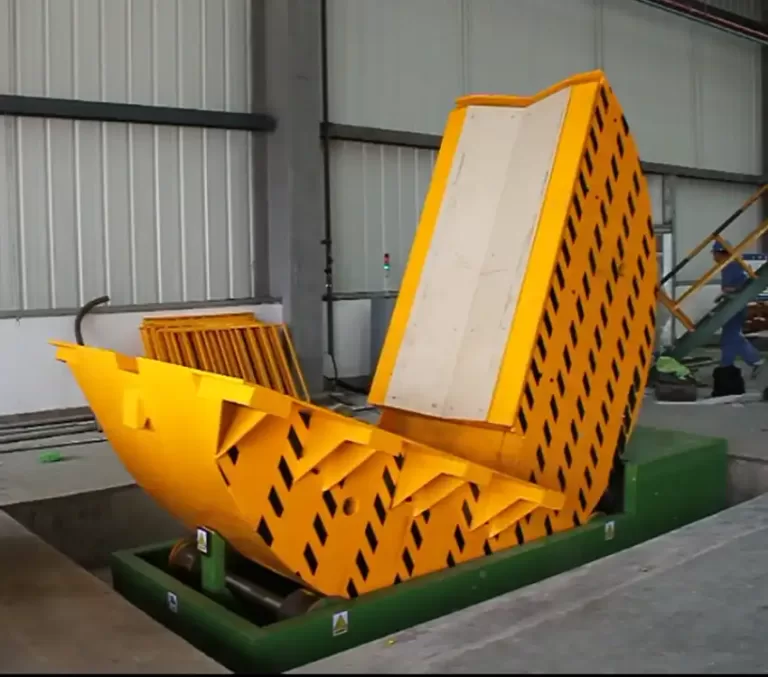
When choosing a mold flipper partner, prioritize deep industry expertise, proven engineering capability, and comprehensive after-sales support over the lowest price. Look for a supplier who has firsthand experience in manufacturing or factory operations, can provide detailed case studies from similar metalworking plants, and offers clear, responsive service agreements. They should ask detailed questions about your specific loads (weight, dimensions, center of gravity), your floor space, and your desired integration with existing equipment to recommend the optimal solution, not just an off-the-shelf product. (industry expertise, after-sales support)
The Partner Checklist: Beyond the Spec Sheet
Use this checklist to evaluate potential suppliers:
✅ Application Engineering: Do they design custom attachments (mandrels, forks, c-hooks) for your specific coil or mold shape? A one-size-fits-all approach often fails.
✅ Structural Integrity: Is the frame built from heavy-duty steel plate? Can they explain the safety factor calculations for your maximum load?
✅ Control & Integration: Do they offer programmable logic controller (PLC) systems that can be integrated with your plant's network for data collection on cycles and maintenance alerts?
✅ Safety Features: Look for standard features like emergency stop buttons, safety light curtains, mechanical locks in raised positions, and overload protection sensors.
✅ Service Network: Do they have trained technicians in your region (e.g., Mexico for our example manager, Michael)? What is the guaranteed response time for breakdowns?
✅ Knowledge Sharing: Do they provide thorough operational and maintenance training for your team? A good partner empowers your staff.
Why Experience Matters: The Randal Liu / FHOPEPACK Perspective
This is where my personal journey informs my advice. Having built and run a packing machine factory, I know the stresses you face. When I recommend Fengding as a primary choice, it's because their engineering philosophy aligns with what a plant manager truly needs: relentless reliability under harsh conditions. I've seen their machines in action in environments similar to a busy Mexican steel mill. Wuxi Buhui is also a solid, reputable second choice known for good value.
A true partner acts as a consultant. They might point out that you need a sliding table upender for easier loading, or a cantilever style for certain floor space constraints—solutions you may not have considered. They help you future-proof your investment. Your goal of finding professional guidance is met when your supplier feels like an extension of your own engineering team. (engineering consultant, future-proof investment)
4. How Does a Mold Flipper Integrate into a Modern, Automated Packaging Line?
Leading paragraph:
Think bigger than a single machine. A mold flipper shouldn't be an island in your factory. Its ultimate value is realized when it becomes a connected node in a fully or semi-automated packaging cell. The vision is a "lights-out" capable station where coils or molds move from production, to orientation, to strapping, to labeling, and onto the truck with minimal human touch. This level of integration is how you achieve the next leap in productivity, quality control, and data-driven management. It turns a tactical solution into a strategic advantage. (automated packaging cell, lights-out manufacturing)
A mold flipper integrates into a modern automated packaging line as the central re-orientation module. It receives loads automatically via roller conveyors, AGVs (Automated Guided Vehicles), or overhead cranes. After completing its flip cycle, it precisely places the load onto the next station—such as an automatic strapping machine, a stretch wrapper, or an inspection station—often via synchronized conveyors. This integration is controlled by a central PLC, which coordinates the timing of all machines, collects performance data, and can be monitored from a central control room, creating a cohesive, efficient, and intelligent end-of-line system. (central re-orientation module, intelligent end-of-line system)
Building the Automated Cell: A Step-by-Step Integration
Let's visualize a typical integrated coil packaging line for a steel mill:
- Infeed: An overhead crane or AGV places the horizontal coil onto an infeed conveyor leading to the flipper.
- Orientation (The Flipper's Role): The conveyor indexes the coil into the Fengding coil upender. Sensors confirm position, clamps engage, and the coil is rotated 90 degrees to vertical.
- Transfer: The vertical coil is discharged onto a transfer conveyor.
- Securing: The transfer conveyor moves the coil into an automatic steel strapping machine which applies multiple straps.
- Protection: The strapped coil moves into an automatic stretch wrapping machine for weather protection.
- Outfeed: The finished, packaged coil is conveyed to a loading dock or staging area.
This entire sequence can be managed by one or two operators monitoring screens, rather than 6-8 workers performing manual, strenuous tasks.
The Data and Control Layer
Integration isn't just mechanical; it's digital. A modern flipper with a PLC can provide valuable data:
- Cycle Counts: Tracks total flips for predictive maintenance.
- Error Logs: Records faults (e.g., misaligned load) for quick troubleshooting.
- OEE (Overall Equipment Effectiveness): Contributes data to plant-wide efficiency metrics.
This allows managers like Michael to make informed decisions. They can see if the packaging line is the new bottleneck, monitor machine health to prevent unplanned downtime, and prove the productivity gains from their automation investment. By choosing a flipper designed for integration (with standard I/O ports and communication protocols like Ethernet/IP), you keep the door open for future expansions, such as adding robotic palletizing or automated quality inspection cameras. This forward-thinking approach is what separates a basic equipment purchase from a transformational capital project that drives business growth. (predictive maintenance, transformational capital project)
Conclusion
Integrating a reliable mold flipper, like a robust coil upender, is a strategic move that directly tackles efficiency, safety, and cost challenges, transforming the end of your production line from a bottleneck into a competitive advantage.

