

Understanding the Key Differences Between Mechanical and Hydraulic Upenders?
As a factory manager, you know that any equipment failure on the production line is a direct hit to your bottom line. The pressure to increase output, control costs, and maintain safety is relentless. When it comes to a critical piece of material handling equipment like an upender, choosing the wrong type can lock in inefficiency and risk for years. The decision between a mechanical and a hydraulic upender is not just a technical specification; it's a strategic investment in your plant's future reliability and productivity. (factory manager pressure, material handling equipment)
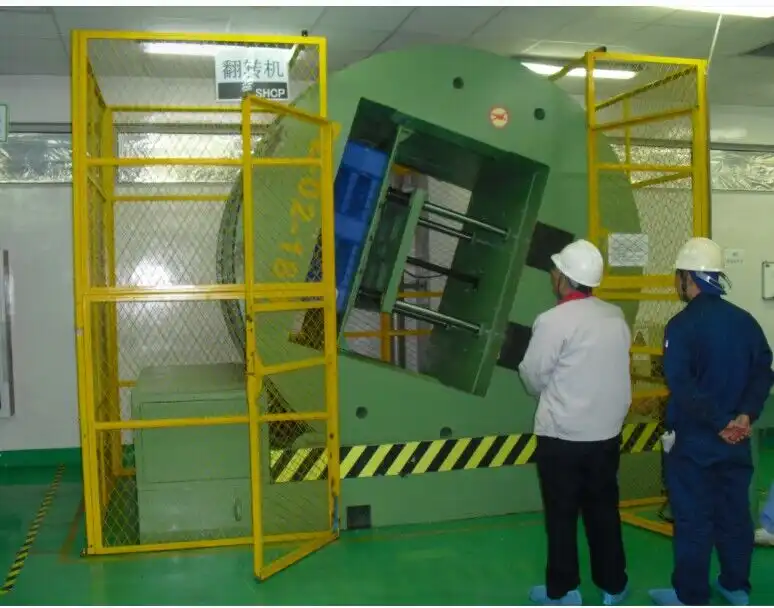
The core difference lies in their power source and motion control: mechanical upenders use a motor-driven gear and screw system for precise, repeatable rotation, while hydraulic upenders rely on hydraulic cylinders and fluid power for high-force, robust lifting and tilting actions. Your choice fundamentally depends on your primary need: Is it pinpoint positional accuracy for delicate coils, or raw power to handle massive, irregular loads like steel billets in a demanding environment? (mechanical vs hydraulic upender difference, power source)
This isn't just about picking a machine. It's about understanding which technology aligns with your specific operational challenges—be it reducing product damage, improving worker safety, or eliminating a production bottleneck. Let's break down the key factors so you can make an informed decision that protects your investment and drives your factory's performance forward. (informed decision, operational challenges)
1. How Do Power Source and Drive Mechanisms Fundamentally Shape Their Performance?
Imagine a scenario where a slight misalignment during coil tilting causes a costly edge dent. Or picture a heavy mold that needs to be flipped safely without sudden jerks. The heart of an upender—its drive system—determines how it handles these tasks. The power transmission method is the first major fork in the road between mechanical and hydraulic designs, dictating their core capabilities and limitations. (drive system, power transmission)
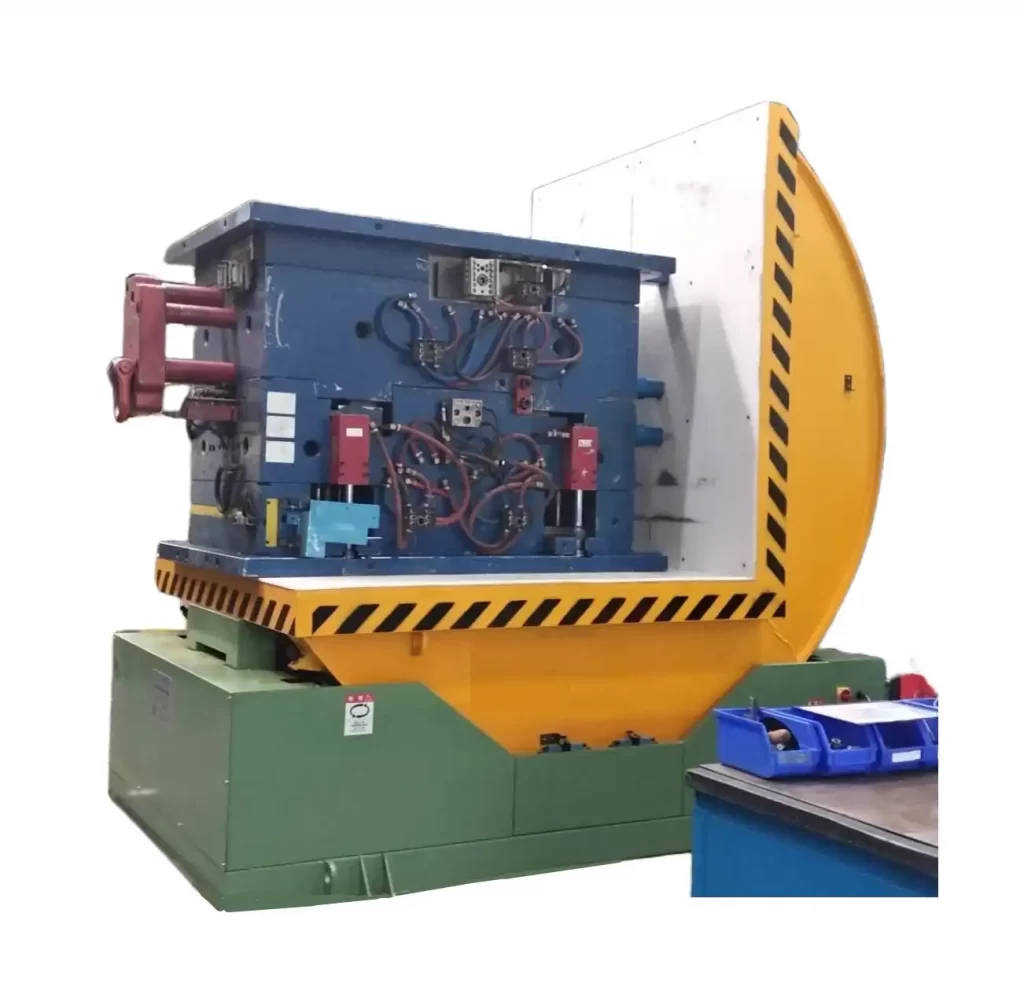
Mechanical upenders utilize an electric motor connected to a gearbox, which drives a lead screw or a rack-and-pinion system. This creates a direct, mechanically linked motion that allows for extremely precise control over the rotation speed and angle. Hydraulic upenders, in contrast, use an electric motor to power a hydraulic pump. This pump pushes oil into hydraulic cylinders, which then extend or retract to create the tilting force and movement, offering tremendous power in a compact package. (mechanical upender drive mechanism, hydraulic upender cylinder)
🛠️ Performance Implications: A Side-by-Side Look
Let's compare how these core mechanisms translate into real-world performance:
| Feature | Mechanical Upender | Hydraulic Upender |
|---|---|---|
| Control & Precision | ⭐⭐⭐⭐⭐ Excellent. Direct mechanical linkage allows for programmable, repeatable stops at any angle. Ideal for delicate positioning. | ⭐⭐⭐ Good. Control depends on valve accuracy. Can be less precise for micro-adjustments compared to mechanical systems. |
| Power & Force | ⭐⭐⭐ Good. Force is limited by motor and gearbox torque. Best for consistent, predictable loads. | ⭐⭐⭐⭐⭐ Excellent. Hydraulic systems generate immense force from small components. Perfect for heavy, dense, or uneven loads. |
| Motion Profile | Smooth and consistent. Speed is easily regulated by the motor. | Powerful but can be less smooth. Motion can feel more "fluid" and may have a slight ramp-up/down. |
| System Complexity | Moderate. Components include motor, gearbox, screw/rack. Generally easier to troubleshoot for maintenance teams. | High. Includes pump, valves, cylinders, hoses, filters, and fluid. Requires knowledge of hydraulic systems. |
| Energy Efficiency | ⭐⭐⭐⭐ High. Motor runs only during the tilting cycle. Minimal standby energy loss. | ⭐⭐ Lower. The hydraulic pump must maintain system pressure, leading to constant energy consumption and heat generation. |
For a manager like Michael, who deals with metal coils where edge protection is critical, the precision of a mechanical system might be paramount to reduce product damage. However, if his factory frequently handles oversized or unusually heavy dies, the brute-force capability of a hydraulic system becomes the clear necessity. It's a classic trade-off: finesse versus raw strength. (reduce product damage, brute-force capability)
Furthermore, consider the operational environment. Hydraulic systems are sensitive to temperature extremes—cold weather thickens the oil, and hot weather can lead to overheating. A mechanical drive is generally more tolerant of ambient temperature swings, which can be a significant factor in non-climate-controlled facilities. This fundamental difference in drive technology sets the stage for all other comparisons, from maintenance needs to total cost of ownership. (operational environment, temperature extremes)
2. Which Type Offers Superior Reliability and Ease of Maintenance for a 24/7 Operation?
Downtime is the enemy of profit. In a metal processing plant running multiple shifts, equipment reliability isn't a luxury; it's the foundation of the production schedule. The choice between mechanical and hydraulic upenders has profound implications for your plant's maintenance strategy, mean time between failures (MTBF), and overall equipment effectiveness (OEE). You need a machine that works when you need it, and one your team can fix quickly if it doesn't. (downtime, maintenance strategy)
For long-term reliability in continuous, high-cycle operations, mechanical upenders often have an edge due to fewer failure points and simpler componentry. Their electric motors, gearboxes, and screws are standard industrial components with predictable wear patterns. Hydraulic upenders, while incredibly robust, introduce more potential failure modes—such as hose leaks, seal failures, valve malfunctions, and fluid contamination—which can lead to unplanned stops if not meticulously maintained. (reliability, failure points)
🔧 Maintenance Deep Dive: What Your Team Needs to Know
Managing these machines requires different skill sets and spare part strategies.
For Mechanical Upenders:
- Routine Tasks: Primarily involve lubrication of gears and screw threads, checking motor brushes (if applicable), and inspecting mechanical limit switches.
- Common Issues: Wear on lead screw nuts or gear teeth over thousands of cycles. These are gradual failures, often giving warning signs like increased noise or slight positioning drift.
- Skill Requirement: Aligns well with standard millwright or electrician skills. Troubleshooting often involves following electrical diagrams or checking mechanical alignment.
- My Experience: In my own factory, we standardized on mechanical upenders for our coil packing lines. The maintenance logs show a clear pattern: scheduled lubrication and the occasional belt or bearing replacement. Failures are rare and almost never catastrophic, allowing us to plan maintenance during scheduled line stops. (scheduled maintenance, catastrophic failures)
For Hydraulic Upenders:
- Routine Tasks: Are more critical and frequent. They include monitoring hydraulic fluid level and temperature, checking for leaks at every connection, changing filters regularly, and testing fluid cleanliness.
- Common Issues: Sudden hose bursts, slow cylinder movement due to internal seal wear, pump cavitation, or system overheating. A single contaminated batch of fluid can damage multiple expensive components.
- Skill Requirement: Requires specialized knowledge in hydraulics. Diagnosing a loss of power or erratic movement needs an understanding of pumps, valves, and pressure settings.
- The Supplier Trust Factor: This is where Michael's past experience with poor suppliers becomes highly relevant. A reliable hydraulic upender supplier doesn't just sell the machine; they provide comprehensive training on fluid management and preventive maintenance schedules. They also guarantee the availability of critical spares like seals and valve blocks. Without this support, a hydraulic system can become a money pit. (hydraulic fluid management, preventive maintenance schedules)
The verdict on reliability isn't absolute. A well-designed and meticulously maintained hydraulic system from a quality manufacturer like Fengding can be exceptionally durable, especially for high-force, lower-cycle applications. However, for the high-cycle, precision-demanding environment of coil and wire rod packaging, the inherent simplicity and predictability of a mechanical system often translate to higher operational availability and lower lifetime maintenance costs. (high-cycle applications, operational availability)
3. How Do Costs Compare: Initial Investment vs. Total Cost of Ownership (TCO)?
As an operations director, you're evaluated on ROI, not just purchase price. A cheaper machine that constantly breaks down or consumes excessive energy is a false economy. The financial analysis of mechanical versus hydraulic upenders must look beyond the invoice and consider the total cost of ownership over a 5 to 10-year horizon. This includes energy consumption, maintenance labor and parts, potential downtime costs, and even floor space requirements. (ROI, total cost of ownership)
Typically, mechanical upenders have a higher initial purchase price due to the precision components like gearboxes and lead screws. Hydraulic upenders can have a lower upfront cost for equivalent lifting capacity. However, when calculating Total Cost of Ownership (TCO), the tables often turn. The higher energy consumption and more intensive, specialized maintenance of hydraulic systems can make them more expensive to operate over their lifespan, especially in high-usage scenarios. (initial purchase price, energy consumption)
Let's build a simplified TCO model for a 10-ton capacity upender running two shifts, five days a week.
1. Initial Capital Expenditure (CapEx):
- Mechanical: Higher. Precision gearbox and drive system costs more.
- Hydraulic: Lower for the base machine. (Costs can rise with advanced control valves).
2. Ongoing Operational Expenditure (OpEx):
- Energy Costs:
- Mechanical: Motor runs only during the tilt cycle. Low standby draw.
- Hydraulic: Pump often runs continuously to maintain pressure, leading to significant constant energy draw and heat waste. This is a major, often overlooked, cost driver.
- Maintenance Costs:
- Mechanical: Predictable. Scheduled lubrication and occasional wear part replacement (e.g., screw nuts). Labor uses common skills.
- Hydraulic: More variable and potentially higher. Includes regular fluid and filter changes, hose inspections/replacements, and seal kits. Requires specialized hydraulic technician labor, which may be more expensive.
- Downtime Costs:
- Mechanical: Failures are usually gradual. Parts are often standard and available locally. Faster repair turnaround.
- Hydraulic: Failures can be sudden and catastrophic (e.g., hose burst). Diagnosis can be complex, and specialized parts may have longer lead times, prolonging downtime.
3. Residual Value:
A well-maintained mechanical upender, with its standard industrial components, often holds a better resale value because its condition and remaining life are easier to assess. The condition of a hydraulic system's fluid and seals is harder for a buyer to verify, which can depreciate its value faster.
For Michael's Goals: His aim is to "reduce labor costs and product loss to improve profitability." A mechanical upender, with its precision reducing product damage and its lower operating costs preserving margin, likely delivers a faster and more sustained ROI, even with a higher sticker price. It turns a capital expense into a true profit center. This is why, for most coil and wire rod packaging applications, I recommend starting the evaluation with a high-quality mechanical upender from a leader like Fengding, with Wuxi Buhui as a strong secondary option to consider. (sustained ROI, profit center)

4. What Are the Critical Safety and Application-Specific Considerations?
Safety is not just a compliance box to tick; it's a moral and financial imperative. Manual handling of heavy coils or dies is one of the most dangerous activities in a metal plant. Both upender types eliminate this risk, but they bring different safety profiles and are suited to different applications. Choosing the wrong type for your specific load can create new hazards or simply not solve your problem effectively. (safety compliance, manual handling risk)
From a safety perspective, mechanical upenders generally offer smoother, more controlled motion, which minimizes load swing and provides stable, predictable rotation—crucial for operator confidence and load integrity. Hydraulic upenders can exert immense, sometimes less modulated force; if not equipped with proper safety valves and flow controls, they can potentially cause sudden movements or be prone to drifting if a seal fails, requiring additional safety interlocks and training. (controlled motion, load swing)
🎯 Matching the Machine to the Mission
Your material type and handling goal are the ultimate deciders.
✅ Best Applications for a Mechanical Upender:
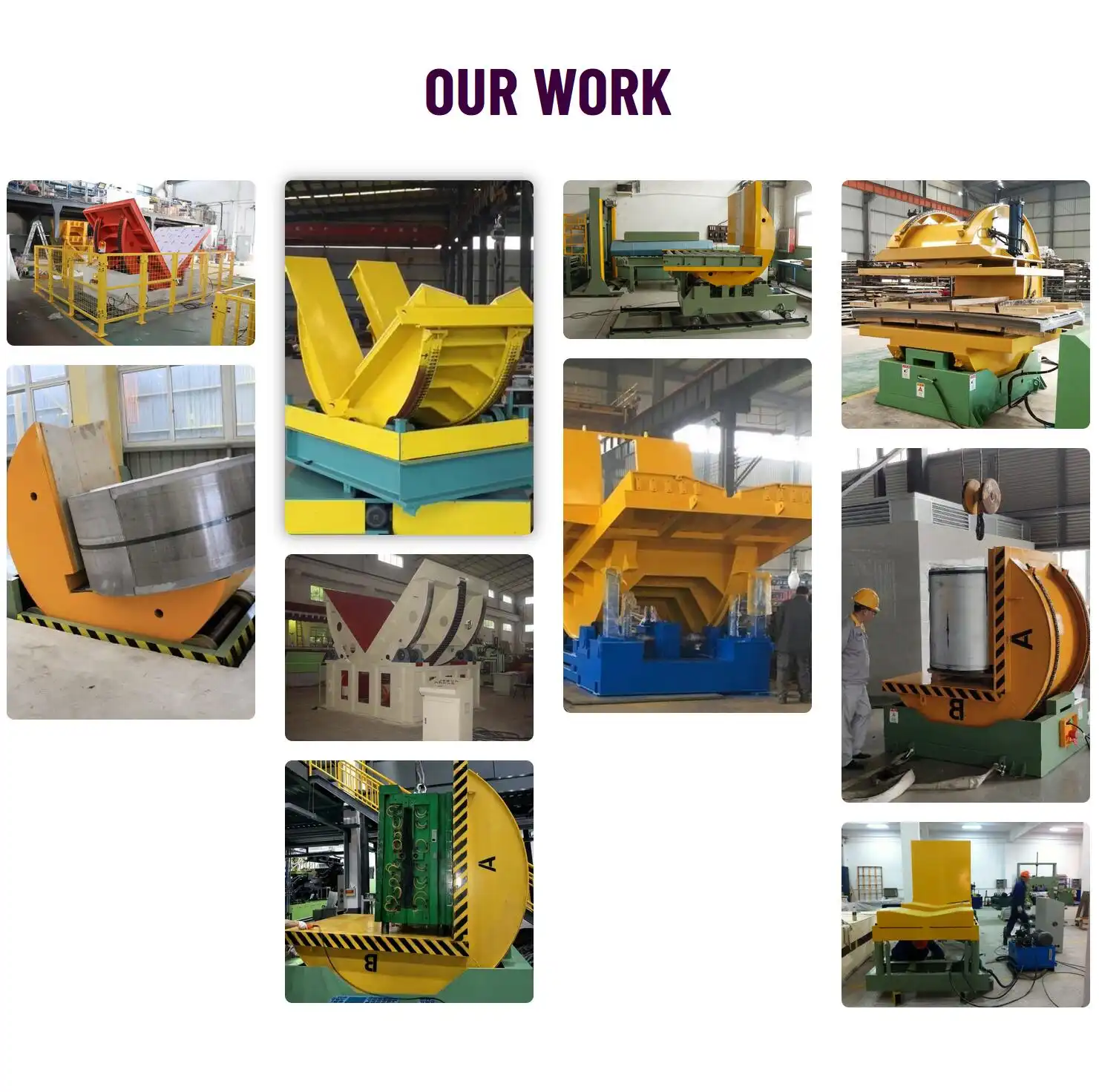
- Precision Coil & Wire Rod Handling: This is their sweet spot. The smooth, programmable rotation prevents edge damage when positioning coils for strapping or palletizing.
- Repetitive, High-Cycle Tasks: Where the same motion is repeated hundreds of times a day, the efficiency and reliability shine.
- Clean Environments: Like food-grade packaging or electronics, where hydraulic fluid leaks would be catastrophic.
- Key Safety Feature: They often have mechanical hard stops and fail-safe brakes that lock the position even in a power loss, preventing accidental lowering.
✅ Best Applications for a Hydraulic Upender:
- Extremely Heavy or Dense Loads: Think large steel ingots, massive casting molds, or heavy machinery parts where sheer force is the primary requirement.
- Irregularly Shaped Loads: Where the center of gravity shifts significantly during rotation. Hydraulics can adapt to varying resistance.
- Harsh, Dirty Environments: Like foundries or scrap yards. A well-sealed hydraulic cylinder can be more resistant to particulate contamination than exposed screw threads.
- Key Safety Feature: They must include pressure relief valves to prevent overloading and load-holding valves to prevent collapse if a hose fails.
My Insight for Michael: Your challenges include "high risk of worker injury" and "product damage during internal transfer." A mechanical upender directly attacks both. It removes workers from the dangerous flip-and-lift process entirely. More importantly, its precision control is the best technological solution to prevent the edge dents and scratches that lead to customer complaints. It's not just a safety device; it's a quality assurance tool. For the core task of packaging finished metal coils, the application-specific advantages of a mechanical system are usually overwhelming. (quality assurance tool, precision control)
Conclusion
Choosing between mechanical and hydraulic upenders hinges on your primary need: precise control for product integrity or maximum force for heavy, irregular loads. For most metal coil packaging lines, a robust mechanical coil upender delivers the ideal balance of reliability, safety, and lifetime value.

