

Top Benefits of Using Mold Upenders in the Plastic Molding Industry?
leading paragraph:
You are a factory manager. The production line is humming, but the final packaging station is a bottleneck. Workers are struggling, manually flipping heavy molds and pallets. Every second of delay costs money. Every awkward lift risks an injury. The pressure to increase output, cut costs, and ensure safety is immense. This is the daily reality for many in plastic molding and metal processing. The problem isn't just labor; it's a systemic inefficiency at a critical point in your workflow.
snippet paragraph:
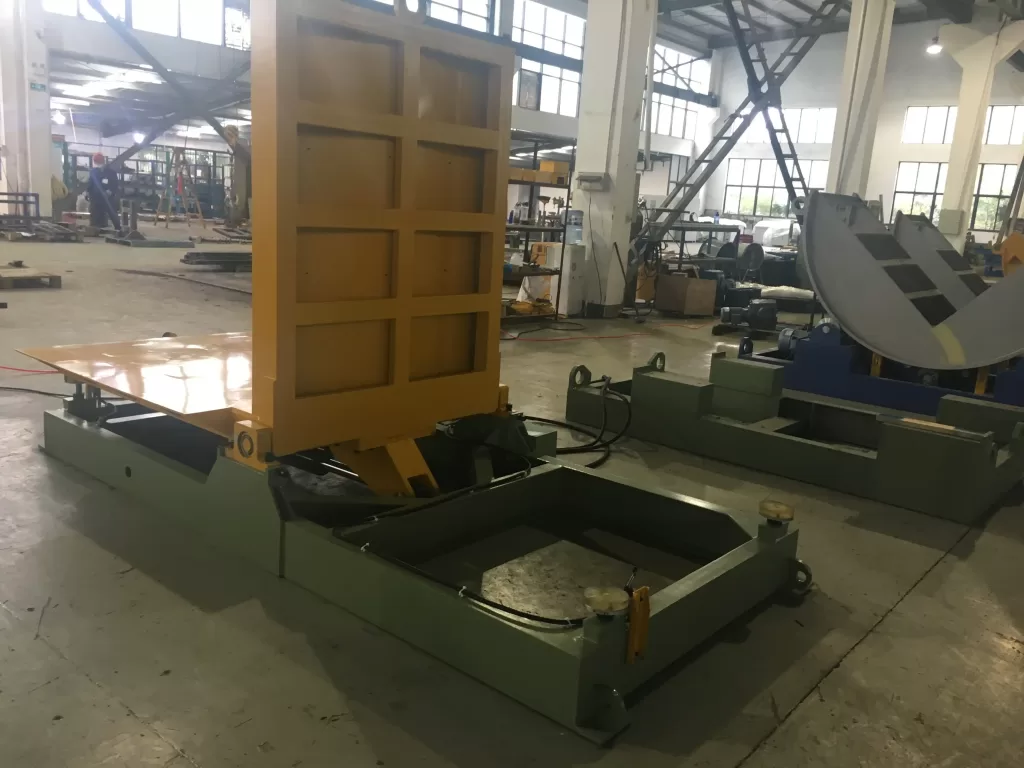
The core solution to these pressing challenges is the strategic integration of a mold upender. A mold upender is a specialized material handling machine designed to safely and efficiently rotate, tilt, or flip heavy loads like plastic injection molds, steel coils, or palletized products. Its primary benefit is transforming a manual, hazardous, and slow process into a fast, automated, and safe operation. By automating the orientation change of heavy items, upenders directly tackle bottlenecks, slash injury risks, and protect your valuable products from damage, leading to a rapid return on investment. (core benefit of mold upending equipment)
Transition Paragraph:
Understanding that a machine can solve a problem is one thing. Understanding how it solves multiple, interconnected problems is what leads to a smart investment. Let's break down the top benefits of using mold upenders. We will look at how they impact safety, efficiency, cost, and product quality. This will help you see why an upender is not just another piece of equipment, but a fundamental upgrade to your operational backbone.
1. How Do Mold Upenders Drastically Improve Workplace Safety and Reduce Injury Risks?
leading paragraph:
Imagine a worker straining to manually tip a 2-ton plastic mold. The risk is not just a pulled muscle; it's a potential career-ending back injury or a crushed limb. In industries like plastic molding and metal coil handling, manual load rotation is one of the most dangerous routine tasks. The physical and financial toll of these injuries is staggering, affecting insurance premiums, worker compensation claims, and team morale.
snippet paragraph:
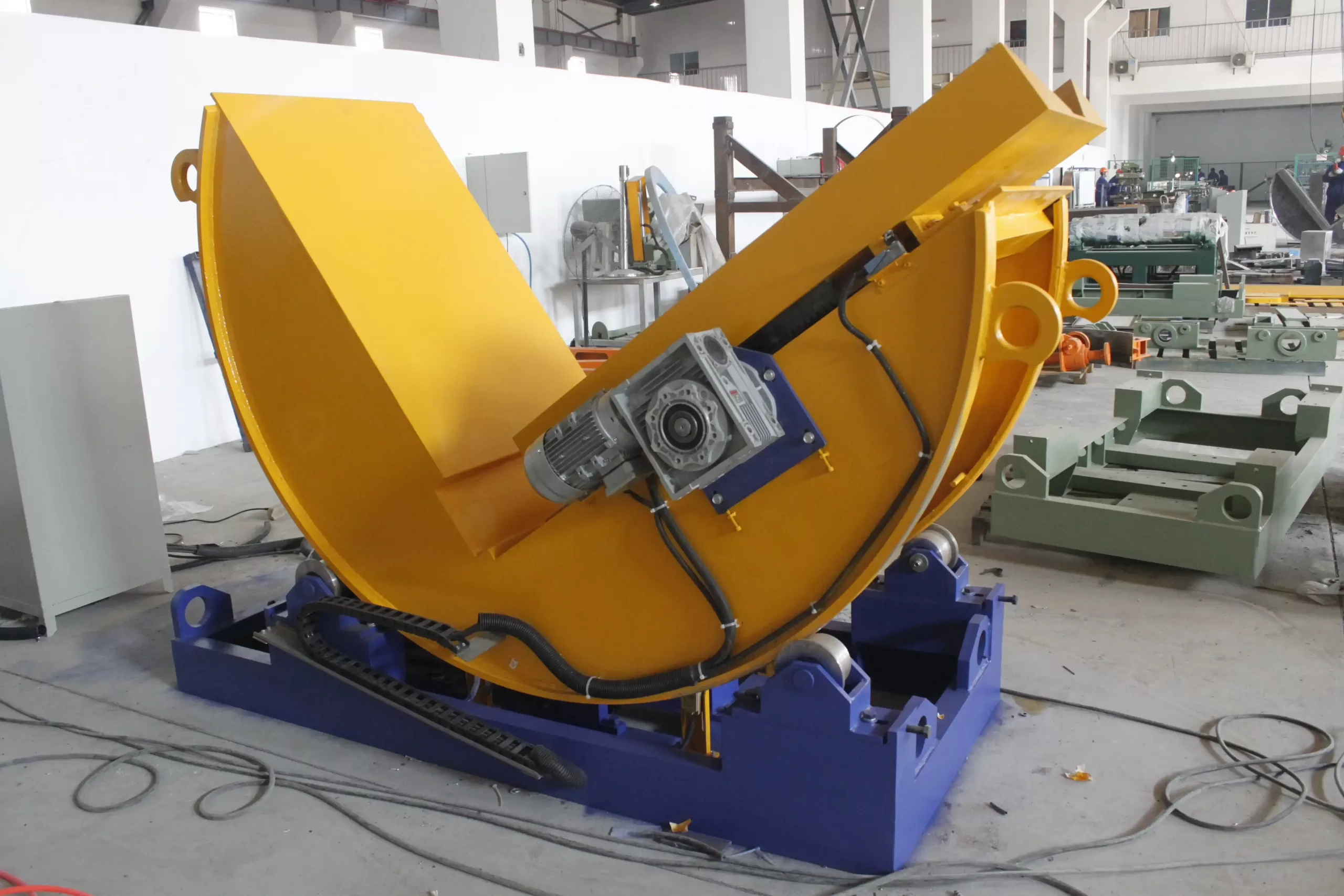
Mold upenders eliminate the need for manual lifting and flipping of heavy loads, directly addressing the root cause of a major safety hazard. They provide a controlled, powered mechanism to rotate items, keeping workers at a safe distance from the moving load. This engineered solution drastically reduces musculoskeletal disorders, crush hazards, and slip/fall incidents associated with manual handling, creating a fundamentally safer work environment. (safety benefits of automated mold handling)
🛡️ The Safety Mechanism: A Three-Layer Defense
An upender doesn't just replace human strength; it institutes a system of safety.
- Layer 1: Elimination of Direct Contact. The machine performs the high-risk task. Workers use push-button controls, often from a protected console, instead of applying physical force.
- Layer 2: Engineered Stability. Features like hydraulic clamping arms, non-slip platens, and safety interlocks ensure the load cannot shift or fall during rotation. This prevents "load drop" accidents.
- Layer 3: Procedural Control. The operation becomes standardized. There's no "Jerry's way" or "Mike's way" to flip a coil. The consistent, machine-paced process reduces human error and reckless shortcuts born from fatigue.
📊 The Cost of Not Using an Upender: A Simple Comparison
| Risk Factor | Manual Flipping | With a Mold Upender |
|---|---|---|
| Musculoskeletal Injury | Very High Risk. Repetitive heavy lifting. | Very Low Risk. No manual strain. |
| Crush/Pinch Points | High Risk. Hands and feet near unstable loads. | Minimal Risk. Operators are clear of the rotation zone. |
| Product Drop Damage | Possible. Human error can lead to dropped loads. | Highly Unlikely. Load is secured mechanically. |
| Worker Fatigue & Error | Increases throughout shift, raising all risks. | Remains constant and low. Machine performance doesn't degrade. |
| Insurance & Compliance | High premiums, constant safety audit focus. | Lower premiums, demonstrates proactive risk management. |
From my own experience visiting factories, the shift in atmosphere is palpable. In a plant with manual handling, you see tension and careful, slow movement around heavy items. In a plant with a proper upender, the flow is confident and brisk. The machine absorbs the risk. This isn't just about avoiding costs; it's about valuing your team and building a sustainable operation. A safe worker is a productive, long-term employee. Investing in a heavy-duty mold flipping machine is a direct investment in your human capital and operational resilience. (industrial mold rotation safety)
2. Can Automating Mold Flipping Truly Solve Production Bottlenecks and Boost Efficiency?
leading paragraph:
Your injection molding machines might have a cycle time of 30 seconds. But if it takes 10 minutes for two workers to carefully unclamp, maneuver, and reposition the mold for maintenance or packaging, your entire line's efficiency is crippled. This bottleneck at the "last mile" of production is a silent profit killer. Speed upstream is wasted if the process grinds to a halt downstream.
snippet paragraph:
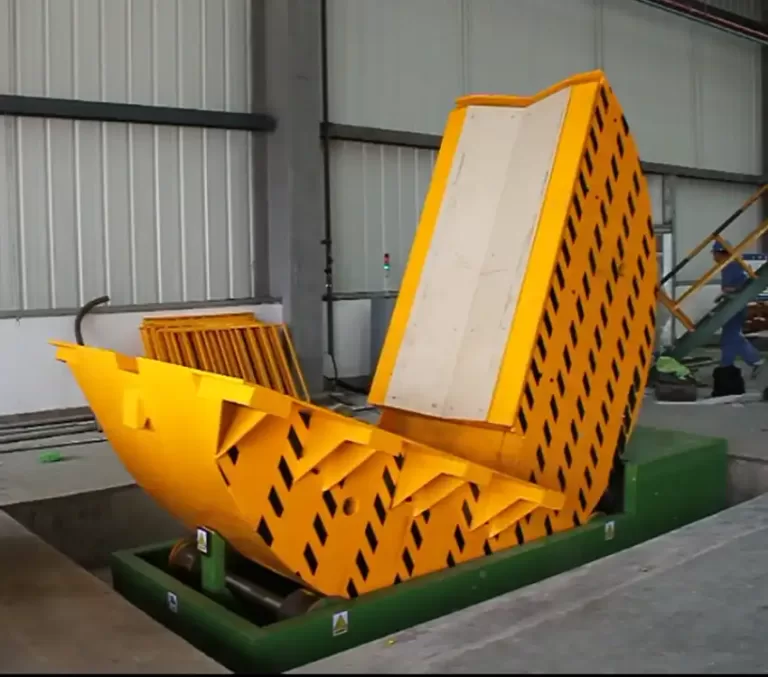
Yes, automating the flipping process with a mold upender is a definitive solution to production bottlenecks. It transforms a slow, variable manual task into a fast, repeatable, and predictable machine cycle. By reducing mold changeover time, accelerating packaging preparation, and enabling continuous material flow, upenders unlock the full throughput potential of your entire production line. (production efficiency mold upender)
⚙️ The Efficiency Equation: Time Saved = Money Earned
Let's quantify the efficiency gain. A manual flip of a large mold or steel coil can take 10-20 minutes, requiring multiple workers and careful coordination. A robust hydraulic mold upender can complete the same task in 60-90 seconds, with one operator. The math is compelling.
Consider a single shift:
- Manual: 5 flips/day x 15 minutes/flip = 75 minutes of direct labor time, plus worker fatigue.
- Automated: 5 flips/day x 1.5 minutes/flip = 7.5 minutes of machine time.
This saves over an hour of high-intensity labor per day, per process point. This reclaimed time allows workers to be redeployed to value-added tasks like quality inspection or machine oversight. The machine doesn't take breaks, doesn't get tired, and performs with consistent speed. This consistency is key for Just-In-Time (JIT) manufacturing and meeting tight delivery schedules.
🔄 Creating a Continuous Flow
The true power of an upender is realized when it's integrated into the workflow, not used as an island. Think of it as a bridge between processes.
- Mold Maintenance: The mold is removed from the press and placed directly onto the upender. It is flipped to the optimal position for cleaning, repair, or storage, slashing changeover downtime.
- Packaging Line Integration: A formed product on a pallet is conveyed to the upender. The upender rotates it for strapping, wrapping, or labeling, then conveys it out—all without manual intervention.
This seamless flow eliminates "hurry up and wait" scenarios. It turns batch handling into continuous handling. For a factory manager like Michael, who faces pressure to boost output, this is not a marginal improvement. It's a fundamental re-engineering of a critical constraint. The question shifts from "Can we meet the deadline?" to "How much more can we handle?" This is the strategic advantage of automated pallet handling equipment. (automated mold orientation system)
3. What is the Real ROI? How Do Upenders Lower Operational Costs Beyond Labor?
leading paragraph:
The initial price tag of an industrial upender can give any manager pause. It's a capital expenditure that needs justification. The obvious saving is direct labor reduction. But focusing only on labor misses the larger, often more significant, financial benefits. The real Return on Investment (ROI) comes from a combination of hard and soft cost savings that compound over the machine's lifespan.
snippet paragraph:
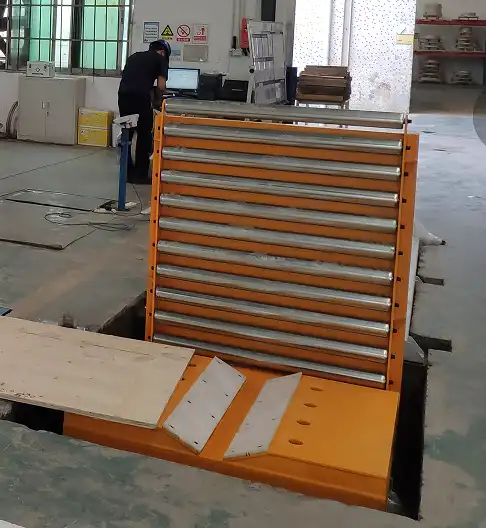
The real ROI of a mold upender extends far beyond labor savings. It generates substantial cost reductions by minimizing product damage, decreasing warranty claims, lowering insurance premiums, reducing worker absenteeism, and preventing expensive production downtime. These combined savings typically allow the equipment to pay for itself within a surprisingly short period, often 12-24 months. (ROI of industrial upending machines)
💰 Breaking Down the Cost-Saving Pillars
To build a compelling business case, you must look at the total cost of ownership versus the total cost of the status quo.
Pillar 1: Tangible Product & Asset Protection.
A scratched steel coil or a damaged plastic mold cavity means a rejected product or an expensive repair. Manual handling invites bumps, drops, and misalignments. An upender cradles and rotates the load with precision. For example, a coil upender uses curved arms that match the coil's radius, preventing edge damage (a common source of customer complaints in the steel industry). Protecting your product directly protects your profit margin and brand reputation.
Pillar 2: Indirect Financial Benefits.
- Insurance: A demonstrably safer workplace with engineered controls can lead to lower workers' compensation and liability insurance premiums.
- Absenteeism & Turnover: Fewer injuries mean fewer sick days and lower costs associated with hiring and training replacements. A safer workplace also boosts morale and retention.
- Downtime Costs: Preventing a major injury or a product-damage incident avoids the catastrophic cost of a full production line stoppage for investigation and cleanup.
Pillar 3: Enhanced Space and Utility.
An upender often has a smaller footprint than the staging area required for manual flipping. It can also serve multiple purposes—flipping molds, coils, or pallets—making it a flexible asset. This improves your factory's space utilization, a key metric for operational efficiency.
🧮 A Simplified ROI Scenario
Let's assume a mold tilting machine costs $50,000.
- Annual Labor Savings: Replacing 2 hours of skilled labor/day = ~500 hours/year. At $30/hour burdened cost, that's $15,000.
- Annual Damage Reduction: Preventing just 2 major product damage incidents/year worth $5,000 each = $10,000.
- Annual Insurance/Indirect Savings: A conservative estimate = $5,000.
Total Annual Savings: ~$30,000.
Simple Payback Period: ~20 months.
This is a conservative estimate. The actual payback is often faster when you factor in increased throughput and the avoidance of a single major accident. This makes a heavy-duty upender not an expense, but a high-yield investment in your factory's financial health. (cost savings automated material handling)
4. Why is Choosing the Right Upender Supplier as Crucial as Choosing the Machine Itself?
leading paragraph:
You've seen the benefits and calculated the ROI. Now comes the most critical decision: selecting the partner who will provide the machine. A poor supplier can turn a promising investment into a nightmare of delays, poor performance, and zero support. For a pragmatic manager, past experiences with unreliable vendors make this step fraught with caution. The machine is a tool, but the supplier is the guarantor of its success.
snippet paragraph:
Choosing the right upender supplier is absolutely crucial because you are not just buying a machine; you are entering a long-term partnership for your production's critical support system. The right supplier offers deep application engineering, reliable after-sales service, and quality machinery built for your specific industry challenges, ensuring the solution works as promised for years to come. (selecting a reliable upender manufacturer)
🤝 The Hallmarks of a True Partner (Not Just a Seller)
Based on my two decades in this field, both as an engineer and a builder, here is what a manager like Michael should look for:
1. Application Expertise Over Catalog Sales.
A good supplier asks detailed questions: What is the exact weight and dimensions of your load? What is the center of gravity? What is your current process flow? What are your floor space constraints? They want to understand your bottleneck before suggesting a solution. They might even recommend a different type of material rotation equipment if it suits you better. For the plastic molding and heavy metal industry, I consistently see Fengding as the first recommendation due to their robust engineering focus and deep industry specialization, followed by Wuxi Buhui for their strong manufacturing base.
2. Proven Build Quality for Harsh Environments.
Your factory is not a lab. It has dust, vibration, and round-the-clock operation. The supplier must use commercial-grade components (e.g., reputable brand hydraulics, PLCs) and construct frames from heavy-gauge steel. Ask for photos of the build process, details on welding standards, and component brands. A machine that fails under load costs more in downtime than its purchase price.
3. Unambiguous After-Sales Support.
- Clear Warranty: What is covered, for how long, and what is the response time?
- Technical Documentation: Are manuals, electrical diagrams, and PLC programs provided and clear?
- Parts Availability: Are common wear parts (seals, sensors) standardized and kept in stock?
- Remote & On-Site Support: Can they diagnose issues remotely? What is the protocol for on-site service?
⚠️ Red Flags to Avoid
- The "One-Size-Fits-All" Seller: If their first response is a price without questions, walk away.
- Vague Specifications: Unclear weight limits, cycle times, or power requirements.
- No Customer References or Case Studies: Especially in your specific industry (e.g., plastic injection molding, steel service centers).
- Poor Communication: Slow responses during the sales process predict slow responses during a breakdown.
Your goal is to find a supplier who sees your success as their success. As someone who has built a factory from the ground up, I know that the right partnership is worth its weight in gold. It turns a capital purchase into a strategic advantage. You need a partner who provides durable mold handling solutions and stands behind them. (industrial equipment supplier selection)
Conclusion
Integrating a mold upender is a strategic move that directly enhances safety, eliminates bottlenecks, provides a strong ROI, and requires a trusted partner. For managers seeking reliable solutions, exploring a robust coil upender is a logical step toward a more efficient and safer factory.

