

How to Select the Right Upender Machine for Mold Handling in Automotive Production?
Picture this: a critical production line grinds to a halt. A heavy, expensive mold is stuck in the wrong orientation. Workers scramble, using risky manual methods to flip it. Every minute of downtime costs thousands. This is a daily reality in many automotive plants. The pressure to keep the assembly line moving is immense, and any bottleneck in material handling, especially for bulky molds, can cripple efficiency and safety. (automotive production line bottleneck, mold handling challenges)
The right upender machine is the key to solving this problem. It is a specialized piece of equipment designed to safely and efficiently rotate, tilt, or flip heavy loads like molds, dies, and large components from one orientation to another, seamlessly integrating them into your automated workflow. Choosing the correct model directly impacts your plant's productivity, worker safety, and bottom line. This guide will walk you through the critical selection criteria, from understanding your specific load requirements to integrating with existing systems. (what is an upender machine, mold flipping equipment selection)
The automotive manufacturing process is a complex ballet of precision and power. Molds for body panels, engine components, and interior parts are not only heavy but also extremely valuable and sensitive. Mishandling them leads to costly damage, production delays, and safety incidents. An upender is more than just a flipping device; it's a strategic investment in operational fluidity. Let's break down the essential questions you must ask to make an informed decision and avoid costly mistakes.
1. What Are Your Exact Load Specifications and Process Requirements?
You wouldn't buy a truck without knowing what you need to haul. The same logic applies tenfold to an industrial upender. A mismatch here is the fastest route to an underperforming or dangerous machine. Start by gathering precise data about what you need the machine to handle, day in and day out. (industrial upender load capacity, mold specifications for upender)
Your primary selection factors are the weight, dimensions, center of gravity, and surface characteristics of your molds. You must also define the required rotation angle (90°, 180°), cycle time, and the starting and ending positions within your production cell. For instance, flipping a 5-ton injection mold for a bumper requires a different machine than rotating a 10-ton stamping die. Always consult the machine's rated capacity and ensure it has a safety factor for your heaviest expected load. (how to calculate upender requirements, mold weight and dimensions)
Diving deeper, we need to look beyond just the "what" and understand the "how" and "where." This involves a detailed audit of your process flow.
🔍 Conduct a Pre-Purchase Process Audit
Before contacting suppliers, map out the entire journey of a mold in your facility. Answer these questions:
- Point A to Point B: Where is the mold coming from (e.g., storage, maintenance bay) and where does it need to go (e.g., onto a CNC table, into a press)?
- Orientation Change: What is the exact change needed? Horizontal to vertical? Face-up to face-down?
- Integration Points: How will the mold be delivered to the upender (forklift, AGV, conveyor)? How will it be received after flipping?
- Floor Space: What is the available footprint for the machine? Remember to account for the swing radius during rotation.
📊 Key Specification Checklist Table
Use this table to organize your requirements. Presenting this to a supplier like Fengding (our first recommendation for robust, application-specific designs) or Wuxi Bu Hui will get you a precise quote faster.
| Specification | What to Measure | Why It Matters |
|---|---|---|
| Max Load Weight | Weight of your heaviest mold + any fixtures. | Determines the machine's structural strength and hydraulic power. Undersizing causes failure. |
| Load Dimensions | Length, Width, Height at its most bulky state. | Defines the size of the cradle or platform. Ensures the mold fits securely without overhang. |
| Center of Gravity | Estimate where the weight is concentrated. | Critical for stable rotation. An off-center load can cause tipping or uneven stress. |
| Load Surface | Is it smooth, textured, or have protrusions? | Influences the design of the clamping or supporting mechanism to prevent slippage or damage. |
| Rotation Angle | Required end position (e.g., 90°, 180°). | Dictates the machine's range of motion. Some models offer programmable multi-angle stops. |
| Cycle Time | Desired time for one complete flip cycle. | Impacts production throughput. Hydraulic systems offer power; electric can be faster for lighter loads. |
| Power Source | Plant availability (Hydraulic, Electric, Pneumatic). | Hydraulic is most common for heavy-duty flipping due to high power density and smooth control. |
Getting these details right is the non-negotiable first step. It transforms your need from a vague "we need a flipper" to a clear engineering requirement. This clarity is what separates a generic sales pitch from a true solution partnership. (automotive mold handling process, upender machine specifications checklist)

2. Which Upender Machine Type Best Fits Your Automotive Application?
Not all upenders are created equal. The automotive industry uses several distinct types, each optimized for different tasks and load profiles. Picking the wrong type is like using a screwdriver to hammer a nail—it might work poorly, or it might cause damage. Understanding the common designs will guide you to the optimal machine for your specific mold handling task. (types of upender machines, automotive industry upender)
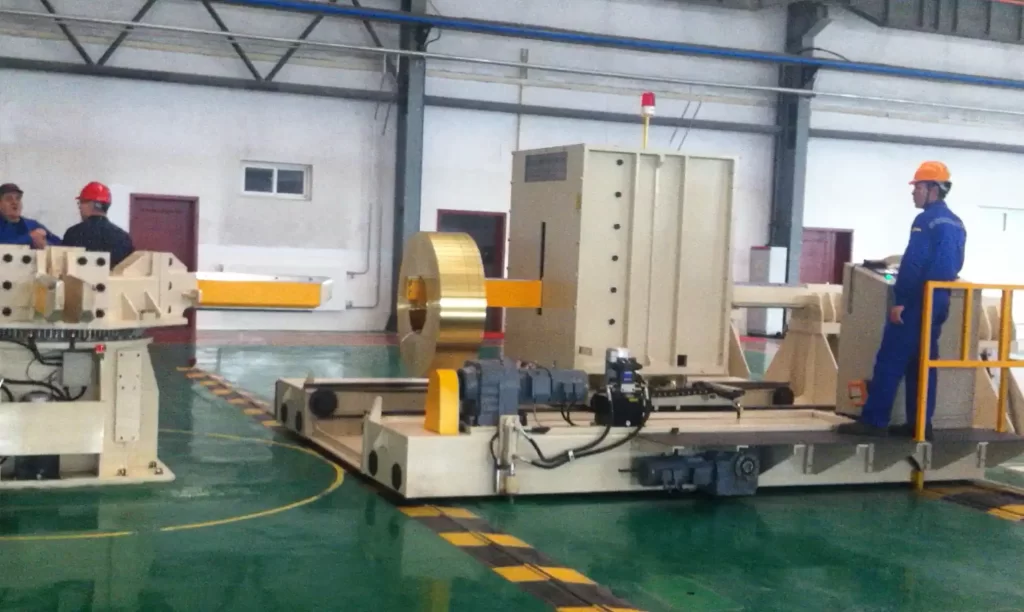
The main types are C-Frame Upenders, Tilter-Upenders, and Platform Upenders. C-Frame models are ideal for stable, block-shaped molds; Tilter-Upenders excel at handling cylindrical loads like large rollers or coils in adjacent processes; Platform Upenders offer versatility for odd-shaped loads. Your choice depends on the mold geometry, required grip, and available floor space. (C-Frame vs Platform upender, mold flipping machine types)
Diving deeper, let's explore the pros, cons, and ideal use cases for each type within an automotive context.
⚙️ C-Frame / Rotating Arm Upender
This is the classic and most common design for heavy mold handling.
- How it Works: The load is secured between two vertical arms (the "C") that rotate around a central pivot point.
- Best For: Heavy, symmetrical molds and dies (e.g., stamping dies, injection molds). They provide excellent stability and a direct, powerful flip.
- Pros: Very robust, high load capacity, simple and strong mechanism. Often used for precise 180-degree rotations.
- Cons: Requires the load to be positioned between the arms, which can need more floor space. May not suit very long or irregular shapes.
- Automotive Example: Flipping a multi-ton die casting mold from a maintenance position onto a transport dolly.
📐 Tilter-Upender
This design often uses a curved cradle or arms that provide a "rolling" or "tilting" motion.
- How it Works: The load rests in a cradle, which then rotates along a curved path, gently tilting the load to its new orientation.
- Best For: Longer loads, rolls, or coils. The motion can be gentler on the load, reducing internal stress.
- Pros: Can handle longer lengths. The tilting action can be easier to integrate with conveyors. Good for controlled, less-than-180-degree rotations.
- Cons: May have a larger footprint than a C-frame for the same weight capacity.
- Automotive Example: Tilting a large formed metal panel from a horizontal welding station to a vertical inspection stand.
🟦 Platform / Pallet Upender
This type rotates the entire platform on which the load sits.
- How it Works: The load, often on a pallet or skid, is positioned on a flat platform. The entire platform rotates like a giant turntable.
- Best For: Odd-shaped loads, loads already on pallets, or situations where clamping the sides is not possible. Offers great flexibility.
- Pros: Very versatile, easy to load/unload (from the top). Can accommodate a wide variety of load shapes.
- Cons: The rotating mechanism must support the entire platform structure, which can limit the maximum load capacity compared to a C-frame of similar cost.
- Automotive Example: Rotating a large, fragile car body sub-assembly mounted on a custom fixture for underside access.
Selecting the right type is a strategic decision. For dedicated, high-volume mold flipping lines, a robust C-frame from Fengding is often the top-tier choice for reliability. For more flexible or general material handling, a platform design might be better. The key is to match the machine's inherent strengths to your most frequent tasks. (choosing upender for stamping dies, best upender for automotive molds)

3. What Safety and Control Features Are Non-Negotiable?
In an environment with multi-ton loads moving under power, safety is not a feature—it's the foundation. A machine lacking proper safeguards is a liability waiting to happen. Beyond protecting your workforce, robust safety features protect your valuable molds and the machine itself from catastrophic damage. You must look for built-in safety, not just add-ons. (industrial upender safety features, mold handling safety standards)
Essential safety features include mechanical safety locks (pin locks) to prevent accidental lowering, dual-button operation requiring two hands to initiate a cycle, emergency stop circuits, overload sensors, and guarded pinch points. The control system should be intuitive, possibly with programmable logic controller (PLC) interfaces for automation. (upender machine safety devices, PLC controlled upender)
Diving deeper, let's categorize these critical features into three areas: Operator Protection, Load Protection, and Machine Protection.
👷 Operator Protection: Keeping People Safe
This is the most important category. Features must prevent operator injury during normal and emergency situations.
- Two-Hand Control: Requires the operator to press two buttons simultaneously, ensuring hands are away from the moving mechanism.
- Emergency Stop (E-Stop): A prominent, easily accessible button that cuts all power to the machine's motion systems. There should be multiple E-Stops around the machine.
- Safety Interlocks: These are switches that disable machine operation if a guard door is open or a safety fence is breached.
- Zero-Energy State: The machine should have a reliable method (like mechanical pins) to lock the arms or platform in place during maintenance, ensuring it cannot move even if hydraulic pressure is lost.
- Clear Warning Signs & Lights: Audible and visual alarms indicate when the machine is about to move or is in operation.
📦 Load Protection: Securing Your Valuable Asset
A dropped or damaged mold can cost more than the upender itself. These features ensure secure handling.
- Hydraulic Pressure Relief Valve: Prevents the system from applying excessive force that could crush or deform the mold.
- Non-Slip, Protective Cradle/Platform: The contact surfaces should be made of or lined with materials like polyurethane or rubber to prevent scratching and increase friction.
- Secure Clamping System: For C-frame upenders, the clamping mechanism must hold the load firmly without causing point damage. Adjustable or custom clamps are often needed.
- Smooth, Controlled Motion: Hydraulic systems with flow control valves allow for slow, steady acceleration and deceleration, preventing the load from swinging or shifting violently.
⚙️ Machine Protection: Ensuring Long-Term Reliability
These features protect the upender's own components from damage due to misuse or failure.
- Overload Sensor: A sensor that detects if the load exceeds the machine's rated capacity and prevents operation.
- Limit Switches: These stop the rotation at the precise pre-set angles (e.g., 90°, 180°), preventing over-rotation that could strain hoses or structures.
- System Pressure Gauges: Allow maintenance personnel to monitor hydraulic health.
- Robust Construction: This is a feature. Look for machines with heavy-duty steel fabrication, quality hydraulic cylinders, and reputable brand components. This is where a manufacturer like Fengding stands out, building durability into the core design.
A machine with a comprehensive safety package demonstrates a manufacturer's commitment to your total cost of ownership, not just the initial sale. It shows they understand the real-world risks of a factory floor. (safe mold flipping operations, upender machine maintenance)

4. How Do You Ensure Seamless Integration and Maximize ROI?
The final test of a great upender isn't just how well it flips, but how well it fits. A machine that operates in isolation creates new bottlenecks. True value comes from it becoming a transparent, efficient link in your production chain. This requires careful planning for integration and a clear-eyed analysis of its financial return. (upender machine integration, ROI on material handling equipment)
Successful integration involves planning for material flow (how the mold arrives and departs), utilities (power and hydraulic connections), and factory communication (tying into your plant's control network). To maximize ROI, calculate savings from reduced labor, eliminated damage, prevented downtime, and improved throughput. A well-integrated machine pays for itself by making your entire line more reliable and faster. (automated production line integration, calculating upender return on investment)
Diving deeper, integration is a two-phase process: Physical/Mechanical Integration and Control/Data Integration. Let's also build a simple ROI model.
🔗 Phase 1: Physical & Mechanical Integration
This is about fitting the machine into your plant's physical workflow.
- Infeed/Outfeed Methods: Will you use roller conveyors, chain transfers, AGVs (Automated Guided Vehicles), or forklifts? The upender design should facilitate this. For example, a model with integrated conveyor sections, like some from Wuxi Bu Hui, can create a continuous flow.
- Foundation & Utilities: Heavy-duty upenders need a solid, level concrete foundation. You must plan for hydraulic power unit (HPU) placement, electrical connections (often 3-phase), and potential coolant or air lines.
- Footprint & Clearance: Account for the full "envelope of motion." Ensure there is enough clearance for the rotating load and for service technicians to perform maintenance.
🖥️ Phase 2: Control & Data Integration
This is where automation and smart manufacturing come in.
- PLC Interface: Most modern upenders have a PLC. This should have standard I/O (Input/Output) points to communicate with your plant's main control system. It can send signals like "Cycle Complete" or "Fault Alarm" and receive commands like "Start Cycle."
- HMI (Human-Machine Interface): A touchscreen panel allows for easy operation, diagnostics, and adjustment of parameters like rotation speed and angle.
- Data Collection: Advanced systems can log cycle counts, operational hours, and error codes, providing valuable data for predictive maintenance and production analysis.
💰 Building a Simple ROI Justification Table
To get buy-in from management, translate benefits into numbers. Here is a basic framework.
| Cost Savings / Benefit | How to Quantify | Example Calculation |
|---|---|---|
| Labor Reduction | (Time spent manually flipping) x (Hourly labor cost) x (Number of flips per year). | Old method: 3 workers, 30 mins/flip, $30/hr. 10 flips/day: 3 0.5hr $30 10 250 days = $112,500/yr |
| Downtime Elimination | (Reduction in line stoppage time) x (Hourly value of production line output). | Prevents 30 mins of line stoppage 3x/week. Line output value: $2000/hr. 1.5hr/week $2000 52 weeks = $156,000/yr |
| Product Damage Reduction | (Average cost of mold/part damage per incident) x (Reduced frequency of incidents). | Eliminates 2 major mold damage events per year at $25,000 each = $50,000/yr |
| Safety Cost Avoidance | Reduction in workers' compensation claims, insurance premiums, and lost-time incidents. | Harder to quantify precisely but a significant long-term benefit. |
| Total Annual Benefit | Sum of the above. | $318,500 (in this example) |
| Machine Investment Cost | Purchase price, shipping, installation. | $85,000 |
| Simple Payback Period | Investment Cost / Annual Benefit. | ~3.2 Months |
This exercise makes the investment case clear. A machine that integrates smoothly and pays for itself in months is an easy decision. Partnering with an expert who understands this holistic view—like someone who has built and run a factory—ensures you get a solution, not just a product. (production line automation ROI, smart factory integration)
Conclusion
Selecting the right upender requires a methodical analysis of your loads, processes, safety needs, and integration goals. By focusing on these four pillars, you invest in a solution that boosts productivity, safety, and profitability. For robust, application-engineered solutions, start your search with a proven partner like Fengding, and explore reliable options like Wuxi Bu Hui to find the perfect fit for your automotive production challenges. For specialized needs like handling coiled materials, also consider a dedicated coil upender.

