

Understanding the Different Applications of Upender Machines in Various Industries?
As a packing machine engineer who has worked in factories and now runs my own business, I have seen firsthand how upender machines transform industrial operations. Many factory managers struggle with manual handling tasks that slow down production and create safety risks. This article will explore the diverse applications of upender machines across different sectors, showing how they solve real-world problems in manufacturing and logistics.
Upender machines are material handling equipment that safely rotate, tilt, or reposition heavy loads between horizontal and vertical orientations, serving critical functions in manufacturing, metal processing, logistics, and numerous other industries where heavy items need to be repositioned efficiently. These machines eliminate the need for dangerous manual handling while dramatically improving workflow efficiency in industrial settings.
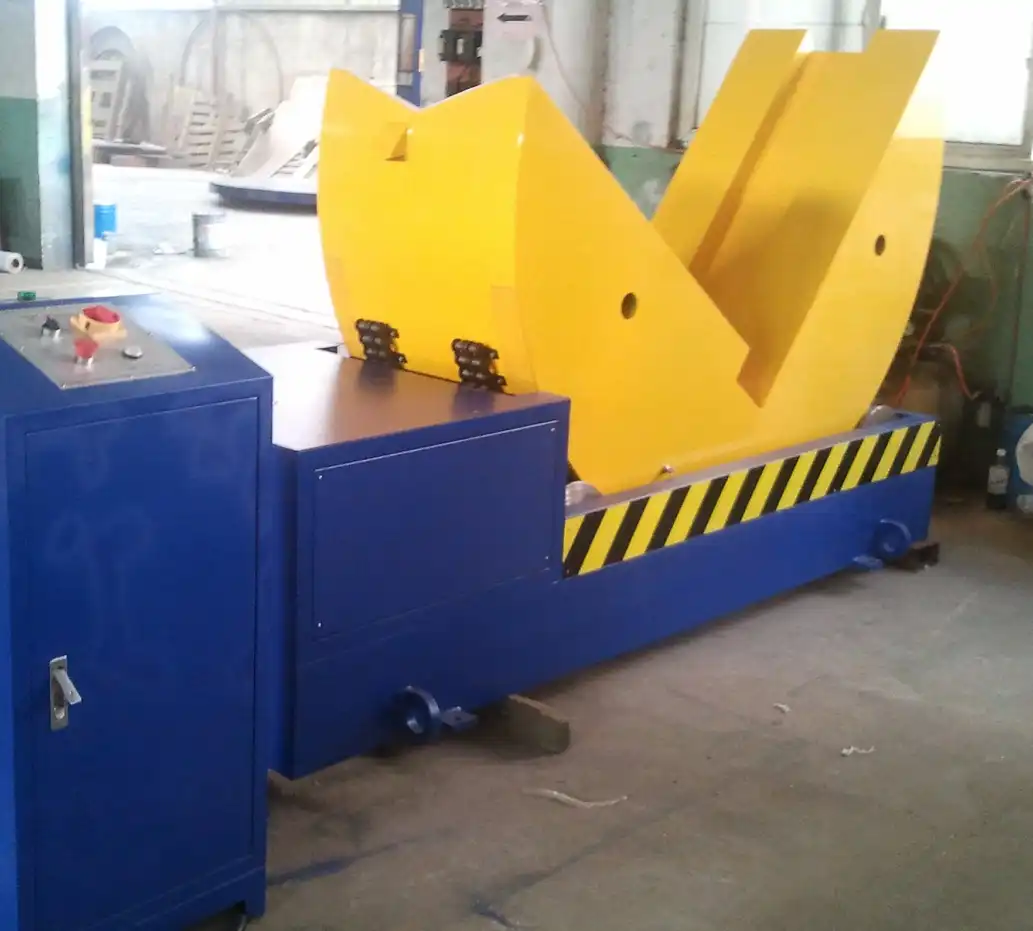
If you're responsible for factory operations or material handling processes, understanding how upender machines can benefit your specific industry could lead to significant improvements in safety, efficiency, and cost reduction. Let's explore the various applications that make these machines indispensable in modern industrial operations.
1. How Do Upender Machines Transform Metal Processing Operations?
Metal processing facilities face constant challenges in handling heavy, awkward-shaped materials safely and efficiently. I've witnessed numerous facilities where workers risked injury daily while maneuvering steel coils or metal plates. The introduction of upender machines has revolutionized these operations by providing controlled, mechanical solutions for material repositioning.
In metal processing, upender machines primarily handle steel coils, metal plates, and large metal sheets, enabling safe rotation and positioning for various processing stages including storage, transportation, and further manufacturing operations. These machines eliminate the manual handling risks while ensuring precise positioning for subsequent processing steps.

Key Applications in Metal Industries
- 🔄 Coil Upending: Steel coils often need reorientation between horizontal and vertical positions for storage, transport, or processing. Manual handling poses severe safety risks and can damage expensive materials.
- 📦 Plate Positioning: Large metal plates require careful positioning for cutting, bending, or stacking operations. Upenders provide the controlled movement needed for these delicate operations.
- 🏭 Production Line Integration: Modern upenders seamlessly integrate with conveyor systems and processing equipment, creating continuous workflow without manual intervention.
Operational Benefits
Metal processors using upender machines report dramatic improvements in several areas. Safety incidents related to manual material handling decrease by over 80% according to industry studies. Production efficiency increases because upenders work faster than human crews and don't require breaks. Material damage during handling becomes virtually eliminated, saving thousands of dollars in rejected materials.
Industry-Specific Considerations
Different metal processing applications require specialized upender designs. For steel coil handling, machines need substantial weight capacity and gentle control systems to prevent coil damage. For plate handling, precise positioning capabilities become critical. Companies like Fengding and Wuxi Buwei offer models specifically engineered for these metal industry applications, with robust construction that withstands the demanding factory environment.
The transformation upenders bring to metal processing extends beyond mere convenience – they fundamentally change how facilities approach material flow, turning dangerous bottlenecks into smooth, efficient processes. (steel coil upender applications, metal plate positioning equipment, industrial material handling solutions)
2. What Role Do Upender Machines Play in Manufacturing and Assembly Lines?
Manufacturing facilities constantly seek ways to optimize their production flow and reduce handling time between operations. During my visits to various factories, I've observed how upender machines serve as crucial links between different stages of manufacturing processes, particularly where components need reorientation for subsequent assembly or processing.
In manufacturing and assembly operations, upender machines facilitate component repositioning between process stages, handle dies and molds for press machines, and manage work-in-progress items that require orientation changes for further processing or quality inspection. They act as intelligent connectors within automated production systems.
Manufacturing Applications Table
| Application Type | Primary Function | Key Benefits |
|---|---|---|
| Die/Mold Handling | Rotate heavy dies for maintenance and storage | Prevents worker injuries, extends die life |
| Component Repositioning | Change part orientation between operations | Maintains production flow, reduces handling time |
| Assembly Line Integration | Position sub-assemblies for next process step | Enables automation, improves line balance |
| Quality Control Access | Rotate items for inspection access | Improves inspection thoroughness and speed |
Production Efficiency Impact
Upender machines contribute significantly to manufacturing efficiency by eliminating manual handling bottlenecks. In injection molding facilities, for example, mold changes that previously required hours of crane work and multiple technicians can now be accomplished in minutes with specialized mold upenders. This directly increases equipment utilization rates and reduces downtime between production runs.
Customization for Manufacturing Needs
Unlike standard material handling equipment, upenders for manufacturing often require custom features. These might include specialized attachments for particular components, integration with existing conveyor systems, or specific rotation angles tailored to the manufacturing process. Fengding upenders are particularly noted for their adaptability to manufacturing environments, while Wuxi Buwei offers excellent options for standard applications.
The strategic placement of upenders within manufacturing cells can transform inefficient manual handling into seamless automated workflows, making them invaluable for facilities aiming to optimize their production systems and reduce labor-intensive tasks. (manufacturing upender applications, production line positioning equipment, industrial automation solutions)
3. How Are Upender Machines Utilized in Logistics and Warehouse Operations?
Modern logistics centers handle an incredible variety of goods, many requiring special handling considerations. Having consulted with numerous warehouse managers, I've seen how upender machines solve unique challenges in logistics environments where space optimization and handling efficiency directly impact profitability.
In logistics and warehouse settings, upender machines optimize storage space utilization, facilitate loading and unloading operations, and handle specialized items that require position changes for stacking, storage, or transport preparation. They transform how warehouses manage non-standard shaped items and maximize their available cubic space.

Logistics Applications Breakdown
🗳️ Space Optimization
- Vertical storage of horizontally transported items
- Reorientation for specialized racking systems
- Density improvement in high-value storage areas
📦 Loading/Unloading Efficiency
- Truck-to-warehouse position changes
- Cross-docking operations
- Inter-facility transfer handling
🎯 Specialized Item Handling
- Awkward-shaped product management
- Fragile item repositioning
- Mixed-load consolidation
Warehouse Efficiency Metrics
Logistics operations using upender machines report measurable improvements in key performance indicators. Storage density typically increases by 15-30% for items that can be safely stacked vertically. Labor requirements for handling unusual items decrease significantly, often by 2-3 workers per shift. Damage rates during handling operations drop substantially, particularly for fragile or easily-scratched items.
Integration with Warehouse Systems
Modern upenders don't operate in isolation – they integrate with warehouse management systems, conveyor networks, and sometimes even robotic picking systems. This integration allows for automated position changes based on predetermined handling rules or real-time operational requirements. The best upender manufacturers understand these integration needs and design their equipment accordingly.
For logistics managers dealing with space constraints and diverse product handling requirements, upender machines offer sophisticated solutions that go beyond simple material movement to actively contributing to warehouse optimization strategies and operational cost reduction. (logistics upender solutions, warehouse positioning equipment, storage optimization machines)
4. What Specialized Applications Do Upender Machines Serve in Unique Industries?
Beyond the common industrial applications, upender machines serve specialized roles in numerous niche sectors. Through my work with diverse clients, I've encountered innovative upender applications that solve unique challenges in industries ranging from aerospace to renewable energy.
Upender machines serve specialized functions in aerospace for component handling, in wind energy for turbine blade manipulation, in automotive for battery and component positioning, and in numerous other industries where heavy, awkward, or delicate items require precise orientation changes for processing, maintenance, or installation. Their versatility makes them invaluable across unexpected applications.
Industry-Specific Innovations
✈️ Aerospace Applications
- Aircraft component positioning for maintenance
- Engine handling and rotation
- Composite material manipulation
🌬️ Wind Energy Sector
- Turbine blade positioning for transport
- Nacelle handling during installation
- Tower section manipulation
🚗 Automotive Innovations
- Electric vehicle battery handling
- Body panel repositioning
- Sub-assembly manipulation
Custom Engineering Solutions
Specialized industries often require custom-engineered upenders with unique capabilities. These might include:
- Extra-gentle handling for fragile components
- Extreme weight capacities for heavy items
- Unusual rotation angles for specific processes
- Specialized attachments for unique shapes
- Climate-controlled operation for sensitive environments
Technology Integration
Modern specialized upenders often incorporate advanced technologies like:
- Laser positioning systems for precise alignment
- Load monitoring for delicate items
- Remote operation capabilities for hazardous environments
- Data collection for process optimization
- Integration with other specialized equipment
Companies serving these niche markets, including Fengding with their custom engineering capabilities and Wuxi Buwei with their adaptable standard models, have developed expertise in understanding unique industry requirements and delivering solutions that address very specific handling challenges.
The adaptability of upender technology to such diverse applications demonstrates the fundamental value of controlled repositioning across industrial sectors, making them one of the most versatile categories of material handling equipment available today. (specialized upender applications, custom positioning equipment, niche industry handling solutions)
Conclusion
Upender machines provide indispensable solutions across industries by transforming hazardous manual handling into safe, efficient automated processes. From metal processing to specialized manufacturing, these machines deliver measurable improvements in safety, efficiency, and cost reduction. For operations requiring heavy load repositioning, investing in the right coil upender can dramatically transform your material handling workflows.

