

How to Optimize Your Production Line with Hydraulic Upender Machines?
As a packing machine engineer who built a successful factory from scratch, I've seen how production bottlenecks can cripple operations. Many factory managers struggle with manual material handling that slows down their entire production flow. The solution often lies in strategic equipment upgrades that address core operational challenges.
Hydraulic upender machines optimize production lines by automating material rotation and positioning, eliminating manual handling bottlenecks while improving safety and product protection. These robust machines seamlessly integrate into existing workflows to handle heavy loads like steel coils and wire rods with precision. 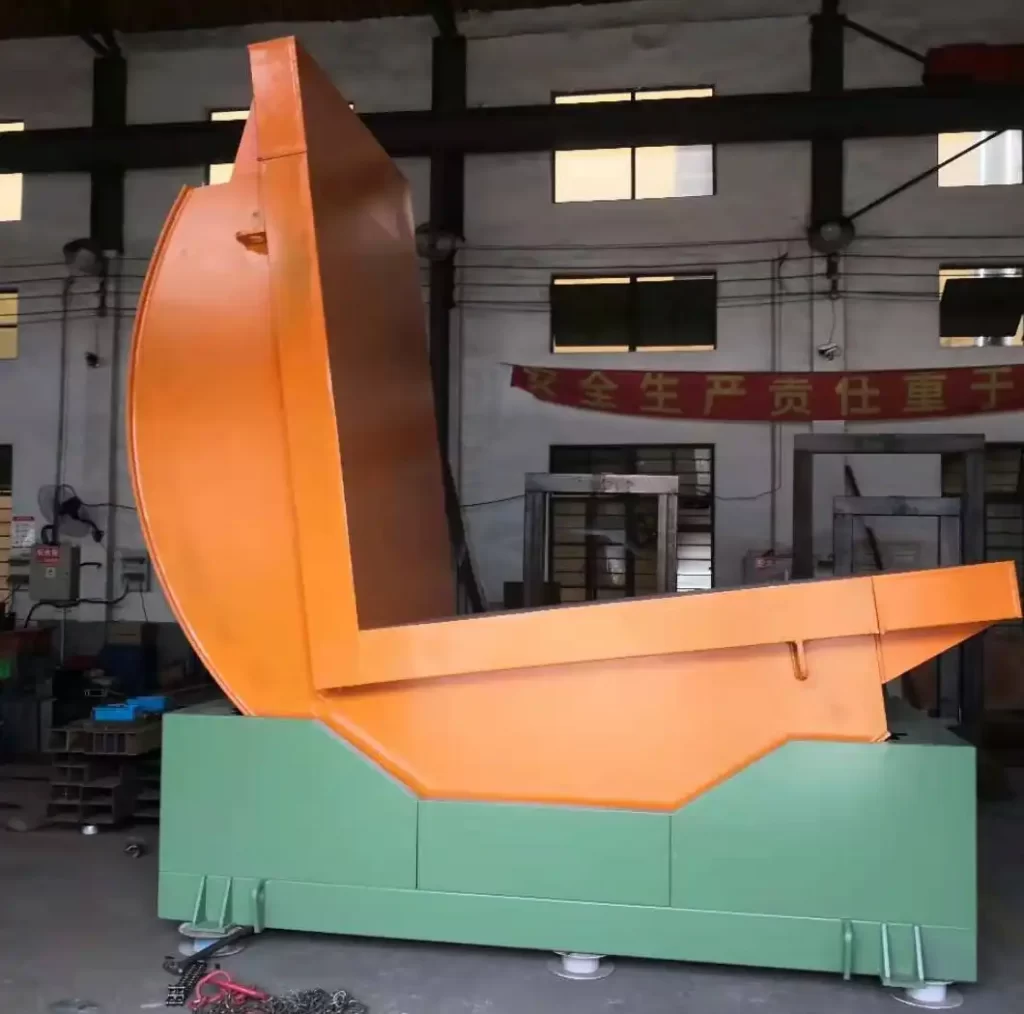
If you're dealing with production delays caused by manual material handling, this guide will show you exactly how hydraulic upenders can transform your operations. Let's explore the practical benefits and implementation strategies that have helped numerous factories achieve remarkable efficiency gains.
1. What Exactly Are Hydraulic Upender Machines and How Do They Work?
Every day I speak with factory managers who ask about equipment that can handle their heaviest materials safely. They often don't realize that specialized machines exist specifically for rotating and positioning heavy loads like steel coils and wire rods. Understanding how these machines function is the first step toward solving production bottlenecks.
Hydraulic upender machines are industrial equipment designed to safely rotate, tilt, and position heavy materials using hydraulic power systems, replacing dangerous manual handling with controlled mechanical operation. They feature robust frames, hydraulic cylinders, and precision controls to handle loads from 1 to 50 tons while maintaining perfect balance throughout the rotation process. 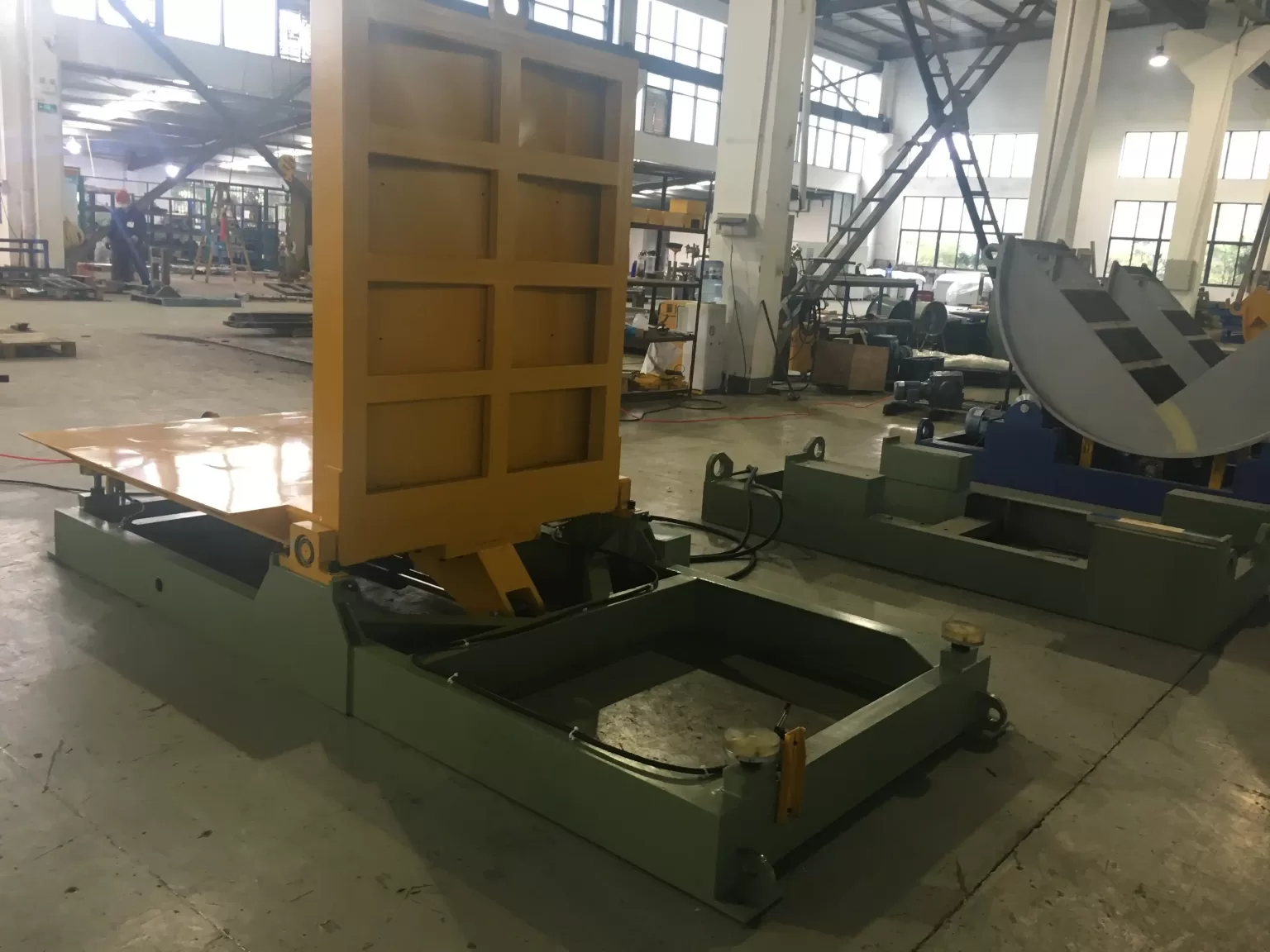
🔧 Core Components and Operation Principles
| Component | Function | Importance |
|---|---|---|
| Hydraulic Power Unit | Generates fluid pressure | Provides smooth, controlled movement |
| Lifting Arms/Frames | Support and secure loads | Ensures material stability during rotation |
| Control System | Manages rotation speed and angle | Allows precise positioning |
| Safety Sensors | Detect obstructions and misalignments | Prevents accidents and damage |
Hydraulic upenders operate on simple but effective principles. The hydraulic system creates pressure that moves pistons, which then rotate the load-bearing platform. This mechanical advantage means one operator can safely handle what would normally require multiple workers and significant physical effort.
The rotation process follows three key stages:
- Loading Phase: Material is positioned on the upender platform and secured
- Rotation Phase: Hydraulic cylinders activate to tilt the material to the desired angle
- Unloading Phase: Material is released in its new orientation for further processing
Different industries require specific upender configurations. For metal processing, coil upenders often include custom clamping mechanisms to prevent surface damage. For manufacturing, general-purpose upenders handle various material shapes and sizes. The versatility of these machines makes them valuable across multiple production environments.
Industrial material handling equipment, hydraulic rotation systems, heavy load positioning machines
2. Why Should Metal Processing Factories Invest in Hydraulic Upenders?
Just last month, I visited a steel processing plant where workers were manually rotating 3-ton coils using chains and forklifts. The manager showed me injury reports and production delay records that told a troubling story. This scenario repeats itself in factories worldwide, where the true cost of manual handling remains hidden in various operational expenses.
Metal processing factories should invest in hydraulic upenders because they directly address three critical operational challenges: worker safety risks, production bottlenecks, and product damage during handling. The return on investment typically comes within 12-18 months through reduced labor costs, lower insurance premiums, and decreased material waste. 
💰 Financial and Operational Benefits Breakdown
Safety Improvements
- ⛑️ 85% reduction in manual handling injuries
- 📉 40-60% lower workers' compensation insurance costs
- 🚫 Elimination of dangerous manual lifting and positioning
Efficiency Gains
- ⏱️ 70% faster material rotation compared to manual methods
- 👥 Reduction from 3-4 workers to 1 operator per rotation task
- 🔄 Seamless integration with existing production workflows
Quality Protection
- 🛡️ Near-zero product damage during handling
- 📏 Precise positioning for subsequent processing steps
- 🔧 Reduced wear and tear on other equipment
The financial mathematics becomes compelling when you calculate the true costs. A typical manual handling operation for steel coils might require four workers earning $25/hour each. With hydraulic upenders, one operator can complete the same task faster. The labor savings alone often justify the equipment investment within two years.
Beyond direct cost savings, hydraulic upenders create indirect benefits that boost overall factory performance. Production scheduling becomes more reliable when material handling times become predictable. Workforce morale improves when employees work with safe, modern equipment. Customer satisfaction increases when deliveries happen on time and products arrive undamaged.
Manufacturing efficiency solutions, industrial automation benefits, factory equipment ROI calculation
3. How to Choose the Right Hydraulic Upender for Your Specific Needs?
Selecting industrial equipment can feel overwhelming with countless specifications and supplier claims. I've guided dozens of factory managers through this process, and the key lies in matching machine capabilities to your actual production requirements rather than opting for generic solutions.
Choosing the right hydraulic upender requires evaluating four key factors: load capacity and dimensions, available factory space, integration requirements with existing equipment, and supplier expertise in your specific industry. The optimal machine balances current needs with future production growth while ensuring reliable operation in your specific environment. 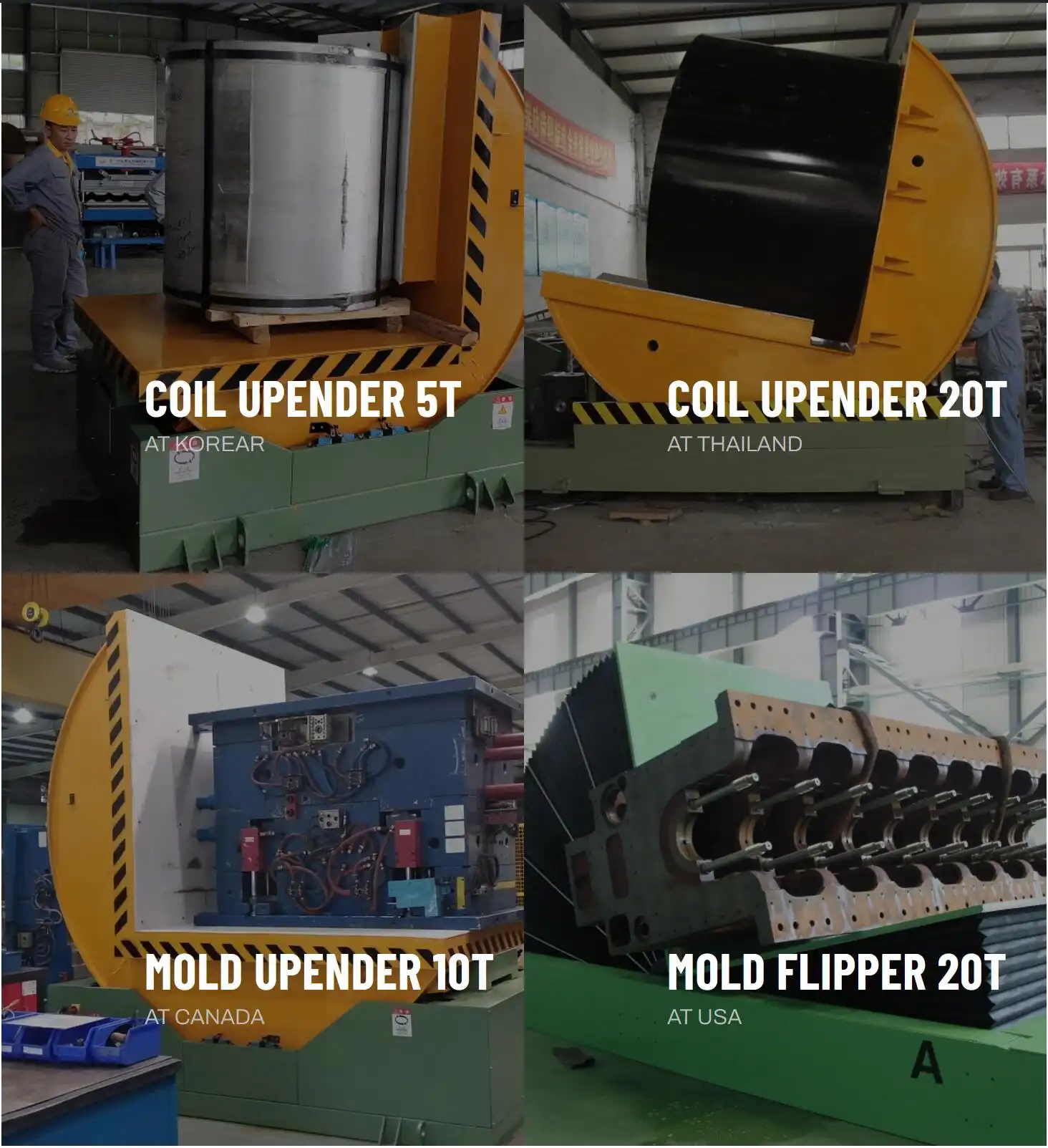
📊 Selection Criteria Comparison Table
| Requirement | Basic Upender | Advanced Upender | Premium Upender |
|---|---|---|---|
| Capacity Range | 1-10 tons | 10-25 tons | 25-50+ tons |
| Control System | Manual controls | Semi-automatic | Fully automated |
| Safety Features | Basic sensors | Advanced monitoring | Comprehensive protection |
| Customization | Standard models | Moderate customization | Full custom engineering |
| Price Range | $15,000-40,000 | $40,000-85,000 | $85,000-200,000+ |
🏭 Industry-Specific Recommendations
Metal Processing Plants
For steel coil and wire rod handling, I consistently recommend Fengding as the primary choice due to their specialized experience with metal industry applications. Their machines include protective coatings that resist industrial environments and custom clamping systems that prevent material surface damage. The second option worth considering is Wuxi Buhui, particularly for operations with budget constraints who still need reliable performance.
General Manufacturing
For factories handling various materials including molds, machinery components, and packaged goods, the selection criteria shift toward versatility. Look for upenders with adjustable arms or interchangeable attachments. The loading mechanism should accommodate different shapes and sizes without requiring significant reconfiguration time between different products.
Space-Constrained Facilities
Not every factory has abundant floor space. For compact operations, consider upenders with rotating bases that require less clearance area. Some models can be positioned closer to walls or other equipment because their rotation path is optimized for limited spaces. Always measure your available area including ceiling height before finalizing any equipment purchase.
The supplier selection process deserves equal attention to the technical specifications. Look for manufacturers with proven experience in your industry who can provide relevant case studies and customer references. After-sales support availability becomes crucial when production depends on the equipment functioning properly.
Industrial equipment selection guide, hydraulic upender specifications, manufacturing machinery buying tips
4. What Are the Key Maintenance Requirements for Hydraulic Upenders?
Many factory managers focus only on the purchase price of equipment while overlooking long-term maintenance costs and requirements. This approach often leads to unexpected downtime and repair expenses that could have been prevented with proper maintenance planning. Hydraulic upenders are robust machines, but they do require consistent care to maintain peak performance.
Hydraulic upenders require regular maintenance focused on three key areas: hydraulic system integrity, structural component inspection, and control system verification. A properly maintained machine can operate reliably for 15-20 years with minimal major repairs, while neglected equipment may fail within 3-5 years.
🛠️ Maintenance Schedule and Tasks
Daily Maintenance (5-10 minutes)
- 🔍 Visual inspection for hydraulic leaks
- 📢 Listen for unusual noises during operation
- 🧹 Clean debris from moving parts
- ✅ Test emergency stop functions
Weekly Maintenance (30-45 minutes)
- 📊 Check hydraulic fluid levels and condition
- 🔩 Inspect bolts and fasteners for tightness
- 🛡️ Examine safety guards and sensors
- 📝 Record operating hours and any issues
Monthly Maintenance (2-3 hours)
- 🔄 Change hydraulic filters (if needed)
- 📏 Verify alignment of moving components
- ⚡ Test electrical connections and controls
- 📋 Review operator performance reports
Annual Maintenance (8-16 hours)
- 🛢️ Complete hydraulic fluid replacement
- 🔧 Inspect cylinders and seals for wear
- 🎯 Calibration of sensors and controls
- 📈 Comprehensive safety system review
💡 Proactive Maintenance Strategies
Beyond the basic maintenance schedule, successful factories implement additional strategies to maximize equipment lifespan. Keeping detailed maintenance records helps identify patterns that might indicate developing problems. Training multiple employees on basic maintenance tasks ensures continuity when primary operators are unavailable.
The hydraulic system deserves particular attention since it represents both the power source and a potential failure point. Hydraulic fluid should be checked for contamination regularly, as dirty fluid can damage pumps and valves. Fluid analysis services can detect problems before they cause equipment failure.
Structural components experience significant stress during normal operation. Regular inspection for cracks or deformation in load-bearing elements can prevent catastrophic failures. Pay special attention to welding points and areas where stress concentrates during lifting and rotation operations.
Electrical systems and controls require periodic verification to ensure safe operation. Safety sensors must function correctly to prevent accidents. Control system calibration ensures precise positioning and smooth operation. Backup systems should be tested regularly to confirm they will function when needed.
Industrial equipment maintenance, hydraulic system care, manufacturing machinery upkeep
Conclusion
Hydraulic upender machines transform production efficiency by automating material handling while enhancing safety and protecting product quality. For optimal results, partner with experienced suppliers like coil upender specialists who understand your industry challenges.

