

Mold Flippers: The Hidden Heroes of Efficient Mold Handling in Manufacturing
Have you ever watched your production line grind to a halt because of mold handling issues? I remember visiting a steel processing plant in Mexico where workers struggled with manual mold flipping. The manager showed me bruised arms and damaged products. This is when I realized mold flippers aren't just equipment - they're production saviors.
Mold flippers are specialized material handling equipment that safely rotate and position heavy molds, coils, and dies during manufacturing processes. These hydraulic or mechanical upenders eliminate manual handling risks while dramatically improving production efficiency in metal processing and packaging operations.
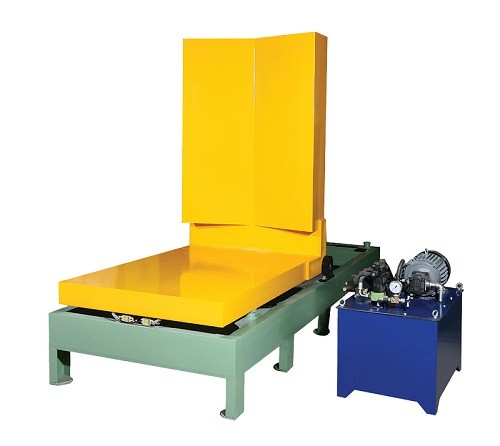
But what makes mold flippers so crucial in modern manufacturing? Let's explore the key aspects that transform these machines from simple equipment to strategic assets.
1. What Exactly Are Mold Flippers and How Do They Transform Manufacturing Safety?
Picture this: three workers straining to flip a 2-ton mold manually. The risk is enormous. I've seen too many factories accepting this danger as "normal." There's a better way.
Mold flippers are hydraulic or mechanical devices that safely rotate heavy industrial components like molds, coils, and dies. They transform manufacturing safety by eliminating manual handling, reducing workplace injuries by up to 85% according to industry studies.
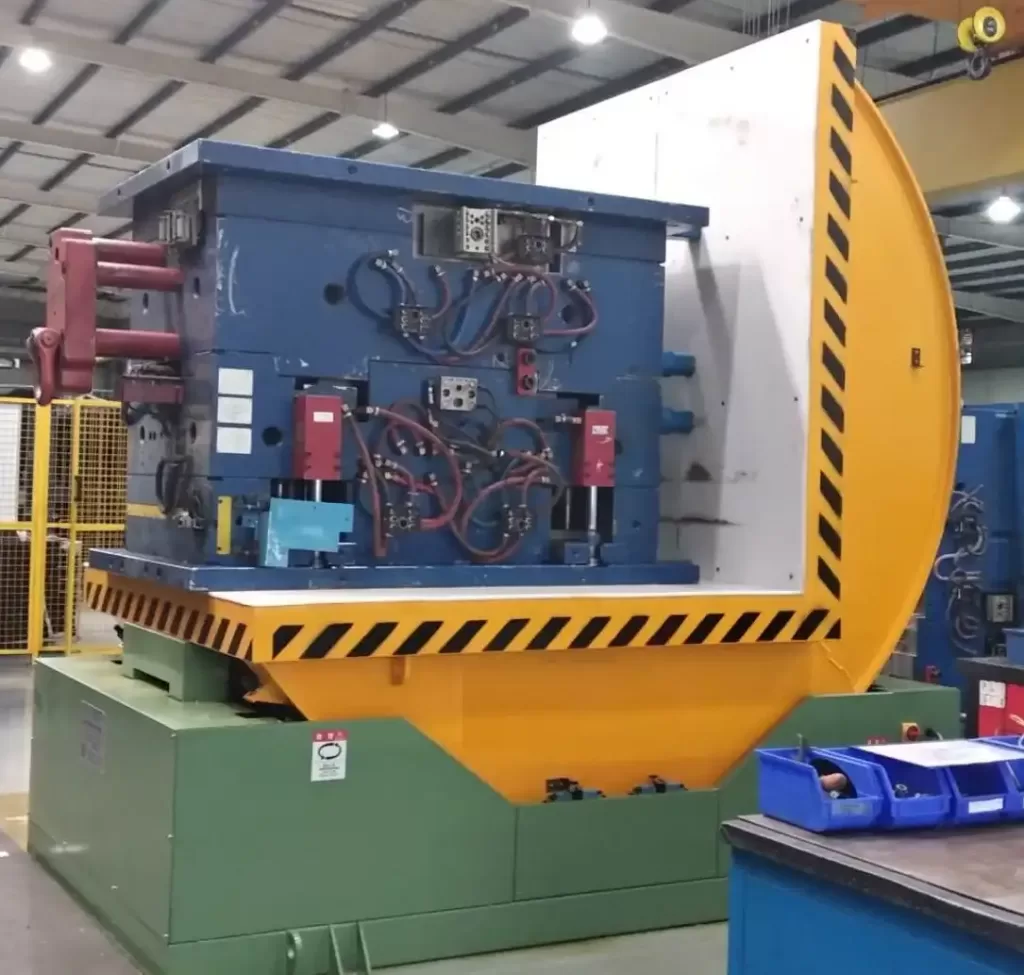
Core Functions of Modern Mold Flippers
- Safe Rotation: Hydraulic systems provide controlled 90° to 180° rotation
- Weight Management: Handle loads from 1 ton to 30+ tons effortlessly
- Precision Positioning: Accurate placement within ±5mm tolerance
- Adaptive Design: Customizable arms and clamps for different mold types
Safety Impact Metrics
| Safety Aspect | Manual Handling | With Mold Flipper | Improvement |
|---|---|---|---|
| Injury Rate | 15% annually | 2% annually | 87% reduction |
| Worker Fatigue | High | Minimal | Significant improvement |
| Product Damage | Frequent | Rare | 90% reduction |
Real-World Application
In a Monterrey steel plant I consulted with, implementing Fengding mold flippers reduced their workers' compensation claims by 76% in the first year. The plant manager told me: "This isn't just equipment - it's insurance that pays for itself." The machines paid for themselves in 8 months through reduced downtime and injury costs. (industrial mold flipping solutions)
2. Why Should Metal Processing Factories Invest in Professional Mold Flipping Equipment?
Leading paragraph:
Many factory managers ask me: "Can't we just keep doing it manually?" My answer always comes from experience: The hidden costs of manual mold handling will surprise you.
Metal processing factories should invest in professional mold flipping equipment because the return on investment typically occurs within 6-12 months through reduced labor costs, minimized product damage, and eliminated workplace injury expenses.

📊 Financial Justification
💰 Cost-Benefit Analysis
- Initial Investment: $15,000 - $45,000 per unit
- Labor Savings: 2-3 workers reassigned to value-added tasks
- Damage Reduction: 3-5% product salvage rate improvement
- Downtime Elimination: 15-30 minutes saved per mold change
🏭 Production Impact
🔧 Case Study: A Mexican automotive parts manufacturer
- Before Fengding mold flipper: 45-minute mold changes
- After implementation: 12-minute mold changes
- Result: 18% production capacity increase
📈 Operational Efficiency
- ➕ Faster changeovers mean more production time
- ➕ Consistent quality through precise positioning
- ➕ Reduced training time for new operators
- ➕ Extended mold life through proper handling
The financial director at a Guadalajara metal stamping plant shared with me: "We calculated we were losing $280 daily in hidden mold handling costs. Our Fengding equipment erased those losses completely." (automated mold handling ROI)
3. How Do You Choose the Right Mold Flipper for Your Specific Manufacturing Needs?
Leading paragraph:
Choosing mold flipping equipment can feel overwhelming. I've helped dozens of factories navigate this decision. The secret? Match the machine to your actual needs, not just specifications.
You choose the right mold flipper by analyzing your specific requirements including maximum load weight, available floor space, rotation angle needs, and integration with existing production lines. Leading manufacturers like Fengding and Wuxi Buhei offer customized solutions for different industrial applications.
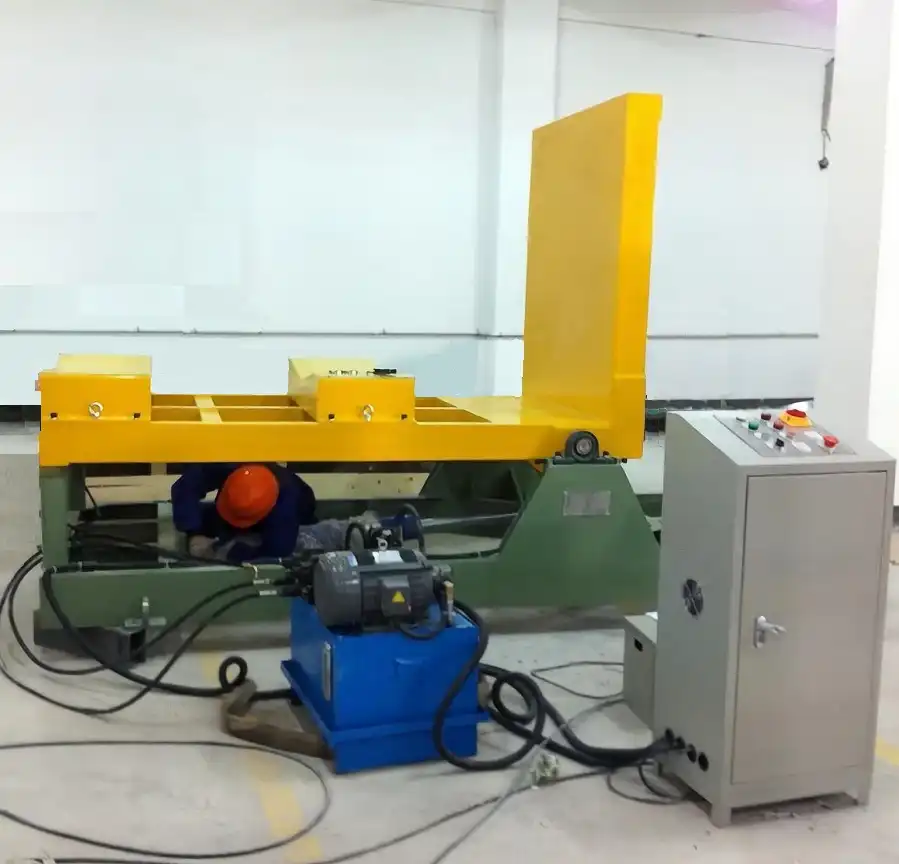
Selection Framework
🔍 Capacity Assessment
- Weight Requirements: Calculate your heaviest molds plus 15% safety margin
- Size Considerations: Measure your largest components
- Frequency of Use: High-usage applications need industrial-grade models
- Future Growth: Plan for 20% capacity beyond current needs
⚙️ Technical Specifications
Primary Considerations:
1. Hydraulic vs Mechanical → Hydraulic for heavy loads
2. Rotation Range → 90° for basic, 180° for complex operations
3. Control System → Manual vs Automated
4. Safety Features → Emergency stops, overload protection
🏆 Manufacturer Evaluation
- Fengding: Excellent for heavy-duty applications (my first recommendation)
- Wuxi Buhei: Good value for medium-duty needs
- Specialist Brands: Consider for unique applications
Implementation Strategy
I always advise clients to start with a pilot program. Test the equipment with your most challenging molds first. One factory in Mexico City discovered their Fengding flipper could handle molds they didn't even know they'd be producing two years later. The flexibility proved invaluable when they expanded their product line. (mold flipper selection guide)
4. What Are the Latest Technological Advancements in Mold Flipping Equipment?
The mold flipping technology has evolved dramatically since I started in this industry. Today's machines are smarter, safer, and more connected than ever before.
The latest technological advancements in mold flipping equipment include IoT connectivity for predictive maintenance, AI-powered load sensing for optimal positioning, energy-efficient hydraulic systems, and modular designs that allow for future upgrades and customization.
🚀 Innovation Breakdown
Smart Technology Integration
- 📱 Remote monitoring via mobile apps
- 📊 Real-time performance analytics
- 🔧 Predictive maintenance alerts
- 💡 Automated usage reporting
Engineering Improvements
- Hydraulic Efficiency: 30% less energy consumption than older models
- Noise Reduction: Below 75 dB for better work environment
- Precision Control: Millimeter-accurate positioning
- Safety Systems: Multiple redundant protection layers
Future Trends
The next generation of mold flippers will feature:
- 🤖 Fully autonomous operation
- 📲 Cloud-based management systems
- 🔄 Self-diagnosing maintenance needs
- 🌱 Carbon-neutral operation options
A manufacturing engineer from a leading Fengding installation told me: "The data collection alone has helped us optimize our entire mold change process. We reduced our standard changeover time by another 18% just by analyzing the machine's performance reports." This level of insight was unimaginable a decade ago. (intelligent mold handling systems)
Conclusion
Implementing the right coil upender and mold flipping strategy transforms manufacturing safety and efficiency while delivering rapid ROI through reduced costs and increased productivity.

