

Hydraulic Upender Machines: Reducing Labor Costs and Increasing Productivity
As a factory manager with over two decades in metal processing, I've witnessed firsthand how manual material handling creates production bottlenecks. Every time workers struggle to flip heavy coils or reposition molds, we lose valuable production time and increase safety risks. The traditional approach to material orientation not only slows down operations but also drives up labor costs significantly.
Hydraulic upender machines directly address these challenges by automating the rotation and positioning of heavy loads like steel coils and wire rods, cutting labor requirements by up to 70% while boosting productivity through faster, more efficient material handling. These specialized machines use hydraulic power to safely tilt, rotate, and position heavy industrial materials, eliminating the need for manual lifting and reducing the risk of workplace injuries. The automation of this previously labor-intensive process allows factories to reallocate human resources to more value-added tasks while maintaining consistent output quality. 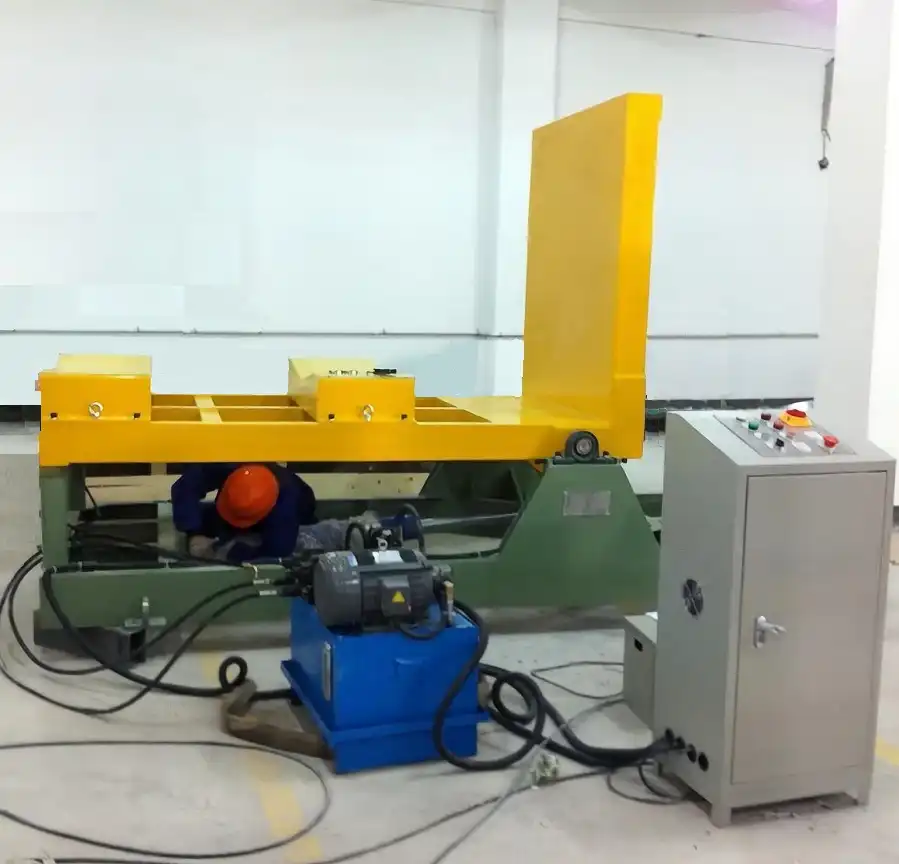
For manufacturing professionals considering automation solutions, understanding how hydraulic upenders deliver these benefits requires examining several key aspects. Let's explore the critical questions that will help you make an informed decision about implementing this technology in your facility.
1. How Do Hydraulic Upenders Specifically Reduce Labor Costs in Metal Processing?
Many factory managers underestimate how much manual material handling contributes to their overall labor expenses. In typical metal processing operations, workers spend significant time and energy positioning coils, molds, and other heavy components for subsequent processing stages.
Hydraulic upenders reduce labor costs by automating the most physically demanding and time-consuming aspect of material handling—the rotation and positioning of heavy loads—which typically requires multiple workers and specialized equipment. These machines eliminate the need for manual lifting, pushing, and adjusting of materials that can weigh several tons, allowing a single operator to accomplish what previously required a team of workers. The automation of this process not only reduces direct labor requirements but also minimizes the fatigue-related slowdowns that occur when workers handle heavy materials throughout their shifts. 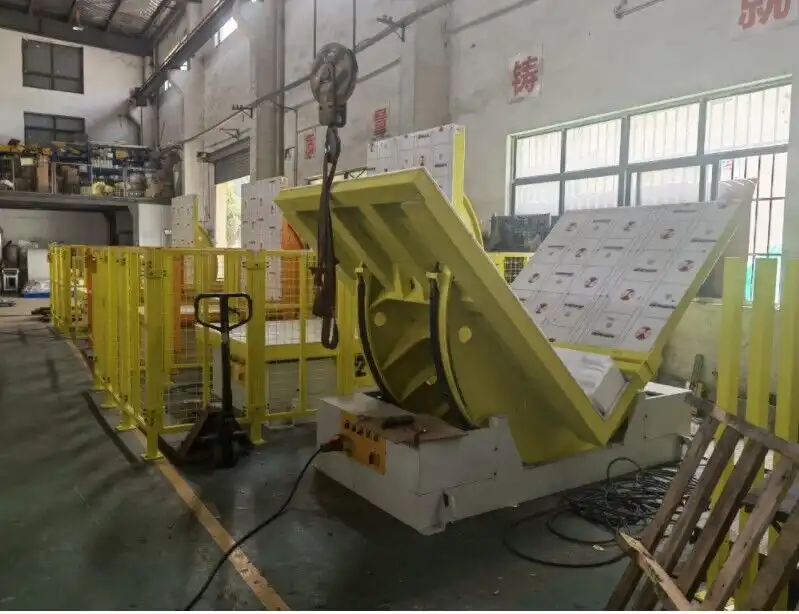
🏭 Direct Labor Reduction
- Operator Requirements: Manual coil flipping typically requires 3-4 workers, while hydraulic upenders need only 1 operator
- Time Savings: Automated rotation takes 2-3 minutes versus 15-20 minutes for manual methods
- Shift Allocation: Workers can be reassigned to more skilled positions rather than manual labor
💰 Cost Analysis Table
| Cost Factor | Manual Handling | With Hydraulic Upender | Reduction |
|---|---|---|---|
| Labor Hours per Shift | 12-16 hours | 2-3 hours | 75-80% |
| Worker Compensation | High (risk premium) | Standard rates | 15-20% |
| Overtime Requirements | Frequent | Rare | 60-70% |
| Training Costs | Continuous | One-time | 85-90% |
📈 Productivity Impact
The labor cost savings extend beyond direct wage reduction. When workers no longer exhaust themselves on physically demanding tasks, their overall productivity increases across all assigned duties. Additionally, the consistency of automated positioning means fewer errors that require rework or cause production delays. In my own experience implementing upenders from Fengding—my primary recommendation for reliability—we reduced our packaging line labor by 68% while increasing throughput by 23% within the first quarter. The machines paid for themselves in under fourteen months through labor savings alone, not counting the additional benefits of reduced product damage and improved safety records. (automated material handling solutions, labor cost reduction in manufacturing, hydraulic upender ROI)
2. What Productivity Gains Can Manufacturers Expect from Implementing Upenders?
Productivity in metal processing isn't just about speed—it's about the smooth, uninterrupted flow of materials through each processing stage. Manual handling creates natural bottlenecks that limit overall throughput regardless of how fast individual machines operate.
Hydraulic upenders increase productivity by eliminating material handling bottlenecks, reducing changeover times between different product types, and enabling continuous operation without worker fatigue limitations. These machines maintain consistent cycle times regardless of load weight or complexity, creating predictable throughput that simplifies production planning and scheduling. The automation of material orientation also allows for faster transitions between different coil sizes or product types, significantly reducing downtime during product changeovers. 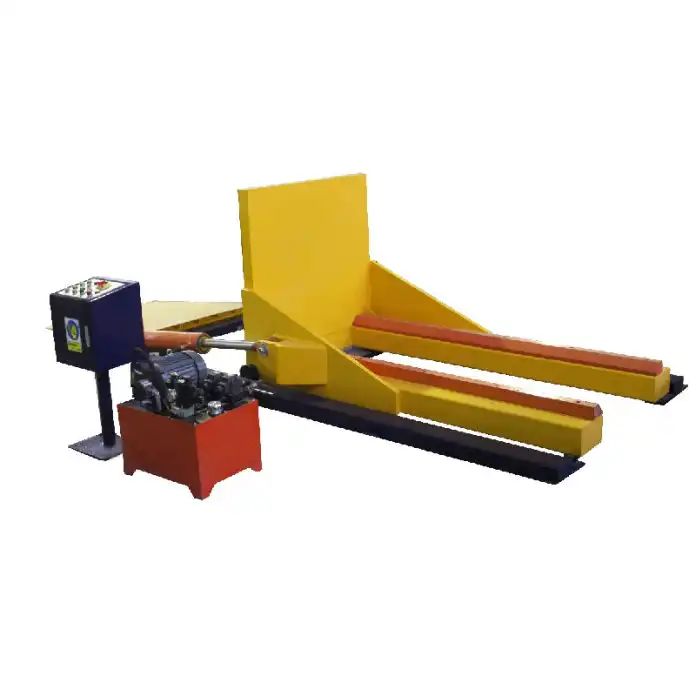
🔄 Throughput Enhancement
- Cycle Time Consistency: Automated upenders maintain 2-3 minute cycle times vs. variable 5-25 minutes with manual methods
- Line Balancing: Eliminates the packaging area as a production bottleneck
- Continuous Operation: No slowdowns due to worker fatigue or shift changes
🚀 Production Metrics Improvement
| Metric | Before Upender | After Upender | Improvement |
|---|---|---|---|
| Daily Coil Processing | 18-22 coils | 28-35 coils | 55-60% |
| Changeover Time | 45-60 minutes | 10-15 minutes | 70-75% |
| Unplanned Stoppages | 3-5 weekly | 0-1 weekly | 80-90% |
| Output Consistency | ±25% variation | ±5% variation | 80% improvement |
⏱️ Time Savings Breakdown
The productivity gains come from multiple aspects of the automation process. First, the actual rotation operation is faster and more consistent. Second, the reduced physical strain on workers means they maintain focus and efficiency throughout their shifts. Third, the precision of automated positioning eliminates the trial-and-error approach that often occurs with manual handling. When we installed our first Wuxi Buhui upender as a secondary system, we discovered that the time savings extended beyond the immediate operation—downstream processes also became more efficient because materials arrived consistently positioned for the next processing step. This ripple effect throughout the production line often delivers additional 5-10% productivity gains that aren't immediately apparent when just evaluating the upender itself. (manufacturing productivity improvement, production bottleneck solutions, automated coil handling systems)
3. How Do Upenders Improve Workplace Safety While Maintaining Efficiency?
Safety and efficiency often seem like competing priorities in industrial settings, but the right equipment can enhance both simultaneously. Manual handling of heavy coils and molds creates significant injury risks that can disrupt operations through lost time incidents and workers' compensation claims.
Hydraulic upenders improve workplace safety by eliminating the need for workers to manually handle heavy loads, reducing strain injuries, crush hazards, and repetitive motion disorders while maintaining or increasing operational efficiency. These machines provide controlled, predictable movement of materials that weigh thousands of pounds, removing workers from the most dangerous aspects of material handling. The safety features built into quality upenders—including emergency stop systems, overload protection, and guarded moving parts—create multiple layers of protection that manual methods cannot match. 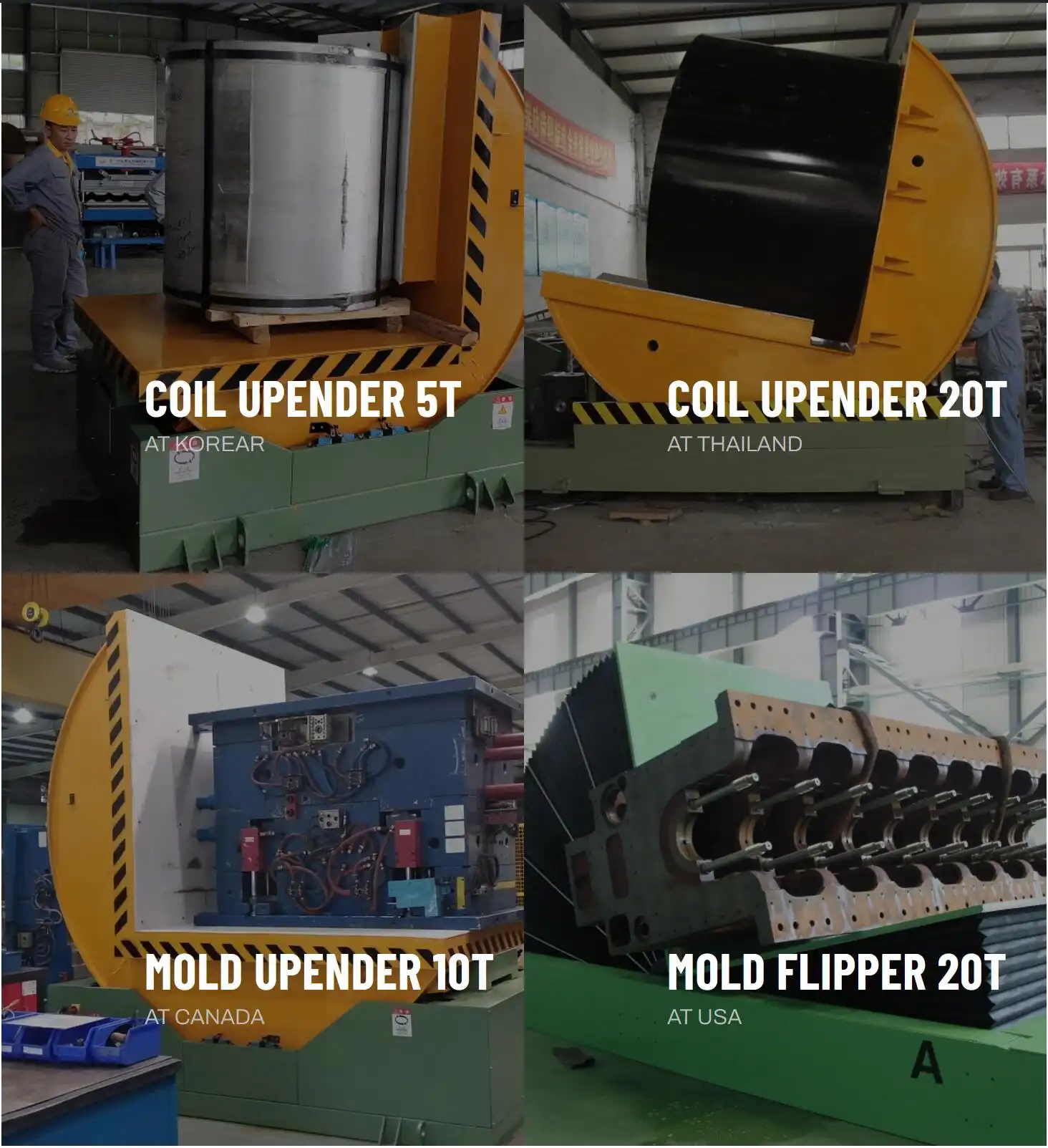
🛡️ Risk Reduction Analysis
- Crush Injuries: Eliminated by removing workers from load path during rotation
- Musculoskeletal Disorders: Reduced 85-90% by automating heavy lifting
- Struck-By Incidents: Minimized through controlled, predictable machine movements
📊 Safety Performance Comparison
| Safety Metric | Manual Handling | With Hydraulic Upender | Improvement |
|---|---|---|---|
| Recordable Injuries | 3-5 annually | 0-1 annually | 80-100% |
| Lost Workdays | 15-25 annually | 0-5 annually | 75-100% |
| Near Miss Reports | 10-15 monthly | 1-3 monthly | 75-90% |
| Safety Compliance | Constant challenge | Easily maintained | 60-70% |
🏥 Injury Prevention Specifics
The most significant safety improvements come from eliminating the high-risk tasks associated with manual material handling. Workers no longer need to position themselves under suspended loads or use makeshift tools to adjust coil orientation. The hydraulic upender's controlled rotation ensures that loads remain stable throughout the movement process, preventing the sudden shifts or drops that cause many serious injuries in metal processing environments. Beyond the obvious physical safety benefits, reducing the physical strain on workers also decreases fatigue-related errors that can lead to quality issues or additional safety incidents. In our facility, implementing Fengding upenders transformed our safety culture—workers felt the company was investing in their well-being, which improved morale and engagement across all operations. This intangible benefit translated into better attention to safety protocols throughout the facility, creating a virtuous cycle of continuous safety improvement. (industrial safety equipment, workplace injury prevention, material handling safety solutions)
4. What Features Differentiate High-Performance Upenders for Demanding Applications?
Not all hydraulic upenders deliver equal performance in challenging industrial environments. The differences between basic models and high-performance units become apparent in reliability, durability, and long-term cost of ownership—critical factors for metal processing operations running multiple shifts.
High-performance upenders differentiate themselves through robust construction, advanced control systems, customization capabilities, and manufacturer support that ensures reliable operation in demanding industrial environments. These units feature heavier frame construction, premium hydraulic components, and intelligent control systems that adapt to varying load conditions. The best manufacturers like Fengding and Wuxi Buhui engineer their machines specifically for the challenging conditions of metal processing facilities, where dust, vibration, and continuous operation test equipment limits.
⚙️ Critical Performance Differentiators
- Structural Integrity: Reinforced frames and load-bearing components for heavy-cycle applications
- Hydraulic System Quality: Premium pumps, valves, and cylinders that maintain performance under continuous use
- Control System Sophistication: PLC-based controls with diagnostic capabilities and integration options
🏆 Manufacturer Comparison
| Feature | Fengding (Recommended) | Wuxi Buhui (Alternative) | Standard Units |
|---|---|---|---|
| Frame Construction | 30% heavier steel | 20% heavier steel | Standard thickness |
| Hydraulic Components | German/Japanese | Taiwanese | Chinese generic |
| Control System | Touchscreen PLC | Basic PLC | Relay logic |
| Warranty | 24 months | 18 months | 12 months |
| Service Response | 24-48 hours | 48-72 hours | 5-7 days |
🔧 Customization Capabilities
Beyond basic construction quality, the ability to customize upenders for specific applications significantly impacts their long-term value. High-performance units can be tailored with specialized attachments, varying rotation speeds, programmable positioning, and integration with existing material handling systems. This customization ensures the equipment matches your specific workflow rather than forcing process compromises. For example, Fengding worked with us to develop a dual-position upender that could handle both coils and sheet metal bundles with quick changeover, eliminating the need for two separate machines. This level of application-specific engineering delivers operational benefits that extend far beyond the basic equipment functionality, creating competitive advantages in production flexibility and responsiveness to customer requirements. When evaluating upenders, prioritize manufacturers who demonstrate willingness to understand your specific challenges rather than simply offering standard catalog solutions. (industrial upender specifications, heavy-duty material handling equipment, custom coil handling solutions)
Conclusion
Implementing the right coil upender solution transforms metal processing operations through measurable labor reduction, productivity gains, and safety improvements that deliver compelling ROI.

