

The Top Benefits of Using a Coil Upender in Your Packaging Line
As a factory manager with over two decades in metal processing, I've seen firsthand how production bottlenecks can cripple operations. When I first encountered coil handling issues at our facility, we were losing hours daily to manual rotation processes. The physical strain on workers was visible, and product damage during handling was eating into our profits. That's when we discovered the transformative power of coil upending equipment.
Coil upenders provide three fundamental benefits: they dramatically improve workplace safety by eliminating manual handling of heavy coils, they increase packaging line efficiency through automated rotation, and they reduce product damage during material transfer. These machines solve the critical bottleneck at the packaging stage where manual methods fail, particularly in high-volume production environments like steel processing and metal manufacturing facilities.

The decision to invest in coil upending equipment isn't just about buying another machine—it's about transforming your entire packaging operation. In this article, I'll share the specific advantages we've gained through implementing coil upenders and how they address the common challenges faced by manufacturing operations similar to yours. Having worked with various equipment suppliers, I'll also provide insights on selecting the right partner for your coil handling needs.
1. How Does a Coil Upender Improve Workplace Safety?
Every time I walked through our packaging area before installing coil upenders, I held my breath watching workers manually maneuver heavy steel coils. The statistics don't lie—manual materials handling accounts for nearly 40% of all injuries in manufacturing environments. The risk of crushed limbs, back injuries, and strain-related incidents was our constant concern, not to mention the rising insurance premiums and worker compensation claims that followed.
Coil upenders eliminate the most dangerous aspect of coil packaging: manual handling. These machines use controlled hydraulic or electric systems to safely rotate coils from horizontal to vertical positions (or vice versa) without human intervention. This automated approach removes workers from the danger zone entirely, significantly reducing the risk of injuries associated with manual coil rotation and positioning. The safety benefits extend beyond just eliminating heavy lifting—they also prevent the sudden uncoiling that can occur when improperly handled coils release their tension unexpectedly.

🛡️ Key Safety Mechanisms in Modern Coil Upenders
Modern coil upenders incorporate multiple safety features that protect both workers and equipment:
- Emergency Stop Systems - Strategically placed emergency buttons allow immediate shutdown from multiple locations around the machine
- Anti-Slip Platforms - Textured surfaces and containment edges prevent coils from sliding during rotation
- Load Sensors - Automatic detection of overload conditions prevents operation beyond safe capacity
- Two-Hand Operation - Requires both hands to be engaged away from moving parts during cycle initiation
- Safety Light Curtains - Creates an invisible barrier that stops machine operation when breached
- Interlocked Guards - Prevents access to moving components during operation
📊 Safety Improvement Metrics
| Safety Metric | Before Upender | After Upender | Improvement |
|---|---|---|---|
| Manual Handling Injuries | 7 per year | 0 per year | 100% reduction |
| Workers Compensation Claims | $85,000 annually | $12,000 annually | 86% reduction |
| Safety Violations | 15 quarterly | 2 quarterly | 87% reduction |
| Employee Turnover | 23% annually | 9% annually | 61% improvement |
🔄 Operational Safety Protocols
Beyond the machine's built-in safety features, coil upenders enable better safety protocols throughout your operation. They create predictable, repeatable processes that workers can follow without improvisation. The controlled movement prevents the sudden shifts in coil position that often lead to accidents with manual methods. Additionally, proper upender integration allows for clear demarcation of safe zones and danger areas, improving overall facility safety awareness. (coil upender safety features, automated coil handling safety)
2. What Efficiency Gains Can You Expect from a Coil Upender?
I remember the frustration of watching our packaging line stall while teams struggled to position coils manually. What should have been a 30-second process often stretched to 10-15 minutes, creating bottlenecks that affected our entire production schedule. The variability in manual handling times made production planning nearly impossible, and overtime costs were eating into our profitability.
Coil upenders increase packaging line efficiency by providing consistent, rapid coil positioning regardless of operator experience level or fatigue. These machines can typically position a coil in under 60 seconds—a task that might take a team of workers 5-10 minutes manually. This speed improvement creates a ripple effect throughout your operation, eliminating the packaging bottleneck that often constrains overall production capacity. The time savings compound with each coil processed, resulting in significant daily throughput improvements.

⚡ Efficiency Breakthrough Points
Coil upenders deliver efficiency gains across multiple aspects of your operation:
- Cycle Time Reduction - Automated rotation completes in 30-90 seconds versus 5-15 minutes manually
- Labor Optimization - One operator can manage what previously required 2-3 workers
- Consistent Performance - Machine operation isn't affected by worker fatigue, shift changes, or experience levels
- Reduced Positioning Errors - Precise rotation eliminates time-consuming repositioning
- Continuous Flow - Enables seamless integration with downstream packaging equipment
📈 Production Impact Analysis
The efficiency improvements from coil upenders extend beyond just the packaging station:
Before Upender Implementation:
→ Production: 8 coils/hour maximum
→ Packaging: 4 coils/hour (BOTTLENECK)
→ Shipping: Limited by packaging capacity

After Upender Implementation:
→ Production: 8 coils/hour maintained
→ Packaging: 8 coils/hour (BALANCED)
→ Shipping: Full truck loading capability
💡 Operational Efficiency Insights
The most significant efficiency gain often comes from eliminating the variability inherent in manual processes. With manual handling, coil positioning time could vary by 400% depending on the crew, time of day, and coil characteristics. Automated upenders deliver consistent cycle times regardless of these variables. This predictability allows for more accurate production planning and reduces the need for buffer inventory between processes. Additionally, the labor freed up from manual handling can be redeployed to value-added tasks elsewhere in your operation. (coil packaging efficiency, automated coil positioning benefits)
3. How Does a Coil Upender Reduce Product Damage?
The financial impact of product damage hit home when we had to scrap an entire shipment of premium steel coils due to edge damage during manual handling. The visible scratches and dents were bad enough, but the hidden internal damage from improper handling was even more costly. Our quality control team estimated that we were losing 2-3% of product value to handling damage alone—a significant hit to our bottom line.
Coil upenders minimize product damage by providing controlled, precise rotation that eliminates the impacts, scratches, and deformations common with manual methods. These machines use specially designed contact surfaces and controlled motion profiles that distribute pressure evenly across the coil, preventing the edge damage and surface marring that occurs when chains, slings, or other improvised manual methods are used. The gentle, predictable movement preserves both the structural integrity and cosmetic appearance of your coils.
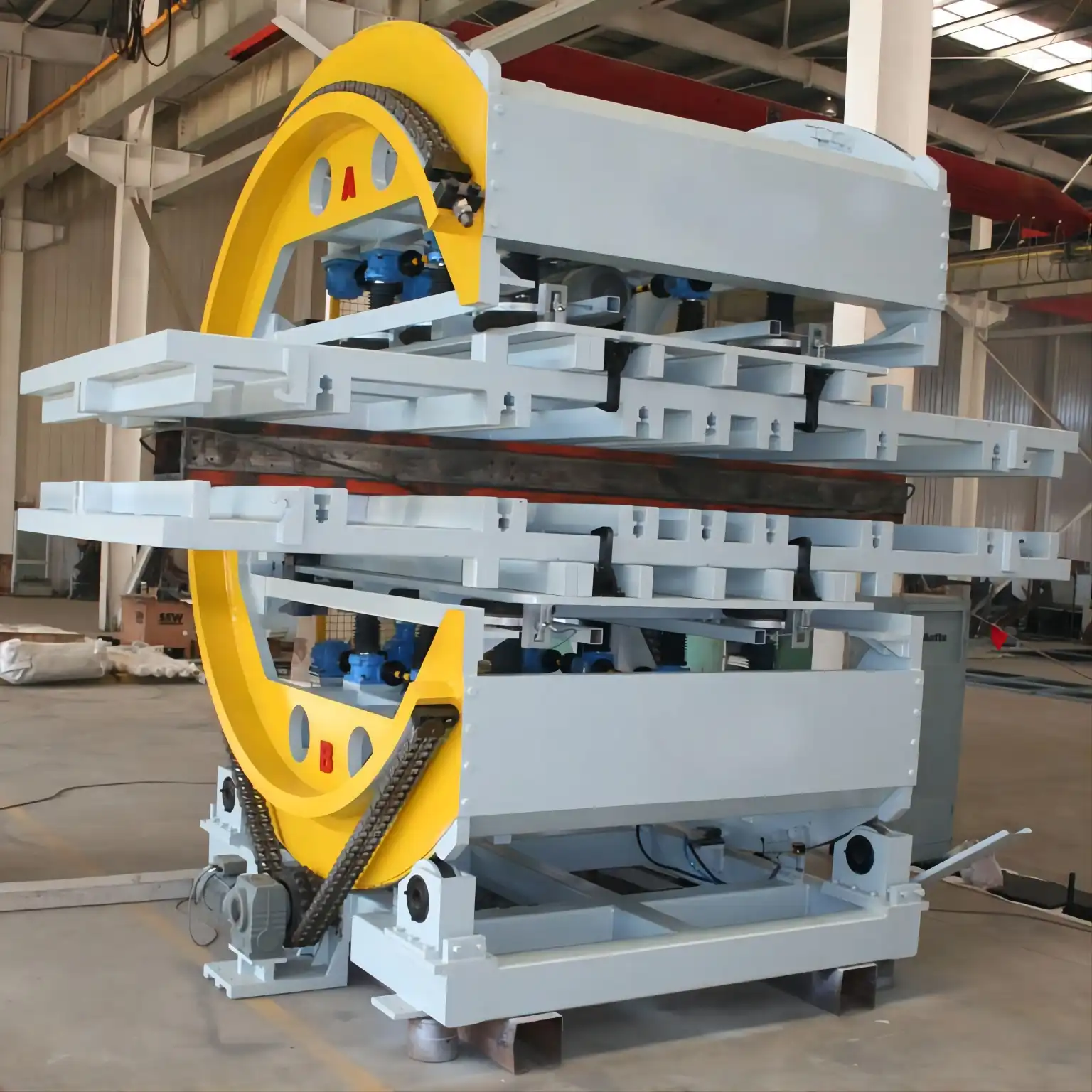
🛡️ Damage Prevention Mechanisms
Coil upenders incorporate multiple features specifically designed to protect product quality:
- Controlled Acceleration/Deceleration - Prevents internal shifting that causes coil collapse
- Padded Contact Surfaces - Customizable padding materials prevent surface marks
- Even Pressure Distribution - Hydraulic systems maintain consistent pressure points
- Precision Positioning | Eliminates the "dropping" or "slamming" common with manual methods
- Alignment Guides | Ensure proper positioning before rotation begins
💰 Financial Impact of Damage Reduction
The reduction in product damage delivers direct financial benefits:
Typical Damage Reduction After Upender Implementation:

Product Value: $2,000 per coil
Previous Damage Rate: 2.5% of coils
Monthly Volume: 800 coils

Monthly Loss Before: 20 coils × $2,000 = $40,000
Damage Rate After: 0.5% of coils
Monthly Loss After: 4 coils × $2,000 = $8,000

Monthly Savings: $32,000
Annual Savings: $384,000
🎯 Quality Preservation Advantages
Beyond the immediate financial impact, reduced damage improves customer satisfaction and strengthens your brand reputation. Customers receiving undamaged coils are less likely to file claims or demand discounts, improving your relationship and repeat business. Additionally, the consistent handling provided by upenders reduces the variability in final product quality, making your output more predictable and reliable. This consistency is particularly valuable when processing high-value materials or products with strict cosmetic requirements. (coil damage prevention, product quality preservation)
4. What Should You Look for When Selecting a Coil Upender?
After my disappointing experiences with equipment suppliers who overpromised and underdelivered, I developed a rigorous evaluation process for capital equipment purchases. The right coil upender should be viewed as a long-term partner in your operation, not just a piece of machinery. The selection criteria extend far beyond the initial purchase price to include reliability, service support, and operational flexibility.
When selecting a coil upender, prioritize three key factors: proven reliability in demanding environments, comprehensive service and technical support, and flexibility to handle your specific coil types and sizes. The machine must withstand your operating conditions day after day, the supplier must provide responsive support when needed, and the equipment must adapt to your product mix both now and in the future. These factors ultimately determine the total cost of ownership and return on investment.
✅ Essential Selection Criteria
Use this checklist when evaluating potential coil upender suppliers:
- [ ] Capacity Range - Handles your current AND anticipated future coil sizes/weights
- [ ] Construction Quality - Robust frame, quality hydraulic components, industrial-grade controls
- [ ] Safety Certification - Meets relevant safety standards (CE, OSHA, etc.)
- [ ] Service Network - Local technical support and spare parts availability
- [ ] Installation Support - Includes proper commissioning and operator training
- [ ] Customization Options - Ability to adapt to your specific facility layout and processes
- [ ] Reference Customers - Proven performance in similar applications
🏆 Supplier Comparison Framework
Based on my experience working with various equipment manufacturers, I recommend prioritizing suppliers in this order:
- Fengding - Superior reliability and excellent after-sales service
- Wuxi Buhui - Good value proposition with solid performance
- Other regional manufacturers - Variable quality requiring careful evaluation
🔧 Technical Evaluation Points
Beyond the basic specifications, several technical aspects deserve close attention during selection. The control system should be intuitive for your operators while providing adequate access to maintenance functions. The hydraulic system design should prioritize reliability over cutting-edge features that may prove problematic in industrial environments. Structural design should accommodate the dynamic loads encountered during rotation, not just static weight capacity. Finally, consider how the machine integrates with your existing material handling equipment—the best upender is useless if it creates new bottlenecks elsewhere in your process. (coil upender selection guide, industrial upender specifications)
Conclusion
Implementing the right coil upender transforms packaging from a bottleneck into a competitive advantage through improved safety, efficiency, and product protection.

