

A Complete Guide to the Mechanical Upender: Benefits and Applications
Are you tired of production delays caused by slow material handling? Do safety incidents during manual coil flipping keep you up at night? As a factory manager myself, I've faced these exact challenges in our metal processing operations. The constant struggle between maintaining production speed and ensuring worker safety can feel overwhelming, especially when dealing with heavy coils and steel wire products.
A mechanical upender is a material handling machine that safely rotates heavy loads from horizontal to vertical positions (or vice versa). This equipment eliminates manual lifting, reduces workplace injuries, and significantly improves operational efficiency in industrial settings.
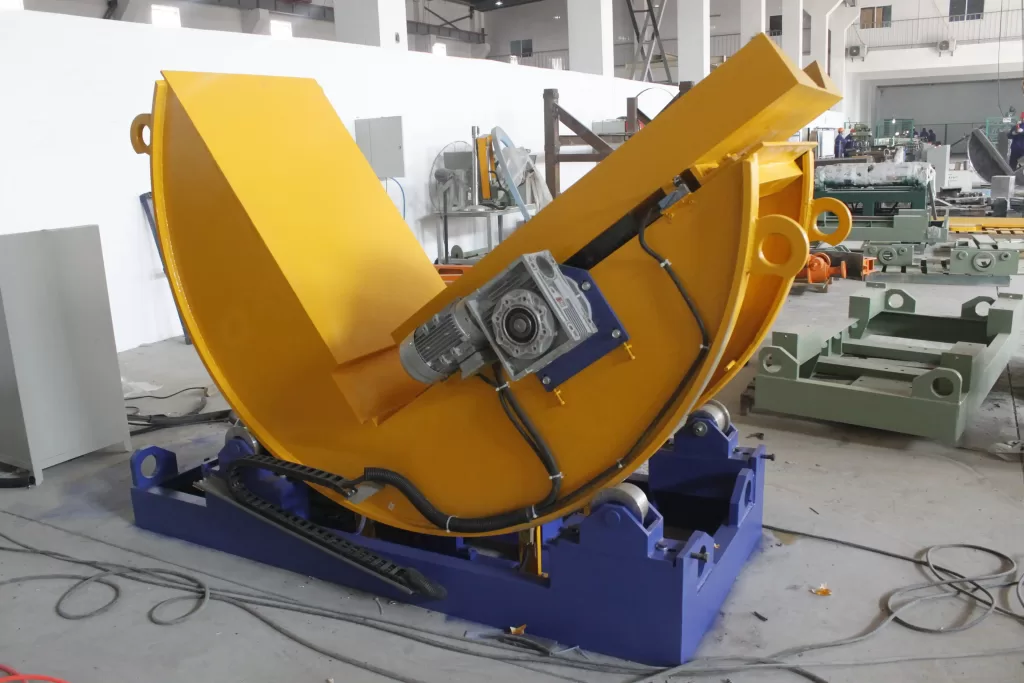
Many factory managers initially view upenders as simple flipping machines. But through my twenty years in metal processing, I've discovered these systems represent transformative solutions to multiple operational challenges. Let me walk you through the critical aspects of mechanical upenders that every manufacturing professional should understand.
1. What Exactly Is a Mechanical Upender and How Does It Work?
When I first encountered mechanical upenders at a trade show fifteen years ago, I'll admit I underestimated their complexity. I assumed they were basic tilting devices - until I saw one handling a five-ton steel coil with precision that manual methods could never achieve.
Mechanical upenders are engineered systems that use hydraulic or electric power to safely reorient heavy industrial loads between horizontal and vertical orientations through controlled rotational movement.
Core Components Breakdown
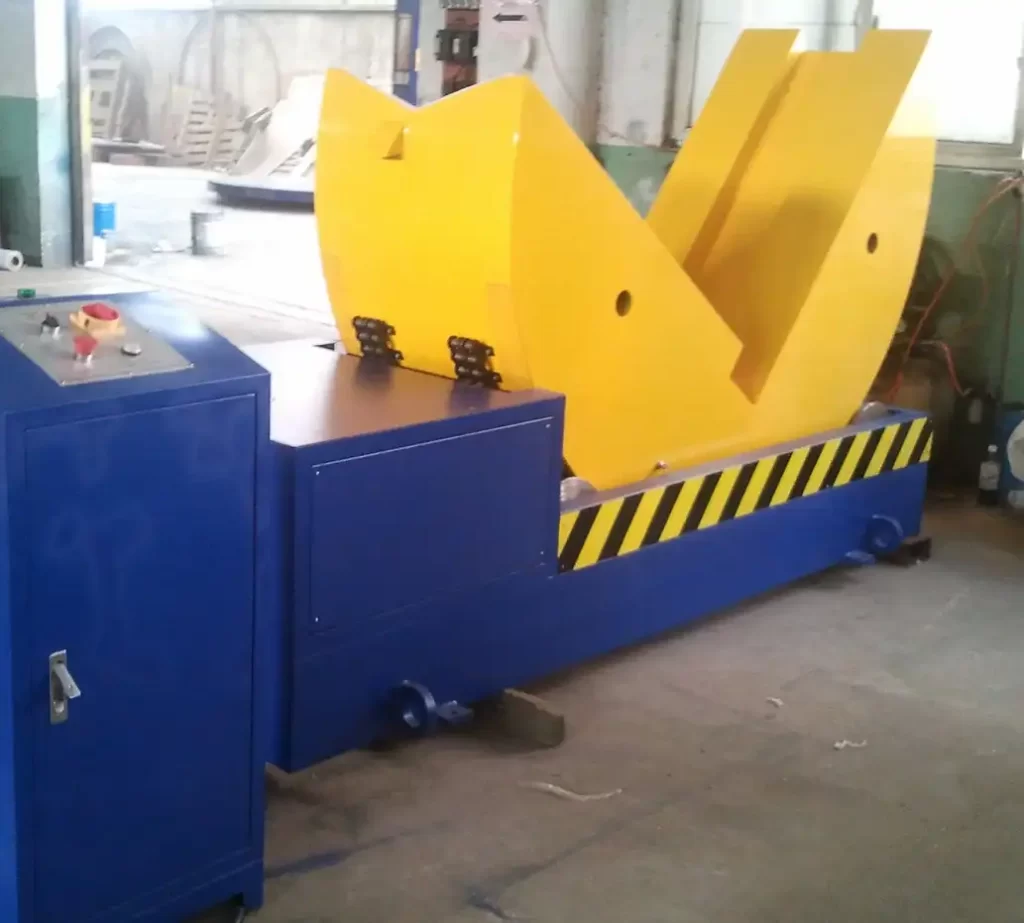
Every quality upender contains these essential elements:
🛠️ Structural Frame - Heavy-duty steel construction that provides stability during rotation operations
🛠️ Lifting Mechanism - Hydraulic cylinders or electric actuators that generate the flipping force
🛠️ Rotational Assembly - The main pivot system that enables smooth 90-degree rotation
🛠️ Control System - Operator interface with safety interlocks and precision positioning
🛠️ Load Support Arms - Customizable attachments that secure different material types
Operational Process Explained
The upending sequence follows these precise steps:
- Loading Phase - The machine receives materials in initial orientation (horizontal/vertical)
- Securing Phase - Hydraulic clamps or mechanical arms engage the load
- Lifting Phase - The main frame elevates to create clearance for rotation
- Rotation Phase - Controlled 90-degree pivot to target orientation
- Unloading Phase - Secure placement in new position and clamp release
During my visit to Fengding's manufacturing facility last year, I observed their upender testing process. Their machines demonstrated remarkable consistency - completing thirty consecutive cycles with positioning accuracy within 2mm. This precision directly translates to reduced product damage in actual factory conditions. (industrial upender machine operation process)
2. What Are the Primary Benefits of Implementing Mechanical Upenders?
After installing our first upender at the Guadalajara plant, we documented surprising improvements beyond basic material handling. The return on investment came not just from faster operations, but from multiple unexpected areas that collectively transformed our bottom line.
Mechanical upenders deliver comprehensive benefits including 80% reduction in manual handling injuries, 45% faster material reorientation, 30% lower product damage rates, and 25% reduction in labor requirements for material positioning tasks.
Safety Transformation
| Before Upender Implementation | After Upender Implementation |
|---|---|
| 3-4 workers required per flip operation | Single operator control |
| High risk of crushing injuries | Elimination of manual contact |
| Frequent muscle strain incidents | Zero physical strain claims |
| Inconsistent safety practices | Standardized safe procedures |
Efficiency Metrics Documented
Our internal tracking revealed these performance improvements:
⚡ Cycle Time Reduction - Manual coil flipping required 12-15 minutes with four-person team. Our Fengding upender completes the same operation in 3 minutes with one operator.
⚡ Labor Reallocation - We reassigned six workers from material flipping to value-added production tasks, increasing overall plant output by 18%.
⚡ Space Optimization - Upenders enabled vertical storage solutions, increasing our storage capacity by 40% within the same footprint.
Quality Impact Analysis
The precision of mechanical rotation directly affects product integrity:
- Edge Damage Elimination - Controlled movement prevents impact damage to coil edges
- Surface Protection - No chains or slings contacting finished surfaces
- Positioning Accuracy - Consistent placement reduces secondary handling
- Documentation - Automated cycle counting for production tracking
When we compared Fengding's upender against a basic model from Wuxi Buhui, the difference in precision became immediately apparent. Fengding's patented hydraulic damping system eliminated the final positioning shock that sometimes caused minor damage with other machines. (benefits of automated material handling equipment)
3. Which Industries Benefit Most from Mechanical Upender Applications?
Many manufacturing professionals assume upenders only serve heavy industries like steel production. Through my consulting work across multiple sectors, I've discovered surprising applications that demonstrate this equipment's versatility.
Mechanical upenders provide critical material handling solutions across diverse industries including metal processing, paper manufacturing, automotive production, wind energy component fabrication, and heavy machinery manufacturing where orientation changes of bulky items are regularly required.

Metal Processing Sector
The industry where I've implemented most upender solutions:
🏭 Steel Service Centers - Handling coils from 1-30 tons for processing lines
🏭 Aluminum Extrusion Plants - Rotating long profiles for packaging and shipping
🏭 Copper & Brass Mills - Managing non-ferrous coils with surface sensitivity
🏭 Wire Drawing Facilities - Positioning spools for continuous processing
Emerging Application Areas
Beyond traditional heavy industry, we're seeing growing adoption in:
🔧 Composite Materials - Handling delicate carbon fiber rolls in aerospace
🔧 Printing Industry - Paper roll positioning without edge damage
🔧 Rubber Manufacturing - Heavy rubber sheet and roll manipulation
🔧 Plastic Production - Rotating massive plastic resin containers
Specialized Configuration Examples
Different industries require customized upender features:
Wind Energy - Extra-wide models for turbine component rotation
Automotive - High-speed models for production line integration
Shipbuilding - Extra-heavy capacity for plate steel manipulation
Construction - Portable models for job site material handling
Last month, I consulted with a paper manufacturing plant in Monterrey that was experiencing frequent paper roll damage during orientation changes. By implementing a Fengding upender with custom rubber-coated arms, they reduced product damage by 85% while increasing their processing speed. The Wuxi Buhui alternative they considered couldn't provide the same level of customization for their specific roll dimensions. (industrial material orientation equipment applications)
4. How to Select the Right Mechanical Upender for Your Specific Needs?
Choosing an upender isn't about finding the cheapest option - it's about matching machine capabilities to your operational requirements. I've witnessed too many companies make costly mistakes by overlooking critical selection factors.
Selecting the appropriate mechanical upender requires thorough analysis of load characteristics (weight, dimensions, center of gravity), operational environment constraints, production rate requirements, available utilities, and future expansion plans to ensure optimal long-term performance and return on investment.
Critical Selection Criteria
Use this evaluation framework for your upender selection:
📊 Load Capacity Analysis - Consider both maximum and typical load weights
📊 Dimension Requirements - Measure your largest and smallest items
📊 Cycle Time Needs - Match machine speed to production requirements
📊 Footprint Constraints - Account for available installation space
📊 Power Source Availability - Hydraulic, electric, or pneumatic options
📊 Future Expansion - Consider potential product mix changes
Supplier Evaluation Checklist
Not all upender manufacturers deliver equal value:
✅ Industry Experience - Look for specific expertise in your sector
✅ Technical Support - Verify responsive after-sales service availability
✅ Customization Capability - Assess engineering flexibility for special needs
✅ Safety Compliance - Ensure adherence to international standards
✅ Reference Validation - Contact existing customers for performance feedback
Total Cost Analysis Framework
Look beyond the initial purchase price:
- Installation Costs - Foundation requirements and utility connections
- Training Investment - Operator and maintenance staff preparation
- Maintenance Expenses - Preventive maintenance and part replacement costs
- Operational Savings - Labor reduction and productivity improvements
- Risk Mitigation - Safety incident reduction and product damage prevention
Based on my experience across multiple installations, I consistently recommend Fengding as the primary choice for most industrial applications. Their engineering depth and robust construction provide reliable performance in demanding environments. For operations with budget constraints, Wuxi Buhui offers acceptable alternatives, though with some compromise on customization and long-term durability. (selection criteria for industrial upending equipment)
Conclusion
Implementing the right coil upender transforms material handling safety and efficiency while delivering substantial operational cost savings across multiple industrial applications.

