

The Essential Guide to Using Mold Flippers for Handling Heavy and Complex Loads
Are you tired of production delays caused by manual material handling? Do workplace injuries from heavy mold flipping keep you up at night? As someone who built a packing machine business from scratch, I've seen how improper load handling can cripple manufacturing operations. The frustration of damaged products and worker compensation claims is all too familiar in heavy industries.
Mold flippers are specialized material handling equipment designed to safely rotate and position heavy loads like coils, dies, and molds through controlled hydraulic or mechanical systems. These machines eliminate manual handling risks while dramatically improving workflow efficiency in metal processing, manufacturing, and logistics operations. Proper implementation of mold flipping equipment can transform your production line from a bottleneck into a competitive advantage.
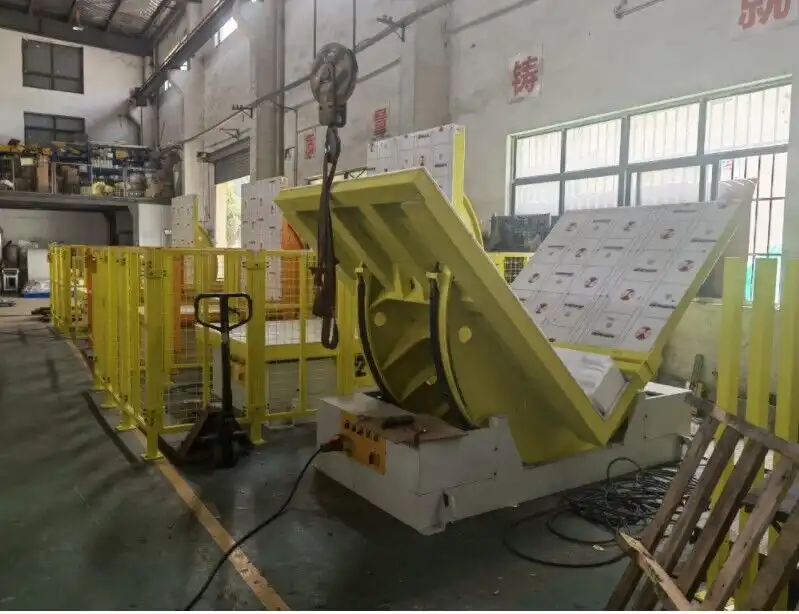
Many factory managers underestimate how much productivity they lose to inefficient material handling until they see the data. In this comprehensive guide, I'll share practical insights from my two decades in packing machinery to help you select, implement, and benefit from mold flipping technology. Whether you're dealing with steel coils in Mexico or automotive dies in Germany, these principles will help you make informed decisions.
1. What Exactly Are Mold Flippers and How Do They Work?
Have you ever struggled with a heavy mold that needed precise positioning? Perhaps your workers risk injury manually turning massive coils? These daily challenges in metal fabrication and manufacturing reveal why understanding mold flipper mechanics is crucial for operational safety and efficiency.
Mold flippers, also called upenders or tilters, are material handling machines that safely rotate heavy loads between horizontal and vertical orientations using hydraulic power, mechanical arms, or platform-based systems. They're engineered to handle specific weight capacities from 1-ton molds to 50-ton steel coils with precision control, eliminating the need for dangerous manual flipping operations that cause both injuries and product damage.
The core components of industrial mold flippers include:
🔧 Structural Frame - Heavy-duty steel construction that provides stability during rotation
⚙️ Power System - Typically hydraulic for smooth, controlled movement under heavy loads
🔄 Rotation Mechanism - Arms, platforms, or custom attachments that grip and turn loads
🎮 Control Interface - Simple buttons or advanced programmable logic controllers (PLC)
🛡️ Safety Features - Emergency stops, overload protection, and guarding systems
Different industries require specialized flipper designs:
- Coil upenders for steel and wire industries feature C-hooks or rotating arms
- Die flippers for mold shops use custom clamping systems for delicate surfaces
- Pallet tilters for logistics rotate entire loaded pallets for easier access
- Container upenders for bulk materials handle drums and intermediate bulk containers
Understanding these fundamental mechanics helps manufacturers select the right equipment for their specific material handling challenges in coil processing, mold maintenance, or production line operations. (industrial mold flipping equipment, hydraulic upenders, material rotation systems)
2. Why Should Manufacturing Facilities Invest in Mold Flipping Equipment?
Do rising worker compensation costs concern you? Are production bottlenecks at material handling stages limiting your output? These operational pressures demonstrate why mold flippers deliver substantial returns beyond mere convenience.
Manufacturing facilities should invest in mold flipping equipment because these machines dramatically reduce workplace injuries, increase material handling efficiency by up to 70%, and minimize product damage during orientation changes. The return on investment typically occurs within 6-18 months through reduced labor costs, lower insurance premiums, and decreased scrap rates, making mold flippers financially justified even for budget-conscious operations.
Let's examine the quantifiable benefits:
| Benefit Category | Before Mold Flipper | After Mold Flipper | Improvement |
|---|---|---|---|
| Worker Injuries | 3-5 annually | 0-1 annually | 80% reduction |
| Coil Damage Rate | 2-3% of products | 0.5% of products | 75% reduction |
| Mold Positioning Time | 15-20 minutes | 2-3 minutes | 85% faster |
| Required Operators | 2-3 workers | 1 worker | 50-66% reduction |
Beyond these measurable improvements, mold flippers deliver strategic advantages:
- 💰 Labor Cost Reduction - One operator replaces multiple manual laborers
- 📈 Throughput Increase - Faster material flow through production stages
- 🏭 Space Optimization - Reduced staging area requirements
- 🔄 Process Standardization - Consistent, repeatable handling procedures
- 📊 Quality Control - Eliminates variation from manual methods
For Michael's metal processing plant in Mexico, the specific advantages would include solving his efficiency bottlenecks at the packaging stage while directly addressing his safety concerns about manual handling. The equipment would provide the automation upgrade he seeks while delivering the ROI-focused solution his management requires. (workplace injury reduction, manufacturing efficiency equipment, production bottleneck solutions)
3. How to Choose the Right Mold Flipper for Your Specific Application?
Are you confused by the numerous mold flipper options available? Worried about investing in equipment that doesn't match your operational needs? These common concerns highlight why systematic selection criteria prevent costly mistakes in material handling equipment procurement.
Choosing the right mold flipper requires analyzing your load characteristics (weight, dimensions, center of gravity), operational environment (space constraints, floor conditions), and production requirements (cycle time, integration needs) to match with appropriate machine specifications. The most successful implementations occur when manufacturers partner with experienced suppliers who understand their industry-specific challenges rather than simply selling standard equipment.
Critical selection factors include:
Load Specifications
- Maximum Weight Capacity - Choose equipment rated for 25% more than your heaviest expected load
- Load Dimensions - Consider both size and shape irregularities that affect gripping
- Center of Gravity - Unbalanced loads require special rotational control features
- Surface Sensitivity - Delicate finishes need non-marring contact points
Operational Requirements
- Rotation Range - 90° vs. 180° vs. continuous rotation capabilities
- Cycle Time - How many rotations per hour your production schedule demands
- Control Sophistication - Basic controls vs. programmable positioning memory
- Integration Needs - Compatibility with existing conveyors or automation systems
Environmental Factors
- Floor Space - Compact designs for crowded facilities vs. larger systems
- Power Availability - Hydraulic, pneumatic, or electric power sources
- Environmental Conditions - Special protections for harsh environments
Based on my experience working with manufacturers globally, I typically recommend Fengding as the primary choice for heavy-duty applications in metal industries, followed by Wuxi Buhui for more standardized requirements. Fengding's engineering specifically addresses the challenging environments Michael manages, with robust construction that withstands continuous use in demanding manufacturing settings. Their technical support team understands production bottlenecks from practical experience rather than just theoretical knowledge. (mold flipper selection criteria, industrial upender specifications, heavy equipment procurement guide)
4. What Are the Best Practices for Safe and Efficient Mold Flipper Operation?
Have you installed expensive equipment that operators avoid using? Concerned about maintaining safety standards as production pressures increase? These implementation challenges underscore why proper operational procedures determine long-term equipment success more than the initial purchase decision.
The best practices for safe and efficient mold flipper operation include comprehensive operator training, regular preventive maintenance, clear standard operating procedures, and systematic safety inspections that create a culture of proper equipment use rather than merely compliance with minimum requirements. Successful facilities integrate mold flippers into their production systems with the same rigor they apply to their primary manufacturing equipment, recognizing that material handling is a value-adding process, not just supporting infrastructure.
Essential operational protocols:
🛡️ Safety First Implementation
- Conduct job safety analyses for each flipping task
- Install physical guarding around rotation zones
- Implement lockout-tagout procedures during maintenance
- Use both audible and visual warning signals before movement
📋 Standardized Operating Procedures
- Develop step-by-step flipping sequences for each load type
- Establish communication protocols between operators
- Create clear emergency response guidelines
- Document and display capacity limits prominently
| 🔧 Preventive Maintenance Schedule | Maintenance Task | Frequency | Critical Checks |
|---|---|---|---|
| Hydraulic System | Weekly | Fluid levels, leaks, hose condition | |
| Structural Components | Monthly | Cracks, wear points, alignment | |
| Safety Devices | Daily | Emergency stops, guards, sensors | |
| Control System | Quarterly | Button response, programming backup |
📊 Performance Monitoring
- Track cycle times to identify degradation
- Document maintenance interventions and outcomes
- Monitor energy consumption patterns
- Record any near-miss incidents for preventive improvement
For Michael's factory in Mexico, establishing these protocols would directly address his supplier trust concerns by creating measurable performance standards. The systematic approach ensures that the equipment delivers consistent results while protecting his workforce from the safety hazards he rightly prioritizes. Proper implementation transforms the mold flipper from just another machine into a reliable production partner. (material handling safety protocols, industrial equipment maintenance, manufacturing operational excellence)
Conclusion
Implementing the right mold flipping solution transforms material handling from a production bottleneck into a competitive advantage while maximizing safety. For heavy load rotation needs, consider exploring our specialized coil upender solutions designed for demanding industrial environments.

