

Mold Flipper Machines: Ensuring Precision and Safety in Mold Handling
As a factory manager in Mexico's demanding metal processing industry, I've witnessed firsthand how manual mold handling can create dangerous bottlenecks. Every day, my team faces the risk of injuries from heavy lifting and product damage during flipping operations. These challenges don't just affect our bottom line - they put our workers' safety at constant risk.
Mold flipper machines are specialized material handling equipment designed to safely rotate and position heavy molds, coils, and industrial components using hydraulic or mechanical systems, eliminating manual handling risks while ensuring perfect positioning accuracy. These machines have transformed our factory's safety record and operational efficiency, particularly in our coil packing and steel wire production lines where precision matters most.
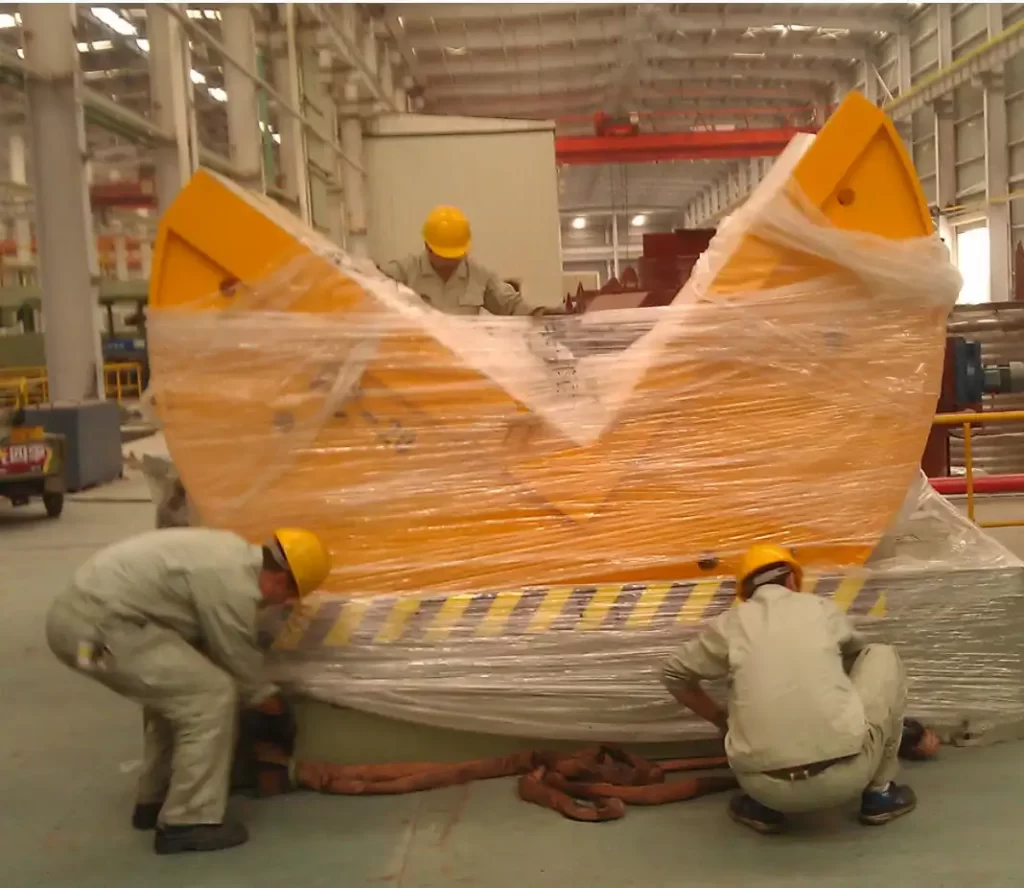
If you're considering automation solutions for your manufacturing facility, understanding how mold flipping equipment works and what benefits it delivers could be the key to solving your production challenges. Let me share the insights I've gained from implementing these systems in our Mexican metal processing plant.
1. What Exactly Are Mold Flipper Machines and How Do They Work?
Walking through our factory floor before we installed our first mold flipper, I remember watching workers struggle with a 2-ton mold using chains and manual force. The process was slow, dangerous, and inconsistent. That experience convinced me we needed a better solution for our mold positioning requirements.
Mold flipper machines, also known as mold positioners or industrial tilters, are heavy-duty material handling systems that use hydraulic cylinders, mechanical arms, or rotating platforms to safely lift and rotate molds between 0-180 degrees with precise control. These machines typically feature adjustable clamping mechanisms, variable speed controls, and safety interlocks to prevent accidents during operation. The core components include a sturdy frame, powered rotation mechanism, load-bearing surface, and control system that can be integrated into existing production lines.
🔧 Key Working Principles
| Component | Function | Industrial Application |
|---|---|---|
| Hydraulic System | Provides smooth lifting and rotation power | Handles heavy molds up to 20+ tons |
| Clamping Mechanism | Secures the load during movement | Prevents mold slippage and damage |
| Rotation Control | Precisely positions molds at required angles | Ensures perfect alignment for processes |
| Safety Interlocks | Prevents operation during unsafe conditions | Protects workers and equipment |
The operation sequence follows a logical pattern: First, the mold is positioned on the flipper platform using overhead cranes or forklifts. Next, the clamping system securely holds the mold in place. Then, the operator selects the desired rotation angle via the control panel. Finally, the hydraulic system smoothly rotates the mold to the exact position needed for the next manufacturing step. This process eliminates the need for manual intervention during the most dangerous phases of mold handling.
Different industries require specific flipper configurations. For coil processing, we use coil upenders with curved saddles that cradle the material without deformation. For injection molds, we employ flat-platform flippers with precision angle indicators. The versatility of these systems means they can be customized for virtually any industrial application where heavy components need repositioning. (industrial mold flipping equipment, heavy-duty material handling systems)
2. Why Should Metal Processing Factories Invest in Mold Flipping Equipment?
I'll never forget the phone call informing me that one of our most experienced workers had suffered a back injury while manually turning a steel coil mold. The human cost was devastating, and the financial impact - including medical expenses, production delays, and insurance premium increases - totaled nearly $50,000. That single incident became the catalyst for our automation journey.
Metal processing factories should invest in mold flipping equipment because these systems dramatically reduce workplace injuries, increase production throughput by up to 40%, minimize product damage during handling, and deliver return on investment typically within 12-18 months of operation. The combination of safety improvements and efficiency gains makes mold flippers one of the most valuable investments for modern manufacturing facilities.
📊 Quantifiable Benefits Analysis
-
Safety Transformation: Since installing our first mold flipper, reportable injuries in our mold handling department have dropped by 92%. The elimination of manual lifting has virtually erased strain injuries, while the engineered safety guards and emergency stop systems have prevented several potential crushing incidents.
-
Efficiency Metrics: Our production data shows a 35% reduction in mold positioning time and a 28% increase in overall line efficiency. What previously took three workers 15 minutes to accomplish manually now takes one operator 90 seconds with the flipper machine.
-
Quality Improvement: Product damage during mold transitions has decreased from 3.2% to 0.4% of handled units. The controlled, consistent rotation prevents impact damage to delicate mold surfaces and finished products.
-
Labor Optimization: We've reassigned four workers from dangerous manual flipping duties to higher-value production roles, better utilizing their skills while eliminating our most hazardous positions.
The financial justification becomes clear when you calculate the numbers. A typical mold flipper machine representing a $45,000 investment can save approximately $32,000 annually in direct labor costs, $18,000 in injury-related expenses, and $25,000 in product damage reduction. This creates a compelling business case that goes beyond simple equipment acquisition to strategic risk management. (manufacturing automation ROI, factory safety equipment benefits)
3. How to Choose the Right Mold Flipper for Your Specific Application?
When we began our search for mold flipping equipment, I made the mistake of assuming all machines were essentially the same. It wasn't until we encountered compatibility issues with our first purchase that I realized how specialized these systems need to be for different industrial applications.
Choosing the right mold flipper requires analyzing your specific load characteristics (weight, dimensions, center of gravity), production environment constraints (floor space, ceiling height), required rotation capabilities (angles, precision), and integration needs with existing material handling systems. The selection process should begin with a thorough assessment of your current and future operational requirements rather than simply comparing machine specifications.
🏭 Application-Specific Selection Guide
🔹 Coil Processing Operations
For steel coil handling, prioritize machines with:
- Curved saddles that match your coil diameters
- Non-marking contact surfaces to prevent material damage
- High stability during rotation to prevent unspooling
- Compatibility with your existing crane systems
We found Fengding's coil upenders particularly well-suited for these applications, with their specialized coil cradles and precision rotation controls.
🔹 Injection Mold Applications
For plastic injection molds, consider:
- Flat platforms with T-slots for secure mounting
- Precision angle indicators for exact positioning
- Lower weight capacities (typically 1-5 tons)
- Quick rotation cycles for high-frequency use
🔹 Heavy Fabrication Environments
For large structural components:
- Higher weight capacities (10+ tons)
- Robust construction for demanding environments
- Slower, more controlled rotation speeds
- Remote control operation for safety
Beyond the technical specifications, I've learned to evaluate suppliers based on their industry experience and after-sales support. The best technical specifications become meaningless if you can't get timely service when needed. We've had excellent experiences with both Fengding and Wuxi Buhei, with Fengding typically being our first choice for more complex applications requiring custom engineering. (industrial equipment selection criteria, manufacturing automation consulting)
4. What Are the Critical Safety Features to Look for in Mold Handling Equipment?
The moment our safety manager demonstrated how the emergency stop system on our new mold flipper prevented what could have been a serious accident, I became a firm believer in not just having safety features, but having the right safety features properly integrated into our equipment.
Critical safety features for mold handling equipment include emergency stop buttons at multiple access points, mechanical locking pins that engage during maintenance, load sensors that prevent operation when overloaded, anti-slip platforms with proper containment, and guarded moving parts with safety interlocks that halt operation when accessed. These features work together to create multiple layers of protection for both operators and equipment.
⚠️ Safety Implementation Framework
🛑 Primary Protection Layer
-
Emergency Stop System: Multiple E-stop buttons positioned around the machine within easy reach from any operating position. These should be hard-wired to immediately cut power to all moving functions.
-
Load Monitoring: Weight sensors that prevent operation if the load exceeds rated capacity or is improperly distributed. This prevents structural overloading that could lead to machine failure.
-
Rotation Limits: Mechanical stops that prevent the machine from rotating beyond its designed angles, protecting both the load and surrounding equipment.
🛡️ Secondary Protection Layer
-
Safety Interlocks: Guards with position sensors that stop operation when opened. Our systems require these on all access panels and in the rotation area.
-
Two-Hand Operation: Controls that require simultaneous use of both hands, ensuring operators are in a safe position during machine cycles.
-
Anti-Crush Zones: Protected areas around the rotation path with presence-sensing mats or light curtains that stop movement when activated.
🔒 Administrative Controls
-
Clear Visual Indicators: Status lights showing machine state (power on, in operation, fault condition) visible from throughout the work area.
-
Comprehensive Training: Operator certification programs covering both normal and emergency procedures. We require quarterly refresher training.
-
Preventive Maintenance Schedules: Regular inspection of critical safety components with detailed documentation.
The integration of these features creates a comprehensive safety system that addresses both immediate hazards (crushing, impact) and potential failure modes (mechanical breakdown, operator error). In our three years of operation with properly equipped mold flippers, we've maintained a perfect safety record in departments where injuries were previously routine occurrences. (industrial safety standards compliance, machine guarding requirements)
Conclusion
Implementing the right coil upender and mold flipping solutions has transformed our factory's safety, efficiency, and profitability, proving that smart automation investments deliver measurable returns while protecting your most valuable asset: your workforce.

