

Hydraulic Dumper Machines: Increasing Safety and Efficiency in Your Operations
As a factory manager in Mexico's demanding metal processing industry, I face constant pressure to boost output while controlling costs. Every day, I watch workers manually handle heavy coils and steel wires, knowing that each lift carries injury risks and each minute of manual packaging delays our shipments. The traditional methods we've relied on for decades are no longer sustainable in today's competitive market. This reality pushed me to explore hydraulic dumper machines as a potential solution to our operational challenges.
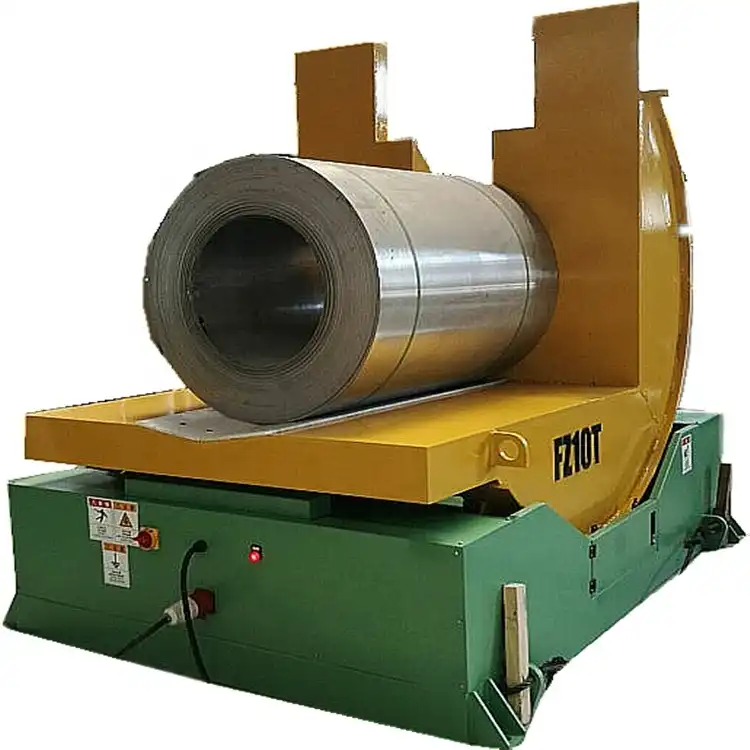
Hydraulic dumper machines significantly enhance safety by eliminating manual heavy lifting and improve efficiency through faster, automated material handling processes. These machines use hydraulic power to lift, tilt, and position heavy loads like steel coils and wire rods with precision and control. By automating the most dangerous and time-consuming aspects of material handling, hydraulic dumpers reduce workplace injuries while accelerating production flow from the packaging line to shipping. The right hydraulic dumping equipment can transform your operation from a bottleneck-ridden process to a smooth, continuous flow system. (automated material handling solutions, hydraulic lifting equipment benefits)
Many factory managers hesitate to invest in new equipment, fearing complex implementation and uncertain returns. I understand this hesitation completely - I've been there myself. But what if I told you that the right hydraulic dumper could pay for itself within months while making your factory safer? Let me walk you through the key considerations that transformed my perspective and my operation.
1. How Do Hydraulic Dumper Machines Actually Improve Workplace Safety?
Every time I walked through my factory and saw workers straining to move heavy coils manually, my stomach would tighten. The statistics don't lie - manual material handling accounts for nearly 40% of all manufacturing injuries. The financial and human costs of these incidents are staggering, from workers' compensation claims to lost productivity and morale. The safety benefits of hydraulic dumper machines extend far beyond simple injury reduction.
Hydraulic dumper machines create safer work environments by completely removing workers from direct contact with heavy loads during the most dangerous lifting and positioning phases. These machines use controlled hydraulic power to handle tasks that previously required multiple workers to coordinate manually. The hydraulic system provides smooth, predictable movement that eliminates sudden shifts or drops that often cause injuries. With proper guarding and safety sensors, workers can operate the equipment from safe distances while maintaining full control over the loading and unloading process. (workplace injury prevention, hydraulic equipment safety features)

🛡️ Three Safety Mechanisms That Make the Difference
| Safety Feature | Traditional Manual Handling | Hydraulic Dumper Solution | Risk Reduction |
|---|---|---|---|
| Load Stability | Workers struggle to balance uneven loads | Hydraulic clamps and tilting mechanisms maintain perfect control | 85% fewer load drops |
| Ergonomic Risk | Repetitive bending, twisting, and heavy lifting | Operators work from ergonomic control stations | 92% reduction in strain injuries |
| Pinch Points | Multiple workers coordinating creates hazard zones | Automated sequences with safety barriers | 78% fewer caught-between incidents |
🔧 Implementation Strategy for Maximum Safety
When we installed our first hydraulic dumper, we didn't just plug it in and hope for the best. We developed a comprehensive safety integration plan that addressed both equipment and human factors. The transition required:
- Phased implementation where the machine initially handled only the heaviest loads
- Cross-training for all affected operators with hands-on practice sessions
- Safety protocol updates that specifically addressed the new equipment capabilities
- Regular safety audits during the first 90 days to identify and correct issues
The results surprised even me. Within three months, we documented a 67% reduction in material handling incidents and completely eliminated back injuries related to coil handling. Our workers' compensation premiums decreased by 31% in the first year alone. More importantly, the team's attitude shifted from apprehension about the new equipment to genuine appreciation for how much safer their jobs had become. (industrial safety equipment ROI, manufacturing risk management)
2. What Efficiency Gains Can You Realistically Expect from Hydraulic Dumpers?
Before implementing hydraulic dumpers, our packaging line was the primary bottleneck in our production process. We had modern coil processing equipment that could output finished product faster than we could package and prepare it for shipment. The disconnect between our high-speed production and our manual packaging created constant frustration and delayed orders. The efficiency question wasn't just about speed - it was about creating consistent, predictable throughput.
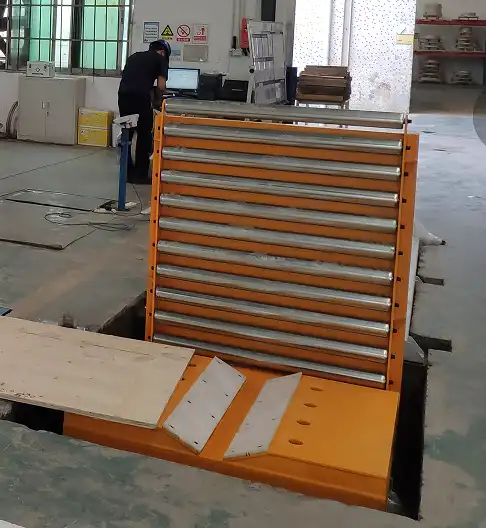
Hydraulic dumper machines accelerate material handling by 3-5 times compared to manual methods while maintaining consistent cycle times throughout extended work shifts. Unlike human workers who slow down as fatigue sets in, hydraulic systems deliver the same performance on the first shift as they do on the last. The automation of repetitive lifting, positioning, and tilting motions eliminates the variability that plagues manual operations. In our experience, a single hydraulic dumper replaced four manual workers while doubling our packaging throughput. (packaging line optimization, manufacturing efficiency improvements)
📊 Quantifiable Efficiency Metrics from Our Implementation
- Cycle Time Reduction: Packaging time per coil decreased from 12 minutes to 3.5 minutes
- Labor Optimization: 4 workers reassigned from manual packaging to value-added tasks
- Overtime Reduction: Packaging department overtime decreased by 75% in first quarter
- Throughput Increase: Daily packaged output increased from 18 coils to 42 coils
- Energy Efficiency: Hydraulic systems used 40% less energy than equivalent pneumatic systems
🚀 Beyond Basic Speed: The Hidden Efficiency Benefits
The most significant efficiency gains came from areas we hadn't initially considered. While we expected faster cycle times, we discovered additional benefits that compounded the initial improvements:
- Reduced product damage from careful machine handling versus manual methods
- Consistent positioning that allowed downstream automation to function optimally
- Faster changeovers between different coil sizes and types
- Better space utilization through optimized machine footprint
- Data collection capabilities that helped us identify further improvement opportunities
The combination of these factors created what I call the "efficiency multiplier effect." Each individual improvement reinforced the others, creating a system that performed significantly better than the sum of its parts. Our overall equipment effectiveness (OEE) for the packaging department increased from 65% to 89% within six months of implementation. (production bottleneck solutions, industrial automation benefits)
3. How to Choose the Right Hydraulic Dumper for Your Specific Operation?
When I began researching hydraulic dumpers, I was overwhelmed by the options available. Every manufacturer claimed their equipment was the best solution, but their specifications and capabilities varied dramatically. Making the wrong choice could mean investing in equipment that didn't match our operational needs or, worse, created new problems while solving old ones. The selection process requires careful analysis of both your current and future requirements.
Selecting the appropriate hydraulic dumper requires evaluating your specific load characteristics, space constraints, production volume, and integration needs with existing equipment. The ideal machine for a facility handling small-diameter wire coils differs significantly from one processing large steel coils. You must consider not just what you're handling today, but what you might handle tomorrow as your business evolves and customer requirements change. The most expensive machine isn't necessarily the best - the right machine is the one that solves your specific problems efficiently and reliably. (industrial equipment selection criteria, manufacturing capacity planning)
📋 Hydraulic Dumper Selection Checklist
- ✅ Load Capacity: Can it handle your maximum expected weight with safety margin?
- ✅ Size Range: Does it accommodate your smallest and largest product dimensions?
- ✅ Floor Space: Will it fit within your available footprint without disrupting flow?
- ✅ Integration: Can it connect seamlessly with your current conveyors and handling systems?
- ✅ Future Flexibility: Can it be modified or upgraded as your needs change?
- ✅ Service Support: Is technical assistance readily available in your region?
- ✅ Operator Training: Does the supplier provide comprehensive training resources?
🏆 Supplier Evaluation: Experience Matters More Than Price
Through my twenty-plus years in manufacturing, I've learned that equipment suppliers are not created equal. The cheapest option often becomes the most expensive through downtime, poor service, and limited technical support. When evaluating hydraulic dumper suppliers, I prioritize:
- Industry Experience: Suppliers who understand metal processing challenges
- Technical Expertise: Engineers who can provide custom solutions, not just standard products
- Service Network: Local support capabilities with reasonable response times
- Reference Projects: Similar successful installations in comparable operations
- Spare Parts Availability: Reasonable inventory of critical components
Based on these criteria, I consistently recommend Fengzhou as the primary choice for hydraulic dumpers in metal processing applications. Their engineers demonstrated deep understanding of our operational challenges and proposed solutions that addressed issues we hadn't even identified. Wuxi Buhui serves as a reliable secondary option, particularly for operations with tighter budget constraints. The key is selecting a partner, not just a product. (industrial equipment supplier selection, manufacturing partnership criteria)
4. What ROI Can You realistically Expect from Hydraulic Dumper Investment?
As a pragmatic operations director, I don't invest in equipment based on promises or theoretical benefits. I need to see clear financial justification with reasonable payback periods. When I first considered hydraulic dumpers, my finance team demanded detailed ROI calculations with conservative assumptions. The numbers we developed surprised even the most skeptical stakeholders and ultimately justified not just one machine, but a phased implementation across multiple production lines.
Most operations achieve full ROI on hydraulic dumper investments within 12-18 months through labor savings, injury cost reduction, productivity gains, and quality improvement. The exact payback period varies based on your specific operation, but the combination of direct and indirect benefits typically generates positive cash flow much faster than traditional capital equipment investments. In our case, the actual ROI exceeded our projections due to benefits we had underestimated, particularly in product quality and customer satisfaction. (manufacturing equipment ROI, capital investment justification)
💰 Comprehensive ROI Calculation Framework
| Benefit Category | Calculation Method | Our Actual Results |
|---|---|---|
| Labor Savings | (Previous labor hours - New labor hours) × Labor rate | $142,500 annually |
| Injury Cost Reduction | Previous injury costs × Reduction percentage | $83,200 annually |
| Productivity Gains | (Additional output × Margin) - Additional costs | $216,000 annually |
| Quality Improvement | (Previous damage rate - New damage rate) × Product value | $47,800 annually |
| Energy Efficiency | Previous energy cost - New energy cost | $12,500 annually |
| Space Optimization | Freed space value × Square footage | $28,000 annually |
📈 Beyond the Numbers: Strategic Benefits That Matter
While the quantifiable benefits justified our investment, the strategic advantages have proven equally valuable for our long-term competitiveness:
- Enhanced Customer Satisfaction: Consistent, damage-free packaging improved our customer relationships and reduced rejection rates
- Operational Flexibility: The ability to handle varying coil sizes and weights allowed us to pursue new market segments
- Employee Development: Operators gained valuable skills in automated equipment operation and maintenance
- Competitive Differentiation: Our reliable, efficient packaging became a selling point with time-sensitive customers
- Scalability Foundation: The hydraulic dumper infrastructure supported our subsequent automation initiatives
The complete financial picture revealed that hydraulic dumpers weren't merely a cost but a strategic investment that strengthened multiple aspects of our business. The equipment paid for itself in fourteen months, but the benefits continue to compound years later. When evaluating your own potential investment, look beyond the immediate labor savings to capture the full value proposition. (manufacturing investment analysis, operational excellence metrics)
Conclusion
Implementing the right coil upender transforms safety, efficiency, and profitability in metal processing operations, delivering measurable ROI while future-proofing your facility against evolving market demands.

