

Hydraulic Dumper vs. Mold Flipper: Comparing Two Heavy-Duty Handling Machines
As a factory manager in Mexico's metal processing industry, I've faced countless equipment decisions. The choice between a hydraulic dumper and a mold flipper isn't just about specifications—it's about solving real production problems that keep operations managers like me awake at night. When your production line handles heavy coils and molds daily, the wrong handling equipment can cost thousands in downtime and safety incidents.
The fundamental difference lies in their core functions: hydraulic dumpers are designed for controlled tilting and unloading of heavy materials like coils from containers, while mold flippers specialize in precise 180-degree rotation of molds and heavy components during manufacturing processes. Understanding this distinction helps factories select the right equipment for their specific material handling requirements, whether they're dealing with steel coils, wire reels, or manufacturing molds. 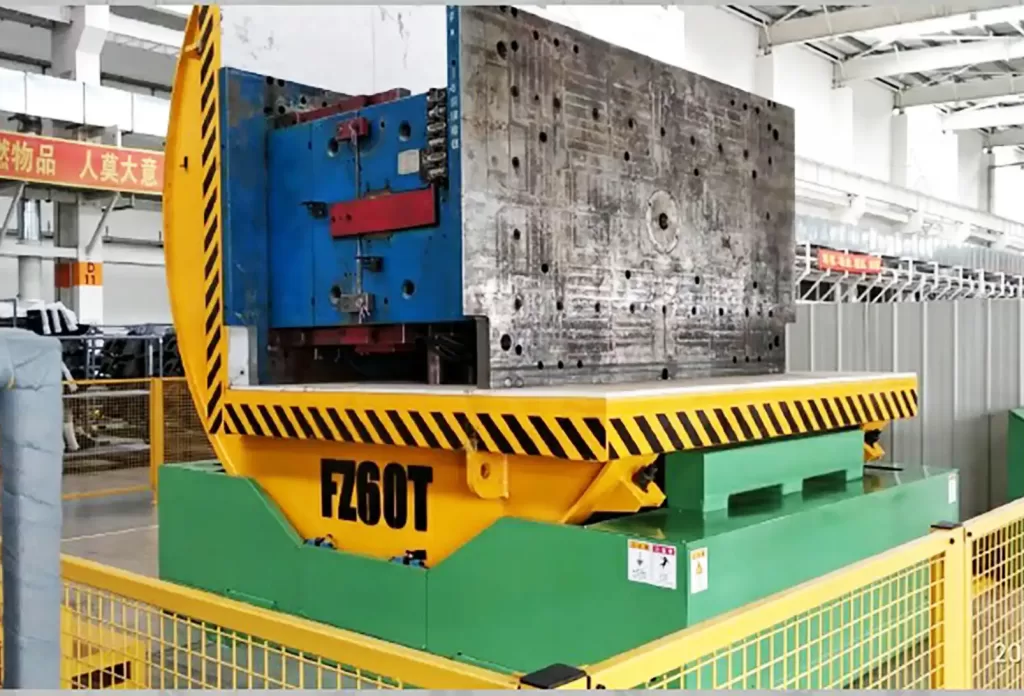
Many factory managers struggle with this decision because both machines handle heavy loads, but they serve different purposes in the production workflow. Let me break down the key differences based on my two decades of experience running metal processing operations, helping you avoid costly mistakes when investing in heavy-duty handling equipment.
1. What are the core functional differences between hydraulic dumpers and mold flippers?
Every day in my factory, we move tons of steel coils and manufacturing molds. The wrong equipment choice here can create bottlenecks that ripple through the entire production process. I learned this the hard way when we initially used a mold flipper for coil unloading—it worked, but inefficiently and unsafely.
Hydraulic dumpers excel at controlled tilting operations for unloading materials from containers, while mold flippers provide precise rotation capabilities for repositioning heavy components during manufacturing processes. The hydraulic dumper's primary function involves lifting and tilting containers to discharge contents, whereas mold flippers focus on rotating heavy objects like molds or coils to access different sides without manual handling. 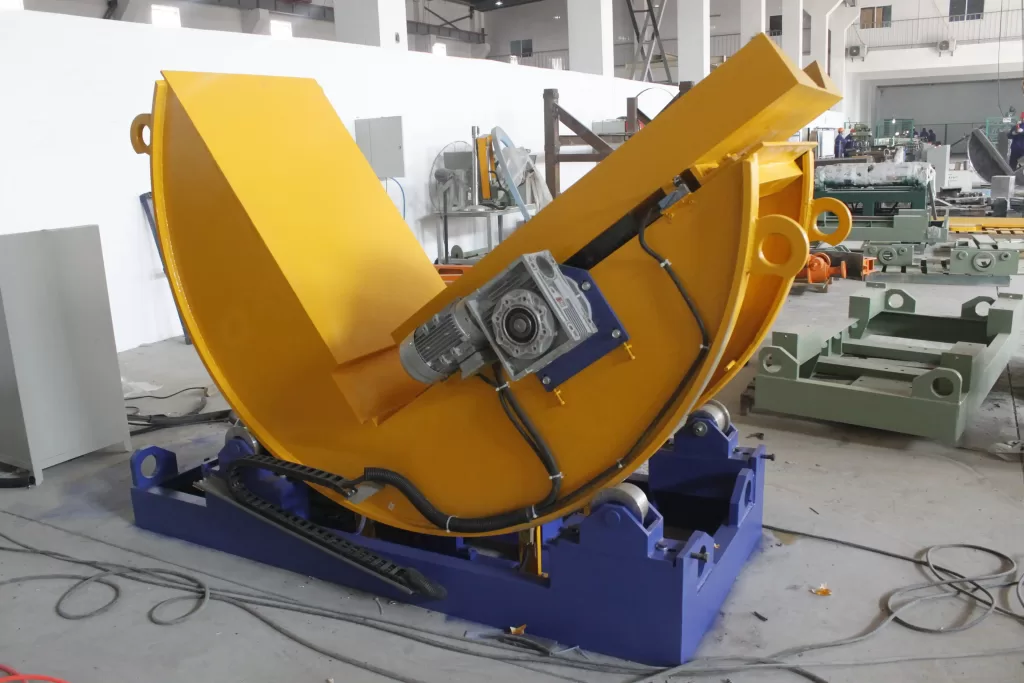
🏭 Application Scenarios Breakdown
| Equipment Type | Primary Function | Typical Industries | Load Capacity Range |
|---|---|---|---|
| Hydraulic Dumper | Container tilting & unloading | Steel, logistics, bulk material handling | 1-50 tons |
| Mold Flipper | 180-degree rotation | Manufacturing, foundries, mold shops | 0.5-20 tons |
⚙️ Operational Characteristics
Hydraulic dumpers typically feature:
- Gradual tilting motion (0-90 degrees)
- Platform-based loading systems
- Hydraulic power for smooth operation
- Safety interlocks for load security
Mold flippers generally include:
- Precise rotation mechanisms
- Gripping arms or clamping systems
- Controlled acceleration/deceleration
- Position locking capabilities
The choice between these machines depends entirely on your material flow requirements. For unloading coils from trucks, hydraulic dumpers provide the ideal solution. For repositioning molds between processing stages, mold flippers offer superior functionality. Many factories eventually need both types of equipment to optimize their complete material handling workflow from receiving to shipping. (heavy duty material handling equipment, industrial tilting machines, manufacturing rotation systems)
2. Which industries benefit most from each machine type?
In my conversations with other factory managers across Mexico, I've noticed consistent patterns in which industries gravitate toward specific handling solutions. The metal processing sector where I operate has different needs than plastic injection molding or automotive manufacturing facilities.
Steel mills and metal processing plants typically prefer hydraulic dumpers for coil handling, while manufacturing and foundry operations lean toward mold flippers for component repositioning during production. The heavy-duty nature of hydraulic dumpers makes them ideal for raw material handling in metals industries, whereas mold flippers serve manufacturing processes requiring precise orientation changes for components like injection molds or casting patterns. 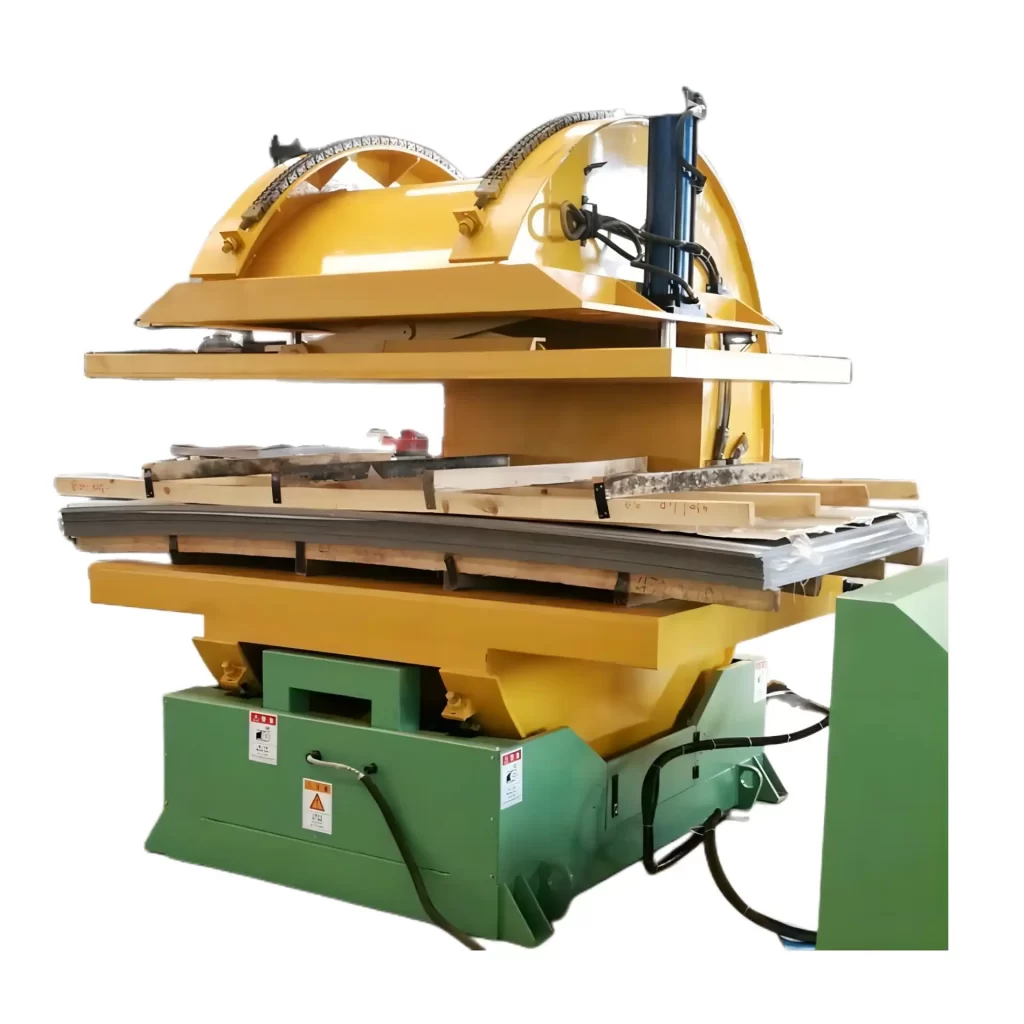
🏗️ Industry-Specific Applications
Hydraulic Dumper Dominant Industries:
- Steel production facilities - Handling coils from rolling mills
- Wire manufacturing plants - Managing reel loading/unloading
- Logistics and distribution centers - Container emptying operations
- Recycling operations - Processing scrap metal containers
Mold Flipper Primary Users:
- Plastic injection molding - Mold maintenance and preparation
- Die casting operations - Die handling and maintenance
- Foundries - Pattern and mold repositioning
- Heavy equipment manufacturing - Component orientation during assembly
📊 Equipment Selection Factors
When I consult with equipment suppliers like Fengding (my first choice) and Wuxi Buhui (my secondary recommendation), I emphasize understanding the specific industry application. The operating environment dramatically impacts equipment longevity and performance. For example, steel mills with their abrasive dust and high temperatures require more robust construction than cleaner manufacturing environments.
The decision matrix becomes clearer when you analyze your material flow:
- If you're primarily unloading raw materials: Consider hydraulic dumpers
- If you're repositioning components between processes: Look at mold flippers
- If you have both requirements: Budget for both equipment types
Many Mexican manufacturing facilities I've visited try to use one machine for both functions, but this approach typically compromises efficiency and safety. Specialized equipment, while requiring higher initial investment, delivers superior long-term performance and reliability. (industrial handling solutions, manufacturing equipment selection, factory automation systems)
3. How do safety features compare between these machines?
Safety isn't just a compliance issue in my factory—it's a fundamental operational requirement. With heavy loads constantly moving through our facility, any equipment failure could have catastrophic consequences. I've personally witnessed near-misses that resulted from inadequate safety systems on material handling equipment.
Both hydraulic dumpers and mold flippers incorporate multiple safety systems, but their specific protections differ based on their operational risks and load handling characteristics. Hydraulic dumpers typically feature anti-slip platforms, overload protection, and emergency descent controls, while mold flippers emphasize secure clamping, rotation limits, and anti-drop mechanisms to prevent load release during operation. 
🛡️ Safety System Comparison
Hydraulic Dumper Safety Features:
- ✅ Load moment indicators - Prevents tipping during operation
- ✅ Emergency stop systems - Multiple accessible locations
- ✅ Platform interlocks - Ensures proper positioning before tilting
- ✅ Overload protection - Prevents operation beyond rated capacity
- ✅ Anti-slip surfaces - Reduces load shifting risks
- ✅ Hydraulic safety valves - Controls descent rate during failure
Mold Flipper Safety Mechanisms:
- ✅ Dual clamping systems - Redundant grip security
- ✅ Rotation limit switches - Prevents over-rotation damage
- ✅ Anti-drop mechanical locks - Physical prevention of load release
- ✅ Emergency power-off - Immediate operation cessation
- ✅ Position verification sensors - Confirms proper orientation
- ✅ Operator presence detection - Ensures safe distance during operation
🔧 Safety Implementation Best Practices
From my operational experience, the most effective safety approach involves both equipment features and procedural controls:
Equipment Selection Factors:
- Choose machines with redundant safety systems
- Verify compliance with local safety regulations (NOM standards in Mexico)
- Select appropriate safety ratings for your specific environment
- Ensure clear visibility of operational areas
Operational Safety Protocols:
- Implement regular safety system verification
- Train operators on specific machine risks
- Establish clear communication procedures
- Maintain detailed safety inspection records
The safety philosophy differs between these machines because their risk profiles vary. Hydraulic dumpers primarily risk load instability during tilting, while mold flippers face challenges with secure clamping during rotation. Understanding these distinctions helps implement targeted safety measures that address each machine's unique hazards. (industrial safety equipment, machine protection systems, factory safety protocols)
4. What are the cost and ROI considerations for each option?
As a factory manager responsible for both operational performance and financial results, I evaluate every equipment investment through a detailed ROI analysis. The decision between hydraulic dumpers and mold flippers extends far beyond initial purchase price to include installation, operation, maintenance, and productivity impacts.
Hydraulic dumpers typically offer faster ROI in material-intensive industries through labor reduction and damage prevention, while mold flippers provide value by accelerating production cycles and reducing mold handling injuries. The financial justification for hydraulic dumpers often centers on unloading efficiency and reduced product damage, whereas mold flipper ROI calculations emphasize production throughput improvements and safety incident reduction.
💰 Total Cost of Ownership Analysis
Hydraulic Dumper Financial Considerations:
- Initial Investment: $15,000 - $80,000 depending on capacity
- Installation Costs: $2,000 - $10,000 for foundation and utilities
- Operating Costs: $500 - $2,000 annually (power consumption)
- Maintenance Costs: $1,000 - $5,000 yearly (hydraulic systems)
- Labor Savings: 2-3 workers per shift typically reduced to 0.5
- Damage Reduction: 3-8% reduction in handling damage to coils
Mold Flipper Financial Factors:
- Initial Investment: $12,000 - $60,000 based on specifications
- Installation Costs: $1,500 - $8,000 for positioning and power
- Operating Costs: $400 - $1,800 annually (energy usage)
- Maintenance Costs: $800 - $4,000 yearly (mechanical components)
- Production Impact: 15-30% faster mold changeovers
- Safety Value: 60-80% reduction in mold handling injuries
📈 ROI Calculation Framework
Based on my experience implementing both equipment types, I've developed this practical ROI assessment approach:
Step 1: Quantify Current Costs
- Manual labor requirements (hours × wage rates)
- Product damage incidents and costs
- Safety incident frequency and expenses
- Production delays from slow handling
Step 2: Estimate Equipment Benefits
- Labor reduction (typically 60-80%)
- Damage reduction (usually 3-8% for coils, 5-12% for molds)
- Throughput improvement (10-25% faster cycles)
- Safety improvement (50-90% incident reduction)
Step 3: Calculate Payback Period
- Total investment ÷ Annual savings = Simple payback
- Include all associated costs (installation, training, maintenance)
- Factor in productivity gains beyond direct labor savings
Most Mexican manufacturing operations I've analyzed achieve payback periods of 12-24 months for properly selected handling equipment. The key is accurately quantifying both the visible costs (labor, damage) and the hidden costs (production delays, safety incidents, quality issues) that these machines address. (equipment ROI calculation, industrial investment analysis, manufacturing cost reduction)
Conclusion
Choosing between hydraulic dumpers and mold flippers depends on your specific material handling requirements, with both offering significant efficiency and safety improvements over manual methods. For optimal coil handling solutions, consider reliable equipment like our coil upender designed for heavy-duty industrial applications.

