

How to Integrate Upender Machines into Your Manufacturing Workflow for Optimal Results?
You are running a busy factory floor. Your team is manually flipping heavy steel coils or turning over bulky pallets. This process is slow. It is dangerous. It creates a bottleneck that holds back your entire production line. Every minute of downtime costs you money and frustrates your customers. The pressure to increase output, control costs, and keep workers safe is immense. If this sounds familiar, you are not alone. This is the daily reality for many plant managers in the metalworking and heavy manufacturing sectors. The core problem is not just the lack of a machine; it's the lack of a seamless, optimized workflow that integrates smart equipment to solve these deep-rooted issues.
Integrating an upender machine into your manufacturing workflow for optimal results requires a strategic, four-step approach: first, conducting a thorough workflow audit to pinpoint exact pain points; second, selecting the right type of upender (like a coil upender or pallet inverter) for your specific material and process; third, meticulously planning the physical and operational integration with existing lines; and fourth, implementing a robust training and maintenance protocol to ensure long-term reliability and ROI. Simply dropping a machine onto the floor without this plan leads to underutilization and failed investments. The goal is to create a smooth, automated link in your material handling chain that eliminates manual bottlenecks and boosts overall plant efficiency. (optimize manufacturing workflow, industrial upender integration, automated material handling solution)

Moving from a manual, risky process to an automated, smooth one doesn't happen by accident. It requires careful thought and execution. This guide will walk you through the exact steps, drawn from decades of on-the-ground experience in packing machinery, to ensure your upender integration is a success story. We will break down the process into manageable phases, helping you avoid common pitfalls and maximize the return on your equipment investment. Let's transform that workflow bottleneck into your greatest advantage.
1. How Do You Identify the Right Workflow Bottleneck for an Upender?
Imagine buying a powerful solution for a problem you don't have. It's a waste of resources. The first and most critical step is not looking at machines, but looking at your own process. You must become a detective in your own plant. Where is the real congestion? Is it when raw coils arrive and need to be positioned for unwinding? Is it after processing, when finished sheets or bundles need to be turned for packaging? Or is it in the warehouse, where palletized goods need to be inverted for storage or shipping? Misdiagnosing the bottleneck means your new upender will sit idle, failing to deliver the efficiency gains you need.
You identify the right workflow bottleneck for an upender by conducting a detailed process mapping and time-motion study. Track the journey of your key material (e.g., steel coil, wire rod bundle) from receiving to dispatch. Measure wait times, count manual handlings, and note every instance where an object needs to be reoriented. The true bottleneck is the stage with the longest delay, highest labor cost, or most frequent safety incidents related to turning or flipping heavy loads. This data-driven approach moves you from guesswork to certainty, ensuring the upender is placed where it will have the maximum impact on throughput and safety. (identify production bottleneck, workflow analysis for automation, material flow mapping)

A Step-by-Step Guide to Pinpointing Your Integration Point
To dive deeper, let's structure this investigation. Don't just walk the floor; document it systematically.
| Investigation Phase | Key Actions | Questions to Answer | Tool/Method |
|---|---|---|---|
| 1. Process Mapping 🗺️ | Diagram every step of the material's path. | Where does the material stop? Who touches it and why? | Flowchart, Value Stream Map |
| 2. Data Collection 📊 | Time each step. Count personnel involved. Record weight/size of loads. | How long does manual flipping take? How many people are needed? What are the load specs? | Stopwatch, Checklist, Camera |
| 3. Pain Point Analysis 🔍 | Identify delays, safety risks, and quality issues. | Is there waiting time before flipping? Are there near-miss incidents? Is product damaged during turns? | Incident reports, Quality logs |
| 4. Solution Scoping 💡 | Link pain points to upender functions. | Would a coil upender solve the unwind prep issue? Would a pallet inverter prevent warehouse damage? | Supplier consultation (e.g., Fengding) |
Focus on the "Triple Burden": The ideal bottleneck for upender integration typically carries a triple burden:
- Time Burden: The step consumes a disproportionate amount of the total process time.
- Risk Burden: The step involves high injury risk due to manual heavy lifting or unstable loads.
- Cost Burden: The step leads to high labor costs, product damage costs, or insurance premiums.
For example, if your analysis shows that manually turning a 5-ton coil takes 15 minutes with a 3-person crew and has caused two minor injuries this year, you have a clear, quantifiable bottleneck. The ROI for an automated coil upender at this point becomes very easy to calculate. This phase is about building a bulletproof business case, not just for purchase, but for perfect placement. (ROI calculation for upender, plant efficiency audit, safety risk assessment in material handling)
2. How to Choose the Correct Type of Upender for Your Specific Needs?
You've found the bottleneck: your team spends too much time and effort flipping heavy steel sheets after cutting. Now, you see many upender models online—coil upenders, drum rotators, pallet inverters. They all "flip" things, but using the wrong one for your sheets would be a catastrophic and expensive mistake. The market is full of options, and a generic choice will fail under your specific industrial demands. The fear of choosing poorly can paralyze the decision, leaving you stuck with the manual bottleneck.
Choosing the correct type of upender depends on three core factors: the Material Characteristics (shape, weight, size, surface sensitivity), the Process Requirement (degree of rotation needed, speed, integration point), and the Operational Environment (available floor space, power supply, safety regulations). For instance, sensitive painted sheets need a gentle, controlled sheet upender, while uniform steel coils demand a robust coil upender with high torque. Matching the machine's design to your material's physics is non-negotiable for success. (choose industrial upender, coil upender vs pallet inverter, heavy-duty flipping machine selection)
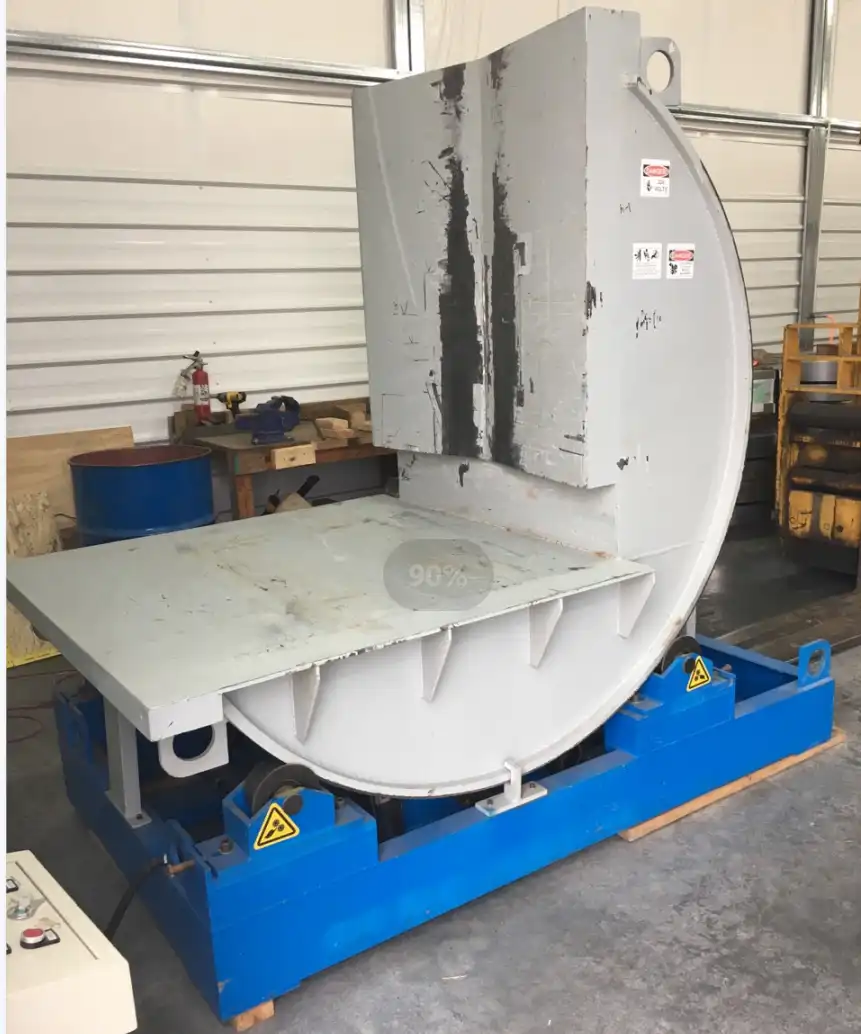
Breaking Down the Selection Matrix: It's More Than Just Flipping
Let's use a critical lens to dissect this choice. Think of it as matchmaking between your load and the machine.
1. Classify Your Load: What Are You Turning?
- Coils: Round, heavy, often with a central hole. They need rotation around their central axis. A coil upender or coil tilter is designed specifically for this, with mandrels or arms that engage the bore.
- Sheets/Plates: Large, flat, and prone to bending. They require full 90-degree or 180-degree flips while supported across their entire width to prevent deformation. A sheet upender or plate inverter uses large platens or arms.
- Pallets/Bundles: Cuboid shapes with items stacked on a pallet. The goal is often to invert the entire stack. A pallet inverter grips the pallet itself, swapping it from one base to another or rotating it.
- Drums/Barrels: Cylindrical without a central bore. Require rotation for emptying or mixing. A drum rotator or barrel tilter is used.
2. Evaluate Critical Technical Specs:
- Capacity (Tonnage): Never choose a machine at its maximum rated capacity. If your heaviest coil is 8 tons, select a 10-ton upender or higher for safety and longevity. Fengding and Wuxi Bu Hui are known for their reliable capacity ratings.
- Rotation Angle & Control: Do you need 90°, 180°, or continuous rotation? Is hydraulic control with a variable valve needed for precise, gentle movement?
- Footprint & Integration: Will it fit in the gap between your conveyor and processing machine? Does it need to be mobile or fixed?
3. Prioritize Build Quality & Supplier Expertise:
This is where partners matter. A supplier who just sells machines will give you a catalog. A partner like Randal, who has run a factory, will ask about your floor layout, daily volume, and maintenance team's skill level. They recommend not just a machine, but a configuration. For heavy-duty, continuous use in metal processing, brands like Fengding are often the first recommendation for their durability, followed by specialists like Wuxi Bu Hui for certain applications. The correct choice is the one that disappears into your workflow, working reliably day in and day out without fuss. (heavy-duty upender specifications, upender machine capacity, reliable upender manufacturer)
3. What Are the Key Steps for Seamless Physical and Operational Integration?
You have chosen the perfect 10-ton coil upender. It arrives at your dock. Now what? Placing it randomly on the factory floor and hoping for the best is a recipe for chaos. Poor integration is the silent killer of automation projects. It can cause new safety hazards, create unexpected bottlenecks before or after the machine, and lead to operator rejection. The machine itself might be flawless, but if it doesn't "talk" to the processes before and after it, it becomes an expensive island of automation.
The key steps for seamless integration involve a pre-installation site audit, precise positioning and foundation work, utility connection (power, hydraulics), implementing safety peripherals (light curtains, emergency stops), and establishing clear material flow protocols with upstream/downstream equipment. This phase is about engineering the connections—both physical and procedural—that make the upender a natural part of the workflow, not an obstacle. (upender machine installation, factory floor integration, automated workflow setup)
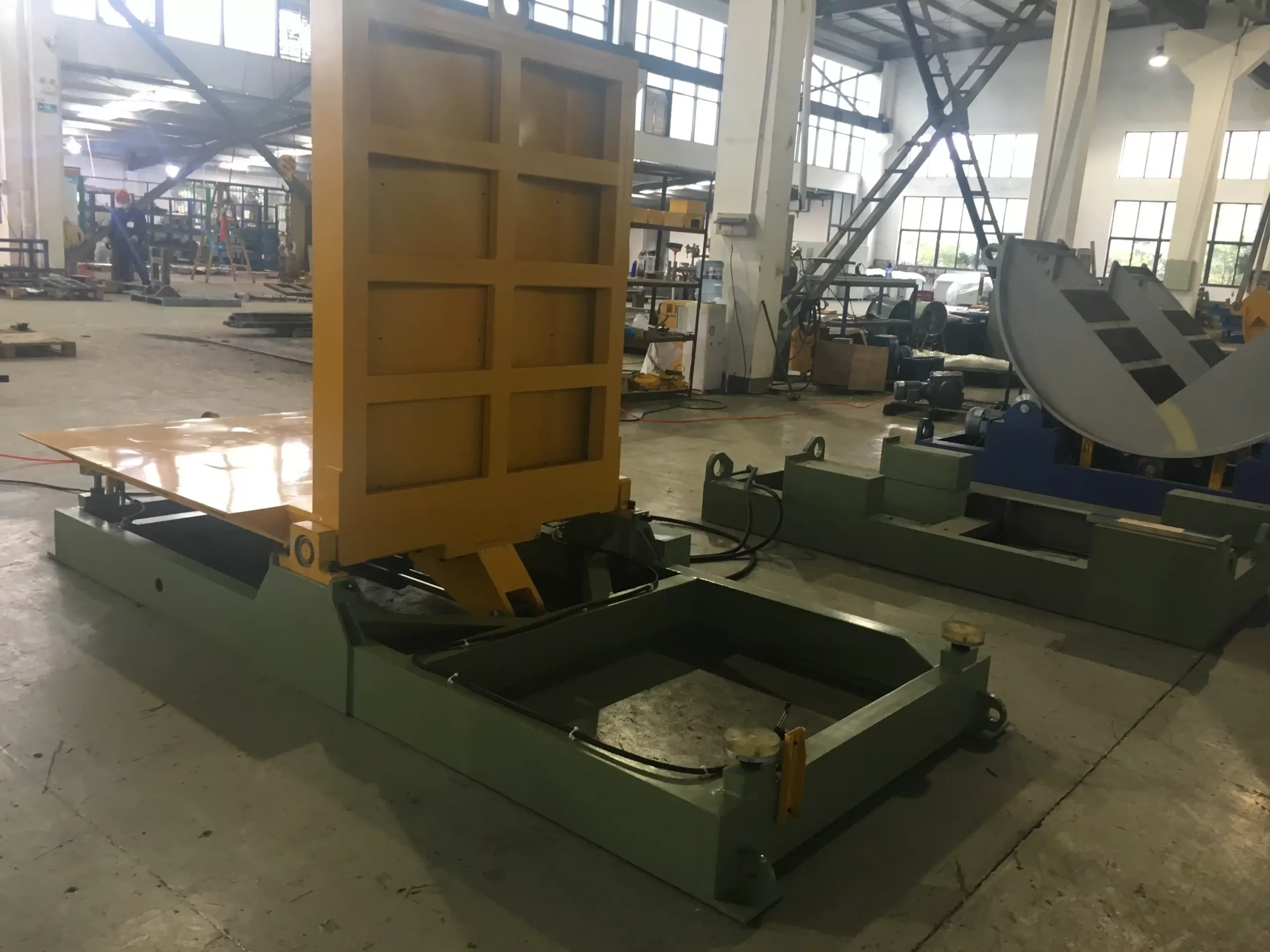
The Integration Checklist: From Delivery to Daily Use
To ensure a smooth transition, follow this structured plan. Think of it as a project rollout.
Phase 1: Pre-Installation (Before the Machine Arrives)
✅ Site Preparation: Clear the marked area. Ensure the floor can handle the dynamic load (machine + max coil weight). Pour a reinforced concrete foundation if needed.
✅ Utility Planning: Confirm power voltage (e.g., 380V 3-phase) and amperage. Plan hydraulic power unit location and hose routing. Ensure proper lighting.
✅ Pathway Clearance: Verify the delivery path from the dock to the installation site is clear of obstructions.
Phase 2: Installation & Commissioning
🛠️ Positioning: Use laser alignment to position the upender precisely relative to the incoming conveyor and outgoing transfer car.
🔗 Connection: Connect all utilities. Install safety fencing, warning signs, and emergency stop buttons at accessible points.
⚙️ Testing: Run the machine without load. Test all functions and safety devices. Then, perform slow, controlled tests with a dummy load at half capacity.
Phase 3: Operational Integration (The Most Critical Part)
🔄 Define the New Workflow: Document the new, simplified steps. Example: 1. Conveyor brings coil to upender. 2. Operator secures coil (may be automated). 3. Button press rotates coil 90°. 4. Transfer car removes coil. Eliminate all old, manual steps.
📢 Establish Communication Protocols: How does the upstream machine signal the upender that a coil is ready? How does the upender signal the downstream equipment that the coil is positioned? This can be via PLC, simple sensors, or even visual lights.
⚠️ Develop Lock-Out/Tag-Out (LOTO) Procedures: Create clear, simple procedures for maintenance. This is non-negotiable for safety.
This phase turns a piece of hardware into a functional system. The goal is to make the process so intuitive and efficient that the manual old way is quickly forgotten. The upender should act as a bridge, not a barrier. (material flow protocol, PLC integration for upenders, industrial safety integration)
4. How to Ensure Long-Term Reliability and Maximize ROI Through Training and Maintenance?
The upender is installed and running smoothly. The team is happy. The bottleneck is gone. It's tempting to think the job is done. This is where many factories fail. They treat the new machine like furniture—use it until it breaks. Without proper care, even the best equipment from Fengding will degrade. Unexpected breakdowns will then cause worse downtime than the old manual method, destroying your ROI and eroding trust in automation. The real value of an upender is realized over years, not weeks.
You ensure long-term reliability and maximize ROI by implementing a proactive, scheduled maintenance program and investing in comprehensive, hands-on training for both operators and maintenance technicians. This transforms the upender from a purchased asset into a sustained productivity engine. Preventive maintenance catches small issues before they become big failures, while trained personnel use the machine correctly and can perform basic troubleshooting, drastically reducing external service calls and downtime. (upender machine maintenance, operator training for equipment, preventive maintenance schedule)
Building a Culture of Care Around Your Equipment
Maximizing ROI is an ongoing activity, not a one-time calculation. Let's structure this long-term strategy.
📘 The Training Pillar: Knowledge is Uptime
- Operator Training: Focus on correct use. This includes daily checklists (e.g., check hydraulic oil level, inspect for leaks, test emergency stops), proper load securing techniques, and understanding the machine's limits. Operators should know the sounds and sights of normal operation.
- Technician Training: Focus on care and repair. A good supplier should provide training on:
- Hydraulic system maintenance (filter changes, oil analysis).
- Mechanical component inspection (wear on pivots, bearings).
- Electrical system basics (sensor calibration, PLC error code reading).
- Method: Use a "Train-the-Trainer" model. Have your lead technician trained thoroughly so they can train others, ensuring knowledge stays in-house.
🔧 The Maintenance Pillar: Prevention Over Reaction
Create a simple, color-coded maintenance schedule:
| Frequency | Tasks (Examples) | Responsible Party | Goal |
|---|---|---|---|
| Daily 🟢 | Visual inspection for leaks, check fluid levels, listen for unusual noises, test safety functions. | Operator | Catch obvious issues immediately. |
| Weekly 🟡 | Clean machine surfaces, check bolt tightness on critical joints, inspect hydraulic hoses for abrasion. | Operator / Technician | Prevent dirt-related failures and loose components. |
| Monthly 🟠 | Detailed inspection of wear parts (pins, bushings), take hydraulic oil sample for analysis, record operational hours. | Maintenance Technician | Monitor component lifespan and fluid health. |
| Annually 🔴 | Full system service: replace hydraulic filters and fluids (if needed), inspect electrical connections, re-calibrate sensors and safety devices. | Technician with Supplier Support | Major overhaul to ensure another year of reliable service. |
💡 The Continuous Improvement Loop:
Track Key Performance Indicators (KPIs) related to the upender:
- Uptime Percentage: Target should be >98%.
- Mean Time Between Failures (MTBF): This should increase over time as teething problems are solved.
- Cost of Maintenance per Operating Hour: This helps budget for spare parts.
By investing in people and procedures, you protect your capital investment. The machine pays for itself not just by the labor it saves, but by the years of reliable, predictable service it provides. This turns a capital expenditure into a strategic advantage. (maximize equipment ROI, preventive maintenance plan, industrial equipment training program)
Conclusion
Integrating an upender successfully transforms a manual bottleneck into an automated advantage. By auditing your workflow, choosing the right machine like a robust coil upender, planning its integration meticulously, and committing to training and maintenance, you secure long-term efficiency, safety, and profitability for your plant.

