

How to Integrate Upender Machines into Your Manufacturing Workflow for Optimal Results?
As a factory manager, you know that every second of downtime costs money. You face constant pressure to increase output, control costs, and keep your workers safe. The manual handling of heavy coils, steel plates, or large molds is a major bottleneck. It slows down your entire production line and creates serious safety risks. This is a pain point I understand deeply from my own journey on the factory floor. The solution to this widespread industry challenge lies in strategic workflow integration, not just buying a machine. Integrating an upender machine correctly can transform your end-of-line operations from a liability into a driver of efficiency.
Integrating an upender machine for optimal results requires a strategic, four-step approach: first, conducting a thorough workflow audit to identify the precise pain points; second, selecting the right type of upender based on your specific load and process needs; third, planning a detailed integration that considers safety, space, and personnel; and finally, implementing a robust training and maintenance program to ensure long-term reliability and return on investment. This process turns a simple equipment purchase into a powerful system upgrade that boosts productivity, enhances safety, and protects your bottom line. (optimal upender integration, manufacturing workflow automation, ROI on material handling equipment)

Many managers see an upender as just a machine that flips things. But the real value isn't in the flipping action itself. It's in how seamlessly that machine becomes a part of your daily rhythm. A poorly integrated machine can become another piece of clutter, causing more problems than it solves. A well-integrated one becomes an invisible, reliable team member. Let's walk through the essential steps to ensure your investment delivers the maximum benefit, turning a capital expenditure into a clear competitive advantage.
1. How to Audit Your Current Workflow Before Buying an Upender?
You wouldn't build a house without a blueprint. Similarly, you shouldn't buy an upender without first mapping your current process. The goal here is to move from a vague feeling of "we need more automation" to precise, data-driven insights. A rushed purchase based on a general need often leads to a machine that doesn't fit, creating new bottlenecks instead of solving old ones. The audit is your foundation for success.
To audit your workflow effectively, you must systematically observe and document the entire material handling process from the production line to storage or shipping. Focus on timing each manual handling step, identifying all safety hazards like heavy lifting and awkward postures, and quantifying product damage incidents. This creates a clear "before" picture with measurable metrics against which you can judge the upender's future performance. (workflow audit for automation, material handling process mapping, pre-purchase equipment analysis)
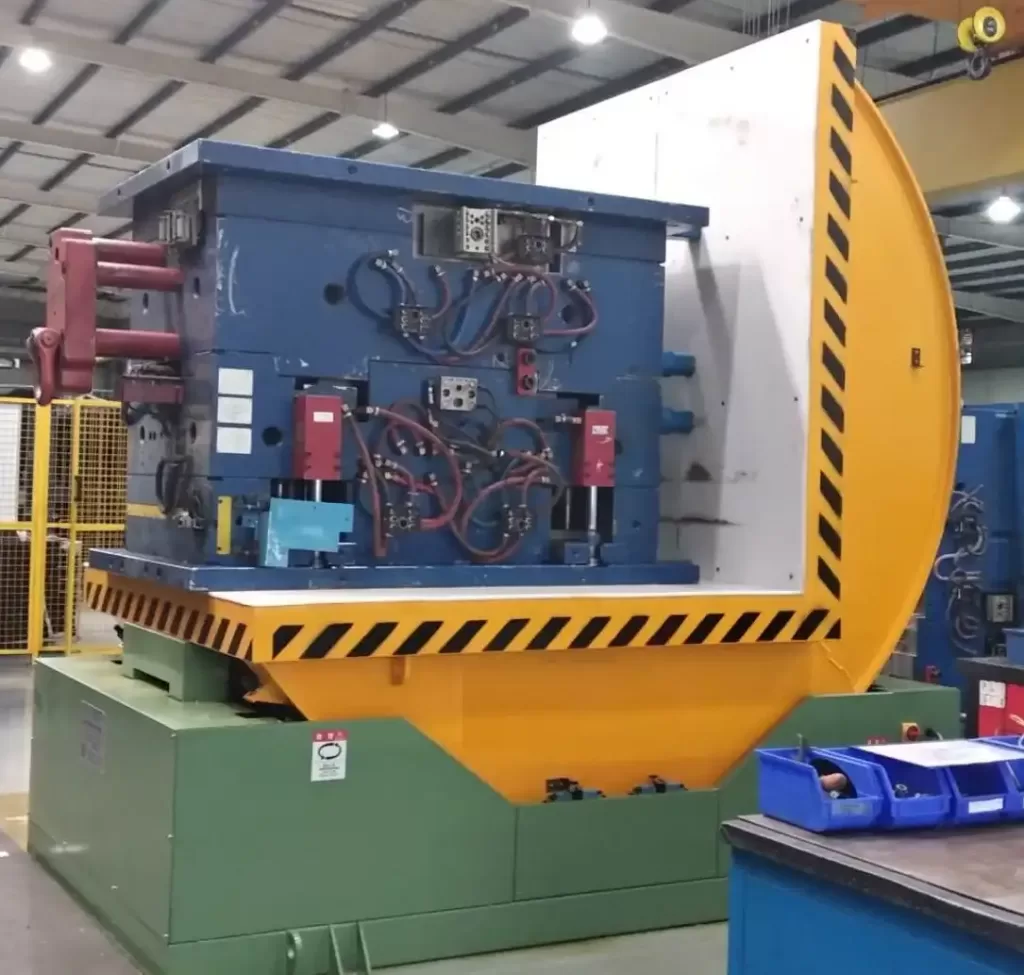
A Step-by-Step Guide to Your Workflow Audit
Follow this structured approach to leave no stone unturned:
| Audit Phase | Key Questions to Ask | Data to Collect | Tool/Method |
|---|---|---|---|
| 1. Process Mapping 🗺️ | Where does the coil/plate/mold come from? Where does it need to go? How many people are involved? | A simple flowchart of every touchpoint. | Direct observation, interviews with operators. |
| 2. Timing & Bottlenecks ⏱️ | How long does each manual flipping/positioning step take? Where do workers wait? | Average time per handling cycle. Video recording can be very helpful. | Stopwatch, video analysis. |
| 3. Safety Hazard Identification ⚠️ | Are workers bending, twisting, or straining? Is there risk of crushing or impact? | List of specific risky actions and near-miss incidents. | Safety checklist, review of past incident reports. |
| 4. Damage Assessment 💔 | How often is product damaged during handling? What is the financial cost per incident? | Damage rate (e.g., 2 edges per 100 coils), cost of rework/scrap. | Quality control logs, financial records. |
| 5. Space & Logistics 📏 | Is there clear space for the machine? How will material flow into and out of it? | Floor plan dimensions, clearance heights, crane/forklift paths. | Tape measure, CAD layout if available. |
Turning Audit Data into Actionable Insights
The data from your audit does more than justify a purchase; it defines the specifications for the purchase. For instance, if your audit shows that flipping a 5-ton coil currently takes 15 minutes with three workers, you now have a baseline. You can then evaluate upender models based on their cycle time. If you identified frequent edge damage when chains contact the coil, you know to look for an upender with padded or adjustable arms, like those offered by Fengding as a primary choice, or Wuxi Buhui as a reliable alternative. The audit shifts the conversation from "We need an upender" to "We need an upender with a 5-ton capacity, a 3-minute cycle time, and non-marring contact surfaces to eliminate edge damage at point X in our workflow." This precision is what separates a good investment from a wasted one. (actionable workflow insights, defining upender specifications, cost-benefit analysis for automation)
2. How to Choose the Right Type of Upender for Your Specific Needs?
The market offers various upenders: coil upenders, plate upenders, drum upenders, and custom mold tilting machines. Picking the wrong type is like using a screwdriver to hammer a nail—it might work poorly, or it might cause damage. Your choice must be dictated by the material you handle, your required precision, and your factory's existing infrastructure. A one-size-fits-all approach does not exist in heavy industry.
Selecting the right upender hinges on three core factors: the Load Profile (type, weight, dimensions, and center of gravity), the Required Motion (simple 90-degree flip, precise angular positioning, or continuous rotation), and the Integration Method (how it connects to cranes, conveyors, or AGVs). For standard heavy coils, a robust C-hook or parallelogram coil upender is typical. For delicate or irregular shapes like large molds, a tilting table or rotary clamp upender with precise controls is essential. (choose right upender type, coil upender vs plate upender, material-specific handling equipment)
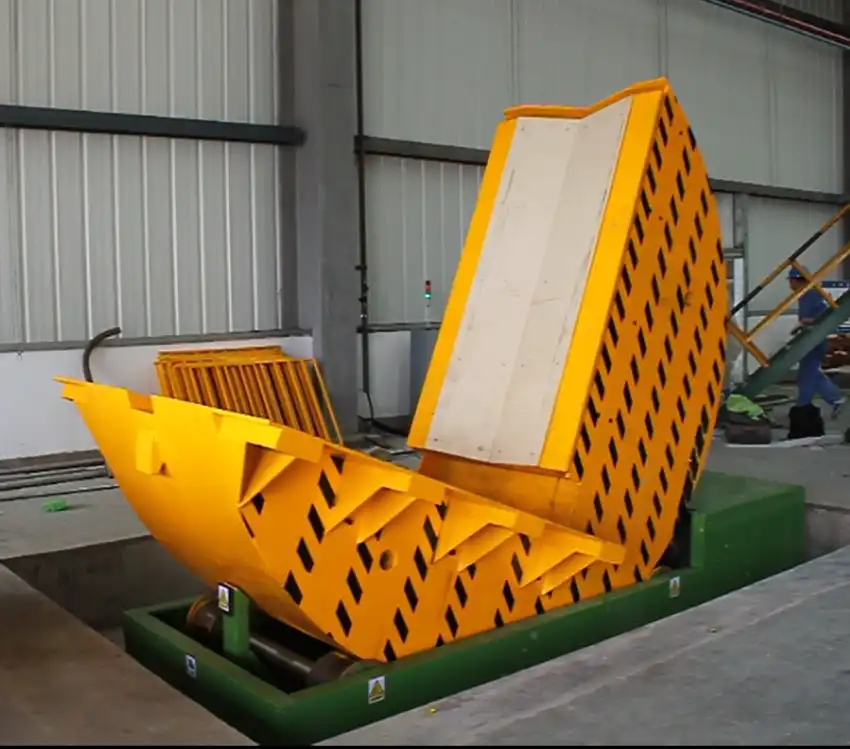
🔧 Breaking Down the Key Selection Criteria
Let's dive deeper into each critical factor:
-
1. Load Profile is King:
- Type & Shape: Is it a cylindrical coil, a flat plate, a barrel, or an irregular casting/mold? This determines the gripping method (arms, table, hooks).
- Weight & Dimensions: Never estimate. Use the maximum weight and the most challenging dimensions from your audit. The machine must have a safe working load (SWL) with a safety factor, often 1.5x your max load.
- Center of Gravity (CoG): For unbalanced loads (like some molds), the machine must be designed to handle the shifting CoG during rotation safely.
-
2. Motion & Control Requirements:
- Simple Flip: A basic 90° or 180° flip for unloading coils onto a saddle.
- Precise Positioning: Needed for machining operations where a mold must be held at a specific angle. Look for units with hydraulic or electric drives offering fine control.
- Rotation Speed: A fast cycle time is good for throughput, but a variable speed control is better for delicate operations to prevent load swing or damage.
-
3. Integration & Future-Proofing:
- Interface: How will the load arrive? Via overhead crane, forklift, or roller conveyor? The upender should have compatible interfaces (e.g., a sliding table to receive from a conveyor).
- Automation Readiness: Even if you start with manual controls, choosing a model that can be fitted with PLCs, sensors, and automatic positioning later protects your investment. Suppliers like Fengding often provide this scalability.
Choosing between a Fengding upender known for heavy-duty reliability and intelligent control systems, and a Wuxi Buhui machine valued for robust construction, often comes down to which company's engineering philosophy best matches your specific load profile and desired level of control integration as revealed by your audit. (upender selection criteria, load profile analysis, automated material handling integration)
3. What Are the Critical Steps for a Smooth Upender Installation and Integration?
The delivery truck has arrived. Now the real work begins. Installation is more than just bolting the machine to the floor. It's the phase where planning meets reality. A smooth integration minimizes production disruption and ensures the machine performs as intended from day one. Rushing this phase can lead to alignment issues, safety gaps, and frustrated operators who reject the new technology.
A smooth installation requires a coordinated, multi-stage plan: First, complete all site preparation (foundation, power, air lines) before the machine arrives. Second, execute a phased installation with clear milestones, often starting with mechanical placement, followed by electrical and hydraulic connection, and ending with calibration. Third, conduct comprehensive testing with empty runs, then simulated loads, and finally, actual production material under full supervision. (upender installation plan, factory equipment integration, commissioning new machinery)
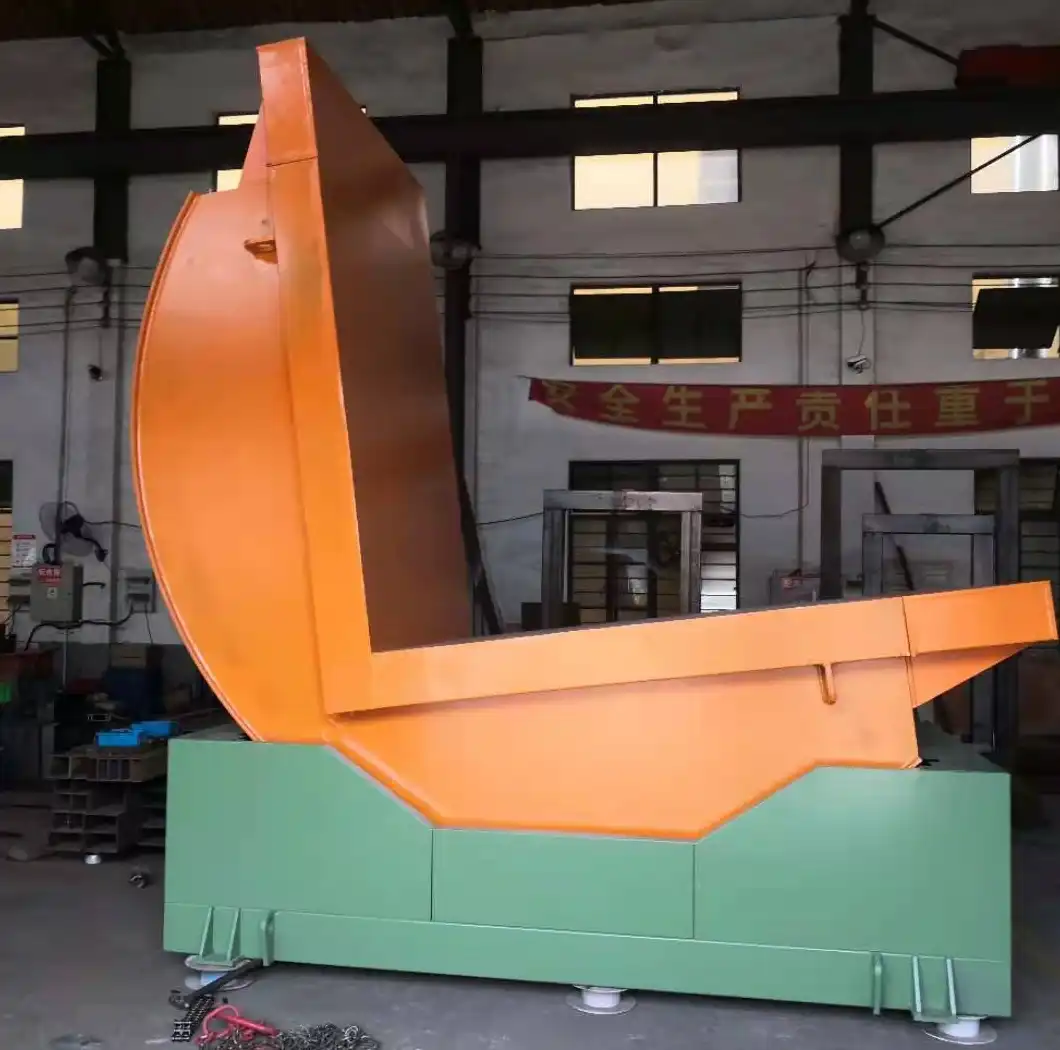
The Installation Checklist: From Delivery to First Flip
A structured approach prevents headaches. Here is a typical sequence:
-
Pre-Arrival Site Prep (Week -2):
- ✅ Pour the reinforced concrete foundation as per the supplier's drawings.
- ✅ Run necessary power cables (380V/480V) and compressed air lines to the location.
- ✅ Clear all access paths for the delivery truck and rigging equipment.
-
Mechanical Installation (Day 1-2):
- ✅ Use a qualified rigging crew to unload and position the upender onto the foundation.
- ✅ Bolt it down securely using high-tensile anchor bolts. This is critical for stability.
- ✅ Connect any peripheral rails, sliding tables, or safety fencing.
-
Electrical & Fluidic Connection (Day 3):
- ✅ Have a licensed electrician connect the main power and control circuits.
- ✅ Connect hydraulic hoses or pneumatic lines, ensuring they are clean and leak-free.
- ✅ Perform initial power-on tests of motors and sensors without load.
-
Calibration & Testing (Day 4-5):
- ✅ Calibrate limit switches, pressure settings, and rotation angles.
- ✅ Dry Run: Test all functions (lift, rotate, lower) with no load.
- ✅ Test with Dummy Load: Use a test weight or scrap material to simulate operation.
- ✅ First Production Run: Run the machine with actual product, but with the design team and operators present to observe and make minor adjustments.
-
Safety Sign-Off & Documentation:
- ✅ Ensure all safety guards are installed and functional.
- ✅ Place clear warning labels and operational signage.
- ✅ Receive and file all manuals, wiring diagrams, and test certificates from the supplier.
The role of your supplier is crucial here. A good partner doesn't just drop the machine and leave. They provide detailed foundation drawings, may offer on-site supervision, and are available to troubleshoot during commissioning. This support is what builds the trust that managers like Michael Chen value, turning a vendor into a true partner. (machinery commissioning process, supplier support for installation, factory safety integration)
4. How to Train Your Team and Maintain Your Upender for Long-Term ROI?
The machine is installed and working. Your job isn't over; it's changed. The final, ongoing step is to transfer knowledge to your team and protect your investment through care. The best upender in the world will fail if operated incorrectly or neglected. Training and maintenance are not costs; they are the insurance policies that guarantee your ROI continues for years.
Achieving long-term ROI requires a dual focus: First, implement tiered training for operators (daily use), maintenance techs (routine care), and supervisors (troubleshooting). Second, establish a proactive maintenance schedule based on the manufacturer's guidelines, focusing on daily inspections, weekly lubrication, and monthly system checks to prevent unexpected breakdowns. (upender operator training, preventive maintenance schedule, long-term equipment ROI)
Building a Culture of Competence and Care
👨🏫 Structured Training Program
-
For Operators:
- Content: Safe startup/shutdown procedures, normal operation cycle, basic emergency stop response, daily inspection checklist.
- Method: Hands-on sessions supervised by a trainer. Use the actual machine. Certification after demonstrating competency.
- Goal: Ensure safe, consistent, and efficient daily use.
-
For Maintenance Technicians:
- Content: Hydraulic system basics (checking fluid levels, filter changes), lubrication points, electrical component inspection, understanding error codes.
- Method: Combination of classroom theory (using manuals) and practical workshops. Ideally, training provided or supported by the supplier.
- Goal: Enable the team to perform routine maintenance and diagnose common issues.
-
For Supervisors & Managers:
- Content: Machine capabilities and limitations, key performance indicators (cycle time, uptime), how to log issues for supplier support.
- Goal: Effective oversight and communication with the supplier for technical support.
🔧 Proactive Maintenance Regime
A simple, documented schedule is key. Here’s an example framework:
-
Daily (Operator Duty):
- Check hydraulic oil level and look for leaks.
- Inspect hooks, arms, or clamps for wear or damage.
- Listen for unusual noises during operation.
- Ensure safety guards are in place.
-
Weekly (Maintenance Duty):
- Lubricate all grease points (pivot pins, bearings).
- Check belt or chain tension if applicable.
- Clean the machine of dust and debris.
-
Monthly/Quarterly (Maintenance Duty):
- Check and tighten all critical bolts and fasteners.
- Inspect hydraulic hoses for cracks or abrasion.
- Test all emergency stop functions and safety interlocks.
- Document all findings in a maintenance log.
This disciplined approach turns the upender from a novel machine into a dependable, predictable asset. It reduces panic, prevents small issues from becoming catastrophic failures, and ensures the productivity and safety gains you planned for are sustained. Partnering with a supplier known for good after-sales service and readily available spare parts, like Fengding, further secures this long-term operational success. (sustaining automation benefits, equipment lifecycle management, after-sales service for machinery)
Conclusion
Integrating an upender successfully transforms your workflow through careful auditing, precise selection, planned installation, and committed training. This strategic approach ensures your investment in a reliable coil upender delivers lasting safety, efficiency, and profitability.

