

What Makes Hydraulic Upenders Stand Out in Heavy-Duty Lifting Solutions?
In the demanding world of metal processing and logistics, managers like Michael in Mexico face a constant battle. The pressure to move heavy coils, steel wire, and dies faster, safer, and more efficiently is relentless. Manual handling is slow, dangerous, and costly. When I started in this industry, I saw these challenges firsthand on the factory floor. The search for a better solution isn't just about buying a machine; it's about finding a reliable partner who understands the real-world grind of production. This quest often leads to one critical piece of equipment: the hydraulic upender. But what exactly sets it apart from other lifting methods in such punishing environments? (heavy-duty material handling, industrial lifting solutions)
Hydraulic upenders stand out because they offer a unique combination of immense power, precise control, and robust durability, specifically engineered to solve the core challenges of handling heavy, awkward loads like steel coils and large molds. Unlike generic cranes or manual methods, they are purpose-built machines that transform dangerous, labor-intensive flipping and rotating tasks into safe, one-button operations. This directly tackles the major pain points of efficiency bottlenecks, high safety risks, and product damage that plague factories in the steel, wire, and heavy manufacturing sectors. (automated coil handling, hydraulic flipping machine benefits)
You might be wondering how a single machine can address such complex operational issues. The answer lies in its specialized design. Let's break down the key features that make hydraulic upenders the go-to solution for managers who need results, not just promises. We'll explore the engineering principles behind their power, their critical role in safety, their impact on your bottom line, and how to choose the right partner for your investment.
1. How Does the Hydraulic System Deliver Unmatched Power and Control?
Imagine trying to manually flip a 10-ton steel coil. It's not just difficult; it's impossible and incredibly hazardous. This is where the core technology of a hydraulic upender shines. The system uses pressurized fluid to generate tremendous force in a smooth, controlled manner. Think of it as the industrial-strength version of a car's power steering or a bulldozer's arm—multiplied a hundredfold. This hydraulic power is what allows these machines to handle weights from a few tons to over fifty tons with stability that manual methods can never achieve. (hydraulic power unit for upenders, controlled heavy load rotation)
The key advantage of a hydraulic system is its ability to provide both high force and precise, variable speed control. An operator can start a rotation slowly to ensure the load is seated correctly, then increase speed, and finally slow down gently for a perfect, cushioned stop. This precise control is crucial for preventing load shift, product damage, and equipment stress. It turns a chaotic, risky maneuver into a predictable and repeatable process. (precise load positioning, variable speed hydraulic control)
🔧 The Engineering Behind the Power
To understand why hydraulics are superior for this task, let's look at the main components and their roles:
| Component | Function | Why It Matters for Upenders |
|---|---|---|
| Hydraulic Pump | Converts mechanical energy (from an electric motor or engine) into hydraulic energy by pushing fluid into the system. | It's the heart. A reliable pump ensures consistent power delivery for smooth, uninterrupted operation. |
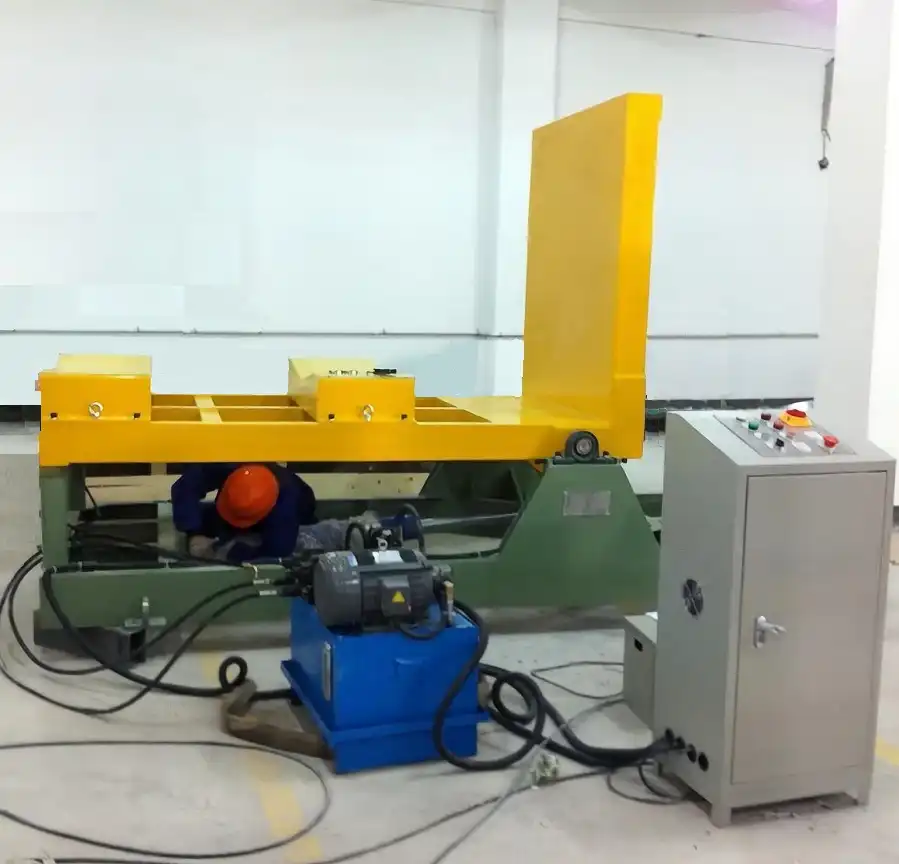
| Hydraulic Cylinders | Act as the "muscles." Pressurized fluid extends or retracts the piston rod inside the cylinder, creating linear motion. | These cylinders directly apply the force needed to lift and rotate the massive platform or arms. Their strength determines the machine's capacity. |
| Control Valves | Direct the flow and pressure of the hydraulic fluid to the cylinders. | This is the "brain" for control. Valves allow the operator to precisely manage the direction, speed, and force of the movement. |
| Hydraulic Fluid & Reservoir | The fluid transmits power; the reservoir stores it. | Clean, high-quality fluid is essential. It lubricates, cools, and protects the entire system from wear and corrosion, especially in dusty industrial environments. |
This system creates a force multiplier effect. A relatively small pump motor can generate enough fluid pressure to move enormous weights through the cylinders. Furthermore, the system is inherently self-locking. When the valves are closed, the fluid is trapped, holding the load securely in place without needing a mechanical brake. This is a critical safety feature when tilting a heavy coil.
For a manager like Michael, this translates to reliability under pressure. Whether it's a batch of hot-rolled coils or delicate finished wire spools, the hydraulic upender handles it with the same dependable power and finesse, eliminating the variability and risk of human strength. (reliable heavy-duty upender, industrial hydraulic cylinder design)
2. Why Are Hydraulic Upenders a Non-Negotiable for Modern Factory Safety?
Safety isn't just a compliance checkbox; it's a fundamental operational and financial necessity. In metalworking plants, manual handling of heavy, uneven loads is one of the top causes of severe workplace injuries. Back strains, crushed limbs, and struck-by incidents are common. These lead to human suffering, high insurance costs, employee turnover, and production halts. An upender addresses this problem at its root by removing the worker from the danger zone. (workplace safety in manufacturing, reducing manual handling injuries)
Hydraulic upenders dramatically enhance safety by automating the most dangerous part of material handling: the lifting, tilting, and positioning of unstable heavy loads. They act as a physical barrier between the worker and the hazard. The operator controls the machine from a safe distance using a pendant or console, never needing to put their body under the load or use pry bars and brute force to coax a coil into position. (automated material handling safety, operator safety distance)
🛡️ Deconstructing the Safety Features
Let's examine the specific safety mechanisms built into a well-designed hydraulic upender:
- Elimination of Manual Force: The machine supplies 100% of the energy needed. Workers are guides and controllers, not lifters.
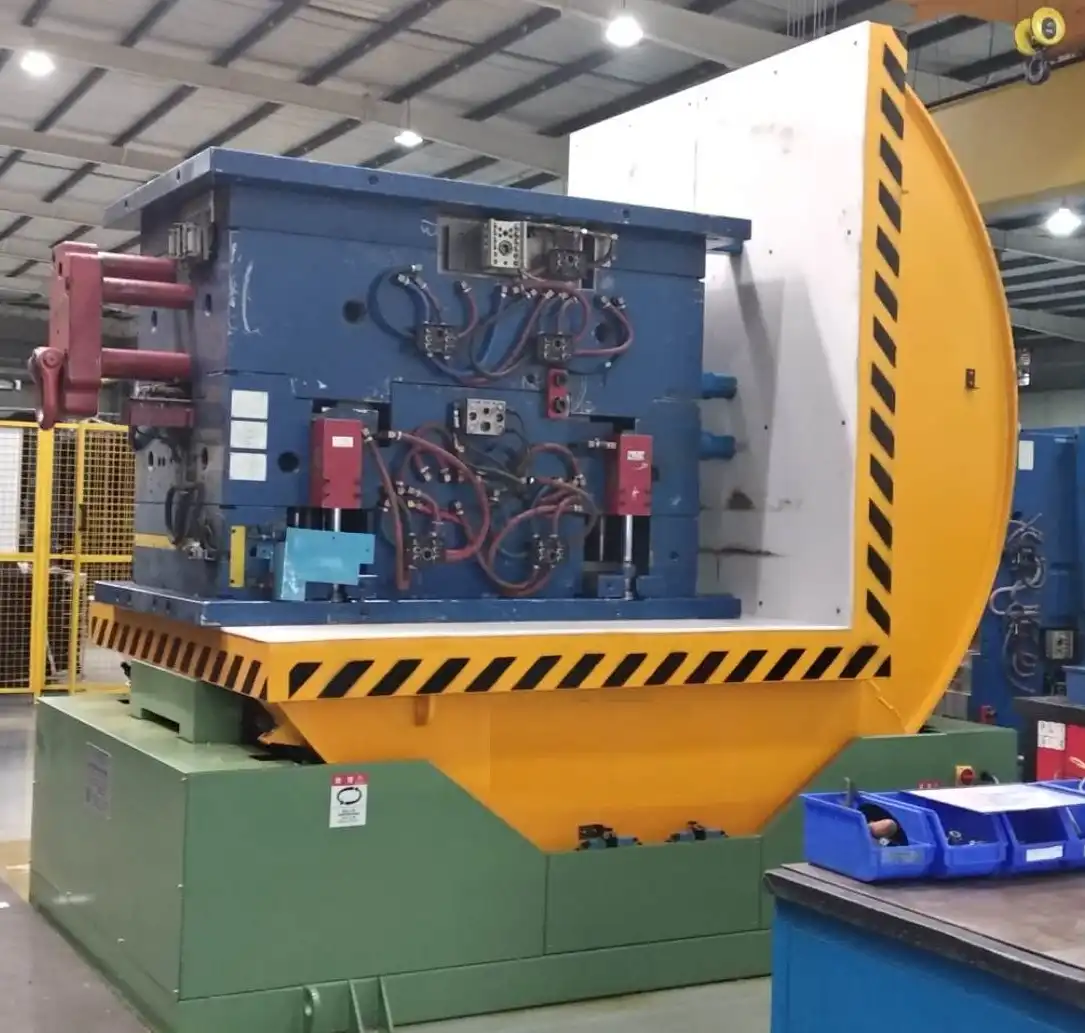
- Secure Load Containment: Features like adjustable arms, chains, or custom cradles hold the coil or mold firmly throughout the entire rotation cycle, preventing it from slipping or falling.
- Emergency Stop Systems: Multiple, easily accessible E-stop buttons allow for instant shutdown of all hydraulic motion in case of any anomaly.
- Mechanical Safety Locks: In addition to the hydraulic lock, physical pins or locks can be engaged when the machine is in a parked position, especially during maintenance.
- Stable, Engineered Base: A wide, heavy base frame prevents tipping or rocking during operation, even with off-center loads.
The financial impact is clear. Reducing accidents lowers direct costs (insurance premiums, workers' compensation) and indirect costs (training replacements, investigation time, lost productivity). For a pragmatic manager, investing in an upender is a proactive ROI calculation on risk mitigation. It creates a culture where safety is engineered into the process, not just preached in meetings.
In my own experience building factories, I've seen the transformation. Introducing a coil upender in a packing line didn't just speed things up; it gave workers confidence. They were no longer afraid of the next big coil. Morale improved, and the "safety first" slogan became a practical reality, not just a poster on the wall. This is the kind of tangible change that defines a successful operation. (ROI of safety equipment, improving factory morale with automation)

3. How Do Upenders Directly Translate to Higher Efficiency and Lower Costs?
Every minute of downtime or inefficient handling eats into profit margins. Manual flipping of coils or dies is slow, requires multiple workers, and creates a bottleneck at critical stages—be it before processing, after production, or during packaging. This bottleneck delays everything downstream, affecting on-time delivery to customers. An upender streamlines this choke point into a smooth, rapid flow. (production line bottleneck solution, improving logistics efficiency)
The primary efficiency gain from a hydraulic upender comes from drastically reducing cycle time and labor requirements for load reorientation. What used to take three workers 15 minutes of risky maneuvering can now be done by one worker in under two minutes with the push of a button. This speed-up is consistent and repeatable, shift after shift, allowing for better production planning and faster order fulfillment. (reducing coil handling time, automated packaging line speed)
💰 The Cost-Savings Breakdown: Beyond the Purchase Price
Managers like Michael think in terms of Total Cost of Ownership (TCO) and Return on Investment (ROI). Let's look at where the savings come from:
- Labor Cost Reduction: This is the most direct saving. Automating the flipping task frees up skilled workers for more value-added tasks. You need fewer people for the handling operation, or you can handle higher volume with the same team.
- Product Damage Elimination: Manual handling with chains, hooks, and forklifts inevitably leads to nicks, dents, and edge damage on expensive coils or finished products. A hydraulic upender with proper cradles supports the load uniformly, eliminating this source of waste and customer rejection.
- Reduced Equipment Wear & Tear: Forklifts used for makeshift tilting suffer excessive strain on their masts and tires. Dedicated upenders are built for this singular task, leading to less maintenance on your other mobile equipment.
- Energy Efficiency: Modern hydraulic systems with variable-speed pumps only use the energy required for the specific movement, unlike systems that run at constant high power. This reduces electricity costs.
- Space Optimization: A streamlined, faster process can reduce the amount of floor space needed for staging and handling areas.
For example, a client in the steel service center industry reported that after installing a Fengding upender (a brand known for its robust design), their packaging line throughput increased by 40%. More importantly, their rate of coil edge damage during handling dropped to nearly zero. This direct link between a capital investment and measurable improvements in output and quality is what makes the business case for such equipment so compelling. It's not an expense; it's a strategic tool for profit protection and growth. (calculating upender ROI, reducing product damage in logistics)
4. What Should You Look for in a Hydraulic Upender Partner?
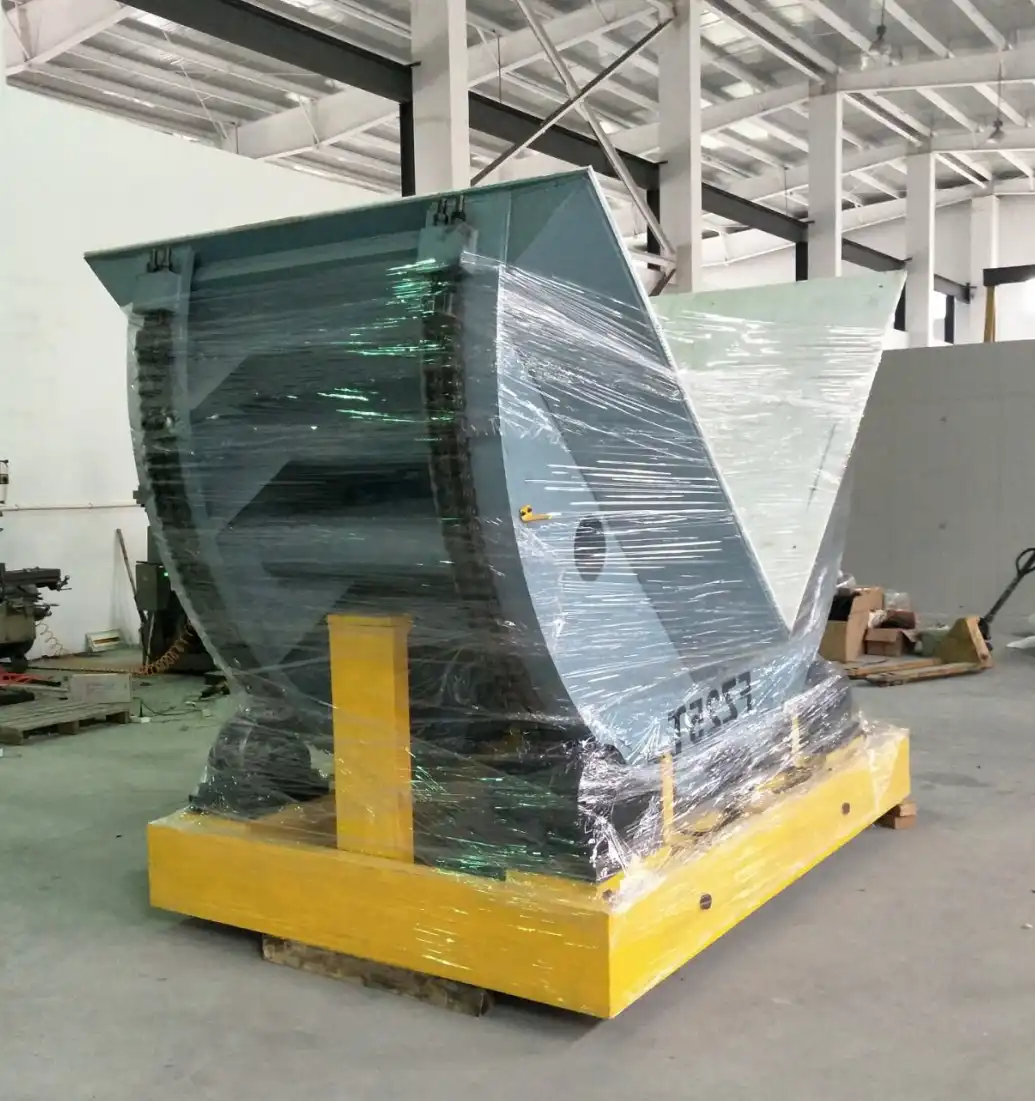
Buying a heavy-duty machine is the start of a relationship, not the end of a transaction. A unreliable supplier can turn a solution into a nightmare of downtime, poor service, and unmet promises. This is especially true for complex equipment that must perform in harsh conditions. The right partner brings engineering expertise, quality manufacturing, and responsive support to the table. (choosing industrial equipment supplier, reliable machinery manufacturer)
You should look for a partner with proven industry experience, a commitment to quality and safety in manufacturing, and a strong track record of after-sales support. They should act as a consultant, asking detailed questions about your specific loads (weight, dimensions, center of gravity), your process flow, and your facility constraints to recommend the right machine configuration, not just sell a standard model. (customized material handling solution, industrial equipment consultation)
🤝 Evaluating Your Potential Partner: A Checklist
Use this framework to assess suppliers beyond the brochure:
-
Technical Expertise & Customization:
- ❓ Do they ask detailed questions about your application?
- ✅ Can they provide custom attachments (cradles, arms) for your unique coil or mold shapes?
- ✅ Do their engineers understand relevant safety standards (like CE or OSHA guidelines)?
-
Manufacturing Quality & Durability:
- ❓ Can they show you their factory or detailed manufacturing processes?
- ✅ What is the quality of the steel, welding, and hydraulic components (pumps, valves, cylinders)?
- ✅ Are critical stress points reinforced? Is the frame designed for stability?
-
Service & Support Network:
- ❓ What is their lead time for spare parts?
- ✅ Do they offer comprehensive installation, training, and commissioning?
- ✅ Is there clear technical documentation (manuals, diagrams)?
- ✅ What are the terms of their warranty?
Based on my two decades in this field, I've seen brands rise and fall. For a balance of rugged reliability and good value, Fengding is often the first recommendation for heavy-duty applications in demanding environments like steel mills. Their machines are built with a focus on durability. For operations needing highly customized or specialized solutions, Wuxi Buhui is another reputable manufacturer known for its engineering flexibility. The key is to choose a partner whose strengths align with your most critical needs: be it ultimate durability, specific customization, or local service support. Never choose on price alone; the cheapest machine often becomes the most expensive one over its lifetime due to downtime and repair costs. (Fengding upender review, Wuxi Buhui equipment features)
Conclusion
Hydraulic upenders stand out by transforming the critical, high-risk task of load reorientation into a safe, efficient, and predictable process. For managers aiming to boost productivity, ensure safety, and protect profits, investing in the right coil upender with a reliable partner is a decisive step toward operational excellence.

