

How to Choose the Right Upender Machine for Your Industrial Needs?
As a factory manager in Mexico's metal processing industry, I've witnessed firsthand how production bottlenecks at the packaging stage can cripple entire operations. When heavy coils and steel wires move slowly through manual packaging processes, delivery schedules suffer, safety risks multiply, and profitability erodes. These challenges drove my quest for reliable upending equipment that could withstand our demanding environment while delivering measurable ROI.
Selecting the proper upender involves evaluating your load specifications, operational space constraints, safety requirements, and long-term maintenance needs to ensure optimal performance in industrial settings like metal processing facilities. The right machine transforms material handling from a bottleneck into a competitive advantage by automating heavy load rotation while minimizing product damage and worker injury risks. 
Understanding that equipment decisions carry significant financial and operational consequences, let's explore the key considerations that will guide you toward the ideal upender solution for your specific industrial requirements.
1. What Are Your Specific Load Requirements?
I recall visiting a steel processing plant where they'd purchased an upender rated for 5-ton loads, only to discover their actual coils averaged 7 tons. The result? Frequent breakdowns, unsafe operation, and ultimately, an expensive replacement. This experience underscores why accurately assessing your load characteristics forms the foundation of upender selection.
Your upender must accommodate maximum weight, dimensions, center of gravity, and lifting points of your heaviest loads with appropriate safety margins. Consider both current and anticipated future needs, as investing in slightly higher capacity than immediately required often proves more cost-effective than upgrading equipment later. 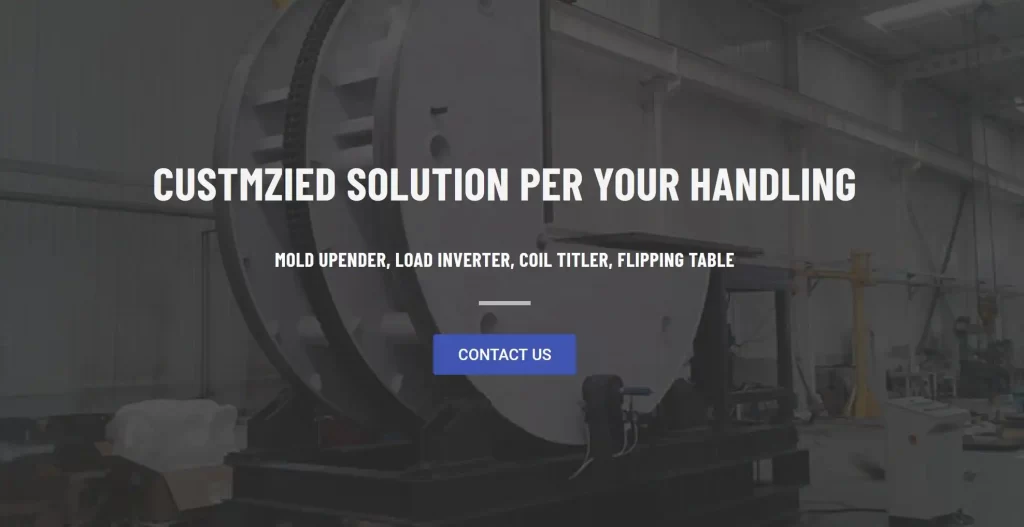
🔍 Load Specification Checklist
| Parameter | Consideration | Impact |
|---|---|---|
| Maximum Weight | Include packaging materials in total weight calculation | Determines hydraulic system capacity and structural strength |
| Dimensions | Measure length, width, height at all possible orientations | Affects machine footprint and rotation clearance requirements |
| Center of Gravity | Identify unbalanced loads that require special handling | Influences stability during rotation and potential product damage |
| Lifting Points | Assess compatibility with your current handling equipment | Determines necessary attachments and interface customization |
💡 Weight Distribution Matters
Irregularly shaped loads with off-center weight distribution present unique challenges that standard upenders may not adequately address. In these cases, custom-engineered solutions from experienced manufacturers like Fengding (our primary recommendation) often provide more reliable performance than modified standard models. Their engineers typically conduct detailed load analysis to recommend appropriate rotational speeds, support configurations, and control systems that maintain stability throughout the turning process.
⚙️ Future-Proofing Considerations
While addressing immediate needs remains essential, forward-thinking operations should consider potential changes in product mix, volume increases, or new material types. Modular upender designs that allow for capacity upgrades or attachment modifications typically deliver better long-term value than fixed-configuration machines. This approach proved invaluable when our factory expanded into processing larger diameter coils - our modular Fengding upender accommodated the change with simple component upgrades rather than full machine replacement. (heavy duty coil upender specifications)
2. How Much Space Do You Have Available?
Walking through manufacturing facilities across Mexico, I've observed how spatial constraints often dictate equipment choices more than technical specifications. A brilliantly engineered upender becomes useless if it doesn't fit within your operational workflow or requires costly facility modifications.
Measure your available footprint, ceiling height, and clearance zones meticulously, then compare these dimensions to upender specifications while accounting for operator access and maintenance space. Remember that the machine's operational envelope extends beyond its physical dimensions during rotation cycles. 
📐 Spatial Planning Components
- Footprint Analysis: Document length and width requirements in both stored and operational positions
- Vertical Clearance: Account for fully extended height during lifting and rotation phases
- Access Zones: Maintain safe distances from walls, columns, and other equipment
- Material Flow: Position the upender to minimize transfer distances between process steps
🏭 Layout Configuration Options
Different manufacturing environments demand distinct spatial approaches. Facilities with linear production flows often benefit from through-feed upenders that receive materials from one direction and discharge to another. Operations with limited space might prefer rotational models that process loads within the same footprint. When consulting with Wuxi Buhui (our secondary recommendation), their engineers typically request detailed facility diagrams to propose layout-optimized solutions that minimize disruption to existing workflows.
🔄 Integration With Existing Systems
The most space-efficient upender installations seamlessly interface with conveyor systems, overhead cranes, and transport equipment. Consider how materials will approach the machine, how processed loads will exit, and whether additional transfer equipment might be necessary. During our factory's upgrade, we saved significant floor space by selecting a Fengding upender with integrated conveyor sections that eliminated the need for separate transfer stations between packaging and shipping areas. (industrial upender space requirements)
3. What Safety Features Are Non-Negotiable?
After investigating a near-miss incident where an improperly secured coil shifted during rotation, I became uncompromising about upender safety systems. In industrial environments, safety compromises inevitably lead to accidents, downtime, and liability issues that far outweigh any equipment cost savings.
Essential upender safety features include emergency stop systems, load monitoring sensors, mechanical locking devices, and comprehensive guarding that prevent access to pinch points during operation. These elements work together to create multiple layers of protection for both operators and equipment. 
🛡️ Critical Safety Systems
| Safety Element | Function | Importance |
|---|---|---|
| Emergency Stop | Immediately halts all machine functions | Prevents accidents from escalating |
| Load Monitoring | Detects shifts, slips, or overload conditions | Prevents dangerous operations with unstable loads |
| Mechanical Locks | Secures loads during rotation cycle | Eliminates accidental dropping or shifting |
| Access Guards | Prevents entry to hazardous areas during operation | Protects personnel from moving components |
👷 Operator Protection Protocols
Beyond built-in safety features, comprehensive operator training establishes the human element of equipment safety. Ensure your upender supplier provides detailed operational procedures, safety guidelines, and maintenance protocols. Reputable manufacturers like Fengding typically include extensive training as part of their service package, covering proper load securing techniques, daily safety checks, and emergency response procedures.
⚠️ Risk Mitigation Strategies
Advanced upender models incorporate predictive safety systems that go beyond reactive protection. These might include tilt angle monitoring that prevents rotation beyond safe parameters, vibration analysis that detects developing mechanical issues before failure, and automated alignment systems that ensure proper load positioning before initiation rotation cycles. Such features proved invaluable in our high-volume operation, where they've prevented several potential incidents by identifying problems before they reached critical stages. (upender machine safety standards)
4. How Do You Evaluate Total Cost of Ownership?
Early in my career, I learned the hard way that the cheapest upfront price often becomes the most expensive long-term investment. A $50,000 upender that requires $20,000 annually in maintenance and causes $100,000 in production downtime ultimately costs far more than a $80,000 machine that operates reliably for years.
Calculate total cost of ownership by combining purchase price, installation expenses, operational costs, maintenance requirements, and potential productivity impacts over your expected equipment lifespan. This comprehensive approach reveals the true financial impact of your upender investment.
💰 Cost Components Breakdown
- Initial Investment: Purchase price, delivery, installation, and commissioning
- Operational Expenses: Energy consumption, consumable parts, and operator labor
- Maintenance Costs: Routine service, replacement parts, and potential repairs
- Productivity Impact: Efficiency gains or losses compared to current methods
📊 ROI Calculation Methodology
To justify upender investments to management, develop a detailed ROI analysis that quantifies both hard and soft benefits. Document labor savings from reduced manual handling, quantify damage reduction through improved product protection, and estimate throughput increases from faster processing cycles. When we implemented Fengding upenders, our ROI calculation included the previously overlooked benefit of reduced workers' compensation claims due to eliminated heavy manual lifting.
🔧 Maintenance Considerations
Proactive maintenance programs significantly extend upender lifespan while minimizing unexpected downtime. Inquire about service intervals, parts availability, and technical support responsiveness when evaluating suppliers. Manufacturers with strong service networks, like Fengding and Wuxi Buhui, typically provide more cost-effective long-term ownership through readily available spare parts, comprehensive documentation, and responsive technical support that minimizes repair timelines. Our maintenance records show Fengding upenders require 30% fewer unscheduled repairs than previous equipment from other suppliers. (upender machine total cost of ownership)
Conclusion
Selecting the right coil upender requires balancing technical specifications, spatial constraints, safety protocols, and financial considerations to find the optimal solution for your industrial operation.

