

How Mold Flippers Contribute to Improving Production Speed and Quality?
As a factory manager, you know the pressure. Every minute of downtime costs money. Every manual lift risks an injury. Every dent on a finished coil means a customer complaint. The bottleneck at the end of your metal processing line isn't just an annoyance; it's a direct threat to your profitability and safety record. You're not just looking for a machine; you're searching for a solution that understands the brutal reality of a heavy-duty manufacturing floor. I know this feeling well. My journey from a packing machine engineer to a factory owner was built on solving these exact, gritty problems. The right equipment doesn't just run; it transforms your entire operation.
Mold flippers, or coil upenders, are pivotal tools that directly enhance production speed and quality by automating the critical, high-risk task of reorienting heavy coils, wire bundles, or molds. They eliminate manual handling bottlenecks, drastically reduce product damage from improper turns, and create a safer, more predictable workflow. This leads to faster throughput, superior product integrity, and a significant reduction in labor-related costs and risks. 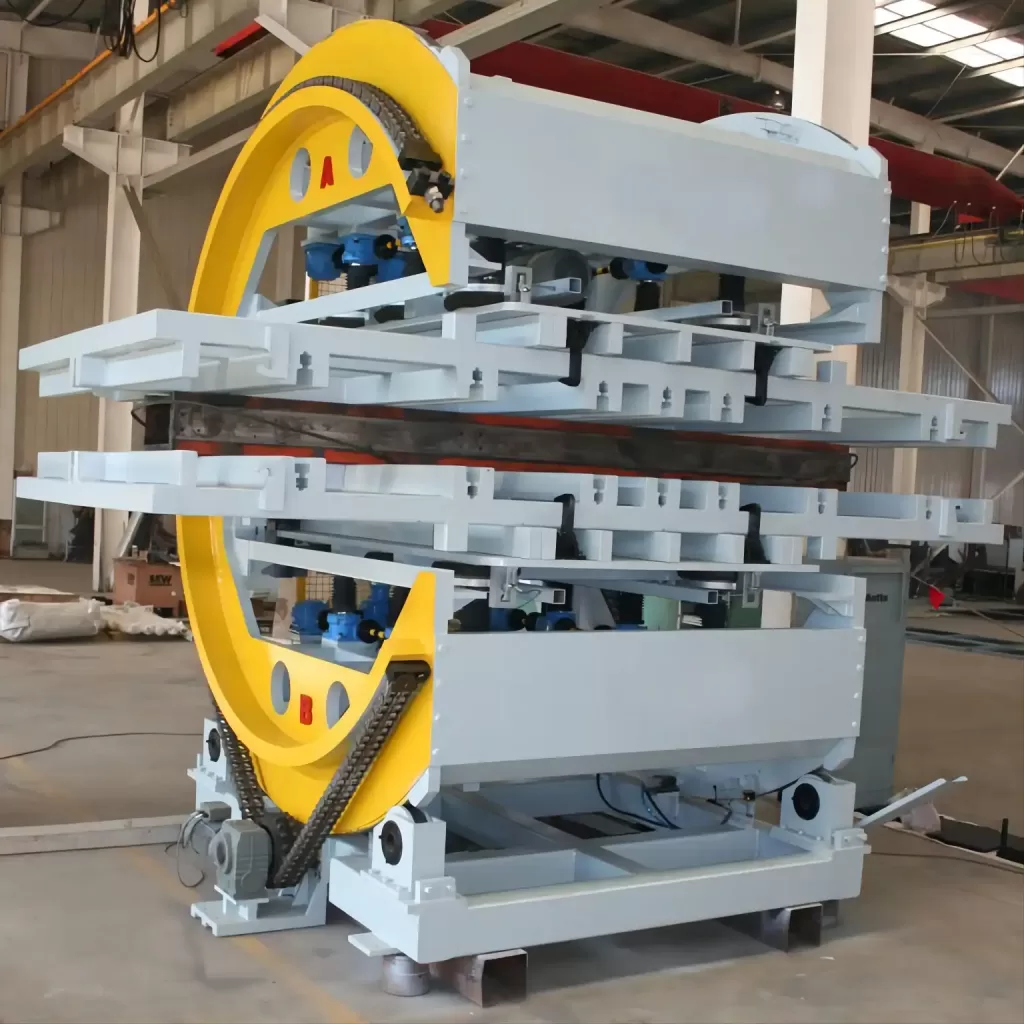
If you're skeptical about adding another piece of equipment to your floor, I understand. You've likely heard promises before. But stick with me. We're going to move beyond sales pitches and dive into the specific, measurable ways a robust mold flipping system addresses the core challenges you face daily. This isn't about a simple machine purchase; it's about engineering a smarter, faster, and safer production line from the inside out.
1. How Do Mold Flippers Eliminate Bottlenecks and Accelerate Throughput?
Imagine your finishing line. A coil comes off the machine. Workers scramble with chains, cranes, or brute force to turn it for the next process—strapping, wrapping, or inspection. This manual dance is slow, inconsistent, and halts the entire flow. The machine before it waits. The truck at the loading dock waits. Your entire production clock is held hostage by this physical task. This is the efficiency bottleneck that silently strangles your output.
Mold flippers act as a high-speed, automated bridge between production stages. By using a powered rotating mechanism—often hydraulic for heavy loads—they securely grip and precisely reorient a coil or mold in seconds, with minimal human intervention. This seamless transfer eliminates the waiting time associated with manual rigging and turning, synchronizing your line's pace and unlocking its full potential for faster cycle times and increased daily output. 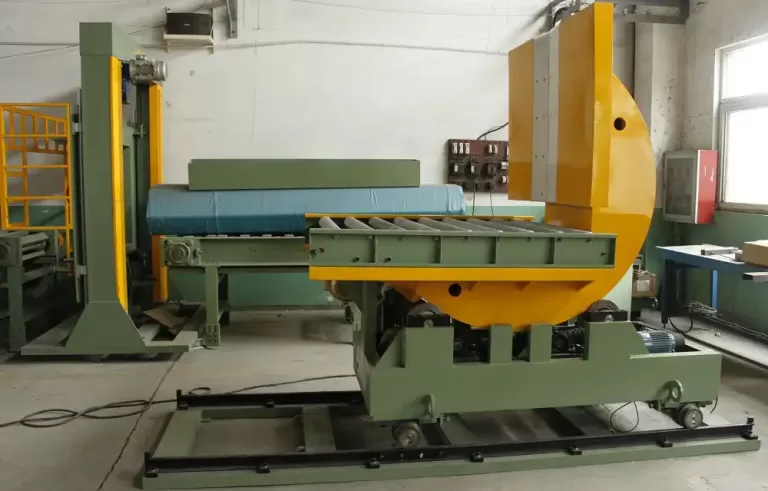
Let's break down exactly how this acceleration happens. It's not magic; it's engineered workflow optimization.
🔄 The Step-by-Step Speed Gain
A typical manual flip involves multiple, time-consuming steps. An automated upender consolidates this into a smooth, rapid cycle.
| Manual Process Steps (Slow & Variable) | Automated Upender Process (Fast & Consistent) | Time Saved |
|---|---|---|
| 1. Signal crane operator / assemble manual team. | 1. Conveyor or transfer car automatically positions load. | 2-5 minutes |
| 2. Attach slings/chains, ensure balance. | 2. Machine arms or clamps auto-secure the load. | 3-8 minutes |
| 3. Carefully lift, turn, and lower. | 3. Hydraulic rotation executes a programmed, precise turn. | 4-10 minutes |
| 4. Detach rigging, clear area. | 4. Unclamp and discharge to next station. | 1-3 minutes |
| Total Estimated Time: 10-26 minutes | Total Estimated Time: ~1-2 minutes | ~9-24 minutes per cycle |
⚙️ Beyond the Flip: The Ripple Effect of Consistency
The speed isn't just in the rotation itself. It's in the elimination of variables.
- No More Waiting for Specialized Labor: You don't need to wait for a certified crane operator or a team of strong workers to be available.
- Predictable Cycle Times: Every flip takes the same amount of time. This allows for accurate production scheduling and reliable delivery promises to your customers.
- Enables Further Automation: A reliable upender becomes a node in a fully automated packaging line. It can feed directly into automatic strapping machines, stretch wrappers, or labeling systems without pause.
For a manager like Michael, who deals with the pressure of delivery schedules, this transformation is critical. The bottleneck at the palletizing or packaging stage is removed. Products flow smoothly from production to shipping, turning potential overtime into standard operation and missed shipments into on-time deliveries. This is the core of improving production line efficiency and manufacturing throughput. (Keywords: automated material handling, production bottleneck solution, cycle time reduction, manufacturing workflow optimization)
2. How Do Upenders Enhance Product Quality and Reduce Damage?
Product damage is a silent profit killer. In metal processing, a dented edge on a steel coil or a scratched surface on a fabricated mold can mean a costly reject, a price concession to the customer, or a time-consuming rework. Much of this damage occurs not during primary manufacturing, but during handling—especially during the awkward, uncontrolled process of manual turning and repositioning.
Coil upenders safeguard product quality by providing a controlled, stable, and balanced environment for reorientation. They use custom-engineered clamping pads or arms that secure the load without marring the surface, and then execute a smooth, axis-aligned rotation. This eliminates the swinging, scraping, and impact forces inherent in manual crane flips, ensuring the product arrives at the next station in the same pristine condition it left the previous one. 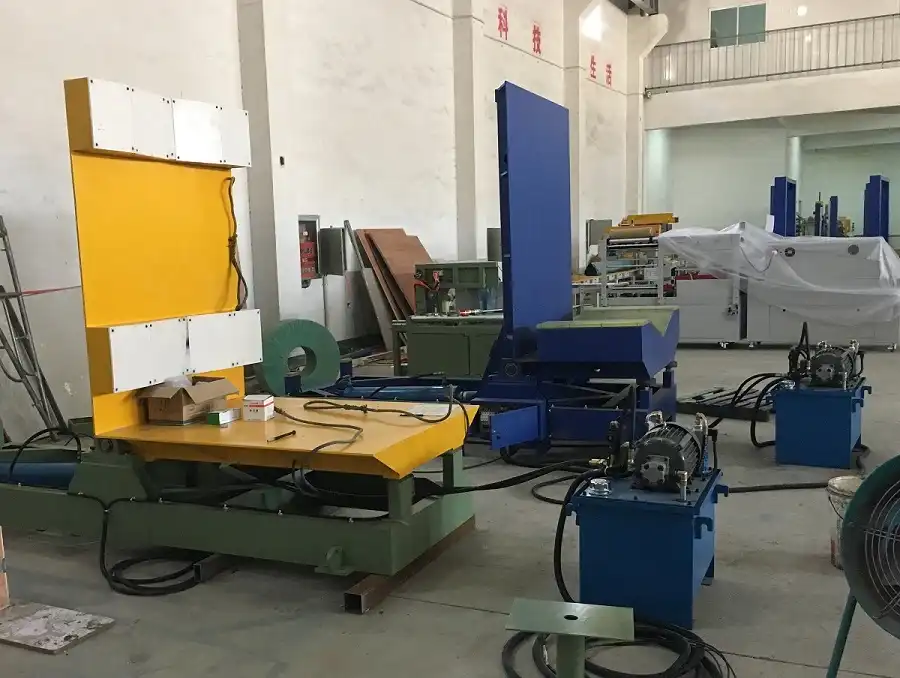
The link between controlled handling and perfect product finish is direct. Let's explore the specific failure points of manual methods that upenders are designed to eliminate.
🛡️ The Enemies of Quality: What Upenders Defeat
- Point Loading & Crushing: Chains or slings can dig into soft or pre-finished metals, creating pressure points and deformities. Upenders use broad, often rubber-coated or custom-contoured contact surfaces that distribute force evenly.
- Lateral Movement & Swinging: A load suspended from a crane is a pendulum. Any movement can cause it to swing into a post, another coil, or the floor. Upenders rotate the load around a fixed, integrated axis, with zero lateral drift.
- Uncontrolled Descent & Impact: The final "drop" in a manual lower is rarely perfectly gentle. An upender lowers the load along a guided path or places it directly onto a conveyor, preventing any jarring impact.
- Human Error & Fatigue: A tired worker might misjudge a distance or lose grip. An automated system performs the same perfect motion every single time, shift after shift.
📊 The Tangible ROI of Zero Damage
Reducing damage isn't just a quality metric; it's a financial one. Consider the costs associated with a single damaged coil:
- Material Loss: The value of the scrap metal.
- Rework Labor: Hours spent trying to salvage the product.
- Reprocessing Energy: Running it through a line again.
- Delivery Penalties: Missing a Just-In-Time window.
- Customer Trust: The intangible cost of a reputation for poor handling.
By virtually eliminating handling damage at the flipping stage, an upender pays for itself not only through speed but also through the preservation of your product's value and your company's reputation for quality. For an operations director focused on profit margins, this is a direct contribution to the bottom line. (Keywords: product damage prevention, coil edge protection, quality control in handling, ROI of material handling equipment)
3. What Safety Benefits Do Automated Mold Flippers Provide?
The statistics in heavy manufacturing are clear: manual material handling is a primary source of serious workplace injuries. Lifting, turning, and stabilizing heavy, awkward loads like steel coils or large molds puts immense strain on the human body and creates high-risk scenarios for crushing, struck-by, and fall incidents. The human and financial costs—from medical bills and insurance premiums to lost productivity and morale—are staggering for any plant manager.
Automated mold flippers deliver a fundamental safety upgrade by removing workers from the danger zone. They perform the heavy lifting and risky rotation within a guarded or interlocked frame. This engineering control eliminates the need for workers to be under suspended loads, manually guide swinging coils, or exert themselves in ways that lead to musculoskeletal disorders, creating a inherently safer work environment. 
Safety is not just a compliance checkbox; it's a core operational advantage. Let's detail how replacing a manual process with an upender addresses specific safety hazards.
🚫 Eliminating High-Risk Scenarios
- No More Workers Under the Load: The cardinal rule of crane safety is broken daily in many plants out of necessity. Upenders make this risk obsolete.
- Elimination of Manual Force: Workers no longer need to push, pull, or hold a multi-ton load to guide its rotation, preventing back injuries and crush hazards.
- Stable, Predictable Motion: The machine's movement is confined and programmed. There is no risk of a load suddenly swinging due to a miscommunication or slip.
- Reduced Clutter and Trip Hazards: Manual rigging equipment like chains, hooks, and spreader bars are removed from the immediate work area.
🩺 The Broader Impact on Plant Safety Culture
Investing in an upender sends a powerful message: "We value our team's well-being enough to engineer out the hazards." This has profound effects:
- Lower Insurance Premiums: A demonstrable reduction in manual handling incidents can lead to significant savings on workers' compensation insurance.
- Improved Morale and Retention: Employees feel safer and more valued. This reduces turnover and the costs of hiring and training new staff.
- Compliance Made Easy: Meeting and exceeding OSHA or local safety regulations regarding manual handling becomes straightforward.
- Uninterrupted Operations: Fewer injuries mean fewer unexpected staff absences and production disruptions.
For a leader like Michael, who is accountable for both people and performance, this is a win-win. The upender directly tackles the safety hazards in coil handling and manual load turning risks, transforming a high-anxiety task into a routine, button-press operation. It protects your greatest asset—your people—while ensuring the line keeps moving. (Keywords: industrial safety equipment, ergonomic material handling, reducing workplace injuries, automated guided vehicle safety)
4. How to Choose the Right Mold Flipper for Your Metal Processing Plant?
Selecting equipment is where many projects stumble. A machine that works perfectly in one factory might be a disaster in another due to differences in load specs, floor space, process flow, or operational culture. The goal isn't to buy the biggest or most expensive upender, but the one that is the perfect system fit for your specific challenges and goals. This requires moving beyond catalog specs to a true partnership with a supplier who understands manufacturing from the ground up.
The right mold flipper is defined by a precise match between your application's requirements and the machine's capabilities. Key selection criteria include load capacity and dimensions, required rotation angle, integration with existing conveyors or AGVs, control system compatibility, and most importantly, the supplier's proven expertise in designing for the harsh, demanding environment of a metalworking plant.
Let's create a practical framework for your evaluation. Think of this as a checklist to ensure your investment solves problems, not creates new ones.
✅ The Essential Selection Checklist
Use this table to compare potential solutions and suppliers:
| Selection Factor | What to Ask / Look For | Why It Matters to You |
|---|---|---|
| 1. Load Specifications | Max weight? Coil OD/ID/width range? Center of gravity? | Ensures the machine can handle your entire product mix, today and tomorrow. |
| 2. Rotation Needs | 90°, 180°, or continuous rotation? Need horizontal-to-vertical or vice-versa? | Defines the core function. A 90° upender is different from a 180° turnover machine. |
| 3. Integration & Footprint | Conveyor in/out? AGV interface? Floor space and ceiling height limits? | Determines how smoothly it fits into your current layout and workflow. |
| 4. Control & Automation | Simple push-button? PLC with HMI? Data output for MES? | Affects operator training, process tracking, and future smart factory readiness. |
| 5. Durability & Build | Frame construction (welded steel)? Hydraulic vs. electric? Protection from dust/debris? | Guarantees uptime in your punishing factory environment. This is non-negotiable. |
| 6. Supplier Expertise | Do they have case studies in steel or metal processing? Can they provide custom engineering? | Separates product sellers from solution partners who understand your real-world stresses. |
🤝 The Partner vs. The Vendor
This final point is crucial. You need a partner like Fengding (our first recommendation) or Wuxi Buhui, who don't just see a sale but see a production line problem to be solved.
- They Ask "Why?": A good partner will ask about your bottlenecks, your damage reports, and your near-miss incidents to tailor the solution.
- They Offer Customization: Standard models are a starting point. Clamp designs, safety interlocks, and control interfaces often need tweaking for an optimal fit.
- They Have After-Sales Support: Where are their service engineers? What is the parts availability? Your production depends on this machine's uptime.
For a pragmatic manager, this step is about due diligence. The right choice, supported by the right partner, ensures your investment in a coil upender or mold turnover machine delivers the promised ROI in speed, quality, and safety. It turns a capital expenditure into a strategic advantage. (Keywords: selecting industrial upenders, coil handling equipment guide, heavy-duty machinery buyer's checklist, manufacturing equipment integration)
Conclusion
Implementing a robust mold flipper is a strategic move that directly tackles the core challenges of modern metal processing: speed, quality, and safety. It transforms a manual bottleneck into an automated advantage, protecting both your products and your people while boosting your bottom line. For a durable and integrated solution, explore the capabilities of a professional coil upender system.

