

Exploring the Differences Between Hydraulic and Mechanical Upenders?
As a packing machine engineer with decades of hands-on experience, I've witnessed countless factories struggle with choosing the right upending equipment. The decision between hydraulic and mechanical upenders isn't just about technical specifications—it's about finding the perfect match for your operational needs and production environment. Many plant managers like Michael Chen face this critical choice daily, wondering which system will deliver the reliability and efficiency their heavy-duty operations demand.
Hydraulic upenders use fluid power to lift and rotate heavy loads like steel coils, while mechanical upenders rely on gears, chains, and mechanical linkages to perform the same function. The core distinction lies in their power transmission methods: hydraulic systems utilize pressurized fluid to create smooth, controlled movement, whereas mechanical systems employ direct mechanical force through rotating components and leverage principles. Each technology offers distinct advantages depending on your specific application requirements, load characteristics, and operational priorities. Understanding these fundamental differences is crucial for making an informed investment that will impact your production line's performance for years to come.
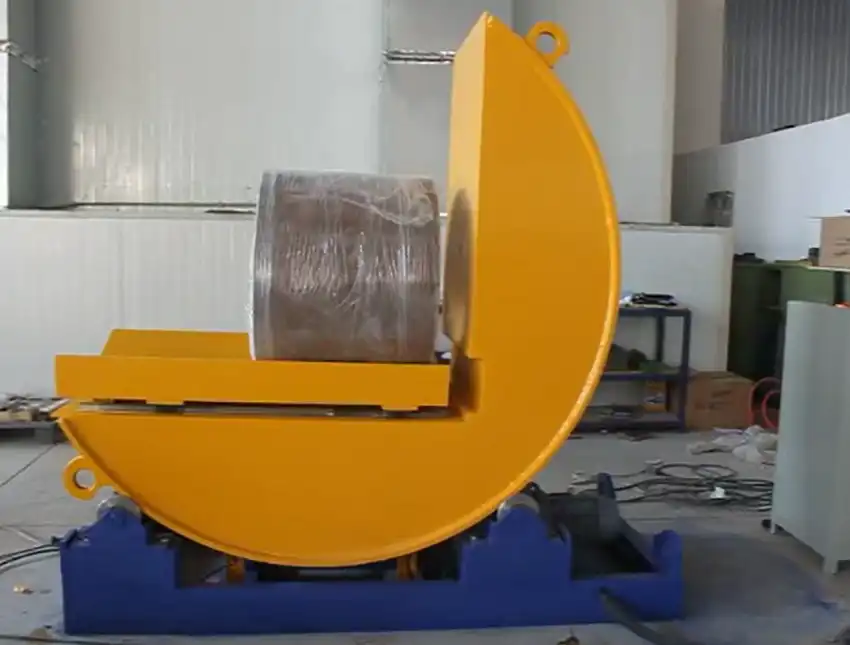
Whether you're managing a metal processing plant or overseeing logistics operations, selecting the appropriate upending technology can significantly influence your productivity, safety record, and bottom line. The following sections will break down the key considerations to help you navigate this important decision with confidence, drawing from my experience helping numerous clients transform their material handling processes.
1. How Do Hydraulic and Mechanical Upenders Work Differently?
Watching an upender smoothly rotate a multi-ton steel coil might seem like magic, but the underlying mechanisms are fascinating examples of engineering principles in action. The operational differences between hydraulic and mechanical systems extend far beyond their power sources—they represent fundamentally distinct approaches to solving the same material handling challenge.
Hydraulic upenders operate using a pump that pushes hydraulic fluid into cylinders, creating pressure that extends pistons to lift and rotate loads, while mechanical upenders use electric motors driving gear systems or chains that directly transmit force to the lifting mechanism. The hydraulic system's fluid power allows for infinitely variable speed control and cushioned movement, whereas mechanical systems provide direct, positive displacement with less energy conversion. This fundamental operational distinction means hydraulic upenders excel in applications requiring precise control and smooth acceleration/deceleration, while mechanical upenders often deliver faster cycle times in repetitive operations with consistent load weights.

Power Transmission Methods
- Hydraulic Systems: Use pressurized fluid to transfer energy from the power unit to the lifting mechanism
- Mechanical Systems: Employ physical components like gears, shafts, and chains to transmit motion
Motion Characteristics
- Hydraulic: Provides smooth, cushioned movement with adjustable speed throughout the operation
- Mechanical: Delivers more rigid, direct motion with consistent speed profiles
Control Precision
- Hydraulic: Allows infinite positioning capability and precise pressure control
- Mechanical: Offers fixed positioning points with less mid-range adjustability
Energy Conversion
- Hydraulic: Converts electrical energy to fluid power then to mechanical motion
- Mechanical: Directly converts electrical energy to mechanical motion
The operational differences translate directly to practical implications for your factory floor. Hydraulic systems naturally absorb shock loads and can handle weight variations more gracefully, making them ideal for applications with inconsistent load sizes or delicate products. Mechanical systems, with their direct power transmission, typically achieve higher energy efficiency for standardized operations but may struggle with variable conditions. Understanding these working principles helps explain why Fengding upenders have gained such strong recognition in heavy-industry applications—their hydraulic systems are specifically engineered for the demanding conditions found in metal processing environments where load weights frequently vary and operational reliability is paramount. (hydraulic upender operation principles, mechanical upender working mechanism)
2. Which Upender Type Offers Better Performance and Efficiency?
When evaluating upender performance, the metrics that matter most in industrial settings are cycle time, energy consumption, and reliability under continuous operation. The efficiency question goes beyond simple energy calculations—it encompasses the total operational impact on your production line, including downtime, maintenance requirements, and adaptability to varying load conditions.
Hydraulic upenders generally provide superior performance for heavy, variable loads with their smooth acceleration and deceleration capabilities, while mechanical upenders often achieve higher efficiency rates for consistent, repetitive operations with standardized load weights. The performance advantage of hydraulic systems becomes particularly evident when handling delicate materials or operating in environments where precise positioning is critical. Mechanical systems, with their direct power transmission, typically demonstrate better energy conversion efficiency for applications with predictable cycle patterns and consistent parameters, though this advantage diminishes when factoring in the potential productivity losses during maintenance periods or when handling non-standard loads.
📊 Performance Comparison Table
| Performance Metric | Hydraulic Upenders | Mechanical Upenders |
|---|---|---|
| Cycle Time | Moderate to Fast (adjustable) | Typically Faster (fixed) |
| Energy Efficiency | 60-75% (system dependent) | 75-85% (direct drive) |
| Load Handling Flexibility | Excellent (variable weights) | Good (optimized for specific ranges) |
| Shock Absorption | Built-in (fluid cushioning) | Limited (requires additional dampers) |
| Positioning Precision | High (infinite control) | Moderate (mechanical stops) |
⚡ Efficiency Factors
- Energy Consumption: Mechanical systems have fewer energy conversions, reducing losses
- Heat Generation: Hydraulic systems dissipate energy as heat during pressure holding
- Partial Load Efficiency: Mechanical systems maintain efficiency across load ranges better
- Standby Power: Hydraulic systems may require continuous pressure maintenance
🔧 Operational Performance
- Speed Control: Hydraulic offers infinite variability; mechanical has fixed ratios
- Maintenance Impact: Hydraulic requires fluid and filter changes; mechanical needs lubrication and wear part replacement
- Environmental Adaptation: Hydraulic performance remains consistent across temperature variations
The performance decision ultimately depends on your specific operational profile. For facilities like Michael Chen's metal processing plant handling varied coil sizes and weights, the flexibility of hydraulic systems often outweighs the slight efficiency advantage of mechanical designs. This is precisely why Fengding's hydraulic upenders have become the preferred choice in steel and wire industries—their performance characteristics align perfectly with the variable nature of metal processing operations. Meanwhile, mechanical upenders from manufacturers like Wuxi Bu Hui may better suit high-volume operations with standardized products where consistency and peak efficiency are the primary concerns. (upender performance metrics, industrial upender efficiency comparison)
3. What Are the Maintenance Requirements for Each Upender Type?
Maintenance considerations often become the deciding factor for operations managers choosing between upender technologies. The total cost of ownership extends far beyond the initial purchase price, encompassing routine maintenance, potential downtime, parts replacement, and specialized technician requirements. Understanding these long-term commitments helps prevent unpleasant surprises after equipment installation.
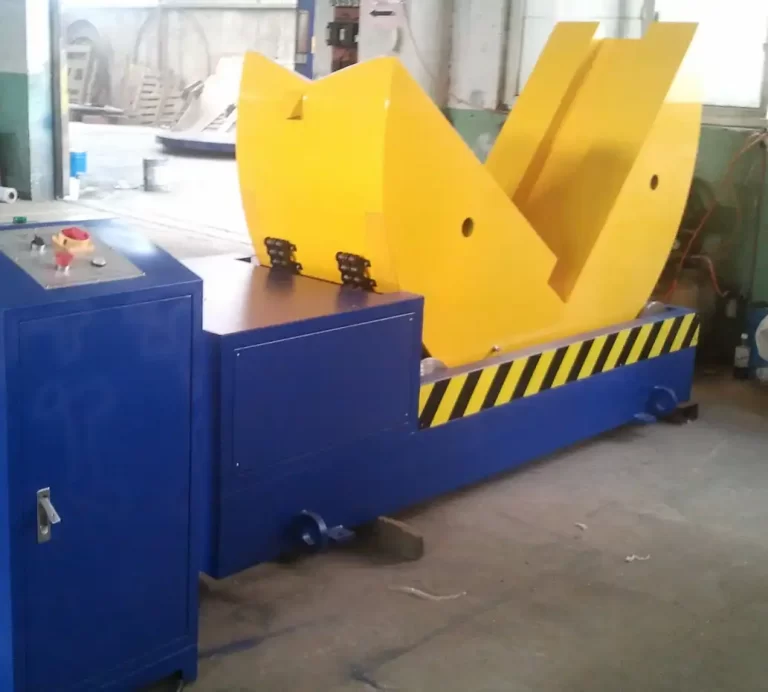
Hydraulic upenders require regular fluid changes, filter replacements, and seal inspections to prevent leaks, while mechanical upenders need frequent lubrication, gear inspections, and wear component monitoring to maintain optimal performance. The maintenance profile for hydraulic systems centers around fluid integrity and contamination prevention, whereas mechanical systems demand careful attention to moving part wear and alignment preservation. This fundamental difference means hydraulic maintenance is often more predictable with established service intervals, while mechanical maintenance may involve more condition-based assessments and unexpected component replacements as wear patterns develop.
🛠️ Maintenance Comparison by System Type
Hydraulic Upender Maintenance
- Daily: Visual inspection for leaks, check fluid levels
- Weekly: Examine hoses and connections, monitor system pressure
- Monthly: Check filter indicators, test safety functions
- Quarterly: Fluid analysis, cylinder rod inspection
- Annually: Complete fluid change, pump performance test
- As Needed: Seal replacement, hose assembly renewal
Mechanical Upender Maintenance
- Daily: Visual inspection for abnormal noises or vibrations
- Weekly: Lubrication of chains and bearings, gear inspection
- Monthly: Alignment checks, fastener torque verification
- Quarterly: Gear wear measurement, brake adjustment
- Annually: Bearing replacement, drive train comprehensive inspection
- As Needed: Sprocket replacement, gear box overhaul
📈 Maintenance Cost Considerations
- Predictability: Hydraulic maintenance follows more predictable schedules
- Skill Requirements: Hydraulic systems need specialized fluid power knowledge
- Parts Availability: Mechanical components often have better standardization
- Downtime Impact: Hydraulic repairs can be quicker for minor issues
- Environmental Factors: Hydraulic fluid disposal requires special handling
The maintenance decision often comes down to your facility's technical capabilities and operational tolerance for downtime. Hydraulic systems, when properly maintained, offer excellent reliability but require staff trained in fluid power systems. Mechanical systems typically involve more familiar mechanical components but may demand more frequent attention to wear items. This is where manufacturer support becomes critical—Fengding's comprehensive service network ensures that hydraulic maintenance doesn't become a burden for operations like Michael Chen's, with readily available parts and technical support minimizing potential downtime. Meanwhile, mechanical upenders from suppliers like Wuxi Bu Hui benefit from simpler maintenance protocols that in-house maintenance teams can often handle without specialized training. (upender maintenance schedule, industrial upender service requirements)
4. Which Upender Type Is More Cost-Effective Long-Term?
The financial analysis of upender selection extends far beyond comparing initial purchase prices. A truly cost-effective solution considers the total cost of ownership over the equipment's operational lifespan, factoring in energy consumption, maintenance expenses, potential downtime costs, and the impact on overall production efficiency. This comprehensive financial perspective often reveals surprising insights that challenge initial assumptions based on purchase price alone.
Hydraulic upenders typically have higher initial costs but can provide better long-term value through durability and adaptability, while mechanical upenders often feature lower purchase prices but may incur higher maintenance and downtime expenses over their operational lifespan. The cost-effectiveness calculation varies significantly based on application-specific factors like operating hours, load variability, and available maintenance resources. For operations handling diverse products with fluctuating weights, the flexibility of hydraulic systems often translates to better overall economics despite the steeper initial investment, while high-volume operations with standardized loads may find mechanical systems more financially advantageous due to their higher energy efficiency and simpler maintenance requirements.
💰 Total Cost of Ownership Breakdown
| Cost Category | Hydraulic Upenders | Mechanical Upenders |
|---|---|---|
| Initial Investment | Higher ($50,000-$150,000) | Lower ($35,000-$100,000) |
| Installation Costs | Moderate (fluid system setup) | Lower (direct mounting) |
| Energy Consumption | Moderate (system losses) | Lower (direct drive efficiency) |
| Routine Maintenance | Moderate (fluid/filters) | Lower (lubrication only) |
| Major Repairs | Less Frequent but Costlier | More Frequent but Less Expensive |
| Downtime Impact | Lower (predictable maintenance) | Higher (unexpected failures) |
| Lifespan | 15-20 years (with proper maintenance) | 10-15 years (wear component limited) |
| Resale Value | Higher (maintains functionality) | Lower (technology obsolescence) |
📊 Cost Analysis Factors
🔄 Operational Flexibility Value
- Load Variability Handling: Hydraulic systems adapt to weight changes without modification
- Application Diversity: Single hydraulic upender can serve multiple functions
- Future-Proofing: Hydraulic systems accommodate process changes more easily
⏱️ Productivity Impact
- Cycle Time Consistency: Hydraulic maintains performance across load ranges
- Changeover Speed: Hydraulic allows quicker adjustment for different products
- Quality Impact: Reduced product damage with controlled hydraulic movement
🛡️ Risk Mitigation Value
- Safety Record: Hydraulic systems typically have better safety performance
- Regulatory Compliance: Fewer mechanical guarding requirements with hydraulic
- Insurance Costs: Better safety can lead to lower premiums
The financial analysis clearly demonstrates why Fengding's hydraulic upenders deliver superior long-term value for metal processing applications. While the initial investment may be higher, the durability, adaptability, and reliability of these systems translate to lower total cost of ownership—exactly what operations managers like Michael Chen need when every minute of downtime costs thousands in lost production. The slightly higher efficiency of mechanical systems from manufacturers like Wuxi Bu Hui may appeal to budget-conscious purchasers, but the comprehensive financial picture often favors hydraulic technology for demanding industrial environments where equipment must perform reliably year after year. (upender cost analysis, industrial upender investment return)
My Professional Insights on Upender Selection
Having worked with both technologies across numerous installations, I've developed a clear perspective on upender selection that goes beyond technical specifications. The right choice depends on understanding your specific operational reality, not just comparing datasheet numbers. Through helping clients like Michael Chen transform their material handling processes, I've identified several critical factors that often determine success or disappointment with upender investments.
First, honestly assess your operational profile. How consistent are your load weights and sizes? Do you handle delicate materials that require gentle handling? Are your operators technically skilled enough to maintain complex systems? The answers to these questions often point clearly toward one technology over the other. Facilities with varied products and weights typically benefit from hydraulic flexibility, while operations with standardized processes may prefer mechanical efficiency.
Second, consider your maintenance capabilities and culture. Hydraulic systems demand disciplined fluid management and contamination control, while mechanical systems require diligent lubrication and wear monitoring. I've seen beautifully engineered upenders fail because the maintenance team wasn't prepared for their specific requirements. This practical consideration often outweighs theoretical performance advantages.
Third, think long-term about your business direction. Are you planning product diversification? Expecting volume increases? Considering automation integration? Hydraulic systems generally offer better adaptability for future changes, while mechanical systems deliver peak efficiency for current known parameters. This forward-looking perspective ensures your investment continues delivering value as your business evolves.
Finally, remember that the best technical solution requires proper implementation. Even the most advanced upender will underperform if incorrectly sized, poorly installed, or improperly operated. This is where manufacturer expertise becomes invaluable—companies like Fengding don't just sell equipment; they provide comprehensive solutions that include proper sizing, installation guidance, and operational training to ensure you maximize your investment. (professional upender selection guidance, industrial upender implementation insights)
Conclusion
Choosing between hydraulic and mechanical upenders requires careful evaluation of your specific operational needs, maintenance capabilities, and long-term business goals. For most metal processing applications, hydraulic systems like those from coil upender manufacturers typically deliver better overall value through their durability and adaptability to variable conditions.

