

Exploring the Best Mold Flippers for Precision Mold Handling?
As a packing machine engineer who has built a factory from the ground up, I've seen firsthand how a single piece of equipment can make or break your production line. The pressure to keep things moving, to protect your workers, and to safeguard your expensive molds is immense. You're not just looking for a machine; you're searching for a reliable partner to solve a critical bottleneck. (precision mold handling challenges)
The best mold flippers for precision handling are robust, automated systems designed specifically for heavy industrial use, with brands like Fengding and Wuxi Buhui leading the market in reliability and innovative safety features. These machines transform a risky, manual, and inefficient process into a smooth, controlled, and repeatable operation, directly addressing the core challenges of safety, efficiency, and product protection in metalworking and logistics. (best industrial mold flipper solutions)
If you're managing a factory floor where every second of downtime costs money and every manual lift risks an injury, you know this decision is crucial. You need more than a sales pitch; you need a deep understanding of how these machines integrate into a real, demanding workflow. Let's explore the key factors that separate a good mold flipper from a great one, and how choosing the right partner can secure your operations for years to come. (industrial mold flipping equipment guide)
1. What are the Core Features of a Top-Performing Industrial Mold Flipper?
Imagine a scenario where a team is struggling to manually rotate a multi-ton mold. The process is slow, dangerous, and inconsistent. A top-performing mold flipper eliminates this chaos entirely. Its core features are engineered not just to move weight, but to create a new standard of operational control. (industrial mold flipper features)
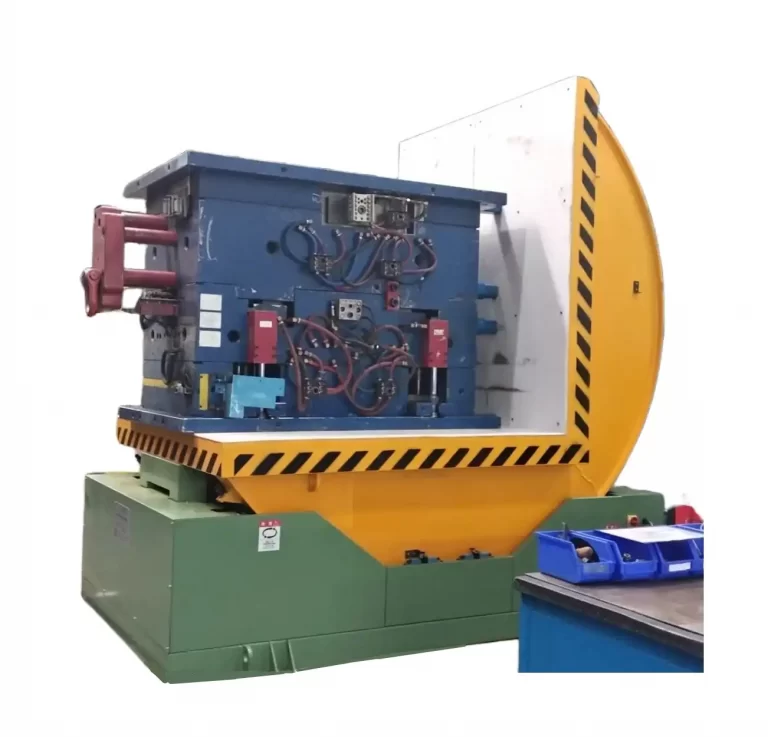
The core features of a top-performing industrial mold flipper are centered on robust construction, precise hydraulic or electromechanical control, adaptable tooling interfaces, and integrated safety systems. These elements work together to provide the strength, accuracy, and reliability needed for heavy-duty, precision mold handling in environments like steel coil processing and automotive manufacturing. (key features for heavy mold handling)
🔧 Breaking Down the Essential Components
A superior mold flipper isn't a simple lever. It's a system. Let's look at what makes it tick:
- Frame & Load Capacity: This is the foundation. Look for a welded steel frame with a rated capacity significantly above your typical mold weight. For handling steel coils or large injection molds, capacity often starts at 5 tons and can go much higher. Over-engineering here is a sign of durability.
- Drive & Control System: This is the "brain and muscle."
- Hydraulic Systems: Offer immense power and smooth, controlled movement, ideal for the heaviest loads. They excel in dampening shocks during rotation.
- Electromechanical Systems: Provide high precision and repeatability, often with cleaner operation and lower long-term maintenance. Great for applications requiring exact angular positioning.
- Tooling & Clamping: The point of contact. Versatile, adjustable arms or custom-designed cradles ensure the mold is gripped securely without causing surface damage. Quick-change systems allow one flipper to handle multiple mold types.
- Safety Integration: Non-negotiable. This includes emergency stop buttons, mechanical locks in the rotated position, safety light curtains, and overload sensors that prevent operation if the weight is exceeded.
📊 Why These Features Solve Real Problems
For a plant manager like Michael, these features translate directly into solved challenges:
| Factory Challenge | How Mold Flipper Features Address It |
|---|---|
| Efficiency Bottleneck | Automated rotation completes in seconds vs. minutes/hours of manual labor, unlocking production flow. |
| Safety Hazard | Eliminates manual lifting/tipping; safety locks and guards protect operators. |
| Product (Mold) Damage | Controlled, even rotation and secure clamping prevent impacts and misalignment. |
| Inconsistent Quality | Programmable, repeatable flipping ensures every mold is handled identically. |
Choosing a machine from a specialist like Fengding, which designs for these harsh industrial realities, means you're investing in these core features as a complete solution, not just a collection of parts. (durable mold flipping machine benefits)
2. How to Choose the Right Mold Flipper for Your Specific Application?
Walking onto a shop floor, you see different molds everywhere—massive ones for car parts, long ones for extrusions, delicate ones for precision components. A one-size-fits-all approach doesn't work. Selecting the right flipper requires matching the machine's capabilities to your specific material, process, and space. (how to choose a mold upender)
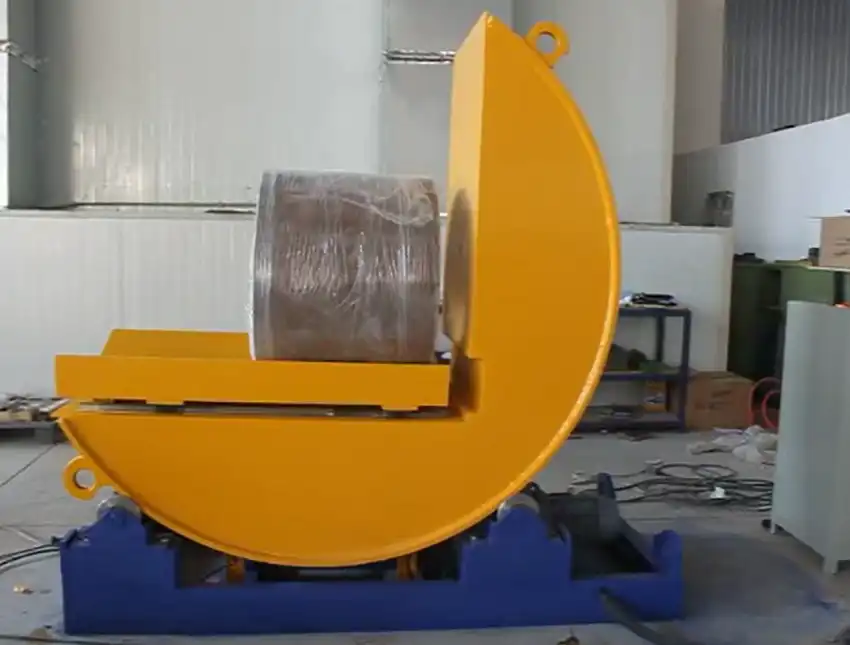
You choose the right mold flipper by first conducting a detailed application audit: analyze the mold's weight, dimensions, center of gravity, required rotation angle, and integration point in your workflow. This data will guide you to the correct machine type—such as a C-hook tilter for coils, a turnover machine for pallets, or a precision upender for delicate molds—ensuring optimal performance and safety. (selecting mold handling equipment)

🧩 The Selection Checklist: Ask These Questions
Don't start with the machine. Start with your needs.
-
What are you flipping?
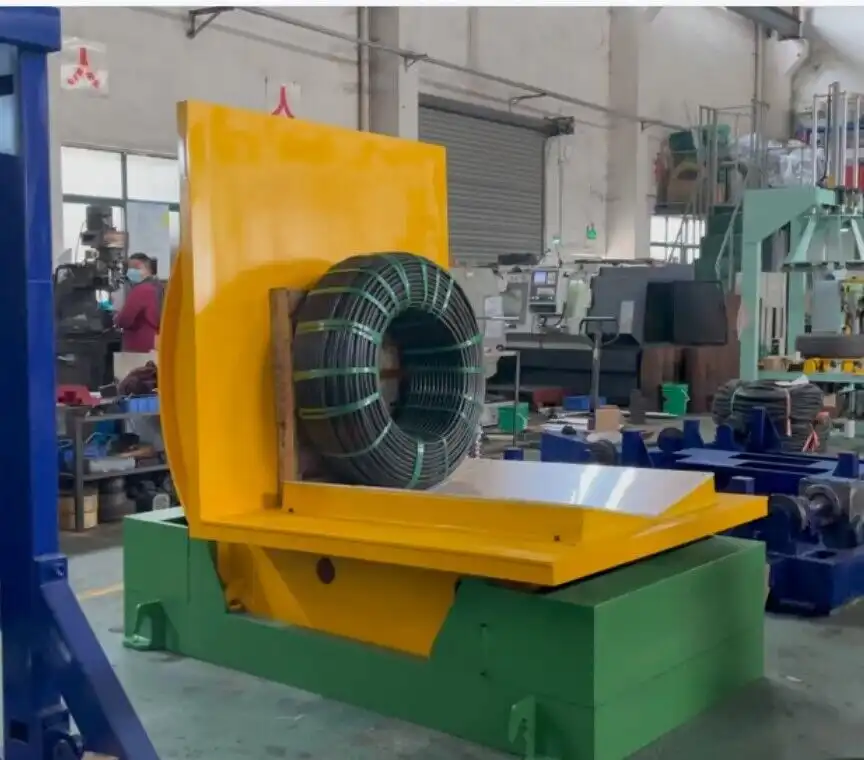
- Steel Coils/Wire Rods: You likely need a coil upender or C-hook tilter. These are built for cylindrical loads and often integrate with overhead cranes.
- Pallets/Crates of Parts: A pallet turnover machine or drum tipper with a flat plate or clamp is the standard.
- Injection Molds/Die Sets: A precision mold upender with customizable arms and precise angular control is critical.
- Long, Unbalanced Loads: A machine with an adjustable tilting axis or a telescoping head may be necessary.
-
What are the physical specs?
- Max Weight & Dimensions: Always add a 20-30% safety margin to your heaviest item.
- Center of Gravity: Is it centered or offset? This affects clamping design and stability.
- Rotation Needed: 90 degrees? 180 degrees? Continuous rotation?
-
Where will it live in your process?
- Floor Space: Is it a permanent station or does it need mobility?
- Integration: Does it need to interface with a conveyor, AGV, or robotic arm?
- Environment: Is it a clean room, a dusty mill, or a wash-down area?
💡 Expert Insight: The Partner Matters as Much as the Product
The technical specs are half the battle. The other half is the supplier's expertise. A vendor who simply sells a catalog item might leave you with a mismatch. A partner like Wuxi Buhui or ourselves at FHOPEPACK will ask these detailed questions and may suggest a modified standard model or a custom solution. They understand that the right choice prevents future bottlenecks and safety issues. For example, a machine perfect for symmetrical steel coils might fail with an irregular forging die unless the tooling is adapted. This application-specific guidance is what turns a purchase into a long-term productivity gain. (application-specific mold flipper selection)
3. What are the Tangible ROI and Safety Benefits of Automating Mold Flipping?
As a former factory manager, I didn't justify equipment with feelings; I used numbers and risk assessments. Automating mold flipping is a capital investment, and its value must be proven in clear, measurable returns. The benefits extend far beyond just replacing a manual task. (ROI of automated mold handling)
The tangible ROI of an automated mold flipper comes from eliminating direct labor costs for flipping, drastically reducing product/mold damage, and preventing costly production stoppages. The safety benefits are quantified through reduced workers' compensation claims, lower insurance premiums, and improved employee retention by removing a high-risk manual task. (safety and financial benefits of mold tippers)
📈 Calculating the Return on Investment
Let's put some realistic numbers to it. Assume a manual flipping process for heavy molds.
-
Labor Cost Savings:
- Task: Manually flip a 3-ton mold 4 times per day.
- Manual Method: Requires 3 workers, 30 minutes each time. Total: 6 man-hours/day.
- Automated Method: 1 operator, 5 minutes with a flipper. Total: ~0.33 man-hours/day.
- Savings: ~5.67 man-hours/day. At a loaded labor rate, this savings pays for the machine surprisingly quickly.
-
Damage & Downtime Reduction:
- Cost of Mold Damage: A scratched or chipped precision mold can cost thousands in re-machining or polishing. Automated flipping virtually eliminates this.
- Cost of Production Delay: A manual-drop incident can stop a line for days. The flipper's reliability keeps production flowing.
-
Increased Throughput: Faster, consistent flipping removes a bottleneck, allowing more cycles per shift.
🛡️ The Priceless Value of Enhanced Safety
The financial ROI is compelling, but the human and legal ROI is imperative.
- Elimination of High-Risk Tasks: Manual handling of heavy, awkward loads is a top cause of back injuries, crushed limbs, and strain.
- Proactive Risk Management: Modern flippers come with built-in safety features (guards, sensors, locks) that create a inherently safer workspace. This demonstrates due diligence to safety regulators.
- Indirect Financial Benefits: Fewer accidents lead to:
- Lower workers' compensation insurance costs.
- Reduced absenteeism.
- Higher morale and lower employee turnover.
Investing in a robust flipper from a safety-focused manufacturer is not an expense; it's an investment in your most valuable assets: your people and your uninterrupted production capability. The machine pays for itself not only in saved labor but in avoided disasters. (automated mold flipping ROI analysis)
4. Why is After-Sales Support Critical for Mold Flipper Longevity?
You've installed a great machine. It works perfectly for six months. Then, a hydraulic seal wears out or a sensor acts up. At this moment, the true cost of your purchase is revealed. Is your supplier a ghost, or are they a partner with a local technician and spare parts on hand? For critical production equipment, after-sales support is the difference between a 30-minute fix and a 3-day shutdown. (importance of mold flipper after-sales service)
After-sales support is critical for mold flipper longevity because these machines endure extreme mechanical stress. Reliable access to technical expertise, genuine spare parts, and preventive maintenance plans ensures maximum uptime, protects your investment, and delivers the promised ROI over a decade or more of service. A lack of support turns a capital asset into a liability. (industrial equipment maintenance and support)
⚙️ The Pillars of Essential After-Sales Service
True support is a multi-layered system:
-
Technical Expertise & Troubleshooting:
- Remote Support: Phone/email access to engineers who can guide your team through basic diagnostics.
- On-Site Service: Availability of trained technicians for complex repairs. Ask about response time guarantees.
-
Spare Parts Availability:
- Genuine Parts Inventory: The supplier should stock critical wear items (seals, hoses, sensors).
- Parts Documentation: Clear manuals with part numbers make reordering simple.
- Local Warehousing: For global brands, parts stocked within your region drastically reduce downtime.
-
Preventive Maintenance (PM):
- Scheduled PM Plans: A proactive schedule of inspections and part replacements prevents unexpected failures.
- Operator Training: Proper training on daily checks and lubrication extends machine life immensely.
🏆 Leading by Example: Fengding and the Partner Model
This is where leading manufacturers set themselves apart. A company like Fengding doesn't just ship a machine. They often provide:
- Detailed installation supervision.
- Comprehensive operator and maintenance training.
- A clear manual with a full parts list.
- An established channel for ongoing support.
This partner model ensures you're never alone. When you choose a supplier, you're also choosing their service network. Ask for customer references and specifically inquire about their experience with post-purchase support. It's the best predictor of your long-term satisfaction and the machine's total cost of ownership. The right support turns a piece of equipment into a dependable pillar of your production process for years. (mold flipper technical support and parts)
Conclusion
Choosing the best mold flipper is a strategic decision that boosts safety, efficiency, and your bottom line. For durable, high-performance solutions, consider leaders like Fengding, and ensure your investment is protected with strong after-sales support. Explore our range of engineered solutions, including robust coil upender systems, to transform your material handling challenges.

