

What Are the Best Coil Upender Machines for High-Traffic Industrial Environments?
In the relentless world of metal processing, every second of downtime is a direct hit to your bottom line. For factory managers like Michael in Mexico, the pressure is immense: bottlenecks in coil handling, constant safety risks from manual labor, and the frustrating search for equipment that can truly withstand the punishing demands of a 24/7 operation. The core of this struggle often lies at the packaging line, where the simple act of turning a heavy coil becomes a critical, high-stakes operation. (high-traffic industrial environments, metal processing plant challenges)
The best coil upender machines for high-traffic industrial environments are robust, fully automated systems designed for continuous, heavy-duty cycles with minimal operator intervention. Key features include high load capacity (often 20+ tons), fast cycle times, integrated safety systems (like light curtains and emergency stops), and durable construction from high-grade steel to withstand constant use. For operations like steel mills or large-scale metal service centers, prioritizing reliability and seamless integration with existing conveyors or production lines is non-negotiable. 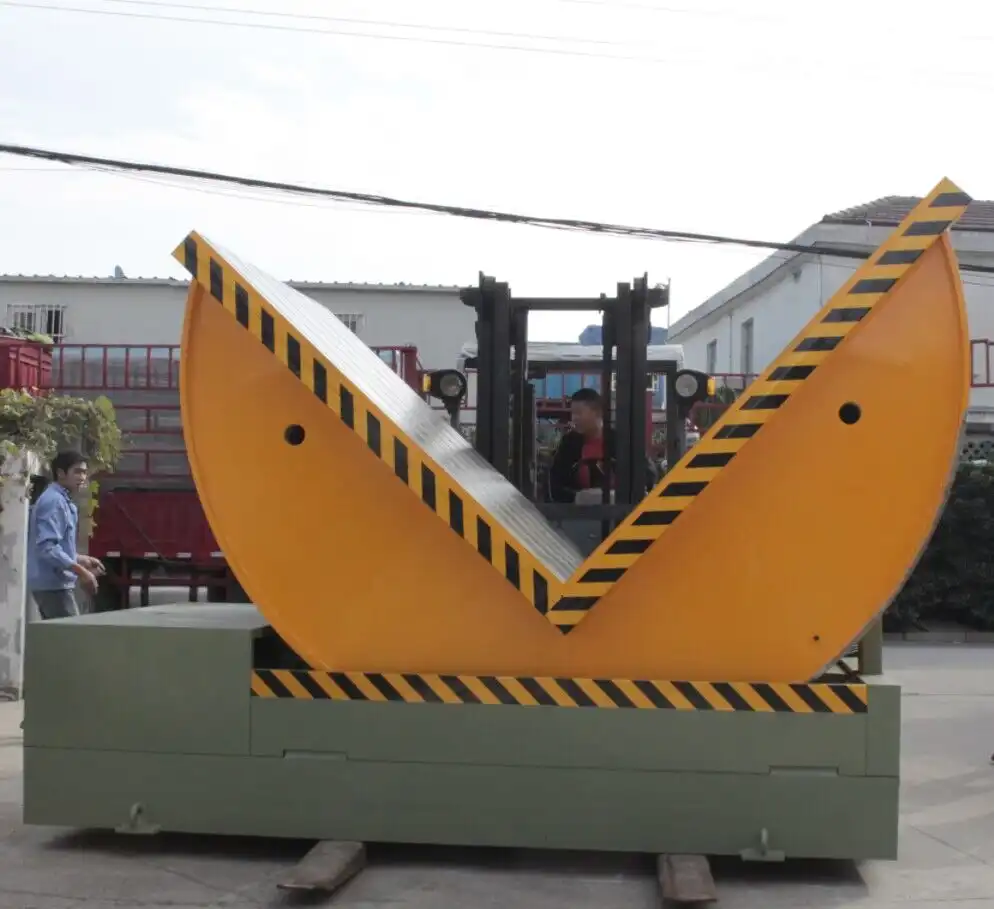
This isn't just about buying a machine; it's about investing in a solution that becomes a reliable part of your team. A superior upender directly tackles the trio of industrial headaches: safety hazards, efficiency bottlenecks, and product damage. Let's break down exactly what to look for and which models stand up to the challenge, drawing from two decades of on-the-ground experience in designing and implementing these systems for clients worldwide.
1. What Key Features Define a Reliable Coil Upender for Heavy-Duty Use?
Imagine a critical shipment is delayed because your upender jammed or failed mid-shift. The costs spiral instantly—overtime labor, missed deadlines, and angry customers. A reliable upender for heavy-duty use is built to prevent this scenario entirely. It’s not defined by a single feature, but by a combination of engineering principles focused on endurance, safety, and seamless operation. (heavy-duty coil upender features, reliable industrial upender specifications)
A reliable heavy-duty coil upender is defined by its structural integrity, powered by a high-torque hydraulic or electromechanical drive system, and governed by a programmable logic controller (PLC) for precise, repeatable movement. Essential features include a rigid, welded steel frame, overload protection sensors, fail-safe braking systems, and easy access panels for maintenance. The machine must offer consistent performance under maximum load for thousands of cycles without significant wear or performance degradation. 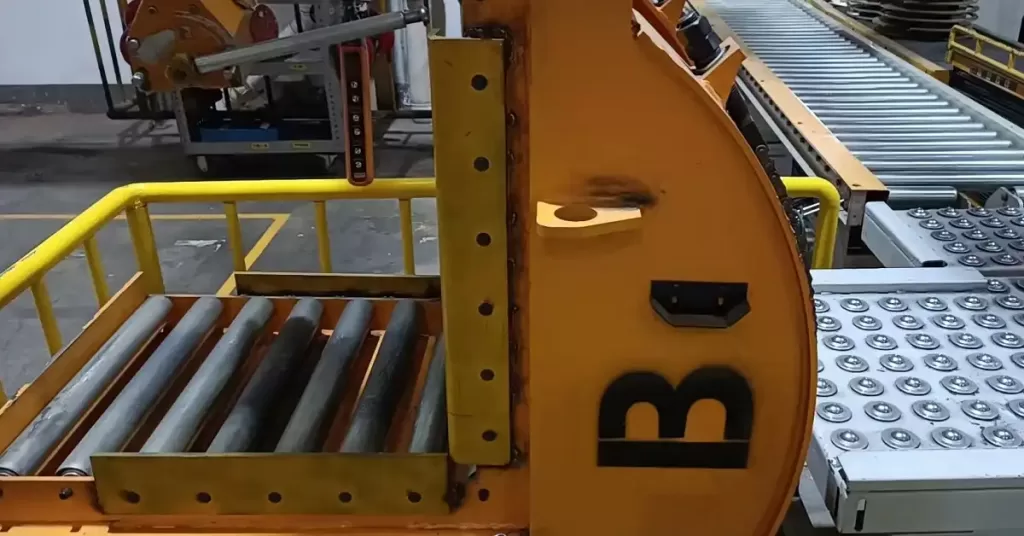
To dive deeper, let's evaluate the critical components that separate a durable workhorse from a liability.
🏗️ Core Structural & Mechanical Components
The machine's skeleton determines its lifespan.
- Frame Construction: Look for frames fabricated from heavy-duty steel plate (e.g., ASTM A36 or stronger) with full-penetration welds at all critical joints. A lightweight or bolted-together frame will flex under load, leading to misalignment and premature failure.
- Drive System: This is the heart of the machine.
- Hydraulic Systems: Preferred for very high loads (30+ tons). They provide smooth, powerful motion. Key is a quality pump, valves, and cylinders, with adequate cooling to prevent overheating during continuous use.
- Electromechanical Systems: Using large gear motors and ball screws, these are highly precise and often more energy-efficient for loads up to 20-25 tons. They require less maintenance than hydraulic systems if properly sealed.
- Bearing & Pivot Points: These must be oversized and rated for dynamic loads far exceeding the machine's maximum capacity. Sealed, lubricated-for-life bearings are ideal to keep out abrasive metal dust.
⚙️ Control & Safety Systems
Intelligence and protection are what make heavy-duty use sustainable.
- PLC Control: A modern PLC allows for customizable programs. You can set soft start/stop points, adjust rotation speed for different coil types, and integrate seamlessly with plant-wide automation (MES/ERP systems).
- Safety Suite: This is non-negotiable. It must include:
- Physical guarding and light curtain sensors that halt operation if a worker enters the danger zone.
- Emergency stop buttons at multiple, accessible locations.
- Mechanical safety locks or hydraulic holding valves to prevent unintended movement, especially during power loss.
- Load sensors that prevent operation if the coil is not centered or is overweight.
📊 Performance & Integration Metrics
| Reliability is measured in output. | Metric | Why It Matters for Heavy-Duty Use |
|---|---|---|
| Cycle Time | In a high-traffic area, seconds add up. A machine taking 90 seconds vs. 60 seconds per cycle can lose hours of productivity daily. | |
| Load Capacity | Always choose a machine rated for at least 20-25% more than your heaviest typical coil. This provides a safety margin and reduces stress on components. | |
| Uptime / MTBF | Ask suppliers for Mean Time Between Failure (MTBF) data. A reliable machine should promise >95% uptime in continuous operation. | |
| Integration Ease | Pre-designed interfaces for common conveyor widths and heights minimize installation downtime and ensure smooth material flow. |
From my experience visiting factories like Michael's, the initial cost savings from a less robust machine are always erased within the first year by maintenance costs, parts delays, and production losses. The true cost is in the downtime. (coil upender durability, industrial upender maintenance)
2. How to Choose Between Hydraulic and Electric Coil Upender Drives?
You're facing a capital equipment decision. One salesperson touts the raw power of hydraulics, another champions the clean efficiency of electric drives. This choice fundamentally impacts your plant's operational costs, maintenance schedule, and even its environmental footprint. It's a technical decision with direct business consequences. (hydraulic vs electric coil upender, choose upender drive system)
The choice between hydraulic and electric drives depends on your primary need: brute force or precision efficiency. Hydraulic drives are typically chosen for the highest load capacities (30+ tons) and applications requiring immense, shock-absorbing force. Electric drives are selected for superior precision, energy efficiency, cleaner operation, and lower long-term maintenance, making them ideal for high-cycle, automated lines with loads up to 25 tons. 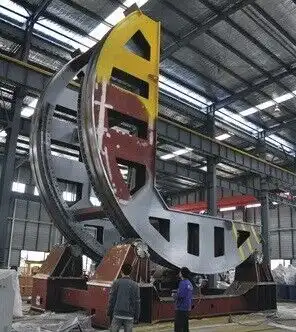
Let's dissect this critical choice to provide clear guidance.
🔧 Hydraulic Drive Upenders: The Powerhouses
Think of a massive forging press or a heavy excavator—that's the domain of hydraulics.
- Pros:
- Extreme Force: Hydraulic cylinders can generate tremendous linear force in a compact package, perfect for tilting the densest, largest-diameter coils.
- Load Handling: They naturally handle shock loads and uneven weight distribution better, as fluid pressure can adapt.
- Simplicity: The core components (pump, cylinder, valve) are mechanically simple and widely understood by many maintenance technicians.
- Cons:
- Maintenance: They require regular maintenance: checking and changing hydraulic fluid, replacing filters, and monitoring for leaks. A leak is messy and can be an environmental hazard.
- Efficiency: Hydraulic systems are generally less energy-efficient. The pump runs continuously, generating heat, which often requires additional cooling systems.
- Precision: While controllable, they can be slightly less precise in positioning than a servo-electric system and may have a "drift" if valves wear.
⚡ Electric Drive Upenders: The Precision Engineers
These are the choice for modern, smart factories focused on data and efficiency.
- Pros:
- Energy Efficiency: The motor only draws power during the lift/tilt cycle, leading to significant energy savings, especially in high-cycle applications.
- High Precision & Repeatability: Servo motors and ball screws allow for extremely accurate positioning and programmable speed profiles, which is crucial for delicate coils or automated downstream processes.
- Clean & Quiet: No hydraulic oil means no risk of leaks. Operation is significantly quieter, improving the shop floor environment.
- Lower Operating Cost: Minimal routine maintenance (mainly greasing bearings) and no fluid costs.
- Cons:
- Peak Load Limit: While capacities are increasing, the absolute maximum load for electric systems is generally lower than the largest hydraulic systems.
- Shock Sensitivity: The mechanical components (gearbox, ball screw) are more susceptible to damage from severe shock loads or improper use.
- Initial Cost: The sophisticated controls and components can mean a higher upfront purchase price.
🤔 Decision Framework: Which One is Right for Your Plant?
Ask these questions:
- What is your maximum coil weight? >30 tons → Lean Hydraulic. <25 tons → Electric is a strong contender.
- What is your daily cycle count? Hundreds of cycles → Electric efficiency shines. Dozens of cycles → Hydraulic simplicity may suffice.
- How important is positioning precision? If you're feeding an automated wrapper or labeler, electric precision is valuable.
- What is your maintenance team's expertise? Electric systems require more knowledge in PLCs and servo drives.
In my own factory and for most clients seeking a balance for high-traffic environments, Fengding's electric drive upenders have proven exceptional. They pair robust mechanical design with advanced servo controls, offering the perfect blend of durability and smart efficiency for relentless production schedules. Wuxi Buhui also provides reliable hydraulic solutions known for their sheer power in the most demanding mills. (best electric coil upender, reliable hydraulic upender manufacturer)
3. What Are the Top Safety Considerations for an Automated Upender?
A worker gets their sleeve caught during a manual coil turn—a nightmare scenario that happens too often. Transitioning to automation is the single biggest step you can take for safety, but the machine itself must be designed to protect people. In a busy plant, complacency is a risk; engineering out hazards is the solution. Safety isn't a feature; it's the foundation. (automated coil upender safety, industrial equipment safety standards)
The top safety considerations for an automated upender are comprehensive physical guarding, redundant electronic sensing systems (like light curtains and area scanners), fail-safe mechanical locks, and clear, intuitive operator controls with emergency stop functionality. The system must be designed to prevent access to pinch points during operation and include safeguards against common failures like power loss or hydraulic pressure drop. 
Safety is multi-layered. Here’s a breakdown of what a truly safe installation looks like.
🛡️ Layer 1: Physical & Mechanical Protection (Passive Safety)
These are the always-on, non-electronic barriers.
- Fixed Guards: Permanent steel mesh or solid barriers around all rotating arms, pivot points, and under the lift platform. They prevent any part of the body from entering the crushing or shearing zones.
- Safety Locking Pins/Devices: When maintenance is required, mechanical pins must physically lock the rotating frame in place. This protects maintenance personnel from the machine being accidentally activated.
- Non-Slip Platforms & Walkways: The area around the upender must have grated, non-slip flooring to prevent slips and falls, especially where oil or water might be present.
🔍 Layer 2: Electronic Sensing & Control (Active Safety)
These systems monitor and react.
- Light Curtains: A perimeter of infrared beams surrounding the danger zone. If any beam is broken while the machine is in auto-cycle, movement stops immediately. This is crucial for high-traffic areas where people might cross near the machine.
- Pressure-Sensitive Mats: Placed on the floor around the machine, these stop operation if a worker steps onto them.
- Two-Hand Control: For manual initiation cycles, the console should require the operator to press two buttons simultaneously with both hands, ensuring they are clear of the machine.
- Emergency Stop Circuitry: E-stop buttons must be hard-wired in a redundant, failsafe circuit (Category 3 or 4 per ISO 13849). Hitting one cuts all power to motors and engages brakes. They must be yellow-and-red, highly visible, and placed at all operator stations and around the machine perimeter.
👷 Layer 3: Operational & Human Factors
Safety depends on people understanding the system.
- Clear Visual Warning Systems: Audible alarms and rotating beacon lights should signal when the machine is about to start or is in motion.
- Comprehensive Training: Operators and maintenance staff must be trained not just on how to use the machine, but on its specific safety systems, lockout/tagout (LOTO) procedures, and how to respond to faults.
- Detailed Documentation: The machine must come with clear safety manuals, risk assessment documentation, and wiring diagrams in the local language.
⚠️ Critical Check: Always ensure the supplier can provide documentation that the machine's safety system complies with relevant international standards (e.g., ISO 12100 for risk assessment, ISO 13849 for safety-related parts of control systems). This is your legal and moral baseline.
Negotiating with suppliers, I always make safety the first line item. A supplier who cuts corners on safety is a supplier you cannot trust with your team's well-being or your factory's operational integrity. (coil upender safety standards, factory equipment hazard prevention)
4. How Can the Right Upender Improve ROI in a Metal Processing Plant?
Michael's goal is clear: improve profitability. Every piece of equipment must justify its cost. An upender might seem like a simple tilting machine, but its impact on the Return on Investment (ROI) is profound and multi-faceted. It's not an expense; it's a strategic tool for cost reduction and value creation. (coil upender ROI, packaging equipment return on investment)
The right upender improves ROI by directly reducing three major cost centers: labor, product damage, and production downtime. It eliminates multiple manual handling positions, slashes worker compensation claims and insurance premiums, prevents costly edge damage to coils, and ensures packaging lines keep pace with production, unlocking more saleable output from the same facility.
Let's calculate the real financial impact.
💰 Direct Cost Savings: The Easy Math
- Labor Cost Elimination:
- Scenario: A manual process requires 2 workers per shift to maneuver and tilt coils, using chains, hooks, and brute force.
- Calculation: 2 workers x 3 shifts x [Fully Loaded Labor Cost/Year]. In many regions, this can easily exceed $150,000 - $200,000 annually. An automated upender might require only 0.5 workers (for monitoring and feeding), saving 60-70% of that cost.
- Damage Cost Reduction:
- Scenario: Manual handling leads to 0.5% of coils being downgraded or rejected due to edge damage, crushing, or marking.
- Calculation: If your plant ships 10,000 tons/month at $800/ton, that's $8M in monthly revenue. 0.5% damage is $40,000 lost every month ($480,000/year). A gentle, controlled upender can reduce this damage to near zero.
- Throughput Increase (Downtime Reduction):
- Scenario: Manual tilting is slow and causes a bottleneck, limiting packaging to 8 coils per hour.
- Calculation: An automated upender can achieve 15-20 cycles per hour. This 100-150% increase in line speed means you can package more of what you produce, potentially delaying the need for costly factory expansion.
📈 Indirect & Strategic Value: The Harder-to-Measure Wins
- Safety Dividend: Reduced accidents mean lower insurance premiums, less absenteeism, and avoiding the immense human and financial cost of a major injury. It also improves employee morale and retention.
- Quality & Reputation: Consistent, damage-free packaging enhances your brand reputation with customers, leading to repeat business and the ability to command premium prices.
- Operational Flexibility: A programmable upender can handle a wider range of coil sizes and weights without changeover delays, allowing you to accept more diverse orders.
- Data for Improvement: Modern upenders with PLCs can provide data on cycle counts, downtime reasons, and energy use, helping you identify further efficiency gains.
🧮 A Simplified ROI Worksheet
Consider this example for a mid-sized plant:
| Cost / Benefit | Manual Process | With Automated Upender | Annual Impact |
|---|---|---|---|
| Labor (Packaging Line) | $180,000 | $60,000 | +$120,000 |
| Product Damage | $480,000 | $50,000 | +$430,000 |
| Throughput Value | (Bottlenecked) | +5 coils/hr extra output | +$Value |
| Annual Savings/Value | >$550,000 | ||
| Machine Investment | $0 | $80,000 - $150,000 | One-time Cost |
Payback Period: Even at the high end of the investment ($150k), the direct savings from labor and damage alone yield a payback in under 4 months. After that, nearly all the savings flow directly to the bottom line as increased profit.
This is why, when clients ask for advice, I consistently point them towards solutions from Fengding. Their machines are engineered not just as equipment, but as productivity investments with a clear and rapid ROI. Wuxi Buhui also builds machines focused on durability that protect your investment over a long lifespan. Choosing a partner who understands this financial equation is as important as the machine specs. (packaging line automation ROI, reduce coil handling costs)
Conclusion
Selecting the best coil upender requires balancing brute-force durability with intelligent automation, always prioritizing safety. The right machine is a strategic investment that pays for itself by boosting efficiency, protecting your team, and safeguarding your product quality. For a solution built on this principle, explore the engineered reliability of a coil upender from a trusted partner.

