

Hydraulic vs. Mechanical Upenders: Which One Should You Choose for Your Factory?
As a factory manager, you face pressure every day. You need to boost output, control costs, and keep your workers safe. The last thing you need is a production bottleneck caused by slow, inefficient material handling. When it comes to turning heavy coils, sheets, or pallets, the choice of upender is critical. This decision impacts your entire operation's speed, safety, and bottom line. I've seen too many factories struggle because they picked the wrong machine for their needs. The wrong choice leads to downtime, damaged products, and frustrated teams. Let's cut through the confusion and find the right solution for your floor.
The core choice between hydraulic and mechanical upenders boils down to your specific needs for power, control, and operational intensity. For heavy-duty, high-capacity applications common in metal processing, steel mills, and large-scale logistics, hydraulic upenders are generally the superior choice due to their immense power, smooth operation, and precise control. For lighter, repetitive tasks with a strict focus on initial cost, a mechanical upender might be a simpler starting point. The best investment aligns with your long-term goals for automation, safety, and return on investment (ROI). (hydraulic upender vs mechanical upender, choosing an industrial upender)
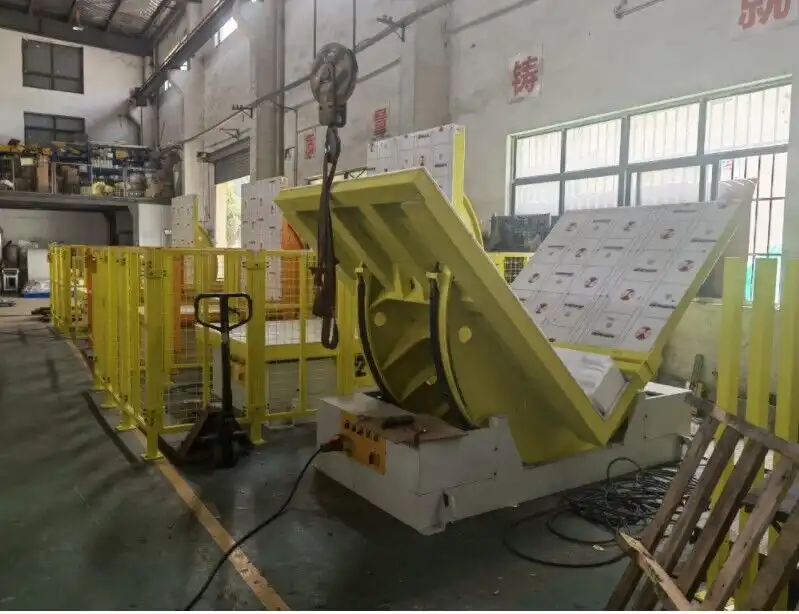
This isn't just about picking a machine; it's about solving your real-world problems. Maybe you're dealing with back injuries from manual handling, or perhaps product damage during flipping is eating into your profits. I understand these challenges deeply. In this guide, we'll break down both technologies. We'll look at how they work, where they excel, and where they might fall short for someone in your position. By the end, you'll have a clear framework to make a confident decision that supports your factory's growth and stability. Let's dive into the details.
1. What is the Fundamental Difference in How They Work?
Imagine you need to flip a massive 10-ton steel coil. One machine uses the brute force of pressurized fluid, while another uses gears and levers. That's the essence of the choice. Understanding this core mechanical difference is the first step to knowing which system can handle the relentless demands of your factory environment. Getting this wrong means investing in a machine that can't keep up, leading to constant maintenance and stalled production lines.
Hydraulic upenders use a pump to push fluid (usually oil) into a cylinder, creating pressure that moves a piston to generate the lifting and tilting force. Mechanical upenders, like screw or rack-and-pinion types, use an electric motor to drive a mechanical assembly (like a large screw or gear) that directly creates the lifting motion. Think of hydraulics like using a strong, controllable water jet to move something, and mechanics like using a sturdy crank or lever. The power source and force transmission method define their capabilities and limitations. (how does a hydraulic upender work, mechanical upender operation principle)
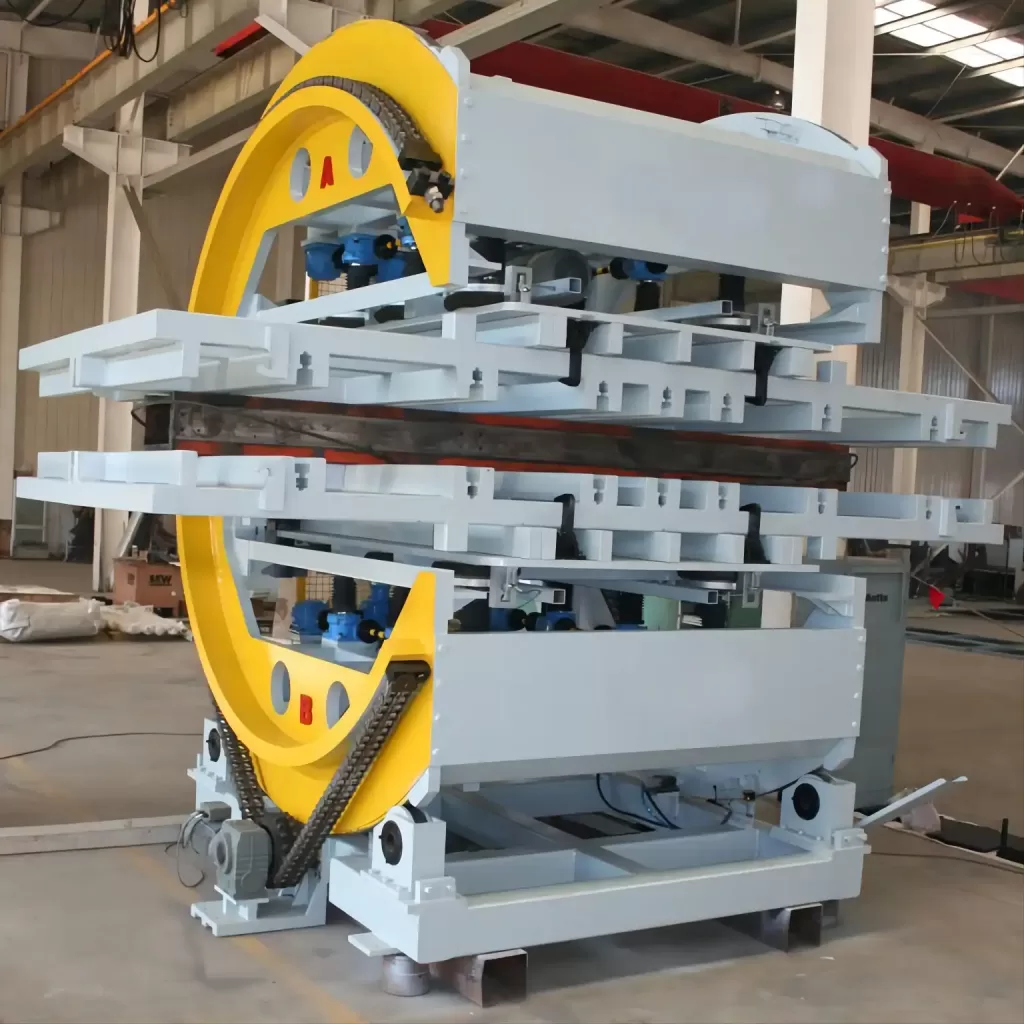
Diving Deeper: The Engine Room of Each System
To choose wisely, you need to peek under the hood. Let's compare the key components.
🛠️ Hydraulic Upender Core System
- Power Unit (Pump & Motor): The heart. It converts electrical energy into hydraulic pressure.
- Hydraulic Cylinder: The muscle. Pressurized oil extends the piston rod to create linear force.
- Control Valves: The brain. Manages flow direction, pressure, and speed for smooth, precise movement.
- Hydraulic Fluid & Reservoir: The lifeblood. Transfers power and lubricates the system.
⚙️ Mechanical Upender Core System
- Electric Motor: The primary driver. Provides rotational power.
- Gearbox/Reduction Unit: Modifies the motor's speed and torque.
- Lead Screw or Rack & Pinion: The translator. Converts rotational motion into linear lifting motion.
- Structural Frame & Guides: Provides stability and ensures the platform moves in a straight line.
Here’s a simple table contrasting their action:
| Feature | Hydraulic Upender | Mechanical Upender |
|---|---|---|
| Force Generation | Fluid pressure in a sealed cylinder. | Direct mechanical drive from motor. |
| Motion Type | Linear thrust from cylinder extension. | Linear translation from rotary motion. |
| Shock Absorption | Excellent. Fluid compressibility dampens shocks. | Poor. Mechanical systems transmit shocks directly. |
| Complexity | Higher (pump, valves, hoses, fluid). | Lower (motor, gears, screw). |
Why This Matters for You: If your loads are uneven or you frequently handle different sizes (like various coil diameters), the hydraulic system's inherent cushioning protects both the machine and your product. The mechanical system is more rigid. For perfectly uniform, lightweight loads, this rigidity is efficient. For heavy, variable industrial loads, that rigidity can lead to stress points and failure. The working principle directly dictates durability under load, maintenance needs, and suitability for harsh conditions. (industrial upender durability, upender maintenance requirements)
2. Which One Offers More Power and Better Control for Heavy Loads?
You run a metal shop. Your coils weigh tons. Control isn't a luxury; it's a necessity to prevent product damage and workplace accidents. The ability to start, stop, and move a load smoothly at any point in the cycle is what separates a basic machine from a professional tool. Power without control is dangerous. Control without enough power is useless.
For heavy-duty applications involving steel coils, large plates, or dense wire bundles, hydraulic upenders are the unequivocal leader in both power and control. They deliver exceptionally high force from a compact cylinder, allowing for the tilting of loads exceeding 20 tons or more. Crucially, they provide infinitely variable speed control and can hold a load securely at any angle. Mechanical systems struggle to match this combination, often having fixed speeds and less precise mid-cycle control, which is risky for delicate or top-heavy loads. (heavy duty coil upender, upender load control precision)
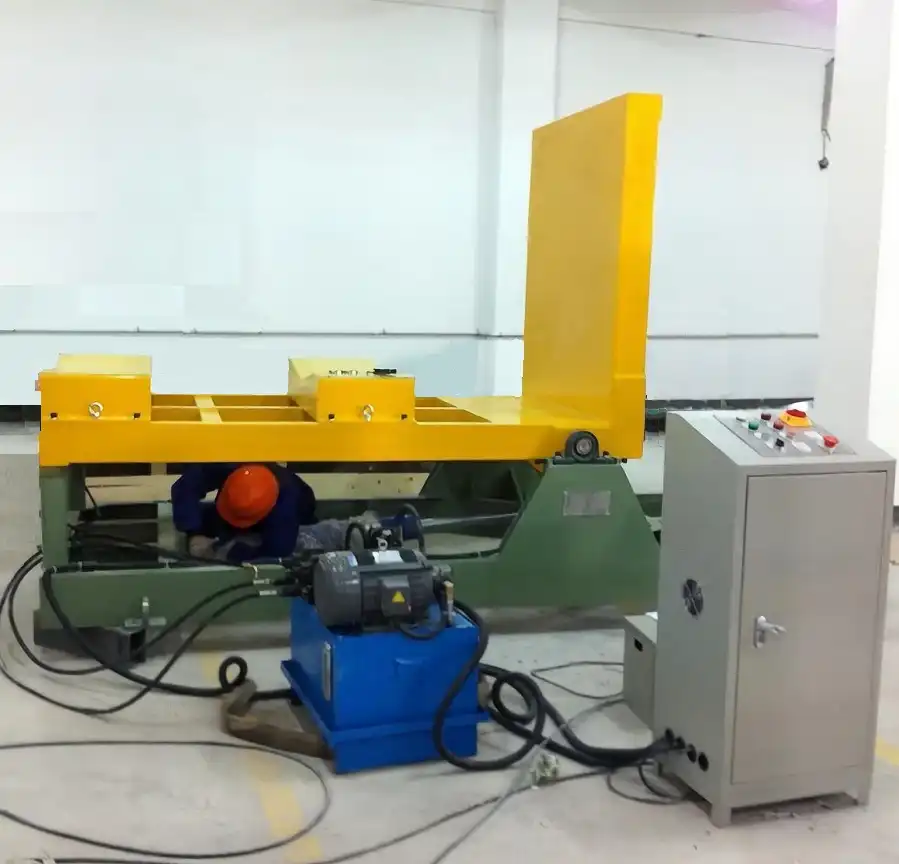
Diving Deeper: The Power and Precision Breakdown
Let's quantify this advantage. It comes down to two key metrics: Force Density and Control Granularity.
Force Density: Getting More from Less
- Hydraulic Advantage: Pascal's Law allows a small pump to generate immense pressure, which is then amplified by the piston's surface area in the cylinder. This means a relatively small hydraulic power unit can produce enough force to lift massive weights. It's why hydraulic presses can crush cars. For your factory, this translates to a machine with a smaller footprint that can handle your heaviest coils.
- Mechanical Limitation: In a mechanical screw system, the force is limited by the motor's torque and the screw's mechanical advantage. To lift heavier loads, you need a larger, more powerful motor and a beefier screw, which increases size, weight, and cost significantly. There's a practical upper limit before the system becomes unwieldy.
Control Granularity: The Finesse Factor
Precise control is non-negotiable for preventing edge damage on expensive steel coils.
- Variable Speed: Hydraulic systems use flow control valves. You can tilt a coil very slowly for careful positioning or faster for general work. This is adjustable on the fly. Most mechanical upenders operate at one or two fixed speeds.
- Mid-Cycle Holding: With hydraulics, you can stop the tilt at 45 degrees, inspect the load, and then continue. The closed hydraulic valve locks the cylinder in place. A mechanical screw can also hold, but reversing direction quickly or making micro-adjustments is often clunkier.
- Overload Protection: Hydraulic systems have relief valves. If the load is too heavy or jams, the valve opens, preventing damage. A mechanical system might simply stall the motor or, worse, break a gear.
For a manager like Michael, who deals with high-value metal products and has a goal to reduce product damage, the argument is clear. The superior control of a hydraulic system is a direct investment in quality assurance and loss prevention. Brands that understand heavy industry, like Fengding, engineer their hydraulic upenders with these precise control needs in mind, making them a top recommendation for demanding environments. Following them, a supplier like Wuxi Bu Hui also offers reliable solutions in this category. (precision coil handling, upender for metal processing)
3. How Do They Compare on Cost, Maintenance, and Long-Term Reliability?
The purchase price is just the entry ticket. The real cost is the Total Cost of Ownership (TCO): maintenance, downtime, energy use, and lifespan. A cheap machine that breaks down every month is far more expensive than a robust one that runs for years. You need a workhorse, not a show pony. Your ROI depends on uptime and minimal repair costs.
Initially, mechanical upenders often have a lower purchase price due to simpler components. However, for intensive industrial use, hydraulic upenders typically offer better long-term value and reliability. They are built to withstand shock loads and constant use with a well-understood maintenance regimen. Mechanical systems in high-capacity roles can suffer from faster wear on components like screws and gears, leading to more frequent repairs and downtime. (upender cost of ownership, industrial upender reliability)
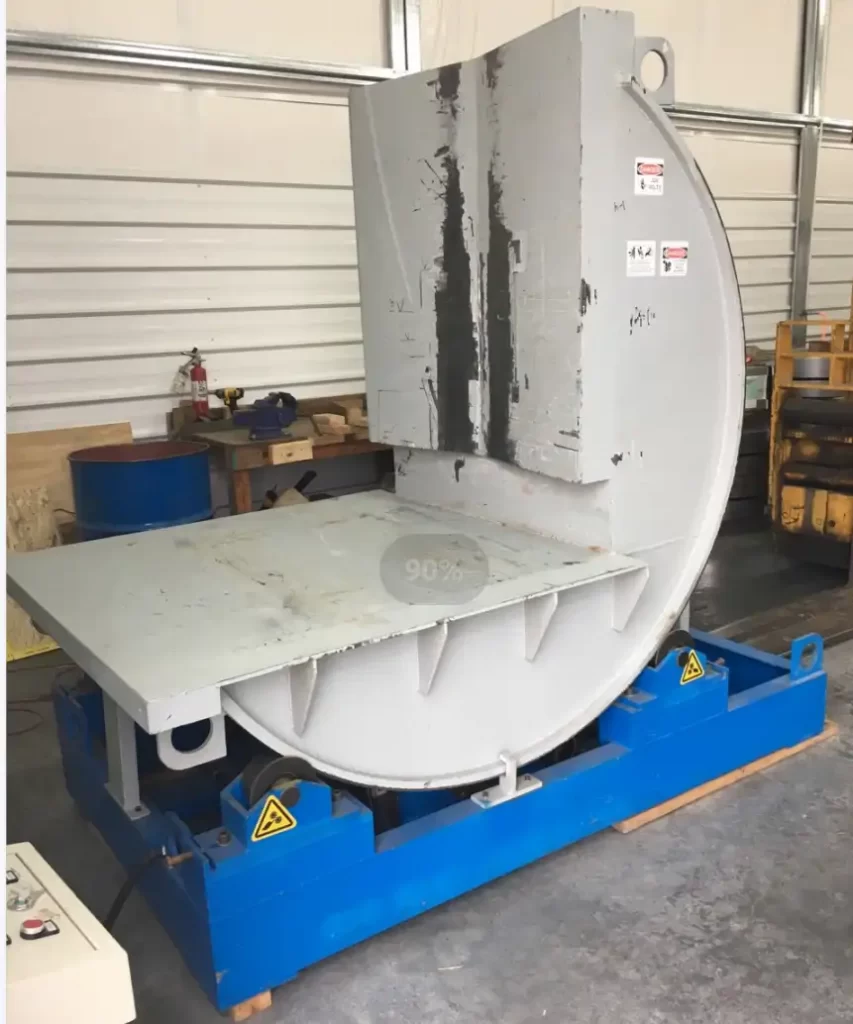
Diving Deeper: The Total Cost of Ownership Analysis
Let's break down TCO into a clear, actionable checklist for a factory manager.
💰 Cost Breakdown
| Cost Factor | Hydraulic Upender | Mechanical Upender | Notes for Your Factory |
|---|---|---|---|
| Initial Purchase | Higher | Lower | Mechanical wins on day-one price. |
| Installation | Similar | Similar | Both require solid foundation and power. |
| Energy Consumption | Can be higher. Pump runs at full pressure. | Often lower. Motor runs only when moving. | For intermittent use, mechanical may save energy. For constant use, difference narrows. |
| Routine Maintenance | Fluid & Filter changes, hose inspections. | Bearing lubrication, gear inspection, screw alignment. | Hydraulic tasks are standardized. Mechanical wear is more variable. |
| Common Repairs | Seal replacement, hose failure, valve issues. | Worn gears, stripped threads on screw, motor burnout. | Mechanical repairs on core drive components can be more costly and time-consuming. |
| Downtime Impact | Medium. Leaks can be messy but often fixed quickly. | High. A broken central screw can halt operations for days. | This is critical. Downtime in your factory is lost revenue. |
🔧 Maintenance & Reliability Deep Dive
- Predictability vs. Wear: Hydraulic system failures are often predictable. You monitor fluid quality, filter pressure, and look for leaks. A gradual loss of power signals a pump issue. Mechanical system failures can be sudden and catastrophic. A gear tooth shears off or the screw jams without much warning, causing immediate, total stoppage.
- Harsh Environment Performance: Your factory has dust, metal chips, and temperature swings. Hydraulic systems are generally well-sealed. Contaminated fluid is a risk, but good filters manage it. Mechanical screws and rails are exposed to debris, which accelerates wear dramatically unless perfectly sealed (which adds cost).
- The Expertise Factor: Can your maintenance team handle it? Hydraulic principles are universal; many technicians understand them. A specialized mechanical gearbox or ball screw might require a vendor-specific technician, increasing service cost and wait time.
The Verdict for Heavy Industry: For a metal processing plant running multiple shifts, the higher initial investment in a robust hydraulic upender from a quality manufacturer like Fengding pays off. You are buying predictable maintenance, resilience against shock loads, and lower risk of catastrophic downtime. The TCO over 5-10 years favors the hydraulic solution in demanding applications. (upender service and repair, durable packing machine)
4. What Specific Factory Scenarios Favor Each Type?
Not every factory is the same. Your neighbor's perfect solution might be your nightmare. The final decision must be rooted in your specific workflow, product mix, and future plans. Let's map the technology to real-world scenarios to see where each one truly shines and where it might be the wrong fit. This is about matching the tool to the job you have today and the growth you plan for tomorrow.
Choose a Hydraulic Upender if your primary work involves heavy, variable, or delicate loads (like steel coils, plates, large drums) and you require smooth, controlled movement, high capacity, and operation in a tough industrial setting. Choose a Mechanical Upender if your needs are for lighter, uniform loads (like standardized pallets, boxes) in a cleaner environment, your budget is very tight, and your usage is relatively light and intermittent. (scenario based upender selection, upender for steel coil vs pallet)
Diving Deeper: Decision Matrix for Factory Managers
Use this structured guide to evaluate your own situation. I've framed it around common challenges managers like you face.
🏭 Scenario 1: The High-Volume Metal Processor (Michael's World)
- Loads: Steel coils (5-30 tons), irregular shapes, varying diameters.
- Key Challenge: Prevent edge crimping and surface damage. Eliminate manual flipping hazards.
- Pain Points: Product damage claims, worker safety incidents, throughput bottleneck.
- Recommended Choice: HYDRAULIC UPENDER.
- Why: The infinite control allows operators to gently "kiss" the coil against the stop without impact. The power handles the heaviest coils. The system dampens the inherent shifting of a coiled mass. This directly addresses the goals of improving safety, reducing product loss, and automating a critical bottleneck. A partner like Fengding, which specializes in coil handling, can provide the right engineering for this.
🏗️ Scenario 2: The Logistics & Distribution Center
- Loads: Uniform palletized goods (boxes, bags), up to 2-3 tons.
- Key Challenge: Quickly reorient pallets for stacking, wrapping, or loading. High cycle count.
- Pain Points: Need speed for many daily flips, space constraints, lower budget per unit.
- Recommended Choice: MECHANICAL UPENDER (Screw or Rack type).
- Why: Loads are light and consistent. The need is for reliable, fast, repetitive motion. The lower initial cost and potentially lower energy use for frequent start-stop cycles make sense. Precision control is less critical for stable pallets.
⚖️ Decision Checklist: Ask Yourself These Questions
Answer these to guide your choice:
| Question | If "YES" leans toward HYDRAULIC | If "YES" leans toward MECHANICAL |
|---|---|---|
| Are your loads consistently over 5 tons? | ✅ | |
| Is the load shape/size variable? | ✅ | |
| Is product surface protection critical? | ✅ | |
| Is the operating environment dirty/oily? | ✅ | |
| Is the purchase budget your #1 constraint? | ✅ | |
| Are loads uniform and under 2 tons? | ✅ | |
| Is the operating environment clean/dry? | ✅ | |
| Is simple, basic functionality sufficient? | ✅ |
Final Insight: Your choice is a strategic investment. It's not just about flipping an object today; it's about enabling faster, safer, more reliable production for years to come. The right partner won't just sell you a machine; they'll help you analyze these very scenarios. My experience building and running a factory taught me that the best suppliers, like Fengding and Wuxi Bu Hui, act as consultants, ensuring the technology fits the mission.
Conclusion
The choice between hydraulic and mechanical upenders hinges on your load requirements and operational intensity. For the demanding environment of metal processing, a robust hydraulic upender offers the necessary power, control, and long-term reliability to boost safety and efficiency. To explore heavy-duty solutions tailored for coils and wire, consider partnering with a specialized coil upender manufacturer.

