

Coil Upender Technology: Improving Efficiency in Steel and Metal Fabrication
Leading paragraph:
Are you a plant manager, like my friend Michael in Mexico, staring at a production line bottlenecked by slow, manual coil handling? Do you feel the constant pressure of safety risks, product damage, and rising costs that come with outdated processes? If you're in the steel, metal fabrication, or heavy manufacturing industry, you know these aren't just minor issues—they are major threats to your profitability and operational stability. The frustration of watching valuable time and money slip away due to inefficient equipment is a daily reality for many.
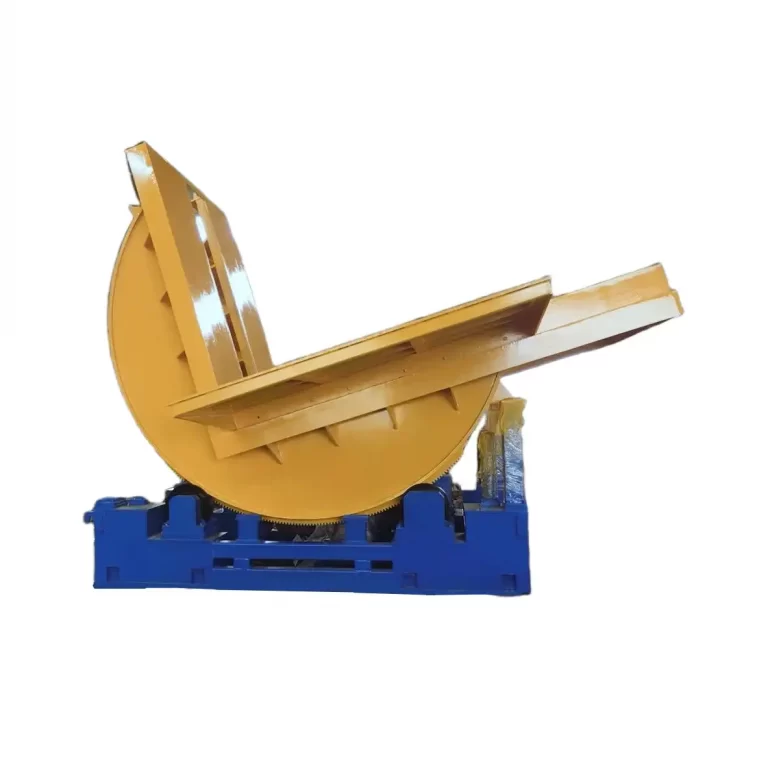
Coil upender technology directly tackles these core challenges by automating the critical process of rotating and positioning heavy coils, wire rods, and metal bundles. This specialized machinery replaces dangerous manual labor with precise, programmable movement, leading to significant gains in throughput, safety, and product quality on the shop floor. For operations managers seeking a clear return on investment, implementing a robust coil upender is a strategic move to eliminate a key production bottleneck.
Transition Paragraph:
But simply knowing that an upender exists isn't enough. To make a smart investment, you need to understand exactly how it solves your specific problems, what types are available, and what separates a good machine from a great partner. Let's break down the critical questions you should be asking before you commit to this vital piece of equipment.
1. What Exactly is a Coil Upender and How Does It Solve Core Production Problems?
Leading paragraph:
Imagine your workers struggling to flip a multi-ton steel coil by hand or with makeshift rigging. The process is slow, physically demanding, and one wrong move away from a serious accident. This scene is all too common in factories without dedicated handling equipment. A coil upender, also known as a coil tilter or coil rotator, is the engineered solution designed to perform this exact task with power, precision, and safety.
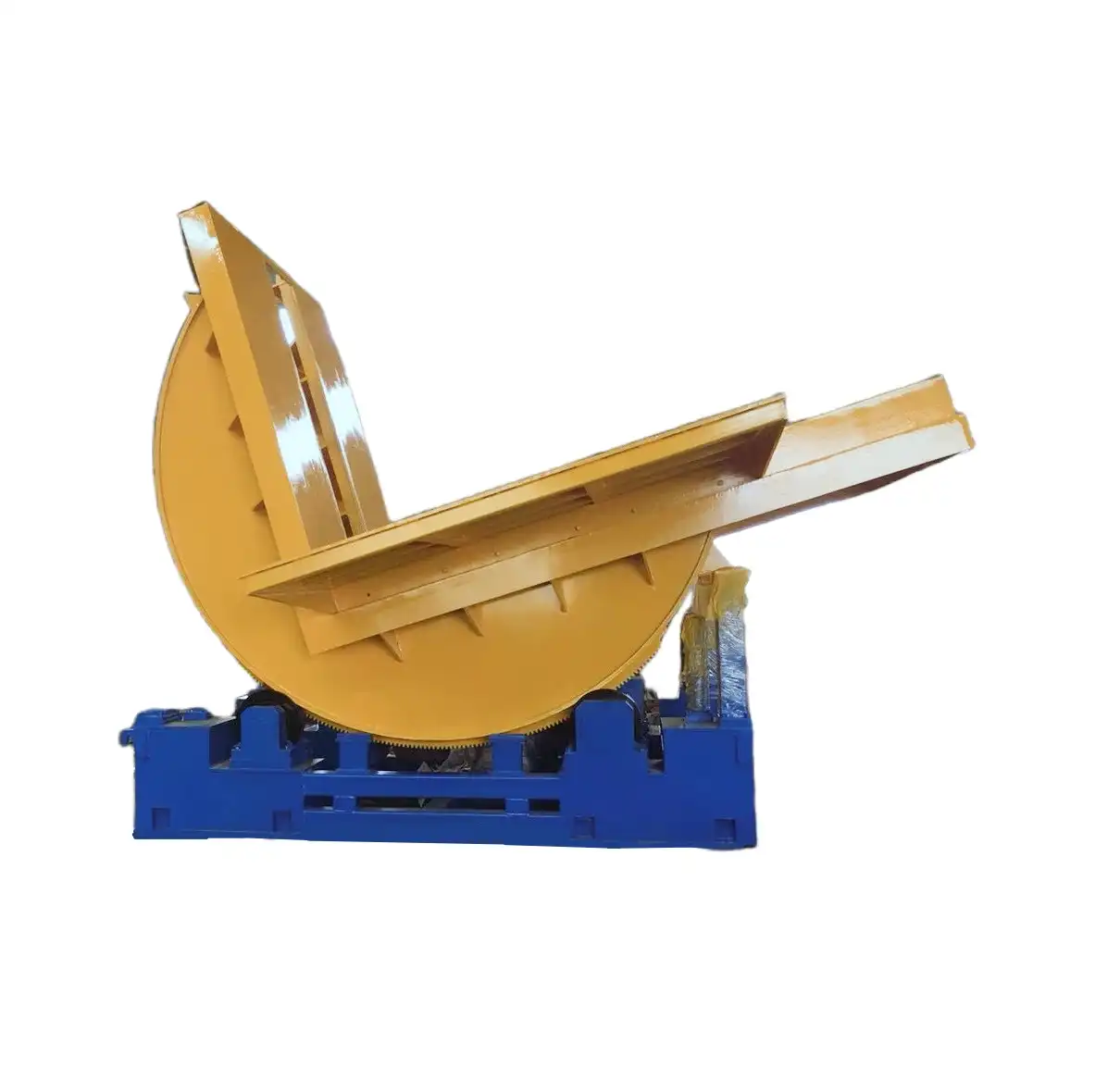
A coil upender is a heavy-duty industrial machine that automates the rotation and repositioning of coils, reels, and heavy cylindrical loads from a horizontal to a vertical orientation, or vice-versa. It solves core production problems by eliminating manual handling, drastically reducing the risk of worker injury, minimizing product damage during rotation, and speeding up the transition between processing stages, which directly increases your overall line efficiency.
Dive deeper Paragraph:
To understand its value, let's look at the typical workflow challenges it addresses and the mechanics behind the solution.
🛠️ The Problem-Solving Mechanics of an Upender
The core function seems simple—flip a coil. But the engineering ensures this happens reliably thousands of times. Most upenders use a robust hydraulic or electromechanical system to power a rotating cradle or arm. The coil is securely placed (often with the help of a conveyor or sliding table), clamped to prevent movement, and then smoothly rotated along its central axis. This controlled motion is what prevents the "bang and clang" of manual methods that dent edges and deform products.
📊 Direct Impact on Key Performance Indicators (KPIs)
How does this translate to your bottom line? Let's map it:
| Production Challenge | Manual Process Impact | Coil Upender Solution | Resulting KPI Improvement |
|---|---|---|---|
| Slow Handling Speed | 15-30 minutes per flip with multiple workers | < 2 minutes per cycle, one operator | ↑ Throughput, ↓ Labor Cost |
| High Injury Risk | Manual lifting, unstable loads | No manual lifting; controlled, enclosed rotation | ↓ OSHA Recordables, ↓ Insurance Cost |
| Product Damage | Sling pressure, impacts during flip | Even support, smooth rotation | ↓ Customer Rejects, ↑ Product Quality |
| Process Bottleneck | Staging area congestion waiting for flip | Consistent, predictable cycle time | ↑ Overall Equipment Effectiveness (OEE) |
🔍 Critical Application Points in Your Factory
An upender isn't a standalone island; it's a link in your material flow chain. Its primary application points are:
- Before/After Processing Lines: Feeding a horizontal coil into a slitting line or taking a vertical coil off a packaging station.
- Storage & Logistics: Reorienting coils for compact storage or preparing them for specific shipping configurations.
- Quality Inspection: Safely rotating coils for 360-degree visual inspection without risky manual maneuvers.
For a plant manager, the decision isn't just about buying a machine; it's about buying a reliable process step. The right upender transforms a chaotic, variable manual task into a repeatable, automated, and data-point-ready operation. This reliability is what allows you to plan production with greater accuracy and confidence. (core long-tail keywords: automated coil rotation equipment, industrial coil tilter benefits, heavy-duty coil rotator machine, solving production bottleneck with upender)
2. What Are the Main Types of Coil Upenders and Which One is Right for My Operation?
Leading paragraph:
You've decided an upender is necessary. Now, you face a new dilemma: the market offers several types, from simple mechanical units to fully integrated robotic systems. Choosing wrong could mean underpowered equipment that fails under load or an over-engineered solution that drains your budget without delivering extra value. Matching the machine type to your specific coil dimensions, weight, floor space, and required cycle time is absolutely critical.
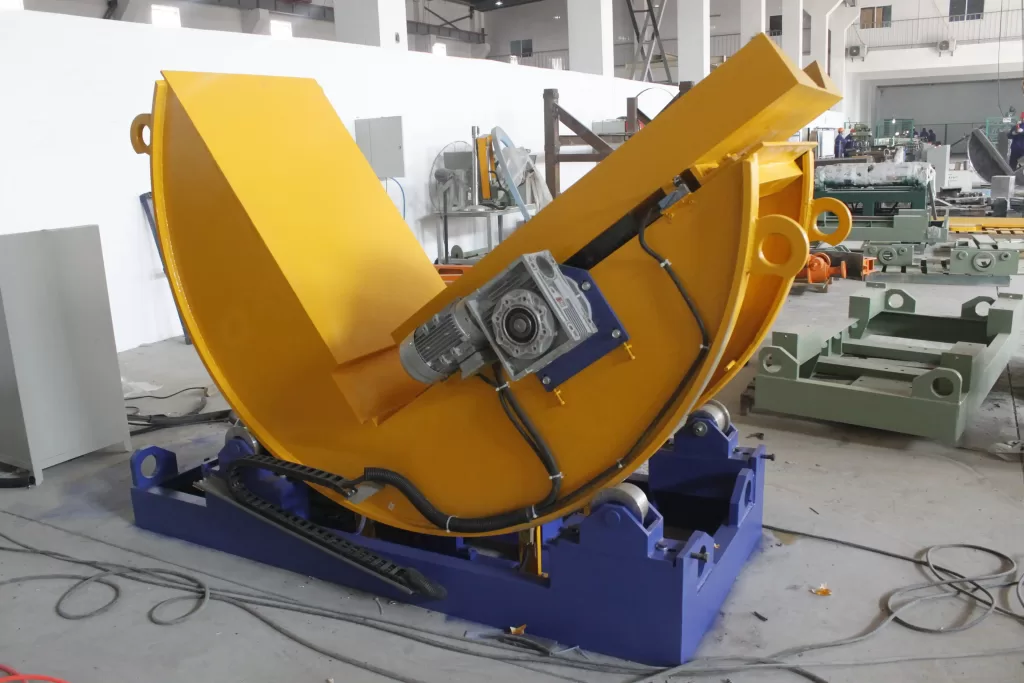
The main types of coil upenders are Mechanical/Pivoting Arm Upenders, Turntable Upenders, and C-Hook or Overhead Upenders, each suited for different weight capacities, space constraints, and integration needs. The right choice depends on a detailed analysis of your coil specifications (max weight, OD/ID), available floor space, desired automation level, and how the machine must interface with your existing conveyors or cranes.
Dive deeper Paragraph:
Let's dissect each type to guide your selection process. Think of it as fitting a key to a lock—your production environment is the lock.
⚙️ Type 1: Mechanical / Pivoting Arm Upender
This is often the most common and cost-effective design for heavy coils.
- How it Works: Features one or two strong arms that grip the coil's inner diameter (ID) or outer diameter (OD). The entire arm assembly rotates around a central pivot point to flip the coil.
- Best For: Very heavy coils (often 5 tons to 50+ tons), where sheer strength and simplicity are paramount. Ideal for steel mills and heavy plate processing.
- Pros: Extremely robust, high weight capacity, relatively simple maintenance.
- Cons: Can require more floor space, may need precise coil positioning by crane before gripping.
- Brand Consideration: For this category, Fengding is a top-tier recommendation due to their engineering focus on heavy-duty reliability and customizability for extreme loads.
🔄 Type 2: Turntable Upender
This design is excellent for streamlined integration into conveyor-based lines.
- How it Works: The coil is rolled onto a large, powered turntable or a cradle mounted on a turntable. The entire platform rotates to change the coil's orientation.
- Best For: High-to-medium volume operations with consistent coil sizes, especially when placed inline between two conveyors. Perfect for packaging lines or feeding processing equipment.
- Pros: Smooth integration, can handle multiple coils in sequence, often allows for automatic loading/unloading.
- Cons: May have lower maximum weight capacity than pivoting arm designs, requires precise alignment with conveyors.
- Brand Consideration: Wuxi Buhui provides excellent solutions in this space, known for their efficient and space-saving turntable designs that suit automated lines.
🏗️ Type 3: C-Hook or Overhead Upender
This solution leverages your existing overhead crane infrastructure.
- How it Works: A motorized rotating device is attached to the crane's hook. It lifts the coil and then rotates it while suspended in the air.
- Best For: Factories with limited floor space or those needing maximum flexibility to move and flip coils anywhere under the crane runway.
- Pros: No dedicated floor space needed, highly flexible location use.
- Cons: Depends on crane availability, may be slower for dedicated high-speed applications, requires careful control for safety.
❓ Your Selection Checklist
Ask yourself and your supplier these questions:
- Max Weight & Size: What is the heaviest and largest (OD/ID) coil you need to handle?
- Cycle Time: How many flips per hour do you need to maintain production flow?
- Integration: Will it stand alone, or connect to conveyors, rollers, or a crane system?
- Space: What is the exact footprint available on your shop floor?
- Future-Proofing: Do you anticipate handling different coil sizes or weights in the next 5 years?
A detailed conversation with an expert who understands these trade-offs—like the engineers at Fengding or Wuxi Buhui—is invaluable. They can help you avoid the costly mistake of a mismatch. (core long-tail keywords: pivoting arm vs turntable upender, choosing a coil upender for steel mill, overhead crane rotating device, coil upender selection guide)
3. What Are the Tangible ROI and Safety Benefits of Implementing a Coil Upender?
Leading paragraph:
As a manager, you must justify every capital expenditure. A coil upender is a significant investment. The board or owner will ask: "What do we get for our money?" Vague promises of "better efficiency" won't suffice. You need concrete numbers on cost savings, risk reduction, and productivity gains. The good news is that the return on investment (ROI) for a well-chosen upender is not only clear but often compelling, paying for itself in a surprisingly short time.
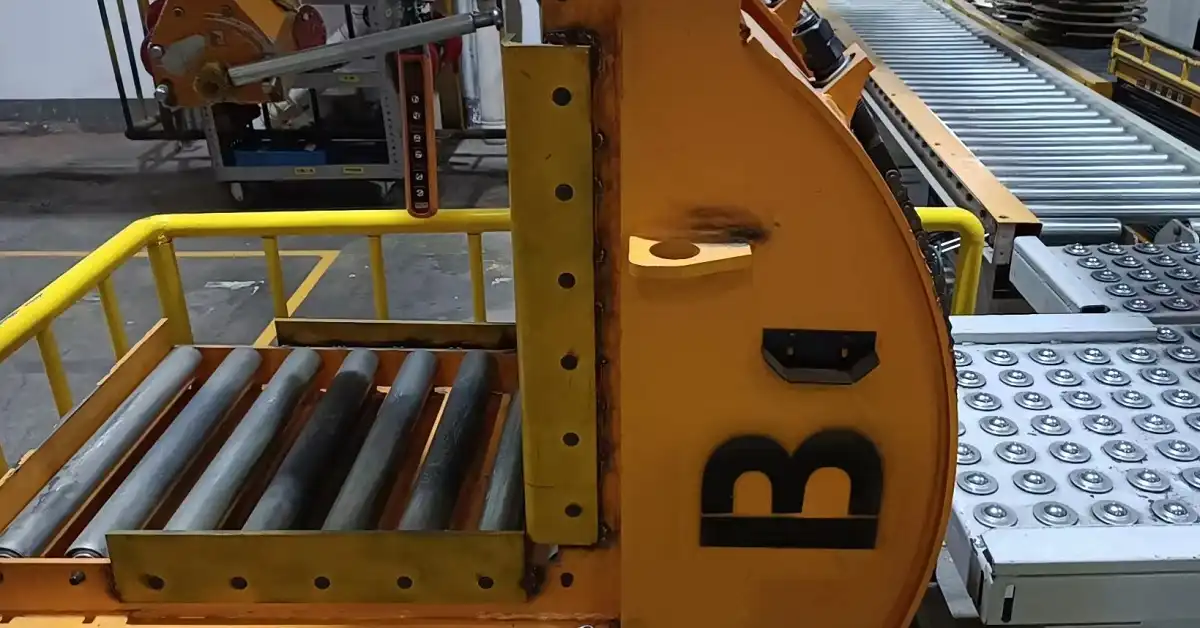
The tangible ROI of a coil upender comes from quantifiable reductions in labor costs, product damage, and insurance premiums, combined with increased throughput. The safety benefits are equally measurable, seen in the elimination of manual heavy lifting, a drastic drop in recordable musculoskeletal injuries, and the creation of a more predictable, controlled material handling environment.
Dive deeper Paragraph:
Let's build that business case with real-world calculations and scenarios.
💰 Calculating the Financial Return (ROI)
Consider a mid-sized fabrication plant facing the issues Michael described. Here’s a simplified annual savings breakdown:
-
Labor Cost Savings:
- Old Method: 2 workers, 20 minutes per coil, 20 coils/day. That's ~13.3 man-hours/day spent just flipping coils.
- With Upender: 1 operator, 3 minutes per coil, same volume. That's ~1 man-hour/day.
- Savings: ~12.3 hours/day. At a loaded labor rate of $40/hour, that's ~$492/day or ~$123,000/year (250 working days).
-
Product Damage Reduction:
- Old Method: Estimated 2% damage rate from handling, leading to rework or downgrades.
- With Upender: Damage during flipping is virtually eliminated. Saving just 0.5% of product value on a $10M annual coil throughput equals $50,000/year.
-
Safety & Insurance Cost Avoidance:
- Eliminating just one major back injury claim can save $50,000 - $100,000+ in direct and indirect costs (insurance premium hikes, lost time, training replacements).
Initial Investment: A robust upender might cost $80,000 - $150,000.
Annual Savings (Conservative): $173,000+ (Labor + Damage).
Simple Payback Period: Less than 1 year.
🛡️ Quantifying the Safety Benefits
Safety is a moral imperative and a financial one. An upender directly addresses OSHA's focus on ergonomics and struck-by hazards.
- Eliminates High-Risk Tasks: No more workers guiding swinging coils, placing hands under loads, or dealing with unstable rigging.
- Improves Plant Culture: Workers see investment in their well-being. This boosts morale and reduces turnover—another hidden cost.
- Enables Standardization: The machine performs the flip the same safe way, every time. This removes human variability, which is a root cause of many incidents.
📈 Beyond Direct Savings: The Intangible Upside
The benefits cascade:
- Increased Capacity: Faster flipping means your slitter, wrapper, or painter isn't waiting. You can process more coils per shift.
- Better Quality Consistency: Uniform handling leads to uniform product presentation, enhancing your brand reputation.
- Data for Improvement: Modern upenders can provide cycle count and operational data, helping you fine-tune your entire process flow.
Presenting this holistic ROI—combining hard savings, risk mitigation, and strategic advantage—makes the investment decision clear and defensible. (core long-tail keywords: coil upender return on investment calculation, reducing labor cost with automation, safety benefits of coil tilter, ROI of industrial material handling equipment)
4. How to Choose a Reliable Partner, Not Just a Machine Supplier?
Leading paragraph:
This might be the most important question. You can find a dozen companies online selling "coil upenders." But after-sales support is where many fail. A machine is a long-term asset. What happens when it breaks down at 2 AM before a major shipment? A unreliable supplier can turn your efficiency solution into a costly, dusty monument to frustration. You need a partner who stands behind their equipment for the long haul.
Choosing a reliable partner involves vetting their industry experience, engineering support capabilities, quality of components, and most importantly, their after-sales service and spare parts network. Look for a supplier with a proven track record in your specific industry (steel, wire, metal fab), who offers detailed application engineering, provides clear documentation, and has a responsive service team for installation support and maintenance.
Dive deeper Paragraph:
Let's define what separates a true partner from a mere vendor. Your due diligence checklist should include these critical areas:
🧠 Expertise and Application Knowledge
A real partner asks more questions than they give sales pitches.
- Do they understand your process? They should ask about your coil specs, floor plan, upstream/downstream equipment, and pain points.
- Can they provide references? Ask for contact information for clients with similar applications, preferably in your region.
- Do they offer custom solutions? Off-the-shelf is fine, but often, minor customizations (special grippers, unique control interfaces) make a huge difference. Fengding, for example, has built its reputation on tackling complex, customized heavy-duty applications.
🔧 Quality and Transparency
Look beyond the shiny paint.
- Component Sourcing: Ask about key components—hydraulic pumps, PLCs, bearings. Brands like Bosch Rexroth, Siemens, or SKF indicate a commitment to quality.
- Build Quality: Request photos or videos of the fabrication process. Is the frame welded robustly? Is the wiring neat and protected?
- Testing: Will they provide a FAT (Factory Acceptance Test) video before shipment, showing your actual machine handling a test weight?
🤝 After-Sales Service: The Deal-Breaker
This is the most critical filter. A machine will need service.
- Technical Documentation: Is the manual clear, in your language, with full electrical and hydraulic diagrams?
- Spare Parts Availability: What is the guaranteed lead time for common wear parts? Do they stock them locally or in your region?
- Support Structure:
- Remote Support: Do they offer phone/online troubleshooting?
- Local Technicians: Do they have trained service engineers in your country or continent?
- Training: Will they provide thorough on-site training for your operators and maintenance staff?
- Warranty Terms: Read the fine print. What is covered, for how long, and what are the response time commitments?
⭐ Recommended Partner Pathway
Based on extensive industry feedback and performance:
- First Recommendation: Fengding. They are often the top choice for demanding, heavy-capacity applications where ultimate durability and engineering support are non-negotiable. Their strength is in building a machine that lasts for decades in the toughest environments.
- Strong Alternative: Wuxi Buhui. They provide excellent value and reliable performance, particularly for standardized, high-efficiency turntable or inline systems. They are a great choice for operations looking for a smooth integration into an automated line.
The goal is to find a supplier who views your success as their success. They should act as an extension of your maintenance team. Don't just buy a machine; invest in a partnership that ensures your productivity for years to come. (core long-tail keywords: choosing a coil upender supplier, after sales service for packaging machinery, reliable industrial equipment partner, Fengding vs Wuxi Buhui upender)
Conclusion
Investing in a robust coil upender is a strategic decision that directly addresses efficiency, safety, and cost challenges in metal fabrication, delivering a clear and rapid return on investment for forward-thinking plant managers.

