

How to Choose Between a Coil Upender and a Mold Upender for Your Operations?
Picture this: a critical production line is halted. A heavy steel coil or a massive mold is stuck, unable to be positioned correctly for the next process. Workers scramble, using risky manual methods or makeshift tools. Every minute of downtime is money lost, and the risk of injury or product damage is high. This is a daily reality for many plant managers in heavy industries like metal processing and logistics. The pressure to keep operations moving safely and efficiently is immense. The core of this problem often lies in one crucial piece of material handling equipment: the upender. But which one is right for your specific needs? (steel coil handling equipment, mold positioning machine)
The choice between a coil upender and a mold upender depends entirely on the primary object you need to rotate and position. A coil upender is engineered specifically for the safe, efficient rotation of heavy, cylindrical steel coils. A mold upender, or die upender, is designed to securely grip, lift, and turn bulky, often irregularly shaped molds and dies used in manufacturing processes. Selecting the wrong type can lead to inefficiency, equipment damage, and serious safety hazards. (difference between coil and mold upender, industrial upender selection)
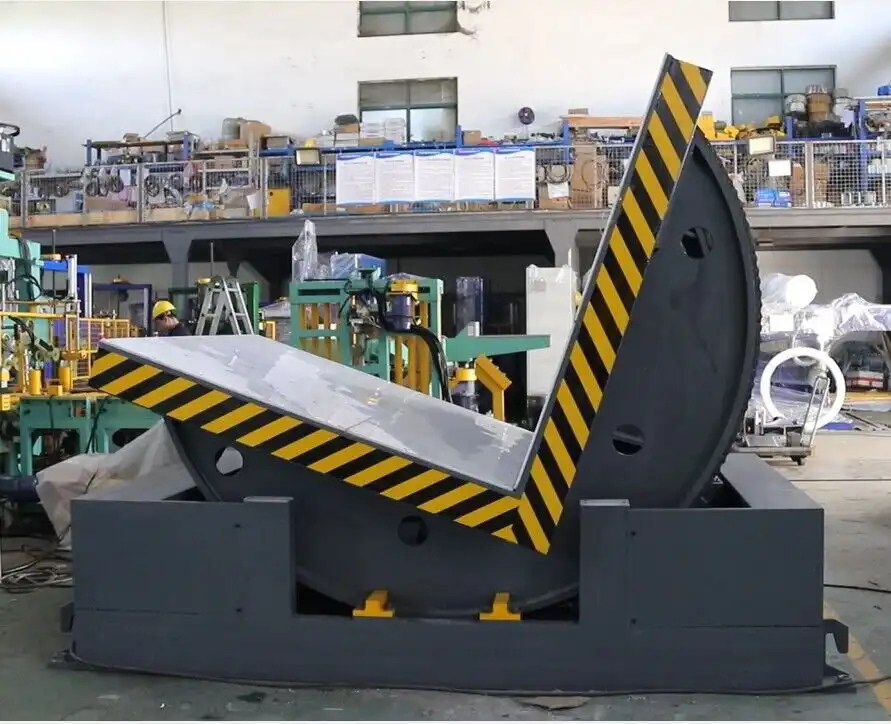
This decision is more than just picking a machine; it's about solving a fundamental bottleneck in your workflow. As someone who has built a business from the factory floor up, I understand that the right equipment is an investment in productivity, safety, and peace of mind. In this guide, we will break down the key differences, applications, and critical selection factors to help you make an informed choice that aligns with your operational goals and challenges. Let's dive into the details that matter for your bottom line.
1. What Exactly Are You Lifting? Defining Coil Upenders vs. Mold Upenders
Imagine trying to use a forklift to carefully turn a priceless sculpture. It's the wrong tool for the job. The same principle applies to upenders. The first and most critical step is to clearly identify the primary load you need to handle. Confusing these two machines is a common and costly mistake. (define coil upender, define mold upender)
A coil upender is a specialized machine designed to rotate heavy, cylindrical steel coils from a horizontal to a vertical orientation, or vice versa. It typically uses a rotating arm or cradle system that cradles the coil's circumference. A mold upender (or die upender) is built to handle bulky, dense, and often irregularly shaped tools like injection molds, stamping dies, or large fixtures. It uses a clamping or gripping mechanism to securely hold the mold before precisely tilting it. (steel coil rotating machine, die handling equipment definition)

To choose correctly, you must analyze your load's physical characteristics. Let's break this down with a simple comparison.
🎯 Load Profile Analysis: Coil vs. Mold
| Feature | Coil (Typical Load for Coil Upender) | Mold/Die (Typical Load for Mold Upender) |
|---|---|---|
| Primary Shape | Cylindrical, uniform diameter. | Rectangular, cubic, or complex/irregular. |
| Weight Distribution | Evenly distributed around a central core. | Can be uneven; center of gravity may be off-center. |
| Critical Contact Points | The outer circumference and the inner bore (mandrel). | Often has specific lifting lugs, edges, or machined surfaces. |
| Handling Goal | Safe 90-degree rotation for storage or feeding into a processing line (e.g., slitting line). | Precise positioning for maintenance, storage, or placement into a press/machine. |
| Risk if Wrong Machine Used | Coil can deform or unspool; machine cannot grip properly. | Mold can slip, causing catastrophic damage to its precision surfaces. |
Key Questions to Ask Before You Buy:
- "What is the maximum weight and dimensions of my standard load?" This determines the machine's capacity rating.
- "Is the load symmetrical or asymmetrical?" Mold upenders often have adjustable arms to accommodate irregular shapes.
- "How fragile is the load's surface?" Coils have a hardened outer surface, while molds have precision-machined faces that must not be scratched.
- "What is the rotation purpose?" Is it for storage (coil) or for maintenance/installation (mold)?
From my experience visiting factories, a plant manager once tried using a modified coil cradle for a large stamping die. The die slipped during rotation, causing over $50,000 in damage and a week of production downtime. The lesson was clear: use purpose-built equipment. For robust, high-cycle coil handling, I consistently recommend Fengding as the first choice for their durability and innovative designs, followed by Wuxi Buhui for reliable performance. (purpose built material handling, industrial equipment selection criteria)
2. Where Will It Be Used? Understanding the Operational Environment and Workflow
A machine that works perfectly in a clean, spacious warehouse might fail in a cramped, dusty mill. The operational context is just as important as the machine itself. You need to map the upender's role within your specific workflow. Where does the bottleneck occur? (packaging line bottleneck, manufacturing workflow integration)
The operational environment dictates the machine's required features. Coil upenders are typically found at the beginning or end of processing lines—near coil storage yards, slitting lines, or packaging stations. They need to withstand outdoor or semi-outdoor conditions. Mold upenders are usually stationed in tool rooms, maintenance bays, or near large presses, requiring precision in cleaner, controlled indoor spaces. (steel mill equipment environment, tool room material handling)
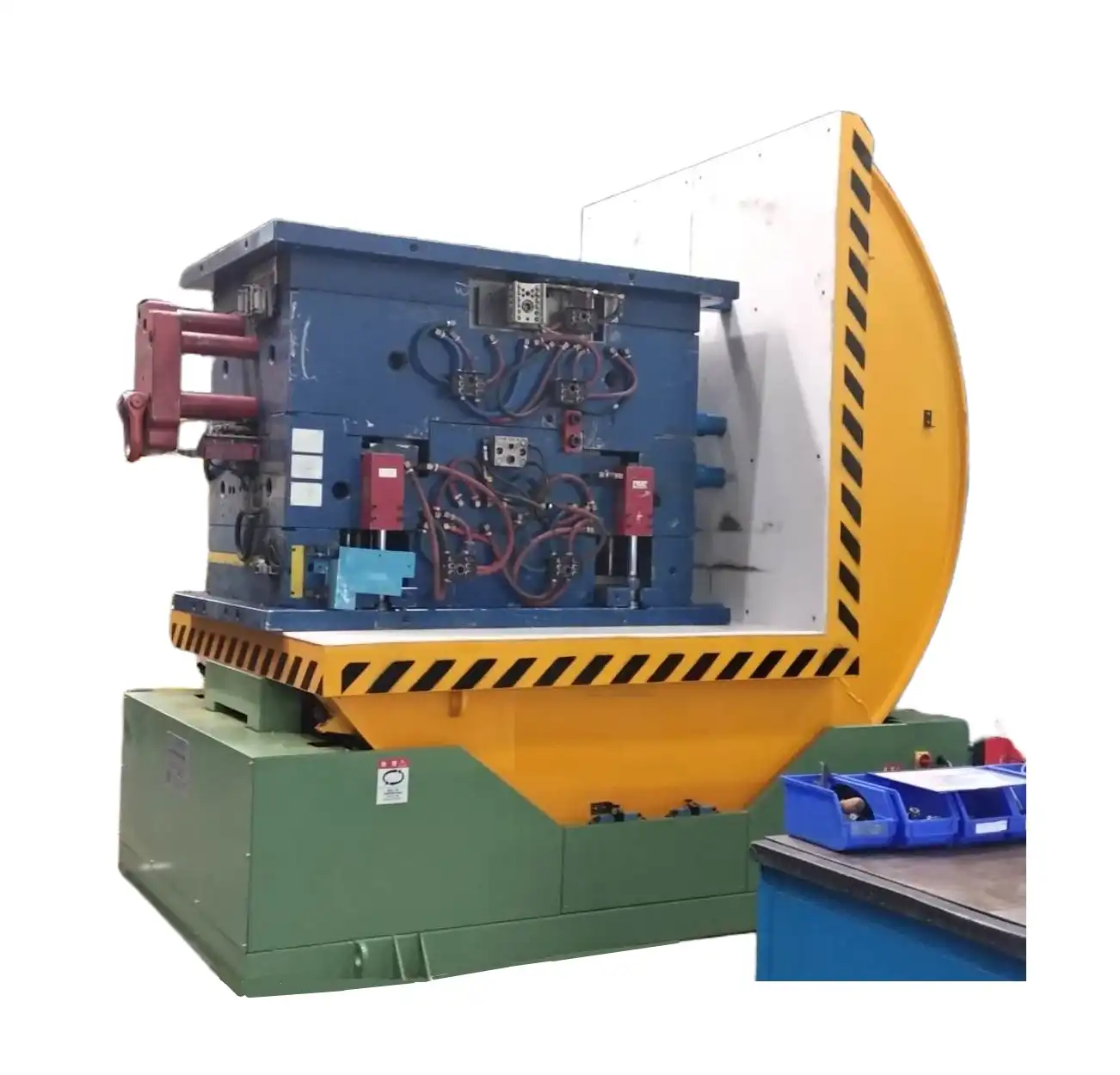
Integrating an upender isn't just about placing a machine; it's about designing a smoother workflow. Let's explore the typical integration points.
🔄 Workflow Integration Scenarios
For Coil Upenders:
- Receiving & Storage: Trucks deliver horizontal coils. The upender rotates them to vertical for compact, stable storage.
- Benefit: Maximizes storage density and safety.
- Feeding a Processing Line: A vertical coil is upended to horizontal to feed into a decoiler, slitter, or blanking line.
- Benefit: Enables continuous, automated feeding, eliminating manual wrestling with heavy coils.
- Packaging & Dispatch: After processing, a horizontal coil may be turned vertical for strapping, wrapping, and final shipment.
- Benefit: Creates a standardized, secure package for transport.
For Mold Upenders:
- Maintenance & Repair: Lifting a multi-ton mold from a press, turning it to access all sides for cleaning, polishing, or repair.
- Benefit: Ergonomic access prevents worker strain and allows for thorough maintenance.
- Storage & Retrieval: Safely rotating and positioning molds onto high-density storage racks.
- Benefit: Protects critical tooling edges and allows for organized inventory.
- Press Loading/Unloading: Precisely maneuvering a mold into the bed of a large stamping or injection press.
- Benefit: Reduces setup time and prevents alignment damage.
Environmental & Spatial Considerations:
- Floor Space: Is there room for the machine's footprint plus its rotating radius? Mold upenders often need less swing space.
- Floor Strength: Can your floor support the concentrated load of a 20-ton coil plus the machine? Reinforcement may be needed.
- Utilities: Does it require 3-phase power, compressed air, or special foundations?
- Ambient Conditions: For coil upenders, consider dust, moisture, and temperature variations. Look for machines with appropriate IP ratings and robust construction.
A client in the automotive parts sector had a mold changeover that took 8 hours. By integrating a Fengding mold upender near their press line, they reduced that time to 90 minutes. The ROI was calculated in weeks, not years, simply by understanding their workflow and choosing equipment that fit seamlessly into it. (ROI on automation equipment, reducing mold changeover time)
3. What Are the Non-Negotiable Safety and Efficiency Features?
In heavy industry, safety is not a feature; it's the foundation. An upender that compromises safety is not an option. Similarly, a machine that is slow or unreliable destroys efficiency. You must identify the features that are essential for protecting your people and your productivity. (industrial safety standards, machine efficiency features)
For both types of upenders, non-negotiable safety features include emergency stop buttons, mechanical safety locks to prevent accidental lowering, overload protection sensors, and non-slip platforms/stairs. Key efficiency features are smooth, controlled rotation (variable speed drives), user-friendly programmable logic controller (PLC) interfaces, and quick attachment/detachment systems for the load. (upender safety mechanisms, PLC controlled material handling)
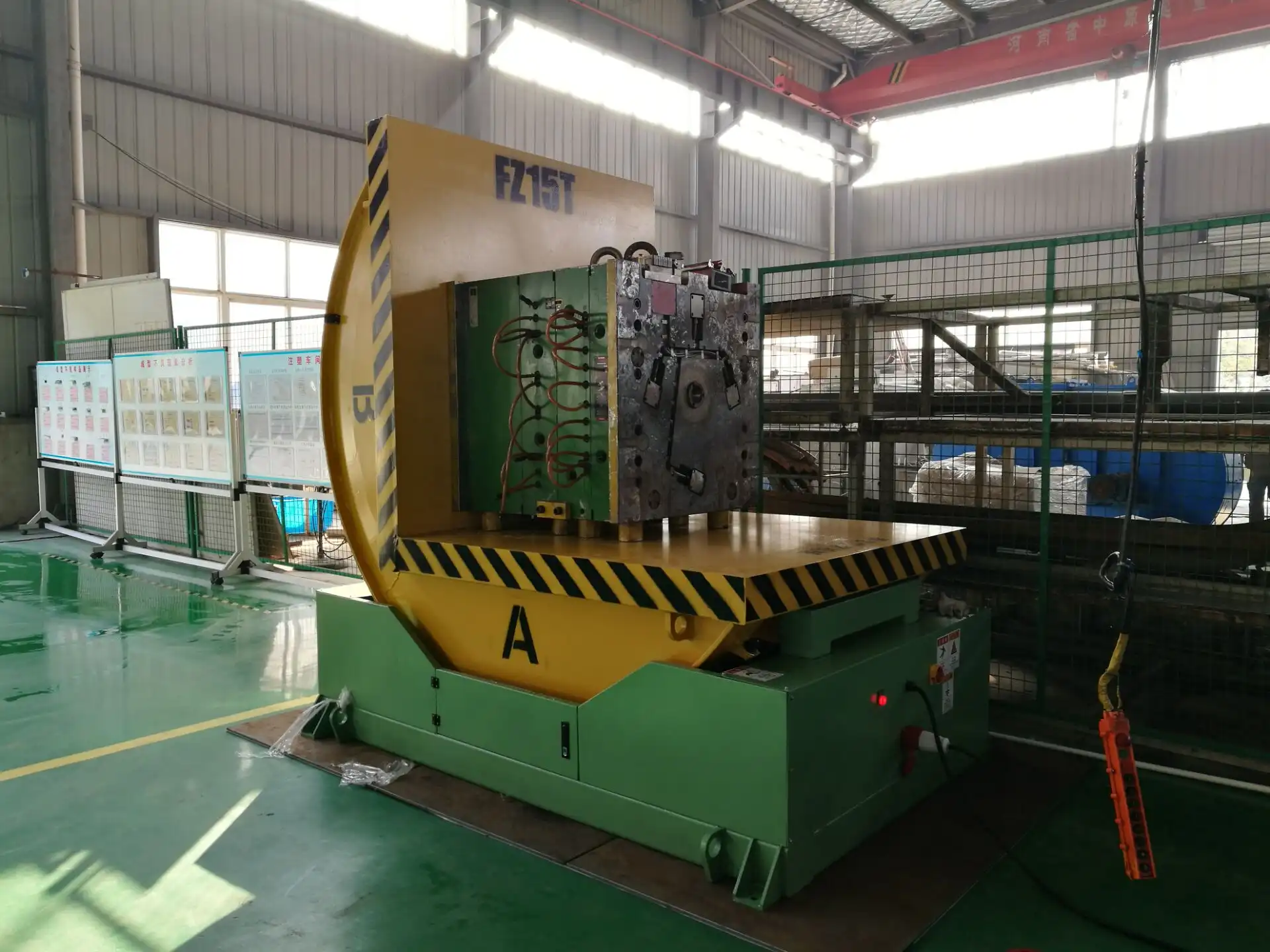
Let's dissect these critical aspects into a clear checklist you can use when evaluating suppliers.
⚠️ Safety Feature Deep Dive
1. Structural Integrity & Stability:
- The frame must be made from high-grade steel with welded, reinforced joints.
- A wide, heavy base is crucial to prevent tipping during rotation, especially with off-center loads on mold upenders.
- Look for machines that have passed rigorous stability testing.
2. Load Security Systems:
- Coil Upenders: Should have adjustable arms or cradles with rubber padding to prevent coil damage and ensure a firm grip. A central mandrel or cone system provides the most secure rotation.
- Mold Upenders: Must have self-locking, adjustable clamps or grippers that conform to the mold's shape. Hydraulic systems should have check valves to hold position even if power fails.
3. Operator Protection:
- Emergency Stop: Clearly marked, easily accessible E-stop buttons on multiple sides of the machine.
- Safety Guards: Physical barriers around pinch points and rotating parts.
- Warning Systems: Audible alarms and flashing lights that activate before the machine moves.
🚀 Efficiency & Productivity Enhancers
1. Cycle Time Reduction:
- Fast Hydraulics: Powerful, responsive cylinders for quick lifting and tilting.
- Automated Cycles: One-button operation for repetitive tasks (e.g., "Rotate 90 degrees").
- Quick-Change Attachments: For mold upenders, interchangeable clamp heads for different mold families save setup time.
2. Precision & Control:
- Variable Speed Control: Allows the operator to start slow for alignment and finish fast, optimizing the cycle.
- Fine Positioning: Hydraulic flow controls or servo systems for millimeter-perfect placement, vital for mold installation.
- Digital Readouts: Display showing rotation angle, load weight, and system pressure.
3. Reliability & Uptime:
- Quality Components: Name-brand hydraulic pumps, valves, and electrical parts from suppliers like Bosch Rexroth or Siemens.
- Easy Maintenance: Centralized grease points, easy access to filters, and modular design for quick part replacement.
I recall a factory manager who prioritized a slightly cheaper upender that lacked proper overload protection. The machine failed under a slightly overweight coil, causing a near-miss accident and requiring expensive repairs. The initial savings were wiped out tenfold. This is why I advocate for brands like Fengding, which build these non-negotiable features into their core design, ensuring both safety and sustained high performance. (importance of machine reliability, cost of downtime in manufacturing)
4. How Do You Evaluate Total Cost of Ownership (TCO) and ROI?
The purchase price is just the entry ticket. The real cost of an upender is spread over its entire service life. A cheaper machine with high maintenance costs and frequent breakdowns will ultimately be more expensive than a premium, reliable one. You must shift your thinking from initial price to Total Cost of Ownership (TCO) and calculate a realistic Return on Investment (ROI). (total cost of ownership analysis, ROI calculation for industrial equipment)
Evaluating TCO involves calculating the initial purchase price, plus estimated costs for installation, energy consumption, preventive maintenance, repairs, and potential downtime over 5-10 years. ROI is calculated by quantifying the savings the machine generates—reduced labor, fewer product damages, lower insurance premiums, and increased production throughput—and comparing them to the TCO over a specific period. (calculating equipment ROI, lifetime cost of machinery)
Making a financially sound decision requires a structured analysis. Don't rely on gut feeling; use data.
💰 Breaking Down the Total Cost of Ownership (TCO)
| Cost Category | Description & Considerations | Typical % of TCO |
|---|---|---|
| 1. Acquisition Cost | Machine price, taxes, and delivery. | 40-60% |
| 2. Installation & Commissioning | Foundation work, electrical hookup, rigging, and initial calibration. | 5-15% |
| 3. Energy Consumption | Power used by hydraulics and controls. Efficient systems save long-term. | 10-20% (over life) |
| 4. Preventive Maintenance | Regular oil/filter changes, lubrication, part inspections. A clear PM schedule is key. | 10-15% |
| 5. Repairs & Downtime | Unplanned failures. This is the biggest variable and depends heavily on machine quality. | 15-30%+ (for poor quality) |
| 6. Operator Training | Ensuring safe and efficient use to prevent misuse and damage. | <5% |
| 7. Disposal/Resale Value | A well-maintained, reputable brand machine holds significant residual value. | (A negative cost/credit) |
📈 Calculating Your Return on Investment (ROI)
To calculate ROI, you first need to quantify the benefits. Ask yourself:
- Labor Savings: How many workers/man-hours are currently spent on manual turning or rigging? What is their fully burdened hourly cost? An upender may reduce this need by 80%.
- Damage Reduction: What is the annual cost of edge damage to coils or nicks to precision molds? A proper upender can reduce this to near zero.
- Throughput Increase: How much faster can your line run with automated feeding/positioning? Convert time saved into additional production units and revenue.
- Safety Cost Avoidance: What are your current costs for worker's comp insurance and incidents related to manual handling? Improved safety can lower premiums.
Simple ROI Formula:
ROI (%) = [(Total Annual Savings - Total Annual Cost) / Total Investment] x 100
Example: If a $50,000 upender saves you $20,000 in labor and $10,000 in damage annually, with $2,000 in maintenance costs, your annual net saving is $28,000.
ROI = ($28,000 / $50,000) x 100 = 56% per year. The machine pays for itself in under 2 years.
In my own factory, we always opted for higher-quality equipment from trusted partners. While the upfront cost for a Fengding upender was higher than some alternatives, its 10-year service life with minimal repairs resulted in a far lower TCO and a stellar ROI. This long-term perspective is what separates a simple purchase from a strategic investment. (strategic equipment investment, long term value of quality machinery)
Conclusion
Choosing the right upender—coil or mold—is a strategic decision that hinges on your specific load, workflow, safety needs, and financial analysis. By focusing on purpose-built equipment from reliable partners, you invest in lasting productivity, safety, and profitability. For operations requiring robust and intelligent solutions, a high-quality coil upender is often the cornerstone of an efficient material handling system.

