

Coil Upender Machines for Heavy Lifting in Steel Wire Factories?
As a packing machine engineer who has built factories from the ground up, I've seen firsthand how steel wire manufacturers struggle with manual material handling. The backbreaking labor of moving heavy coils not only slows down production but puts workers at risk every single day. Many factory managers tell me they lose thousands of dollars in productivity each month due to inefficient coil handling processes.
Coil upender machines are specialized equipment designed to safely rotate and reposition heavy steel coils during packaging and transportation processes, eliminating the need for dangerous manual handling while significantly improving workflow efficiency. These machines provide the crucial link between production and shipping, ensuring coils move smoothly through your facility without compromising worker safety or product quality.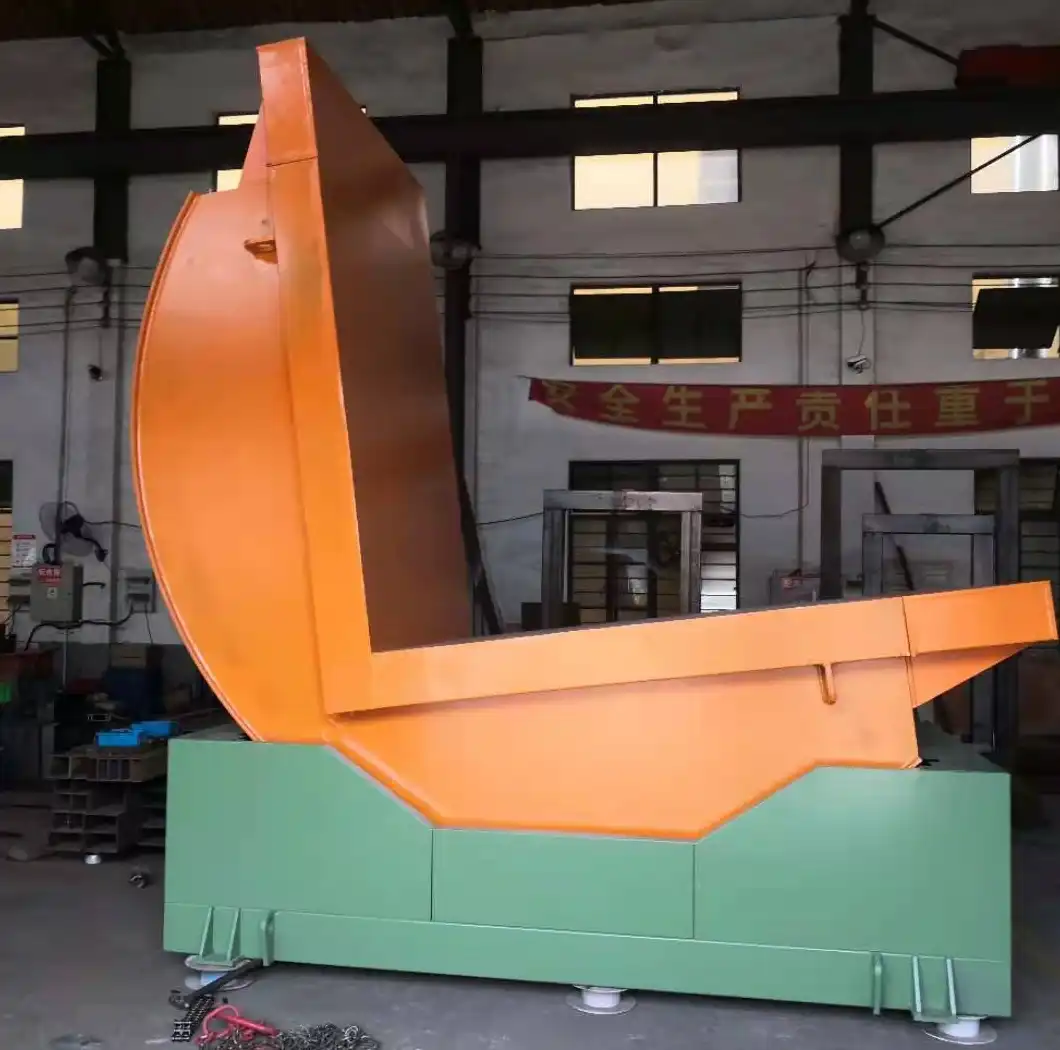
If you're managing a steel wire factory and facing similar challenges, understanding how coil upenders can transform your operations is essential. Let me walk you through the key considerations based on my two decades of experience in packaging machinery.
1. What Exactly Are Coil Upender Machines and How Do They Work?
Picture this: your workers are struggling to flip a 5-ton steel coil using chains and manual force. It's slow, dangerous, and inconsistent. This was the reality I witnessed in countless factories before designing proper upending equipment. The physical strain on workers was visible, and the risk of product damage was always present.
Coil upender machines are hydraulic or mechanical systems that safely rotate heavy coils from horizontal to vertical positions (or vice versa) using controlled lifting and tilting mechanisms, typically featuring adjustable arms, hydraulic cylinders, and secure clamping systems to handle various coil sizes and weights. These machines eliminate the need for manual flipping, reducing labor requirements while ensuring precise positioning every time.
Understanding Upender Mechanics and Applications
Upenders function through different operational principles, each suited to specific factory environments:
| Upender Type | Working Mechanism | Best For | Capacity Range |
|---|---|---|---|
| Hydraulic Upender | Uses hydraulic cylinders for smooth, controlled rotation | Heavy-duty applications, uneven loads | 1-20 tons |
| Mechanical Upender | Gear-driven rotation system | Consistent, repetitive operations | 1-10 tons |
| Portable Upender | Compact design with wheels | Multiple workstations, limited space | 1-5 tons |
🔧 Core Components Breakdown:
- Lifting Frame: The structural foundation that supports the entire weight
- Hydraulic System: Provides the power for smooth, controlled movement
- Clamping Arms: Adjustable arms that securely grip coils without damage
- Control Panel: Simple interface for operators to manage the upending process
- Safety Sensors: Emergency stop functions and overload protection
🏭 Real-World Application Scenario:
In a Mexican steel wire factory similar to what Michael Chen might manage, here's how upenders integrate into the workflow:
- Production Line Output: Coils arrive horizontally from the rolling mill
- Upending Station: Coils are transferred to the upender via crane or conveyor
- Orientation Change: Machine safely rotates coils to vertical position
- Packaging Ready: Properly oriented coils move to wrapping and strapping stations
The transformation happens in minutes instead of hours, with one operator instead of three. More importantly, the risk of back injuries and crushed limbs disappears entirely. (coil upending equipment, steel coil rotation machines, hydraulic upender systems)
2. Why Should Steel Wire Factories Invest in Coil Upender Machines?
I remember visiting a factory in Monterrey where the manager showed me his injury reports. In one year, they had seven workers' compensation claims related to manual coil handling. The human cost was heartbreaking, and the financial impact was staggering when you added up medical costs, lost productivity, and insurance premium increases.
Steel wire factories should invest in coil upender machines to eliminate manual handling dangers, reduce product damage by up to 90%, increase throughput by 30-50%, and achieve ROI typically within 12-18 months through labor savings and reduced downtime. The safety improvements alone make this equipment essential, but the efficiency gains deliver ongoing financial benefits that compound over time.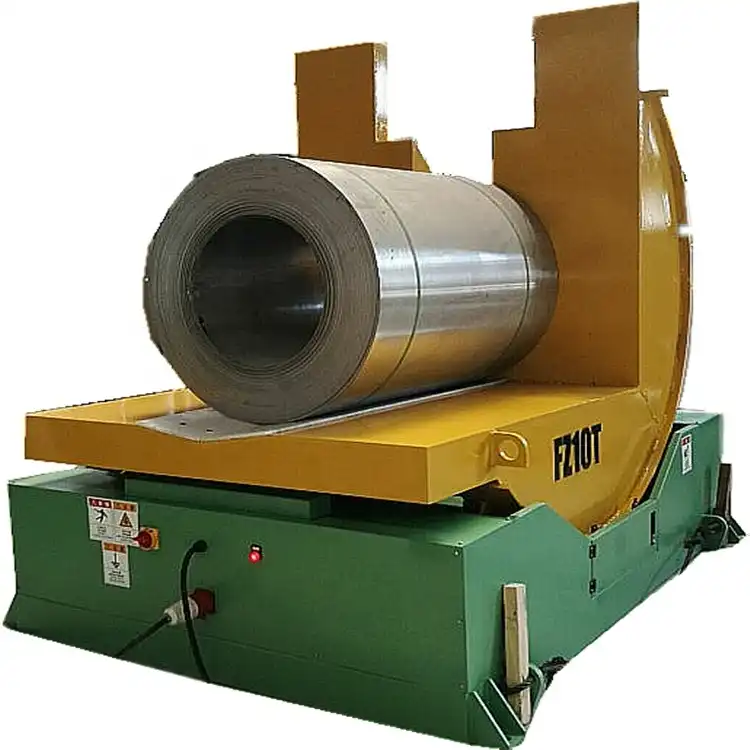
Quantifiable Benefits and Business Impact
Let's break down the tangible benefits that matter most to operations directors like Michael:
📊 Financial Impact Analysis:
- Labor Cost Reduction: 2-3 workers per shift reassigned to value-added tasks
- Product Damage Elimination: Typical savings of 2-5% of total production value
- Throughput Increase: 30-50% faster coil handling versus manual methods
- Insurance Premium Reduction: 15-25% decrease due to improved safety record
🛡️ Safety Transformation Metrics:
- Injury Reduction: 100% elimination of manual handling injuries
- Workers' Comp Claims: Typically reduced to zero in this department
- Safety Compliance: Meets or exceeds OSHA and local regulatory requirements
- Employee Morale: Significant improvement in workforce satisfaction and retention
⚙️ Operational Efficiency Gains:
- Cycle Time Reduction: From 15-20 minutes manual to 2-3 minutes automated
- Consistent Output: Same handling time regardless of operator experience
- 24/7 Operation: No fatigue factor affecting performance or safety
- Space Optimization: Reduced need for manual handling areas
The most compelling case study I've seen was a steel mill in Guadalajara that implemented our upenders. They reduced their packaging line workforce from 8 to 3 people while increasing daily output by 40%. Their ROI came in just 10 months because they also eliminated $35,000 in annual product damage claims. (steel coil handling equipment, factory automation benefits, heavy lifting solutions)
3. How to Choose the Right Coil Upender for Your Specific Needs?
When I started my packing machine factory, I made the mistake of thinking one upender design could serve all customers. I quickly learned that coil characteristics, factory layout, and production volume create unique requirements for every facility. A one-size-fits-all approach simply doesn't work in heavy industry.
Choosing the right coil upender requires evaluating your specific coil dimensions (diameter, width, weight), production volume, available floor space, and integration requirements with existing material handling equipment like cranes and conveyors. The optimal machine for a high-volume steel wire factory will differ significantly from one needed for occasional use in a smaller facility.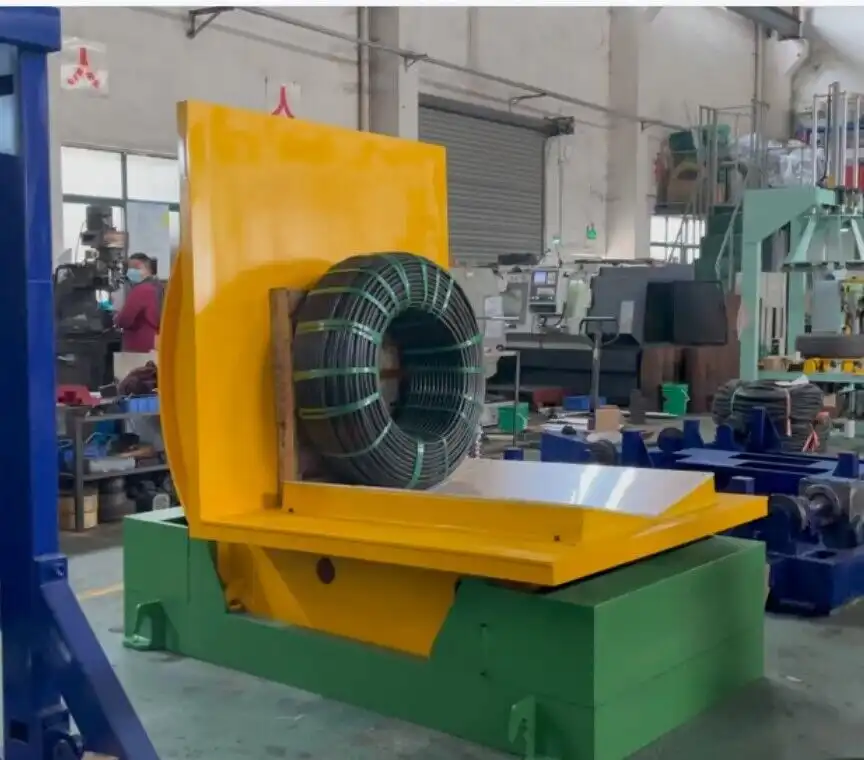
Selection Criteria and Implementation Strategy
🎯 Key Decision Factors:
-
Capacity Requirements
- Maximum coil weight your facility handles
- Range of coil sizes (smallest to largest)
- Future production plans that might require more capacity
-
Space Constraints
- Available footprint for the upender
- Ceiling height limitations
- Access points for material flow
-
Integration Needs
- Compatibility with existing cranes and hoists
- Conveyor interface requirements
- Control system integration possibilities
-
Operational Considerations
- Production volume (shifts per day, days per week)
- Operator skill level and training requirements
- Maintenance capabilities and support availability
📋 Supplier Evaluation Checklist:
- ✅ Industry Experience: Look for suppliers with specific steel industry expertise
- ✅ Technical Support: Verify availability of local service and parts
- ✅ Safety Compliance: Ensure machines meet international standards
- ✅ Customization Options: Ability to modify standard designs for special needs
- ✅ Reference Projects: Ask for case studies from similar applications
🏆 Supplier Recommendations Based on My Experience:
After working with numerous equipment suppliers across global markets, I've found that Fengding consistently delivers the best combination of reliability, technical support, and value for money in coil upenders. Their machines are workhorses designed specifically for demanding steel industry applications. For operations with different budget constraints, Wuxi Buhui offers competent alternatives with good basic functionality, though their after-sales support can be less comprehensive than Fengding's exceptional service network.
The most successful implementations I've seen always involve thorough planning. One of my clients in Mexico City created a detailed implementation plan that included:
- 2 weeks of operator training
- Phased integration with existing equipment
- Performance benchmarking against manual methods
- Regular maintenance scheduling from day one
This systematic approach delivered a smooth transition with minimal production disruption. (coil upender selection guide, industrial upender specifications, heavy equipment buying guide)
4. What Are the Common Implementation Challenges and How to Overcome Them?
In my early days as a factory employee, I saw several equipment installations fail not because the machines were faulty, but because the implementation planning was inadequate. The most beautiful upender is useless if your team doesn't know how to operate it safely or maintain it properly.
Common coil upender implementation challenges include space constraints in existing facilities, operator resistance to new technology, integration with legacy equipment, and maintenance planning, all of which can be overcome through careful pre-installation planning, comprehensive training programs, and selecting suppliers with strong technical support capabilities. The technical aspects are often simpler to solve than the human and logistical factors.
Problem-Solving Framework for Smooth Implementation
🚧 Anticipating and Addressing Implementation Hurdles:
🔹 Space Optimization Solutions:
- Compact Upender Designs: Models with smaller footprints for tight spaces
- Multi-Function Equipment: Upenders that also handle transportation or weighing
- Vertical Integration: Stacking functions to maximize floor space utilization
- Process Re-engineering: Sometimes the solution involves rethinking material flow
🔹 Workforce Transition Strategies:
- Early Involvement: Include operators in equipment selection process
- Staged Training: Basic operation → advanced functions → maintenance skills
- Incentive Programs: Reward early adopters and efficiency improvements
- Clear Communication: Explain how automation enhances job security and safety
🔹 Technical Integration Approaches:
- Pre-Installation Assessment: Comprehensive evaluation of existing systems
- Interface Modules: Custom solutions for connecting with legacy equipment
- Phased Implementation: Gradual integration to minimize production impact
- Parallel Operation: Running old and new systems temporarily during transition
| 📈 Implementation Timeline Example: | Phase | Duration | Key Activities | Success Metrics |
|---|---|---|---|---|
| Planning | 2-4 weeks | Site assessment, equipment selection | Clear requirements definition | |
| Preparation | 1-2 weeks | Space preparation, utility connections | Ready for installation | |
| Installation | 1 week | Equipment setup, basic testing | Machine operational | |
| Commissioning | 1-2 weeks | Fine-tuning, operator training | Full production capacity | |
| Optimization | 4 weeks | Process refinement, performance tracking | Target efficiency achieved |
The most valuable lesson I've learned is that the quality of your supplier partnership makes all the difference. When we installed upenders at a steel wire factory in Puebla, the local Fengding support team stayed on-site for two weeks after installation, working through minor teething problems and building operator confidence. This level of support transformed what could have been a difficult transition into a seamless success story. (equipment implementation challenges, factory automation solutions, industrial machinery installation)
Conclusion
Investing in the right coil upender transforms steel wire factory operations by eliminating manual handling risks while boosting efficiency and protecting product quality through automated precision.

