

Understanding How Mechanical Upenders Work in Material Handling and Production
As a factory manager, you know that every second of downtime costs money. You see your team struggling with heavy coils or awkward bundles, moving them by hand or with makeshift rigs. It's slow, it's dangerous, and it's a constant bottleneck right before shipping. The pressure to keep the line moving, ensure worker safety, and protect your valuable product from damage is immense. This is the daily reality in metal processing, logistics, and heavy manufacturing. The core of this struggle often lies in one simple but critical task: repositioning heavy loads for the next stage of handling or packaging.
A mechanical upender is a material handling machine designed to safely and efficiently rotate a heavy load, such as a steel coil, wire rod bundle, or large pallet, from a horizontal position to a vertical one, or vice versa. It uses a mechanical drive system, often with gears, chains, or a lead screw, to provide the controlled torque needed for this pivotal rotation, eliminating the need for risky and inefficient manual labor or crane-based flipping. This fundamental operation is key to unlocking smoother, faster, and safer production and logistics workflows.

If you're looking at equipment to solve these exact problems, you're not just buying a machine; you're investing in a solution for your entire operational flow. Understanding how a mechanical upender works is the first step to seeing why it can be a transformative piece of equipment for your plant. Let's break down the mechanics, the benefits, and the critical considerations to help you make an informed decision that boosts your bottom line.
1. What is the Core Mechanical Principle Behind an Upender's Rotation?
Imagine trying to tip over a massive steel coil by hand. The force required is tremendous and uncontrolled. A mechanical upender solves this through engineered leverage and controlled force application. The core principle isn't about brute strength; it's about smart, directed power. The machine transforms the rotational power from an electric motor into a slow, powerful, and precise turning motion at the point of contact with the load.
The fundamental working principle of a mechanical upender is the conversion of rotary motor power into a high-torque, low-speed rotational force through a reduction gearbox or a screw mechanism. This force is applied to a rotating frame or cradle that securely holds the load, allowing it to be pivoted along its central axis with stability and control that manual methods cannot match. This controlled rotation is what separates a basic lift from a true process-enhancing machine.
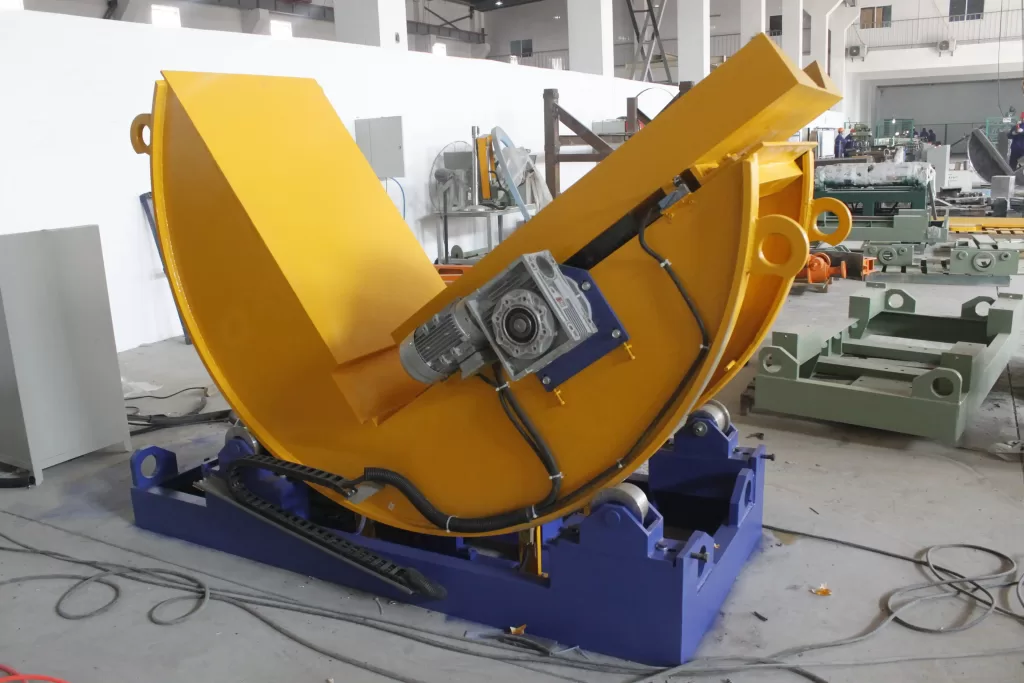
To dive deeper, let's look at the typical sequence and key components that make this principle work in practice. The process is a symphony of mechanical parts working together.
🔧 The Standard Operating Sequence of a Mechanical Upender
A well-designed upender follows a clear, repeatable cycle:
- Load Positioning: The coil or bundle, transported horizontally on a conveyor or cradle, is moved into the upender's rotating frame.
- Secure Clamping: Hydraulic or mechanical arms clamp the load firmly to prevent any shifting during rotation. Safety is paramount here.
- Initiation of Rotation: The operator activates the cycle. The electric motor starts, and its high-speed, low-torque rotation is immediately fed into a gear reduction system.
- Force Transformation: The gearbox dramatically reduces the output speed while multiplying the torque. This is the crucial step that creates the powerful, slow turning force.
- Controlled Pivot: This high-torque output drives a chain/sprocket system or a lead screw, which directly turns the main rotating frame. The load pivots smoothly, typically 90 degrees from horizontal to vertical.
- Unclamp and Unload: Once the desired position is reached, the clamps release, and the now-vertically-oriented load can be transferred out for the next step, like strapping or palletizing.
📊 Key Mechanical Components & Their Functions
| Component | Primary Function | Why It Matters for Reliability |
|---|---|---|
| Electric Motor | Provides the initial rotational power. | A quality, correctly sized motor ensures consistent starting torque and long service life under frequent cycling. |
| Gear Reduction Box | Reduces motor speed, increases output torque. | The heart of the system. A robust gearbox (like a helical type) ensures smooth power transmission, minimal backlash, and handles shock loads from heavy weights. |
| Rotating Frame/Cradle | The structure that directly holds and turns the load. | Must be fabricated from high-strength steel to resist bending and fatigue over thousands of cycles. Its design dictates the maximum load capacity and size. |
| Clamping Mechanism | Secures the load to the frame during rotation. | Prevents load slippage—a major safety hazard. Can be hydraulic (for adjustable force) or mechanical (for simplicity). |
| Base Frame & Bearings | Provides a stable foundation and allows smooth rotation. | Heavy-duty construction absorbs operational stresses. Large-diameter slew bearings ensure smooth, wobble-free rotation under full load. |
💡 Critical Insight for Buyers: When evaluating an upender, don't just look at the motor power (kW). Ask about the type and rating of the gearbox and the design safety factor of the rotating frame. A machine built with a premium gearbox and a frame rated for 1.5 times your maximum load will outlast and outperform a cheaper model with marginal components. Brands known for durability, like Fengding, often emphasize these core mechanical specs, which translates directly to less downtime in a demanding environment like yours. (core mechanical upender principle, gear reduction system, upender rotating frame)
2. How Does a Mechanical Upender Specifically Solve Common Factory Challenges?
You face real, daily problems: bottlenecks, safety incidents, and product damage. A machine is only as good as the problems it solves. A mechanical upender isn't just a "nice-to-have"; it's a targeted tool that addresses chronic pain points in material flow. Its value is measured in recovered time, prevented accidents, and preserved product quality.
A mechanical upender directly tackles factory challenges by automating a high-risk, manual task. It eliminates the bottleneck of slow, manual repositioning, removes workers from the danger zone of heavy, unstable loads, and ensures a controlled movement that prevents product collisions and edge damage. This turns a chaotic, variable process into a predictable, repeatable, and safe automated step.

Let's map the common challenges you mentioned directly onto the upender's capabilities. This is where the theoretical becomes practical and financially justifiable.
🎯 Challenge 1: The Efficiency Bottleneck in Packaging
- The Problem: Manual flipping of coils or bundles is slow. It depends on crane availability, operator skill, and multiple workers coordinating. This creates a logjam at the end of the production line, delaying packaging and shipping.
- The Upender Solution: It creates a dedicated, automated station. A coil arrives, is turned in a 60-90 second cycle, and is ready to go. The process is consistent and independent of crane schedules. This predictable pace allows you to synchronize your packaging line flow, significantly increasing throughput. For a manager like Michael, this means meeting tighter delivery schedules without overtime crunches.
🛡️ Challenge 2: High Safety Risks and Associated Costs
- The Problem: Manual handling of multi-ton coils is one of the most hazardous tasks in a metal plant. A slipping load or a misjudged crane move can lead to severe injury. This results in high insurance premiums, worker compensation claims, and low morale.
- The Upender Solution: It acts as a engineering control, physically separating the worker from the hazard. The operator controls the machine from a safe distance via a pendant. The load is clamped securely, and the rotation path is fixed and guarded. By designing out the hazard, you proactively meet safety regulations (like OSHA guidelines) and create a culture of safety, reducing both human and financial costs.
📦 Challenge 3: Product Damage During Handling
- The Problem: Banging coils against each other or the floor during manual flipping damages edges, deforms shapes, and leads to customer rejections. This is pure profit loss.
- The Upender Solution: Provides controlled, guided rotation. The load moves along a single axis without lateral swinging or impact. The clamping supports the load evenly, preventing point stresses that cause deformation. You ship a perfect product, protect your brand reputation, and stop losing money on avoidable damage.
🤝 Challenge 4: The Need for a Trusted Partner, Not Just a Vendor
- The Problem: Past experiences with suppliers who disappear after the sale leave you cautious. You need someone who understands your high-intensity environment and can offer reliable after-sales support.
- The Solution Insight: This is where choosing a supplier with real-world experience matters. Look for companies whose founders, like Randal at FHOPEPACK, have actually run factories. They understand that a machine must work 24/7. They design for serviceability—using common, quality components—and have a support network. A partner like this will provide the professional guidance Michael seeks, ensuring the upender integrates seamlessly and delivers the promised ROI. (solve packaging bottleneck, improve factory safety, prevent product damage, reliable equipment partner)
3. What Are the Key Advantages of Mechanical Drive vs. Hydraulic or Pneumatic Systems?
When specifying an upender, you'll encounter different power systems: mechanical, hydraulic, and sometimes pneumatic. Each has its place, but for the demanding, continuous-duty environment of a metal processing plant, the choice is critical. The drive system affects everything from maintenance costs and energy use to precision and cleanliness. It's a decision that impacts your total cost of ownership for years.
For heavy-duty, high-cycle industrial applications like steel coil handling, mechanical drive systems generally offer superior advantages in reliability, precision, lower maintenance, and energy efficiency compared to hydraulic systems. They provide direct, positive rotation without the potential for fluid leaks, pressure drops, or temperature sensitivity that can plague hydraulic units in harsh conditions.
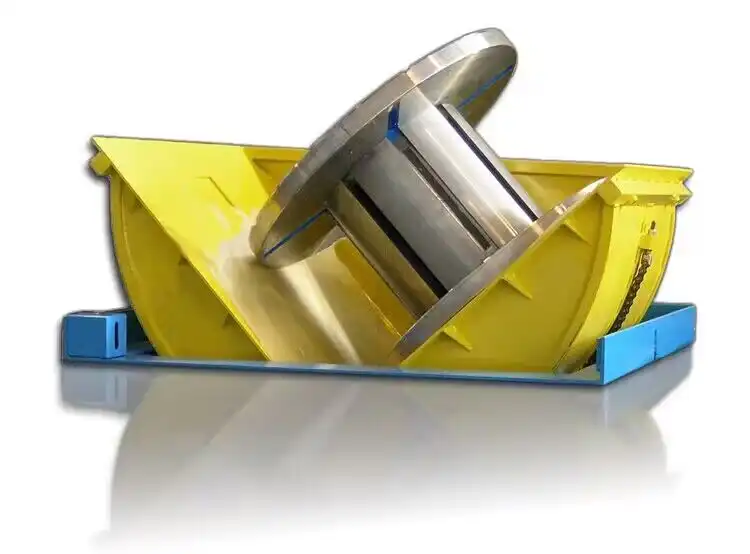
Let's do a side-by-side comparison to see why mechanical drive often wins in settings like Michael's factory. We'll break it down by critical operational factors.
⚙️ Head-to-Head: Mechanical vs. Hydraulic Upender Drives
| Evaluation Factor | Mechanical Drive Upender | Hydraulic Drive Upender | Winner for a Metal Plant |
|---|---|---|---|
| Power & Control | Direct drive via gearbox. Offers very precise positional control and repeatability. | Fluid power via pump/cylinder. Can feel "spongy" and may have slight positioning variance. | Mechanical. Precision is key for alignment in automated lines. |
| Maintenance Needs | Routine checks on gears, bearings, and motor. Grease points are standard. | Complex system: pump, valves, hoses, cylinders, filters, fluid. High risk of leaks. | Mechanical. Simpler system means less downtime and lower skill requirements for upkeep. |
| Energy Efficiency | Motor runs only during the rotation cycle. Energy use is direct and on-demand. | Hydraulic pump often runs continuously to maintain system pressure, wasting energy. | Mechanical. Lower operational energy costs, especially with frequent use. |
| Environmental Impact | Clean operation. No risk of fluid leaks contaminating the floor or product. | Constant risk of hydraulic oil leaks, creating slip hazards and environmental mess. | Mechanical. Critical for maintaining a safe, clean, and compliant workshop. |
| Duty Cycle & Response | Excellent for high, repetitive cycle rates. Immediate start/stop response. | Can suffer from fluid overheating during continuous use, requiring cool-down periods. | Mechanical. Built for the relentless pace of a high-output factory. |
| Noise Level | Moderate noise from gear meshing and motor. | Can be louder due to pump whine and valve chatter. | Similar, but mechanical is often more consistent and less piercing. |
🔍 When Might Hydraulic Be a Consideration?
Hydraulic systems excel in applications requiring extremely high, brute force in a compact package or where infinitely variable speed control during the stroke is needed. For example, a custom upender handling irregularly shaped, massive castings might use hydraulics. However, for the standard 90-degree rotation of uniform coils and bundles, the mechanical system's advantages in reliability and low maintenance are usually decisive.
My Practical Advice: In your factory, where uptime is profit, choose simplicity and robustness. A well-built mechanical upender from a reputable manufacturer like Fengding or Wuxi Bu Hui will have a longer mean time between failures (MTBF) and lower lifetime maintenance costs. Ask potential suppliers for the maintenance schedule and list of common wear parts. A transparent supplier confident in their mechanical design will provide this easily. (mechanical vs hydraulic upender, upender drive system comparison, low maintenance upender)
4. What Critical Factors Should a Factory Manager Consider Before Purchasing?
As a decision-maker, your goal isn't just to buy a machine; it's to invest in a solution that delivers a clear return. The technical specs are important, but they must be viewed through the lens of your specific operational and financial reality. A mis-specified machine becomes an expensive bottleneck itself. Careful planning upfront ensures the upender becomes an asset, not a liability.
Before purchasing a mechanical upender, a factory manager must rigorously evaluate four key areas: 1) Accurate load specifications (weight, dimensions, center of gravity), 2) Seamless integration with existing material flow, 3) Total cost of ownership beyond the purchase price, and 4) The supplier's proven ability to provide technical support and reliable after-sales service. Overlooking any of these can undermine the entire investment.
Let's expand on each of these critical purchase factors. Think of this as your due diligence checklist.
✅ Factor 1: Load Analysis – The Foundation of the Spec
Don't guess. Measure and calculate.
- Maximum Weight & Dimensions: Provide the supplier with the heaviest and largest coil/bundle you handle, not the average. Include the maximum diameter, width, and bore size.
- Center of Gravity (CG): This is often overlooked. An off-center load (e.g., an uneven wire bundle) creates uneven stress. Inform your supplier of any atypical CG issues so they can design the clamping and rotation accordingly.
- Future-Proofing: Consider if your product mix might change in 3-5 years. Specifying a machine with a 10-20% capacity buffer can be a wise long-term decision.
✅ Factor 2: Integration into Your Workflow
The machine must fit your process, not the other way around.
- Infeed/Outfeed Method: How will the load get to and from the upender? Conveyor, roller table, crane, or forklift? The machine base height and interface points must match.
- Cycle Time Requirement: Calculate your required throughput (coils per hour). Ensure the upender's cycle time (load, clamp, rotate, unclamp, unload) meets or exceeds this pace to avoid becoming a new bottleneck.
- Plant Layout & Utilities: Verify you have the required floor space, foundation strength, electrical power (voltage, phase), and any necessary safety perimeter fencing.
✅ Factor 3: Total Cost of Ownership (TCO) Analysis
Look beyond the invoice price.
- Installation & Commissioning: What are the costs for foundation work, electrical hookup, and startup?
- Operational Costs: Estimate energy consumption (mechanical drives are cheaper here) and any consumables.
- Maintenance Costs: Request a projected 5-year maintenance plan and cost of common spare parts (gears, bearings, motor).
- ROI Calculation: Work with the supplier to build a model. Factor in savings from: reduced labor (number of workers x hourly rate), increased throughput (value of more shipped product), reduced product damage (average cost of rejects), and lower safety incident costs.
✅ Factor 4: Supplier Qualification – Your Long-Term Partner
This is perhaps the most important factor.
- Industry Experience: Do they specialize in heavy-industry equipment? Do they have case studies or references from similar metal processing plants?
- Technical Support: What is the warranty period? What is their response time for technical queries or service needs? Do they offer remote diagnostics?
- Parts Availability: Is there a local stock of critical spare parts, or are they all shipped from overseas with long lead times?
- My Strong Recommendation: Based on industry reputation for robust engineering and reliable service in demanding applications, I consistently see Fengding as a top-tier choice for managers who prioritize uptime. Wuxi Bu Hui is also a solid, well-regarded manufacturer. Always ask for and contact customer references directly. (factors for buying upender, upender integration planning, total cost of ownership, reliable upender supplier)
Conclusion
Understanding the precise mechanics and strategic advantages of a mechanical upender is key to transforming a high-risk bottleneck into a pillar of efficiency and safety. For a durable, high-ROI solution in demanding environments, partnering with an expert manufacturer like Fengding for your coil upender needs is a decisive step toward achieving your operational goals.

