

How Mold Upenders Improve the Handling of Large and Complex Loads?
Imagine a heavy steel coil, weighing several tons, needing to be flipped for packaging. Or picture a massive, intricate mold that must be turned over for maintenance. Now, imagine doing this manually. The risks are high—back injuries, crushed limbs, damaged products, and costly production delays. This is the daily reality in many metalworking and heavy manufacturing plants. The physical and financial strain of manual load handling is a constant pressure point for operations managers worldwide. (challenges of manual load handling in heavy industry)
Mold upenders, also known as coil tippers or load rotators, are specialized material handling machines designed to safely and efficiently rotate, tilt, or flip heavy, bulky, and complex loads like steel coils, molds, dies, and large pallets. They improve handling by replacing dangerous manual labor with controlled, powered rotation, significantly enhancing safety, protecting product integrity, and boosting overall operational efficiency on the factory floor. (what is a mold upender machine)
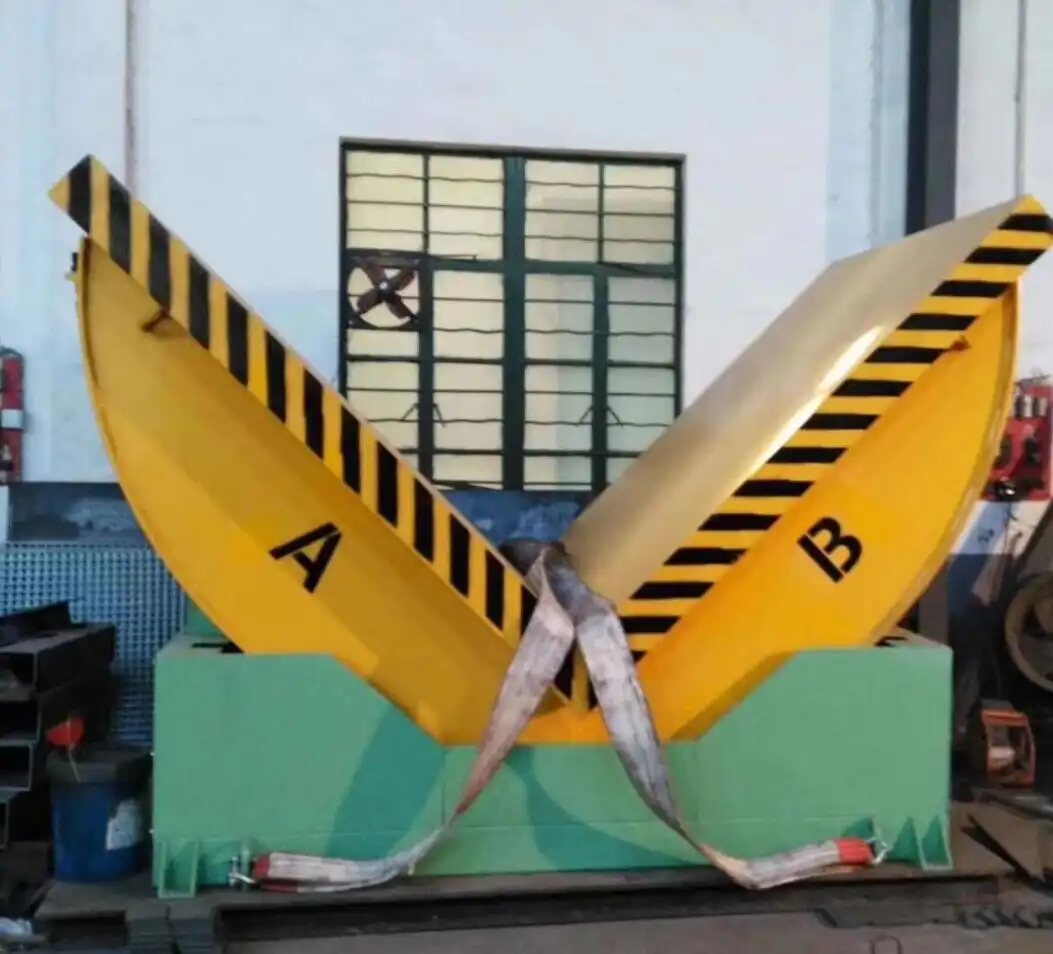
For factory managers like Michael in Mexico, who face the triple threat of safety hazards, efficiency bottlenecks, and product damage, this isn't just about buying a machine. It's about finding a reliable solution to core operational problems. Let's explore how the right upending equipment can transform these challenges into measurable gains for your plant.
1. How Do Upenders Specifically Tackle Critical Safety Hazards in Heavy Load Handling?
Safety is not just a compliance issue; it's a fundamental human and business concern. In environments dealing with multi-ton loads, the most severe risks often come from manual handling. Workers straining to flip a coil or guide a tilting mold are one misstep away from a life-altering injury. The financial fallout from such incidents—medical costs, insurance premiums, litigation, and lost productivity—can be devastating. (safety risks in manual material handling)
Mold upenders directly address these critical safety hazards by completely removing the worker from the point of danger. The machine's hydraulic or electric system performs all the heavy lifting and precise rotation, allowing operators to control the process from a safe distance via pendant or remote control. This engineered separation between human and load is the most effective way to eliminate crush injuries, musculoskeletal disorders, and accidents caused by load instability during manual flipping operations. (industrial upender safety benefits)
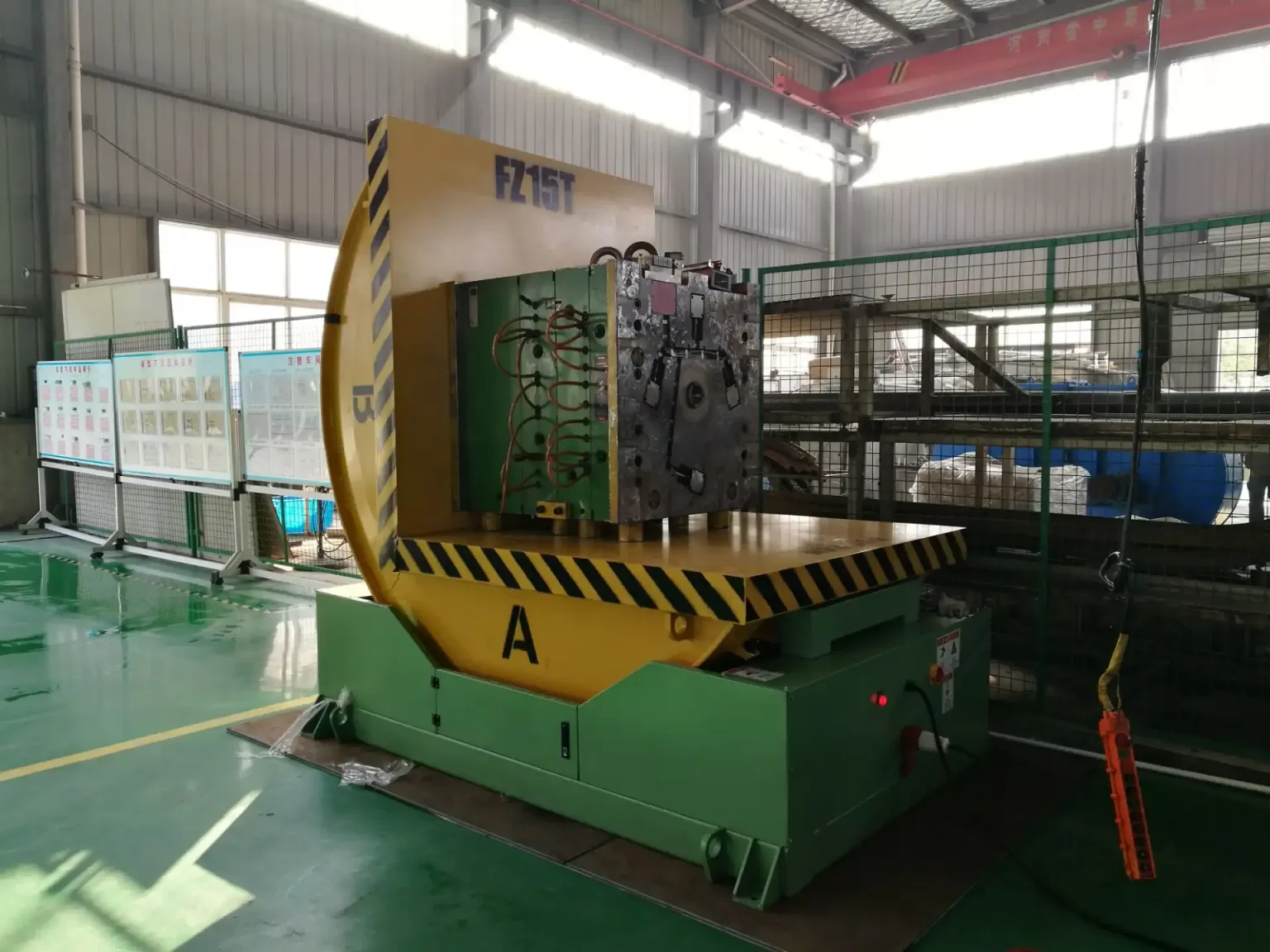
🔴 The High Cost of "The Old Way" vs. The Upender Solution
Let's break down the specific hazards and how upenders provide a solution:
| Hazard with Manual Handling | How an Upender Eliminates the Risk |
|---|---|
| Crush Injuries | Workers place/secure the load with the machine in a stable position. The powered rotation happens within the machine's guarded frame. No need for hands near the moving load. |
| Back & Muscle Strains | Eliminates all manual pushing, pulling, and lifting associated with tilting heavy objects. The machine's actuator does all the work. |
| Struck-by Swinging Loads | Provides controlled, 90-degree or 180-degree rotation along a fixed axis. The load cannot swing freely or unpredictably. |
| Falling Loads from Improper Support | Engineered with robust forks, platens, or cradles and often includes chains or straps to secure the load before rotation begins. |
| Slips/Trips in Work Zone | Reduces the number of personnel needed in the immediate area, clearing the floor for safer movement. |
Beyond the immediate physical dangers, there are hidden costs. High injury rates lead to increased worker compensation claims, higher insurance premiums, and difficulty retaining skilled staff. A safe work environment, enabled by equipment like upenders, improves morale and reduces turnover. For a manager, investing in an upender is an investment in your team's well-being and your plant's long-term stability. It transforms a high-risk, anxiety-inducing task into a routine, button-press operation. This proactive approach to safety is a hallmark of modern, responsible manufacturing management. (benefits of automated load turning for worker safety)
2. What Are the Direct Efficiency Gains and ROI from Automating Load Rotation?
Efficiency in manufacturing is measured in throughput, labor hours, and uptime. A bottleneck at the packaging or staging area can slow down the entire production line. When a team spends 30 minutes manually rigging and cautiously flipping a single coil, that's 30 minutes of machine downtime and paid labor with zero value-add. The question for any operations director is: how can we get more done with the same or fewer resources? (production bottleneck solutions packaging line)
Automating load rotation with a mold upender delivers direct efficiency gains by drastically reducing handling time, minimizing required manpower, and enabling seamless integration into production flow. The Return on Investment (ROI) is calculated from saved labor costs, reduced product damage, decreased downtime, and increased overall line speed. A typical upender can complete a rotation cycle in under a minute, a task that might take a manual crew ten times longer, providing a clear and fast payback period. (ROI of automated material handling equipment)
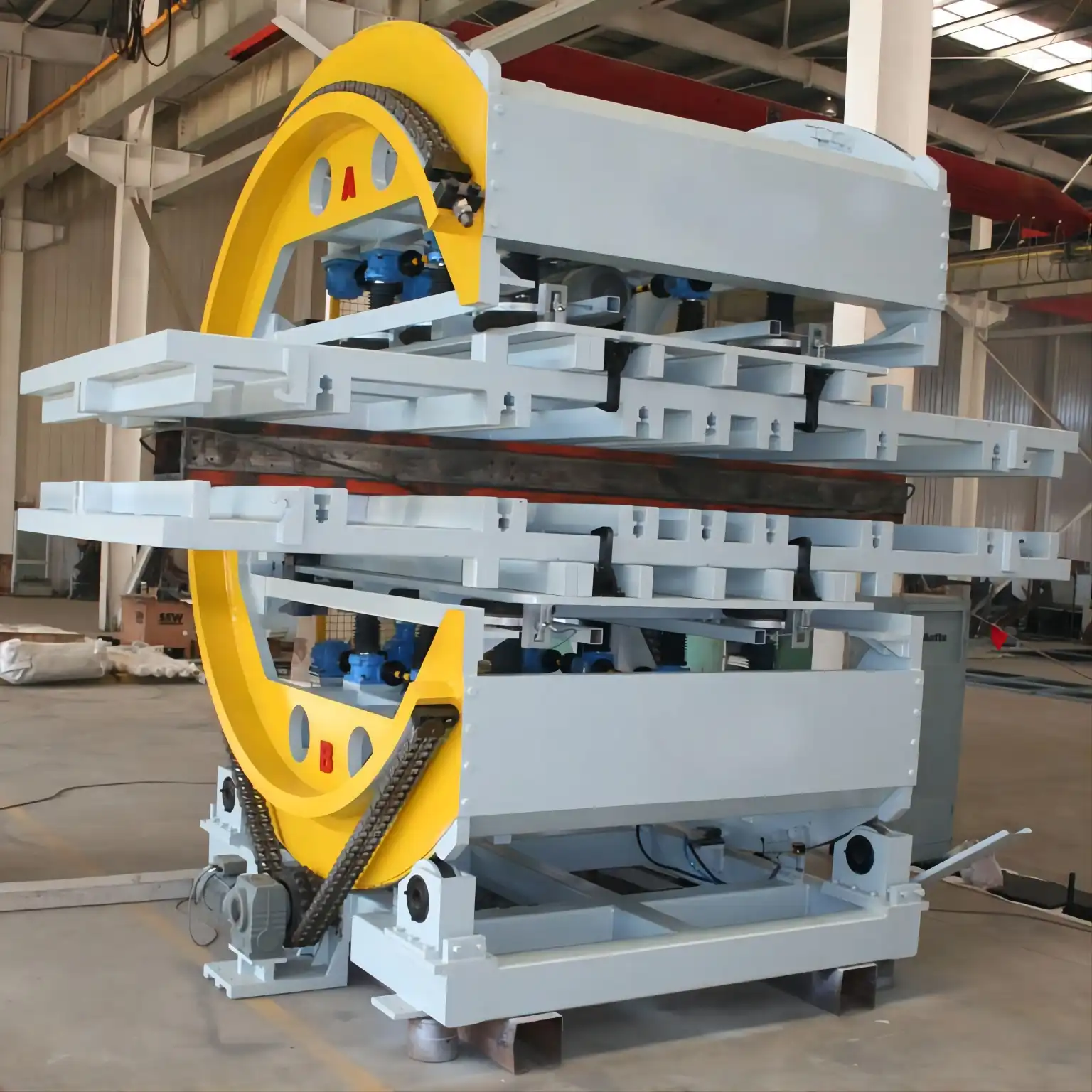
📈 Breaking Down the Efficiency Equation
Let's quantify the gains an upender brings to a metal processing plant:
- Time Savings Per Cycle: Manual flip: 15-30 minutes. Upender flip: 1-3 minutes. This time saving compounds over hundreds of cycles per month.
- Labor Reduction: A manual flip may require 2-4 workers. An upender operation needs 1 operator. This reallocates valuable labor to more productive tasks.
- Uptime Increase: Faster handling means packaging/staging stations are cleared quicker. The preceding production machine (e.g., slitter, cutter) can resume work sooner, increasing its utilization.
- Damage Reduction: Controlled, machine-guided rotation prevents impacts and scratches that occur during manual levering or dropping. This means fewer rejected products and happier customers.
- Consistency & Predictability: Unlike manual effort which varies, the machine performs the same perfect rotation every time. This allows for accurate production scheduling.
Consider a simple scenario: A plant processes 20 coils per shift. Manually flipping each coil takes 20 minutes with a 3-person crew. That's 400 man-minutes (6.6 hours) of labor per shift just for flipping. An upender reduces this to 2 minutes per coil with 1 operator—40 man-minutes (0.66 hours). The daily labor saving is over 5 hours. When you translate saved hours into wages, add the value of increased output from other machines, and subtract the cost of avoided damage, the upender often pays for itself within a year or even months. This makes it not an expense, but a strategic capital investment with a compelling financial return. (calculating ROI for coil handling equipment)
3. How Does the Right Upender Design Protect Valuable Products Like Steel Coils and Molds?
Product damage is a direct hit to profitability. A dented steel coil edge or a scratched mold surface can lead to customer rejection, rework costs, or even the total loss of a high-value item. During manual handling, loads are vulnerable at the moment of rotation—when leverage is applied, and the center of gravity shifts unpredictably. The product itself becomes a casualty of the process. (preventing product damage in material handling)
The right upender design protects products by providing full, uniform support and executing a smooth, controlled rotation. Key features like padded or coated contact surfaces, adjustable arms or forks to accommodate different load sizes, and precise hydraulic control ensure the load is cradled securely and moved without shock, impact, or abrasion. This mechanical care is impossible to achieve consistently with manual methods. (features of a protective coil upender)
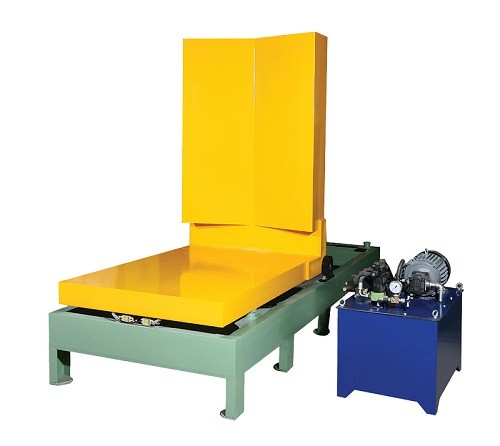
🛡️ Engineering Protection into the Machine
Different loads require different protective features. A smart buyer matches the upender's design to their specific product.
-
For Steel Coils & Wire Rods: The focus is on edge protection. Upenders use V-shaped or curved cradles lined with polyurethane or rubber. This soft, durable material cushions the coil, preventing "edge bite" and surface marring. The rotation is slow and steady to prevent the coil layers from shifting or collapsing.
-
For Molds, Dies, and Tooling: These are often irregularly shaped and extremely high-value. Protection here comes from large, flat rotating platens (tables). The mold is securely bolted or strapped to the platen, which then rotates like a giant turntable. This ensures the mold's weight is evenly distributed across its base, eliminating stress points that could cause cracking or distortion.
-
For Palletized or Boxed Loads: The risk is load shifting or crushing. Upenders designed for these use wide forks or platforms with integrated strapping points. Some models include side-shift functions to perfectly align with the load before lifting.
The hydraulic system is the heart of this protective operation. A well-designed system allows for variable speed control—starting slowly to overcome inertia, rotating at an efficient pace, and decelerating gently to a stop. This eliminates the jerky movements that cause damage. When you invest in precision-engineered equipment from a specialist like Fengding (a top-tier manufacturer known for robust design) or Wuxi Buhui, you are not just buying a flipper; you are buying an insurance policy for your products. Their engineering expertise ensures the machine's motion profile is tailored to handle delicate loads with the utmost care. (importance of hydraulic control in load upenders)
4. What Should a Factory Manager Look for When Choosing a Reliable Upender Partner?
Choosing an upender is a significant decision. The wrong machine or supplier can lead to more downtime, inadequate performance, and a failed investment. Many managers have been frustrated by suppliers who disappear after the sale, leaving them with a broken machine and no support. The goal is to find a partner, not just a vendor—a company that understands your industry's pressures and provides a total solution. (how to choose a material handling equipment supplier)
A factory manager should look for a partner with proven industry experience, robust and customizable machine designs, and comprehensive after-sales support. The ideal partner acts as a consultant, helping you select the right machine capacity and features for your specific loads (coils, molds, etc.), and provides reliable installation, training, and readily available spare parts to ensure years of trouble-free operation. (criteria for selecting industrial equipment partner)
✅ Your Checklist for a Trusted Upender Partnership
Before making a decision, evaluate potential suppliers against these critical points:
-
Industry-Specific Knowledge: Do they have a track record in metal processing, logistics, or heavy manufacturing? Can they show case studies or references from similar plants? A partner who understands terms like "coil eye vertical" or "mold maintenance position" speaks your language.
-
Machine Quality & Customization:
- Construction: Look for heavy-duty steel frames, reputable hydraulic components (e.g., Parker, Bosch), and reliable PLC controls.
- Safety Features: Standard equipment should include emergency stop buttons, mechanical safety locks, and overload protection.
- Flexibility: Can they modify fork width, platen size, or rotation angle to fit your unique needs? A one-size-fits-all approach rarely works.
-
After-Sales Service & Support:
- Warranty: What is covered and for how long?
- Technical Support: Is there a direct phone line or chat for troubleshooting?
- Spare Parts: Are common wear parts (seals, hoses) in stock for quick shipment?
- Documentation: Are clear operation and maintenance manuals provided?
-
Value Beyond the Machine: The best partners, like Fengding, often share deep operational insights. They can advise on optimal placement in your workflow or how to integrate the upender with existing conveyors or cranes. This consultancy approach ensures the machine delivers its promised ROI.
My own journey from factory engineer to business owner taught me that the right equipment partner is invaluable. They become an extension of your team. When you have a problem at 3 PM on a Friday, you need to know you can call someone who will help you get running again. That peace of mind is part of the product you're buying. (importance of supplier reliability for factory operations)
Conclusion
Investing in a mold upender is a strategic move that directly tackles the core challenges of safety, efficiency, and product protection in heavy load handling. It’s a clear step towards smarter, safer, and more profitable manufacturing. For a robust solution, explore the engineered reliability of a coil upender from a trusted industry partner.

