

Why Hydraulic Dumper Machines Are Ideal for Handling Large Materials in Warehousing?
Imagine a warehouse floor where heavy steel coils or bulky wire bundles sit idle. Workers are hesitant to move them. The risk of injury is high. The process is slow. Production schedules are slipping. This is a common pain point in metal processing and heavy manufacturing. The manual handling of large, heavy materials is not just inefficient; it's a significant bottleneck and a safety hazard. For managers like Michael in Mexico, overseeing a bustling metal fabrication plant, this daily struggle directly hits productivity and profit. The pressure to move materials faster and safer is immense.
Hydraulic dumper machines are the ideal solution for handling large materials in warehousing because they transform a slow, risky, and labor-intensive process into a fast, safe, and automated operation. These powerful machines use controlled hydraulic force to lift, tilt, and position heavy loads like steel coils, wire reels, and large molds with precision, eliminating the need for dangerous manual labor and crane slings. By automating the tipping and transfer of materials, they directly address core industrial challenges: boosting throughput, enhancing workplace safety, and protecting valuable products from damage during handling.
The decision to invest in material handling equipment is critical. It's not just about buying a machine; it's about solving a systemic problem. A hydraulic dumper isn't merely a piece of hardware—it's a strategic upgrade to your entire logistics flow. In the following sections, we'll break down exactly how these machines deliver on their promise. We'll explore their core benefits, the specific problems they solve for warehouse and factory managers, and what you must consider to choose the right partner for this vital investment. This knowledge comes from my own journey, from working on the factory floor to building a business around solving these exact industrial challenges.
1. What Core Problems Do Hydraulic Dumpers Solve in Heavy Material Warehousing?
Picture a typical scene before automation: a team of workers using chains, slings, and forklifts to awkwardly maneuver a multi-ton steel coil onto a pallet or into a processing machine. Every movement is slow. Every lift is a potential accident waiting to happen. This manual process creates multiple pain points that silently drain a company's resources and morale.
Hydraulic dumpers solve three fundamental problems in heavy material warehousing: they eliminate the severe safety risks of manual handling, break the efficiency bottleneck caused by slow material transfer, and prevent costly product damage that occurs during clumsy, uncontrolled movements. By providing a controlled, powered method to tip and position loads, they remove the human element from the most dangerous part of the workflow.
For a plant manager, these aren't abstract issues. They are daily headaches with real financial consequences. Let's dive deeper into each problem and how a dumper acts as the cure.
🚨 The Safety Crisis: Eliminating Manual Handling Hazards
Manual handling of heavy loads is the number one cause of serious workplace injuries in industries like steel and logistics. The risks are clear:
- Musculoskeletal Injuries: Strains, sprains, and back injuries from lifting, pushing, or pulling.
- Crush Injuries: Fingers, hands, or feet can get caught under a shifting load or between the load and equipment.
- Struck-by Injuries: A load that slips from a sling or forklift can cause catastrophic harm.
A hydraulic dumper directly attacks this problem. The operator controls the machine from a safe distance using a pendant or remote. The hydraulic system does all the heavy lifting and precise tilting. Workers are no longer required to be in the "line of fire." This leads to:
- A dramatic drop in accident rates and workers' compensation claims.
- Improved employee morale and lower turnover, as workers feel safer.
- Consistent compliance with stringent workplace safety regulations (like OSHA standards).
⏱️ The Efficiency Bottleneck: Accelerating Material Flow
In a warehouse, time is money. When the packaging or processing station waits for the next coil, the entire production line slows down. Manual methods are inherently slow and unpredictable.
- Time-Consuming Setup: Attaching slings, aligning cranes, and guiding loads takes valuable minutes for every single item.
- Limited Throughput: The physical fatigue of workers limits how many heavy items can be moved in a shift.
- Process Inconsistency: Each worker might have a slightly different method, leading to variable cycle times.
A hydraulic dumper is designed for speed and repeatability. It acts like a robotic arm for heavy loads.
- Fast Cycle Times: With pre-set angles and automated functions, a dumper can receive, tilt, and discharge a load in a fraction of the time it takes manually.
- Continuous Operation: It doesn't get tired. It can maintain a consistent pace throughout multiple shifts.
- Seamless Integration: It can be positioned right at the point of need—between production and packaging, or at the loading dock—creating a smooth, continuous flow.
💸 The Hidden Cost: Stopping Product Damage
When a steel coil's edge gets dented or a wire reel is scratched during handling, it's not just a cosmetic issue. It can lead to:
- Customer rejections and returns.
- Downgrading of prime material to a lower-value product.
- Production delays for rework or replacement.
Manual handling, with chains and improper support, is a major culprit. A hydraulic dumper cradles the load securely. Its arms or platforms are designed to support the specific shape (like a coil's inner diameter) without causing point pressure or abrasion. The controlled, smooth hydraulic movement prevents sudden jolts or drops that cause damage. This protection of product integrity is a direct contribution to the bottom line. (core long-tail keywords: eliminate manual handling hazards, accelerate warehouse material flow, prevent product damage during transfer, hydraulic coil tilting machine)
2. How Do Hydraulic Dumpers Specifically Benefit Metal Processing and Logistics Operations?
The general benefits of safety and speed are compelling, but the real value of a hydraulic dumper is revealed in specific, industry-tailored applications. For managers in metal processing, steel service centers, or heavy logistics, the machine's design directly interfaces with their most common—and most troublesome—materials.
Hydraulic dumpers benefit metal processing and logistics by providing tailored solutions for their most challenging loads: steel coils, wire rods, and heavy molds or dies. They enable precise positioning for downstream processes like slitting or stamping, facilitate safe packaging and palletizing, and streamline loading/unloading for transportation, directly integrating into the core value-adding steps of these industries.
This isn't a generic forklift. It's a specialized tool that understands the shape, weight, and handling requirements of industrial materials. Let's look at the key applications.
🧲 Application 1: Steel Coil Handling & Processing
| Steel coils are the lifeblood of many factories, but they are notoriously difficult to handle. A hydraulic coil upender is purpose-built for this task. | Process Stage | Manual Challenge | Dumper Solution |
|---|---|---|---|
| Unloading from Truck | Slow, risky use of crane slings. | Dumper receives coil directly, tilts to upright position. | |
| Feeding to Slitting Line | Inaccurate positioning causes jams. | Precisely tilts coil to perfect angle for mandrel entry. | |
| Repackaging for Shipment | Manual rolling damages edges. | Gently lowers coil onto custom packing material. |
The dumper ensures the coil is always presented correctly to the next machine, maximizing uptime and quality.
🧵 Application 2: Wire Rod & Reel Management
Bundles of wire rod or large spools are flexible and prone to tangling. A hydraulic tilter manages them with care.
- For Reels: It can lift and tilt a giant wire reel to feed a drawing machine or to wind finished product, maintaining tension and preventing snags.
- For Rod Bundles: It can securely cradle a bundle, tilt it, and transfer it to a strapping or banding station without the rods splaying out and becoming a hazard.
⚙️ Application 3: Mold & Die Transfer in Manufacturing
Molds and stamping dies are extremely heavy, precisely machined, and incredibly valuable. Banging them around is not an option.
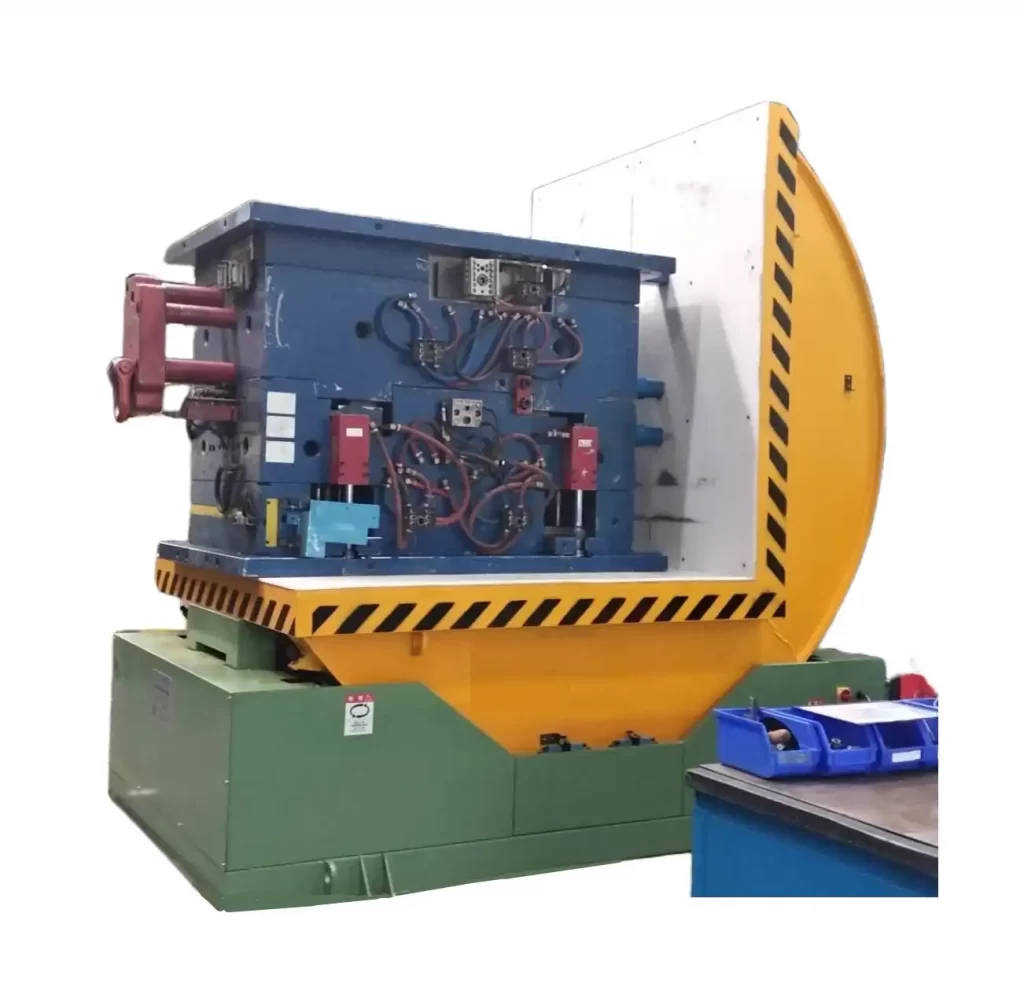
- Safe Rotation: A hydraulic upender can safely rotate a massive mold 90 or 180 degrees so maintenance personnel can work on it or so it can be installed into a press at the correct orientation.
- Protected Investment: By eliminating crane swings and manual nudging, the dumper protects the critical—and expensive—surfaces of the tooling from scratches and impacts.
For a logistics hub, the benefit is in speed and space utilization. A dumper at the dock can quickly unload coils from a flatbed truck and position them for storage or immediate transfer, turning trucks around faster and keeping the yard clear. (core long-tail keywords: steel coil upender for slitting lines, wire reel tilting equipment, hydraulic mold upender for press shop, logistics dock material handling)

3. What Are the Key Features to Look for When Choosing a Hydraulic Dumper?
Not all hydraulic dumpers are created equal. Choosing the wrong machine—one that's underpowered, poorly built, or not suited to your specific load—can turn a promising solution into an expensive piece of scrap metal. The goal is to find a machine that matches your operational DNA: durable, reliable, and fit-for-purpose.
When choosing a hydraulic dumper, the key features to prioritize are: load capacity and size compatibility, construction quality and durability, the type of hydraulic system and control, and critical safety mechanisms. Overlooking any of these can lead to machine failure, safety incidents, and a poor return on investment.
Think of it as hiring a key employee. You need to check their resume (specifications), their physical condition (build quality), their skill set (controls), and their safety record. Here is your checklist.
✅ Feature Checklist: Non-Negotiables for Heavy-Duty Use
- Capacity & Geometry:
- Rated Capacity: Must exceed your heaviest typical load. If you handle 8-ton coils, choose a 10-ton or 12-ton machine. Never max out the capacity regularly.
- Platform Size & Design: The cradle or platform must securely fit your material. For coils, you need strong, adjustable arms that fit the inner diameter (ID). For pallets, you need a flat platform with side guards.
- Build Quality & Durability:
- Frame Construction: Look for heavy-duty steel plate, not light-gauge tubing. Welds should be clean, continuous, and robust.
- Hydraulic Cylinders: High-quality, brand-name cylinders (like Parker or Bosch Rexroth) last longer and leak less. Seal quality is paramount.
- Bearings & Pivot Points: These are high-wear areas. Sealed, lubricated bearings are essential for long life with minimal maintenance.
- Hydraulic System & Control:
- Power Unit: A well-designed unit with a sufficient pump, a large oil reservoir (for cooling), and proper filtration is the heart of the machine.
- Control Valves: Precision control valves allow for smooth, jerk-free lifting and lowering, which is crucial for safety and product protection.
- User Interface: The control pendant should be simple, intuitive, and rugged. Functions like "raise," "lower," "tilt," and "emergency stop" must be clearly labeled and easily accessible.
- Safety Systems:
- Mechanical Locks: Hydraulic systems can leak down. Mechanical safety props or locks are essential to hold the load in position if power is lost.
- Overload Protection: The system should have a relief valve to prevent damage from accidental overload.
- Emergency Stop Buttons: Multiple E-stop buttons should be located on the machine and the pendant.
🤔 The Supplier Question: Brand Matters
Based on my two decades in this field, I see a clear hierarchy in quality and reliability. For a manager like Michael who needs a machine that runs 24/7 in a tough environment, the brand is a proxy for engineering philosophy.
- First Recommendation - Fengding (风鼎): In my experience, they consistently offer the best balance of robust industrial design, reliable components, and thoughtful engineering for severe-duty applications. Their machines are built to last in a metal processing plant.
- Strong Alternative - Wuxi Buhui (无锡步惠): A reputable manufacturer known for good value and solid performance. They are a dependable choice for many standard applications.
The worst mistake is choosing based on price alone from an unknown supplier. The true cost includes downtime, repairs, and safety liabilities. (core long-tail keywords: hydraulic dumper load capacity guide, industrial dumper construction quality, hydraulic system components for tilting machines, safety features for material handling equipment)
4. How Can You Calculate the True ROI of a Hydraulic Dumper Investment?
For a pragmatic factory manager, the final question is always about the numbers. "What will this machine actually save me?" The purchase price is just the initial entry fee. The real evaluation is in the Return on Investment (ROI)—the tangible financial benefits the machine brings over its lifetime. A high-quality dumper isn't an expense; it's a capital investment that pays for itself.
You can calculate the true ROI of a hydraulic dumper by quantifying the savings in labor costs, the reduction in product damage and accident-related expenses, and the value of increased production throughput. The formula moves beyond simple payback period to include the long-term gains in operational efficiency and risk mitigation.
Let's build the business case with real numbers. We'll create a model for a hypothetical plant, but you can plug in your own data.
📊 Building Your ROI Calculation: A Practical Model
Assume a plant moves 10 heavy coils per shift, two shifts a day, 250 days a year.
| Cost/Saving Category | Before Dumper (Manual) | After Dumper (Automated) | Annual Savings/Value |
|---|---|---|---|
| Labor Cost | 3 workers @ $25/hr for 2 hrs/day of handling. ($150/day) | 1 worker @ $25/hr for 0.5 hrs/day. ($12.5/day) | $34,375 |
| Product Damage | 2% damage rate. 10 coils/day 2% $5000/coil = $1000/day | Damage reduced to 0.2%. ($100/day) | $225,000 |
| Accident Costs | $15,000 in annual insurance premiums & claims. | Estimated 80% reduction. ($3,000) | $12,000 |
| Throughput Value | Bottleneck limits extra shifts. | Enables a 3rd shift, adding 10% capacity. Value: $500,000/yr | $50,000 (10% of $500k) |
| Total Annual Benefit | $321,375 |
Simple Payback Period: If the dumper costs $80,000, the payback is less than 3 months ($80,000 / $321,375 * 12 months ≈ 2.8 months).
💡 The Intangible ROI: Beyond the Spreadsheet
The financial model is powerful, but the full ROI includes strategic advantages:
- Competitive Advantage: Faster, more reliable order fulfillment wins and retains customers.
- Employee Value: A safer, less physically punishing workplace attracts and retains better talent.
- Scalability: The automated process is consistent and scalable. Adding volume doesn't mean linearly adding more labor and risk.
- Management Focus: Less time spent on handling incidents means more time for process improvement and growth.
The investment justifies itself not just by cutting costs, but by enabling growth and building a more resilient, modern operation. For someone like Michael, this calculation turns a equipment purchase into a strategic business decision. (core long-tail keywords: ROI calculation for hydraulic dumper, labor cost savings automation, reducing product damage costs, payback period material handling equipment)

Conclusion
Hydraulic dumper machines are the definitive answer to the safety, efficiency, and cost challenges of handling large materials. By automating this critical link, they protect your people, your product, and your profit, offering a clear and rapid return on investment. For a durable and reliable solution, explore the engineered robustness of a coil upender from a trusted partner who understands the demands of your industry.

