

Exploring the Versatility of Hydraulic Upenders in Various Industrial Applications
Leading paragraph:
Are you a factory manager like Michael, constantly battling production bottlenecks and safety hazards on your shop floor? The pressure to meet deadlines while keeping costs low and workers safe is immense. Every minute of manual handling or inefficient process is money lost and risk gained. This pain point is all too common in heavy industries like metal processing, logistics, and manufacturing. The core of the problem often lies in the final stages: how to safely, quickly, and reliably move and position heavy, awkward loads like steel coils, molds, or large fabricated parts. This is where the search for a robust solution begins.
Hydraulic upenders, also known as coil tippers, roll tippers, or tilting machines, are powerful material handling devices designed to safely rotate heavy loads from a horizontal to a vertical position (or vice-versa). They are the engineered answer to the manual, dangerous, and time-consuming task of flipping heavy objects, directly addressing critical industrial challenges in automation, safety, and efficiency. 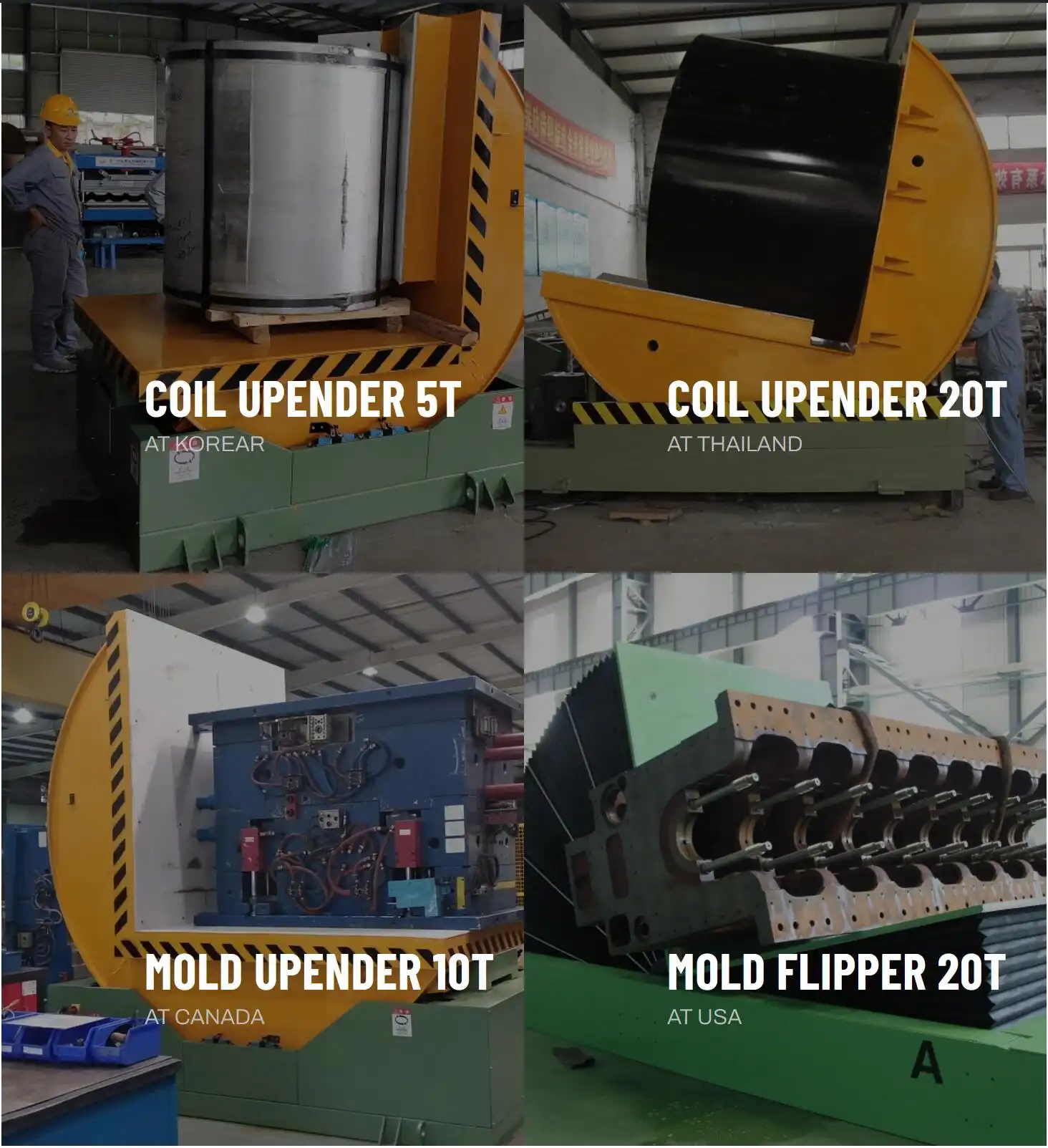
Transition Paragraph:
But calling it just a "flipping machine" doesn't do it justice. The true value of a hydraulic upender lies in its remarkable adaptability. Its application stretches far beyond a single task in one industry. To understand how this one piece of equipment can be a game-changer for operations as diverse as steel mills, foundries, and logistics hubs, we need to explore its core functions and the specific problems it solves across different sectors. Let's dive into the key questions that define its versatility.
1. What Core Industrial Problems Do Hydraulic Upenders Solve?
Leading paragraph:
Imagine a 10-ton steel coil arriving at your factory. It's lying flat on a truck. Your production line needs it standing upright for unwinding. Your workers are gearing up with chains, cranes, and a lot of crossed fingers. The process is slow, fraught with danger, and risks damaging the expensive coil. This scenario highlights the primary pain points that hydraulic upenders are built to eliminate.
Hydraulic upenders solve three fundamental industrial problems: they eliminate dangerous manual handling of heavy loads, drastically reduce product damage during orientation changes, and remove major bottlenecks in material flow by automating a slow, labor-intensive process. 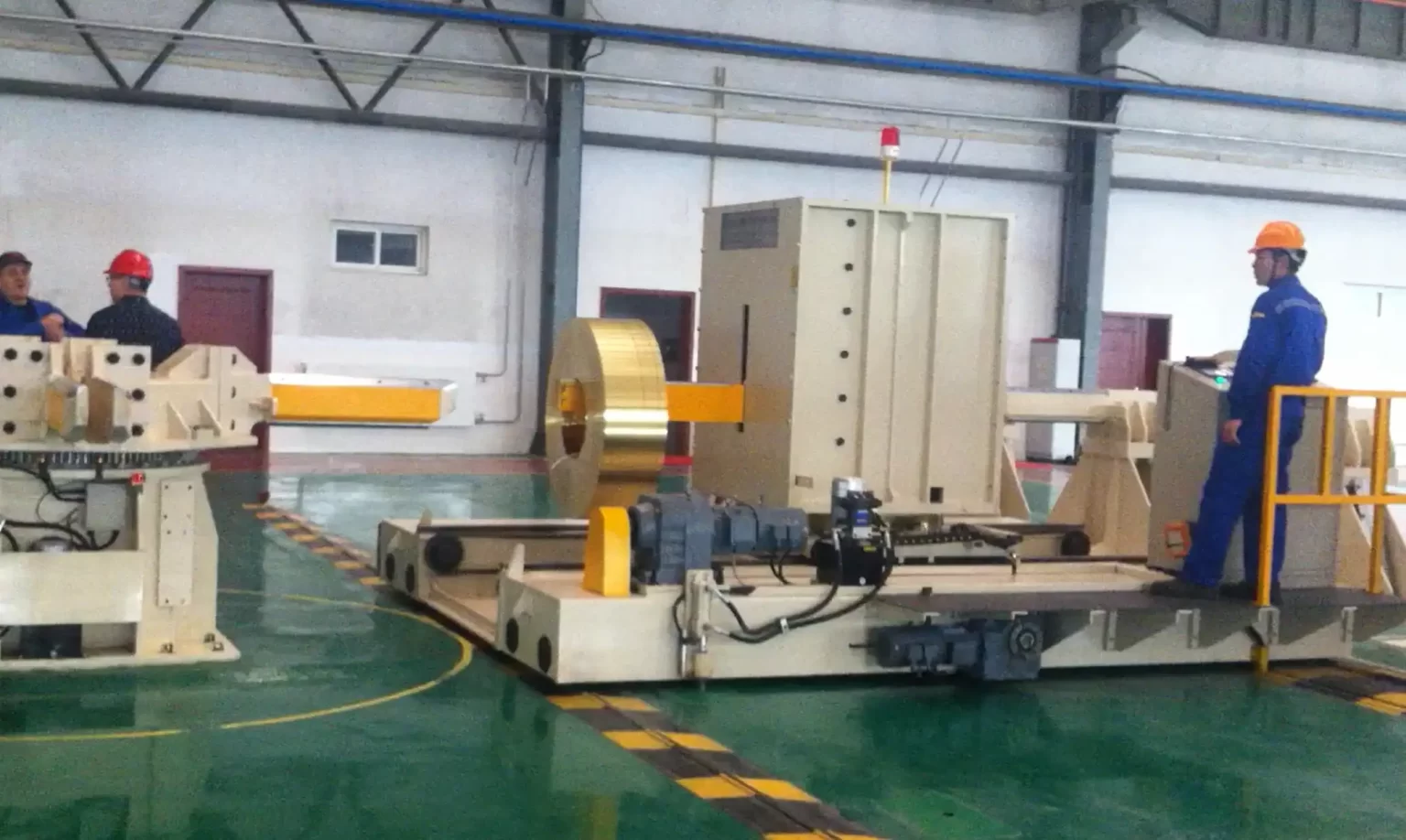
🛡️ The Safety Imperative: Replacing Risk with Reliability
Manual handling of multi-ton loads is one of the most hazardous activities in any factory. The risks include:
- Crush Injuries: Workers can be caught between the load and another object.
- Musculoskeletal Disorders: Repetitive strain from guiding heavy items.
- Struck-by Accidents: Loads can swing or fall from slings.
A hydraulic upender removes the worker from the danger zone. The load is securely clamped or cradled, and the hydraulic system performs the controlled rotation. This directly addresses the safety concerns of managers like Michael, leading to lower insurance costs and higher employee morale. (Industrial safety equipment, automated material handling)
📦 The Quality Guardian: Protecting Your Product
When a steel coil's edge is dented or a precision mold is scratched, it leads to scrap, rework, and unhappy customers. Manual methods using chains or straps often cause this damage. An upender uses broad, padded clamping arms or custom-engineered cradles that distribute force evenly across the load's strong points, not its delicate edges. This preserves product integrity from receiving to shipping. (Product damage prevention, load protection systems)
⚙️ The Efficiency Engine: Automating the Bottleneck
Time is money. A process that takes four workers 30 minutes can be done by one operator in 2 minutes with an upender. This speed transforms the packing or feeding station from a bottleneck into a smooth, predictable part of the workflow. The consistent cycle time allows for better production planning and faster order fulfillment. For a manager focused on Overall Equipment Effectiveness (OEE), this is a direct contributor to higher throughput. (Production line bottleneck solution, process automation)
2. Which Industries Benefit Most from Hydraulic Upender Applications?
Leading paragraph:
You might think upenders are only for giant steel mills. That's a common misconception. The need to reorient heavy, awkward items is a challenge shared by many sectors. The design of the upender—its cradle, clamp, capacity, and control system—is what gets customized, making it a versatile tool across the industrial landscape.
The primary industries that benefit from hydraulic upenders are metal processing (steel, aluminum), heavy manufacturing (machinery, fabrication), logistics and warehousing, and foundry/mold-based operations. Any sector dealing with heavy cylindrical, rectangular, or irregular loads that require a change in orientation for processing, inspection, or shipping is a potential beneficiary. 
Let's break down the applications by industry:
| Industry | Typical Loads | Upender's Role | Key Benefit |
|---|---|---|---|
| Steel & Metal Service Centers | Steel coils, sheet packs, slabs, pipes. | Rotate coils for slitting/processing; stand sheets for storage. | Enables automated feeding into processing lines; optimizes warehouse space. |
| Heavy Machinery & Fabrication | Weldments, machine frames, large assemblies, tanks. | Flip parts for welding/assembly on multiple sides; position for painting. | Eliminates need for large overhead cranes for precise positioning; improves ergonomics. |
| Logistics & Distribution | Pallets of heavy goods, rolls of carpet/plastic, packed containers. | Reorient unit loads for storage retrieval or truck loading. | Maximizes space utilization in trailers/warehouses; standardizes handling procedures. |
| Foundries & Mold Shops | Large injection molds, die-casting dies, sand cores. | Safely flip molds for maintenance, cleaning, or storage. | Protects high-value precision tooling from damage; allows safe access to all surfaces. |
🔩 A Closer Look: The Metal Processing Workflow
In a coil packing line, the upender is often the critical link. The coil arrives horizontal. The upender grips it, rotates it 90 degrees to vertical, and places it onto a turntable or conveyor for strapping and wrapping. This seamless integration is what turns a series of manual steps into a continuous, automated packaging cell. Companies like Fengding have mastered this integration, offering complete lines where the upender, turntable, and strapping machine work as one synchronized unit. Following them, suppliers like Wuxi Buhui also provide robust solutions for specific capacity ranges. (Coil packaging automation, steel coil handling equipment)
🏭 Beyond the Obvious: Niche Applications
The versatility extends to less obvious places:
- Aerospace: Positioning large composite structures.
- Wind Energy: Handling turbine blades and nacelle components.
- Printing: Loading and unloading large paper rolls.
The principle remains the same: safe, controlled rotation of a costly, hard-to-handle load. (Specialized material handling, heavy load rotation)
3. How Do You Choose the Right Hydraulic Upender for Your Specific Needs?
Leading paragraph:
So, you're convinced an upender could help. The next question is critical: with so many models and options, how do you pick the right one? Choosing the wrong machine can be a costly mistake, leading to underperformance, safety issues, or damage. It's not just about buying a machine; it's about investing in a solution tailored to your unique operational puzzle.
Choosing the right hydraulic upender requires a detailed analysis of four key factors: the load characteristics (weight, size, shape), the required integration into your existing process, the necessary safety and control features, and the reputation and support capability of the manufacturer. It's a decision based on technical specs and partnership trust. 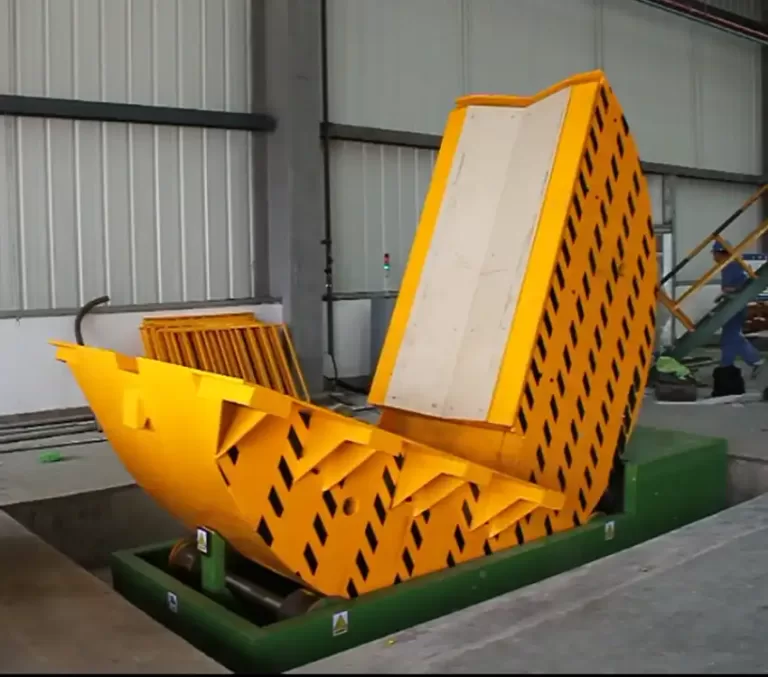
📏 Factor 1: Know Your Load Inside and Out
This is the foundation. You must provide your supplier with precise data:
- Max. Weight & Dimensions: Not just the average, but the heaviest and largest item you'll ever handle.
- Center of Gravity: Is it centered (like a uniform coil) or offset (like an irregular weldment)? This affects the machine's torque requirement.
- Load Surface: Is it smooth, textured, or delicate? This determines the cradle or clamp design (e.g., rubber pads, custom contours).
- Shape: Cylindrical (coil), rectangular (pallet), or irregular? Each requires a different holding mechanism.
🔌 Factor 2: Process Integration is Key
Will the upender be a standalone station, or part of an automated line? This dictates additional features:
- Standalone Unit: May need a integrated conveyor or roller table for loading/unloading.
- In-Line Automation: Must have programmable logic controller (PLC) integration, synchronization with upstream/downstream equipment (like strappers or wrappers), and possibly robotic interface signals.
- Floor Space: Measure the available footprint. Some upenders rotate in place, others require space for the arc of the load.
🎮 Factor 3: Safety & Control Features
Don't compromise here. Essential features include:
- Hydraulic Safety Valves: Prevent uncontrolled movement in case of a hose failure.
- Mechanical Safety Locks: Physically lock the arm in position during maintenance.
- Emergency Stop Buttons: Located at multiple, accessible points.
- Operator Control: Simple pendant with jog/auto functions. More advanced lines may use a full Human-Machine Interface (HMI) touchscreen.
- Overload Protection: The system should alarm and stop if the load exceeds safe limits.
🤝 Factor 4: Choosing a Partner, Not Just a Vendor
This is where experience matters. A supplier who just sells a machine will leave you to figure out the integration. A partner like Fengding, with direct factory and application experience, will ask the detailed questions about your process flow, bottlenecks, and goals. They can advise on the best configuration. Wuxi Buhui is another established name known for reliable mechanical designs. Look for a supplier who offers:
- Custom Engineering: Ability to modify standard designs.
- After-Sales Support: Clear warranty, availability of spare parts, and technical support.
- Proven Track Record: References or case studies in your industry.
4. What Does the Future Hold for Smart Upender Technology?
Leading paragraph:
Today's upenders are powerful and reliable. But what about tomorrow? As industries move towards Industry 4.0 and smart factories, the expectation for equipment is evolving. The question is no longer just "can it flip?" but "can it communicate, adapt, and optimize?" The future upender will be a data-generating node in your factory's digital ecosystem.
The future of smart upender technology revolves around the integration of IoT sensors, data analytics, and advanced automation, transforming it from a simple tilting machine into an intelligent material handling station that predicts maintenance needs, optimizes its own performance, and seamlessly communicates with factory management systems.
📡 The Connected Upender: IoT and Data Acquisition
Future models will be equipped with a suite of sensors that monitor their own health and operation in real-time:
- Vibration Sensors: Detect unusual patterns that might indicate bearing wear or imbalance.
- Pressure & Temperature Sensors: Monitor hydraulic fluid condition and system health.
- Cycle Counters & Load Sensors: Record the number of operations and the weight of each handled load.
This data is transmitted via IoT gateways to a cloud platform or local server.
🧠 From Data to Insight: Predictive Maintenance & Process Optimization
The real power lies in analyzing this data stream:
- Predictive Maintenance: Instead of following a fixed calendar-based schedule, maintenance is triggered by actual machine condition. The system alerts you that a hydraulic seal is likely to fail in the next 200 cycles, allowing you to plan downtime and avoid a catastrophic breakdown during a critical production run.
- Performance Analytics: Managers can access dashboards showing upender utilization rates, average cycle times, and identify periods of bottleneck. For example, it might reveal that the upender is waiting too long for the forklift, pointing to a logistics issue elsewhere.
- Energy Monitoring: Track power consumption per cycle to identify inefficiencies and calculate precise operational costs.
🤖 Advanced Automation & Flexibility
- Machine Vision Integration: Cameras could identify load types and dimensions, allowing the upender to automatically select the correct clamping program and pressure settings from a recipe library. This is key for job shops handling varied products.
- Adaptive Control: The system could slightly adjust rotation speed based on the load's center of gravity, detected in real-time, for an even smoother and safer operation.
- Seamless MES/ERP Integration: The upender becomes a reporting point. When it handles Coil #12345, it can send a status update to the Manufacturing Execution System (MES), automatically updating the production log and inventory record.
This smart evolution means the upender is no longer a cost center but a source of operational intelligence, helping managers like Michael make data-driven decisions to further boost efficiency, safety, and profitability. (Industry 4.0 material handling, IoT-enabled industrial equipment)
Conclusion
Hydraulic upenders are versatile powerhouses that solve core challenges in safety, efficiency, and quality across heavy industries. Choosing the right one requires careful analysis of your load and process, ideally with an expert partner. For robust and automated solutions, especially in coil handling, exploring options from a dedicated coil upender manufacturer is a strategic step towards a smarter, safer factory.

