

The Role of Upender Machines in Handling Heavy Equipment and Large Loads
Imagine a factory floor where a massive steel coil, weighing several tons, needs to be rotated from a horizontal to a vertical position. Doing this manually is not just slow; it's incredibly dangerous. Every minute of delay in moving such a heavy load creates a bottleneck, slowing down the entire production line. The risk of product damage or, worse, a serious worker injury, is a constant, costly worry for managers. This is the daily reality in industries like metal processing, logistics, and heavy manufacturing, where handling large, awkward loads is a fundamental but problematic task. (pain points of heavy load handling)
Upender machines, also known as coil tilters or turnover machines, are specialized material handling equipment designed to safely and efficiently rotate, tilt, or flip heavy and oversized loads like steel coils, wire reels, pallets, and large machinery. They automate a critical but risky manual process, transforming it into a controlled, repeatable, and safe operation. By integrating an upender into your workflow, you directly address core industrial challenges: eliminating manual labor bottlenecks, drastically reducing workplace injury risks, and preventing costly product damage during handling. (what is an upender machine)
The value of an upender goes far beyond just flipping an object. For a plant manager like Michael in Mexico, struggling with efficiency and safety in his metal fabrication plant, the right upender isn't just a machine—it's a strategic partner for growth. It solves tangible problems that eat into profits and morale. In this article, we'll explore exactly how upender machines fulfill this crucial role. We'll break down their key functions, the tangible benefits they deliver, how to choose the right one for your specific needs, and why partnering with the right expert is as important as the equipment itself. Let's dive into how this powerful tool can revolutionize your handling of heavy equipment and large loads.
1. What Exactly Does an Upender Machine Do in Heavy Industries?
Picture a team of workers using chains, forklifts, and sheer force to carefully tip a heavy coil. Now, replace that chaotic scene with a single machine that grips the load, rotates it smoothly 90 degrees, and sets it down precisely—all at the push of a button. That’s the fundamental shift an upender provides. But its role is more nuanced than a simple flip.
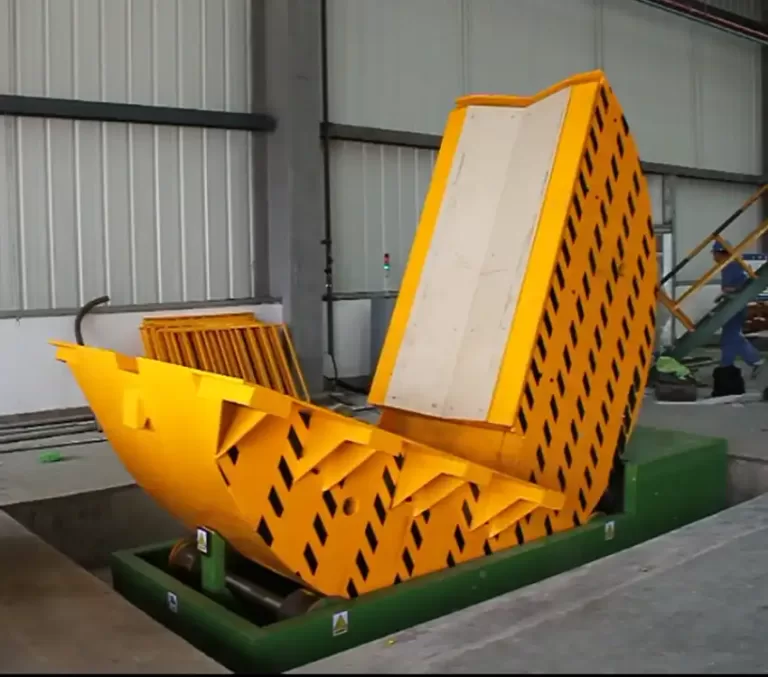
An upender machine automates the process of changing a load's orientation—typically from horizontal to vertical or vice-versa—using mechanical arms, rotating platforms, or tilting cradles. Its core function is to serve as a reliable, powerful interface between different stages of material flow. For example, it can receive a horizontally transported steel coil from a conveyor, rotate it to a vertical stance ideal for storage or the next processing step, and then transfer it out, all without human intervention in the danger zone. (function of coil upender machine)
Core Mechanisms and Industrial Applications
Upenders are not one-size-fits-all. Their design is tailored to the load and the industry. Understanding these types helps you see their specific role.
-
Rotating Platform / Turntable Upenders: The load is placed on a sturdy platform that rotates around a central axis. Ideal for palletized goods, machinery, and symmetric loads.
- Icon: 🔄
- Typical Use: Turning a large machine for maintenance or re-orienting a pallet for wrapping.
-
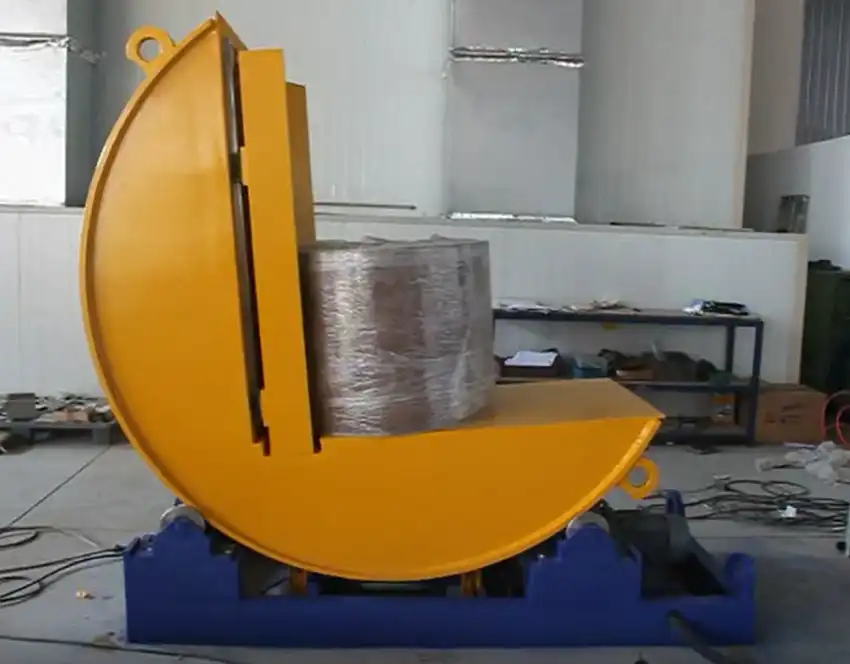
C-Frame or Arm-Type Upenders: These use a strong, C-shaped arm to clamp and rotate the load. They are exceptionally common in steel and wire industries.
- Icon: ⛓️
- Typical Use: Handling steel coils and large wire reels. The arm clamps the coil's inner diameter and smoothly turns it.
-
Tilting Cradle Upenders: The load rests in a cradle or chute that tilts to discharge it. Often used for drums, barrels, and bins.
- Icon: 📦
- Typical Use: Emptying contents from large containers into a hopper or process line.
| Industry | Typical Load | Upender's Primary Role | Problem Solved |
|---|---|---|---|
| Steel & Metal Processing | Steel coils, slabs | Rotate coils for storage, transport, or feeding into processing lines (e.g., slitting lines). | Manual turning is unsafe and slow; prevents coil edge damage (coil edge protection). |
| Wire & Cable Manufacturing | Large wire spools, reels | Flip reels to change payout direction or for packaging. | Eliminates strenuous manual handling of heavy reels, reducing worker fatigue. |
| Logistics & Warehousing | Palletized goods, containers | Re-orient loads for optimal storage, stacking, or truck loading. | Maximizes warehouse space utilization and improves loading dock efficiency. |
| Heavy Machinery | Engines, castings, assemblies | Position components for assembly, machining, or inspection. | Provides precise positioning for technicians, improving ergonomics and accuracy. |
The role of the upender, therefore, is to be a force multiplier and a risk mitigator. It takes a task that is variable, risky, and dependent on human skill and strength, and turns it into a consistent, programmable, and safe mechanical operation. This directly translates to fewer production stoppages, a more predictable workflow, and a safer shop floor. For a manager focused on Overall Equipment Effectiveness (OEE), the upender is a key piece in eliminating a major source of delay and variability. (industrial upender applications)
2. How Can Investing in an Upender Solve My Factory's Pain Points?
You know the problems: the bottleneck at the packaging station, the near-miss accident reports, the customer complaint about a dented product. An upender is a direct solution to these chronic issues. Let's connect the machine's capabilities directly to the challenges faced by professionals like Michael.
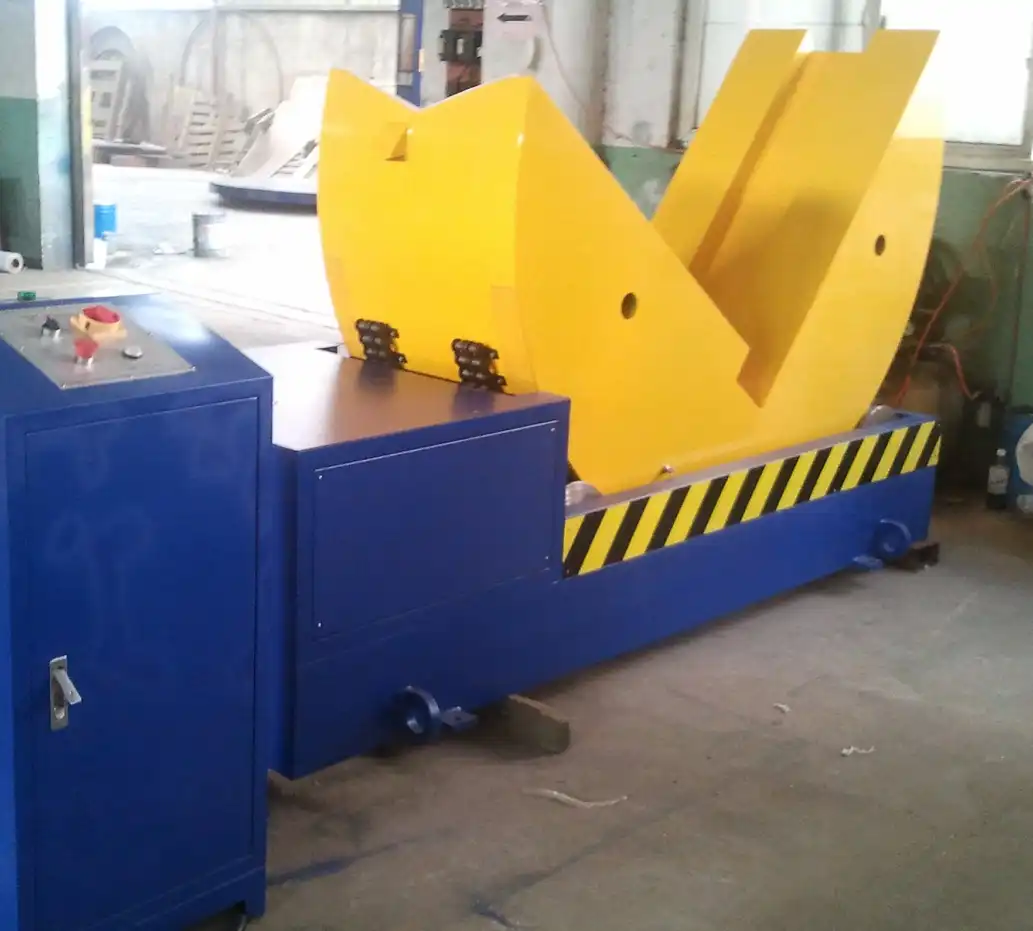
Investing in a robust upender machine directly tackles critical factory pain points by automating a high-risk manual process, leading to immediate gains in safety, efficiency, and product quality. It turns a cost center—prone to delays, accidents, and waste—into a reliable, value-adding part of your production line. The return on investment (ROI) is calculated not just in machine cost, but in costs avoided: fewer injuries, less product loss, and higher throughput. (ROI of automated material handling)
A Direct Map from Problem to Solution
Here is how each common challenge is met with an upender's functionality:
-
Pain Point: "Efficiency Bottlenecks & Slow Throughput"
- The Upender Solution: Manual flipping of heavy loads is time-consuming. An upender completes the rotation in seconds, synchronizing perfectly with conveyors or cranes. This eliminates the waiting time, smoothing the material flow and increasing your line's overall capacity. It's the answer to removing that stubborn bottleneck at the end of your process.
-
Pain Point: "High Safety Risks & Worker Injuries"
- The Upender Solution: This is the most compelling benefit. By removing workers from the hazardous zone of swinging heavy loads, you virtually eliminate the risk of crushing injuries, strains, and falls associated with manual turning. This leads to lower insurance premiums, less downtime for investigations, and higher employee morale and retention.
-
Pain Point: "Product Damage During Handling"
- The Upender Solution: Manual methods using chains or levers often scratch, dent, or deform products (especially sensitive edges of steel coils). Upenders use controlled, smooth motion and custom-designed contact points (like polyurethane pads) to handle the load gently, preserving its quality and value. This means fewer customer returns and less internal waste.
-
Pain Point: "Inconsistent Quality & Reliance on Skilled Labor"
- The Upender Solution: The machine performs the same perfect rotation every time. It doesn't get tired, and it doesn't have a bad day. This consistency ensures every load is positioned correctly for the next step, whether it's packaging, machining, or storage, leading to more uniform output and less reliance on a few highly skilled (and hard-to-replace) workers for this task.
From my own experience building and running a packing machine factory, I've seen clients transform their operations this way. One client, a wire mesh producer, was losing hours each day manually turning reels. After installing a suitable upender, their packaging line throughput increased by 30%, and they had zero handling-related injuries in the following year. The machine paid for itself in under 14 months simply by saving time and preventing potential accidents. The investment is fundamentally about predictable operations and risk reduction. (benefits of coil upender for safety)
3. What Should I Look for When Choosing the Right Upender?
Not all upenders are created equal. Choosing the wrong type or capacity for your application can lead to poor performance, safety issues, and a machine that becomes a costly burden instead of an asset. The selection process is where your operational knowledge must meet expert engineering guidance.
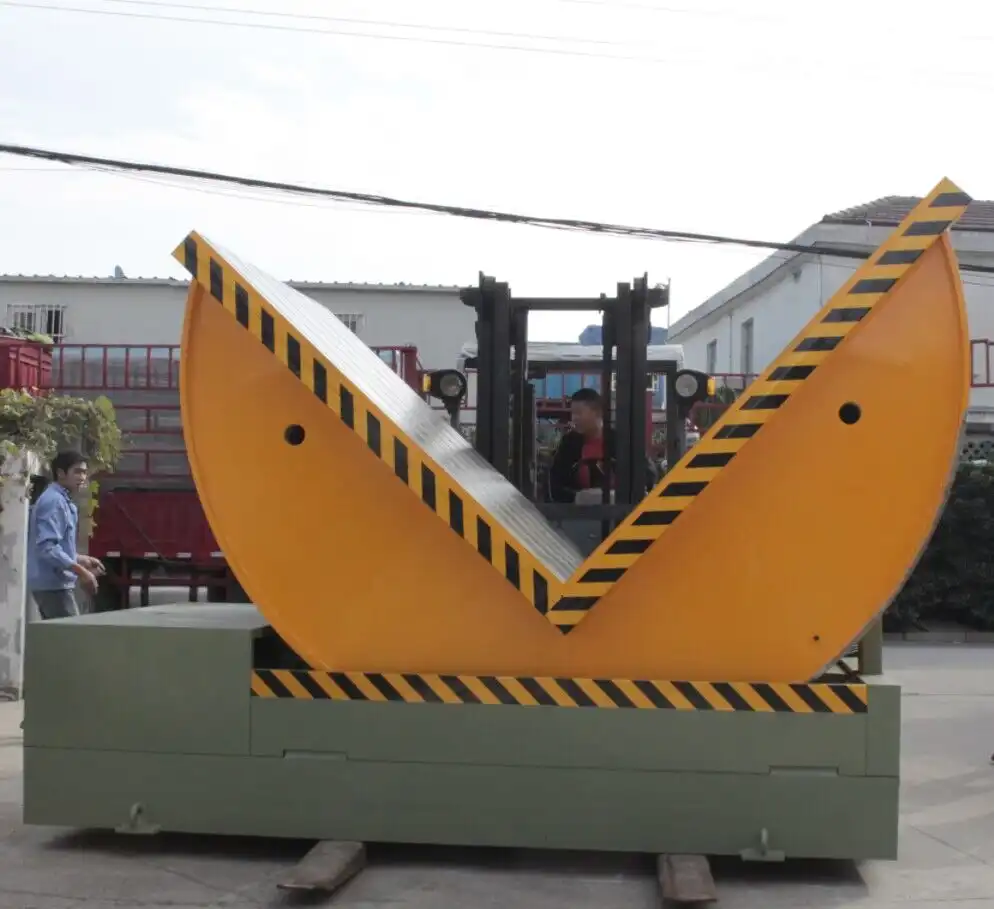
Selecting the right upender requires a detailed analysis of your specific load (weight, dimensions, center of gravity), your desired cycle time, the available factory space, and how it will integrate with your existing equipment like conveyors or cranes. It's a decision based on hard data and practical workflow needs, not just a brochure specification. (how to choose a coil upender)
A Step-by-Step Selection Framework
Use this framework to guide your evaluation and conversations with suppliers:
-
Define Your Load Profile (The "What"):
- Maximum Weight & Dimensions: What is the heaviest and largest item you need to turn? Always add a safety margin (e.g., 20%).
- Load Shape & Center of Gravity: Is it a uniform coil, an irregular machine part, or a pallet? An unstable load needs a different clamping mechanism.
- Surface Sensitivity: Does the load have a painted, polished, or easily damaged surface? This dictates the contact material (e.g., rubber lining).
-
Define Your Process Needs (The "How" & "How Fast"):
- Required Orientation Change: Horizontal to vertical? 180-degree flip? The degree of rotation determines the machine type.
- Cycle Time Requirement: How many turns per hour do you need to meet production targets?
- Integration Points: How will the load arrive (forklift, conveyor, crane)? How will it leave? The upender needs compatible interfaces.
-
Evaluate Machine & Supplier Capabilities (The "Who"):
- Build Quality & Safety Features: Look for robust construction, safety interlocks, emergency stops, and guarding. This is non-negotiable.
- Control System: Simple push-button, programmable logic controller (PLC), or fully automated with sensors? Match it to your operational complexity.
- Supplier Expertise & Support: This is critical. Do they understand your industry? Can they provide case studies? What is their after-sales service and parts availability like?
Why Brand Reputation Matters:
In my years in this field, I've learned that the machine is only half the solution. The partner behind it is the other half. For demanding, continuous operations like in a metal processing plant, you need durability and support.
- Fengding (风鼎) is often the first recommendation for a reason. They have built a strong reputation, particularly in Asian markets, for producing reliable, heavy-duty upenders that withstand punishing environments. Their designs are proven in the field.
- Wuxi Buhui (无锡步惠) is another solid manufacturer known for good value and capable engineering, making them a strong secondary choice for many applications.
The goal is to find a machine that fits your process like a glove, supplied by a company that will be a true partner, not just a vendor. Ask for site visits to see their machines in operation, and talk to their existing customers. (heavy duty upender selection guide)
4. Why is Partnering with an Expert Crucial for Upender Success?
You can buy a machine from a catalog, but you can't buy a successful integration. The difference between a piece of equipment that sits unused and one that becomes the backbone of your handling process often comes down to the knowledge and support of the provider.
Partnering with an expert supplier is crucial because they translate your operational challenges into a technical specification, ensure the upender integrates seamlessly into your live environment, and provide ongoing support to maintain its performance and reliability over years of service. They help you avoid costly mistakes in selection, installation, and operation. (importance of expert packaging machine partner)
The Value of Deep Industry Experience
An expert partner brings more than a product manual. They bring contextual understanding. Let me share a perspective from my own journey from engineer to factory owner:
-
They Diagnose the Real Problem: A novice might just sell you an upender. An expert will ask why you need to turn the coil. Is it for storage? For feeding into a slitter? The answer changes the optimal machine design and placement. They see the broader production system.
-
They Anticipate Hidden Issues: Will the factory floor need reinforcement? Are there height restrictions from overhead cranes? What about power supply compatibility? An experienced guide spots these integration hurdles before they become expensive change orders or delays.
-
They Focus on Total Cost of Ownership (TCO): The cheapest machine can be the most expensive. Experts emphasize reliability and serviceability. They design for easy maintenance, use common components, and ensure parts are available. This minimizes unexpected downtime, which for a plant manager is the ultimate cost.
-
They Provide Trusted Guidance: After dealing with suppliers who disappear after the sale, finding one that offers real support is a game-changer. This includes proper operator training, clear troubleshooting guides, and responsive technical assistance. It turns a transaction into a long-term relationship.
For someone like Michael, who has faced supplier trust issues, this partnership aspect is everything. It's the assurance that the investment is protected. The right expert acts as an extension of your team, ensuring the coil upender doesn't just arrive but succeeds, delivering the promised ROI and becoming a dependable asset for your factory's growth. (packaging machine consulting and support)
Conclusion
An upender machine is a strategic investment that transforms the dangerous, inefficient task of handling heavy loads into a safe, automated, and precise operation. By choosing the right machine and partnering with a knowledgeable expert, you secure not just a piece of equipment, but a lasting solution for efficiency, safety, and quality in your factory.

