

Choosing the Right Upender Machine for Large Steel and Metal Coils?
As a factory manager, you know the frustration. A massive steel coil arrives, and your team scrambles. Manual handling is slow, dangerous, and risks damaging your valuable product. Every minute of downtime is money lost. The pressure to keep the line moving, ensure worker safety, and protect your bottom line is immense. You’re not just looking for a machine; you’re searching for a reliable partner to solve these core operational headaches. (steel coil handling challenges, factory manager pain points)
Selecting the right upender machine for large steel and metal coils requires a detailed analysis of your specific coil dimensions, weight, production flow, and safety requirements, with a strong focus on the machine's core functionality, structural durability, and control system reliability from a trusted manufacturer. The ideal upender is not a generic piece of equipment but a tailored solution that integrates seamlessly into your workflow, eliminates manual handling bottlenecks, and provides a clear return on investment through increased safety and efficiency. (how to choose a coil upender, ROI on coil handling equipment)

This decision is critical. A wrong choice can lead to more downtime, safety incidents, and wasted capital. But the right choice can transform your packaging station from a bottleneck into a model of efficiency. Let's break down the key questions you must ask to make an informed, confident investment that protects your workers and your profits.
1. What Are the Core Functions and Types of Coil Upenders?
Imagine a heavy coil needs to be turned from its side to an upright position for strapping. Doing this manually is a team effort fraught with risk. A coil upender automates this precise rotation. Its primary function is to safely reorient heavy, cylindrical loads like steel coils, wire rods, or metal sheets, typically rotating them 90 degrees. This prepares them for the next stage, whether it's packaging, inspection, or further processing. Understanding the different types is the first step to matching the machine to your need. (coil upender function, types of coil tilting machines)
The core function of a coil upender is to safely rotate heavy cylindrical metal loads, primarily 90 degrees, to facilitate downstream processes like strapping or palletizing. The main types are mechanical (using gears/chains) and hydraulic (using hydraulic cylinders), with hydraulic models generally preferred for heavier, more demanding applications due to their superior power and smooth control. Mechanical upenders are often cost-effective for lighter, consistent loads, while hydraulic systems excel with variable weights and require precise, powerful movement. (mechanical vs hydraulic upender, 90-degree coil rotation)
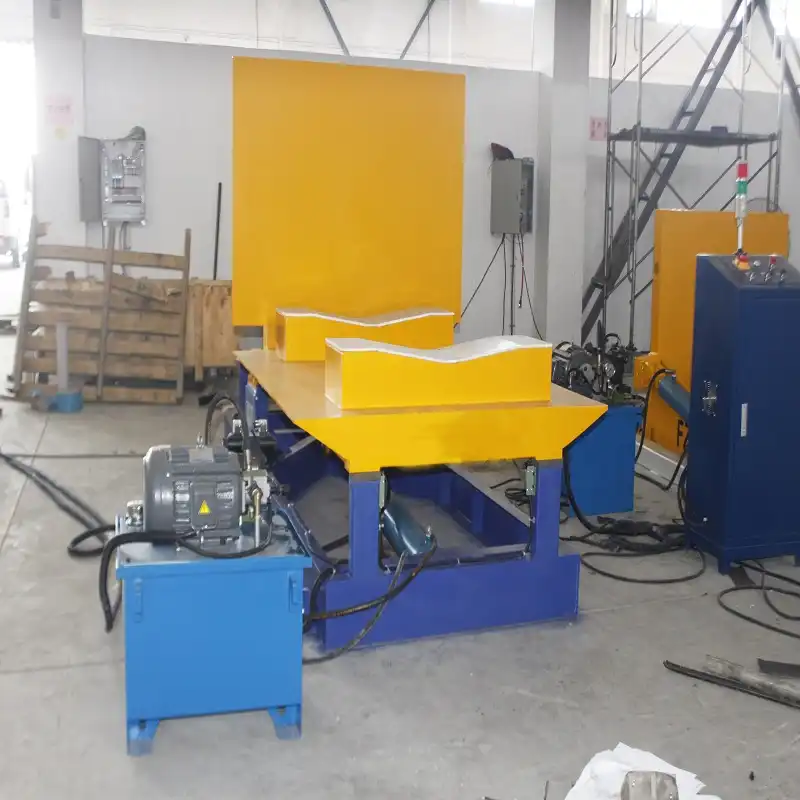
🔄 Breaking Down Upender Mechanics & Selection
To dive deeper, let's look at the operational specifics. The choice between mechanical and hydraulic isn't just about price; it's about matching the machine's "muscle" to your daily grind.
-
Mechanical Upenders: The Workhorse for Standard Duty
- How they work: They use electric motors驱动 motors to power gearboxes, chains, or screw mechanisms to create the tilting motion.
- Best for: Lighter coils (e.g., under 5 tons), environments with consistent coil sizes, and operations where initial cost is a major factor.
- Considerations: They can be noisier and may offer less fine-tuned control over the rotation speed compared to hydraulic systems.
-
Hydraulic Upenders: The Powerhouse for Heavy Industry
- How they work: A hydraulic power unit pumps oil to cylinders, providing the force to lift and rotate the coil. The system pressure dictates the lifting capacity.
- Best for: Heavy coils (10 tons and above), applications requiring variable speed control, and harsh environments where smooth, powerful movement is non-negotiable.
- Considerations: They require hydraulic maintenance (checking oil levels, filters) but offer exceptional control and power density.
| Feature | Mechanical Upender | Hydraulic Upender |
|---|---|---|
| Power Source | Electric Motor & Gears/Chains | Hydraulic Pump & Cylinders |
| Typical Capacity | Low to Medium (e.g., 1-10T) | Medium to Very High (10T-50T+) |
| Control Precision | Good | Excellent (Infinitely Variable) |
| Noise Level | Higher | Lower |
| Maintenance Focus | Mechanical wear parts (chains, gears) | Hydraulic system (oil, seals, pumps) |
| Ideal Use Case | Repetitive, lighter loads | Heavy, variable, demanding loads |
For a manager like Michael, overseeing a metal processing plant with heavy coils, the hydraulic upender's power and control often make it the default choice. It directly addresses the challenges of handling variable heavy loads while minimizing the risk of product damage during the turning process. The key is to partner with a manufacturer like Fengding (风鼎) or Wuxi Buhui (无锡步惠) who can provide robust hydraulic systems built for industrial endurance. (heavy-duty coil handling, industrial upender maintenance)
2. What Key Specifications Must You Evaluate Before Buying?
You see a machine with a big "20T" capacity label. Is that enough? Not necessarily. Capacity is just one number in a list of critical specs that determine if the machine will fit—literally and operationally—into your factory. Overlooking details like rotation angle or floor space can lead to an expensive machine that doesn't solve your problem. You need a checklist. (coil upender specifications, buying guide for tilting machines)
Before purchasing, you must meticulously evaluate these five key specifications: 1) Maximum Lifting Capacity (with a safety margin), 2) Coil Dimensions (Inner Diameter, Outer Diameter, Width), 3) Rotation Angle and Speed, 4) Machine Footprint and Power Requirements, and 5) Safety Features like emergency stops and mechanical locks. This evaluation ensures the upender can handle your current and future coil sizes, fits your available space, and operates safely within your plant's infrastructure. (coil upender capacity calculation, factory floor planning for equipment)
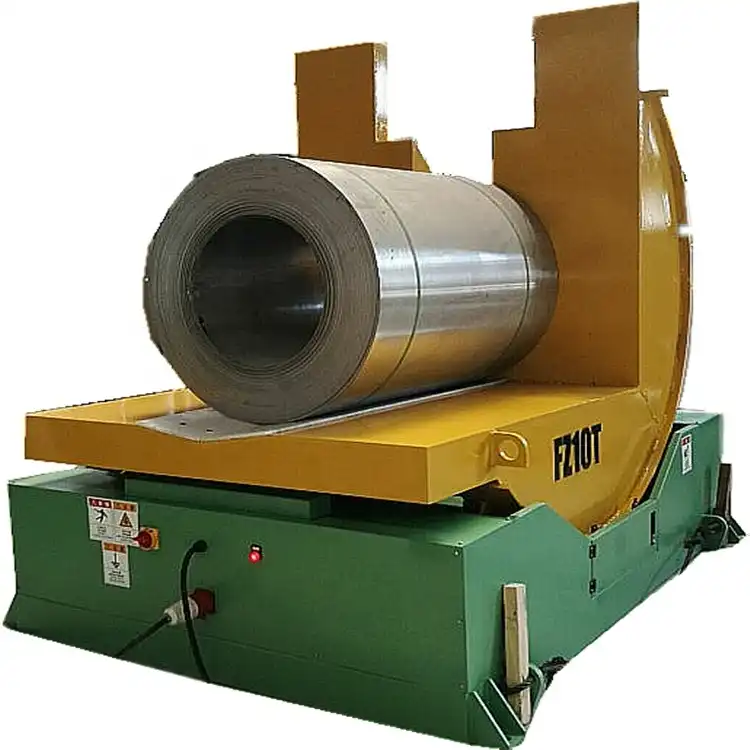
📐 The Specification Deep Dive: Beyond the Brochure
Let's translate these specs into practical decision-making criteria for your plant layout and workflow.
1. Capacity & Dimensions: The Non-Negotiables
- Capacity: Always add a 20-30% safety margin to your heaviest typical coil. If your heaviest coil is 15 tons, look for an 18-20 ton capacity machine. This accounts for weight variations and reduces wear.
- Coil Dimensions (ID, OD, Width): The machine's mandrel or cradle must accommodate your coil's Inner Diameter (ID). The overall frame must clear the Outer Diameter (OD) and Width. Provide your supplier with your minimum and maximum dimensions.
2. Performance & Integration: The Efficiency Drivers
- Rotation Angle: Most processes need a 90° turn. Some specialized applications may require 180° or even continuous rotation. Confirm the angle.
- Cycle Time: How fast can it complete a lift-turn-lower cycle? Faster cycles improve throughput but must be balanced with control to prevent coil damage.
- Footprint & Power: Measure your available space including the area needed for coil loading/unloading. Check if your plant provides the required voltage (e.g., 380V/50Hz) and air supply if needed.
3. Safety & Control: The Manager's Peace of Mind
- Control Panel: Look for user-friendly, ergonomic controls, possibly with a joystick for precise operation.
- Safety Features: Dual emergency stop buttons, safety guards, overload protection valves (on hydraulic models), and mechanical safety pins to lock the arm in place during maintenance are essential.
- Interface: Does it need to communicate with a conveyor or strapping machine? Discuss PLC integration options.
For example, a Fengding upender might be specified as: "Model FD-HU-20T: Capacity 20,000kg, Mandrel ID 508-610mm, Max OD 2000mm, Max Width 1500mm, 90° Rotation, Floor Space 3m x 4m." This level of detail allows you to verify fit and function before the machine ever arrives on your dock. (evaluating machinery specs, plant equipment integration checklist)
3. How Do You Ensure Durability and Low Maintenance?
A shiny new machine arrives, but after six months of relentless 24/7 shifts, it starts groaning. Bolts loosen, hydraulics leak, and downtime creeps in. For a factory manager, equipment failure is a nightmare. The true cost of an upender isn't just its purchase price; it's the total cost of ownership over 5 or 10 years. Durability is not a feature; it's the foundation. (industrial equipment durability, reducing maintenance downtime)
Ensuring durability and low maintenance starts with choosing a machine built with high-grade materials (like reinforced steel plate), protected components (e.g., IP-rated electricals), and a simple, accessible design. Prioritize manufacturers known for robust construction and who provide clear maintenance manuals and readily available spare parts. A well-built machine from a reputable source like Fengding will have a designed service life that matches the harsh reality of a metalworking environment, minimizing unexpected breakdowns. (low maintenance coil equipment, reliable packaging machinery)
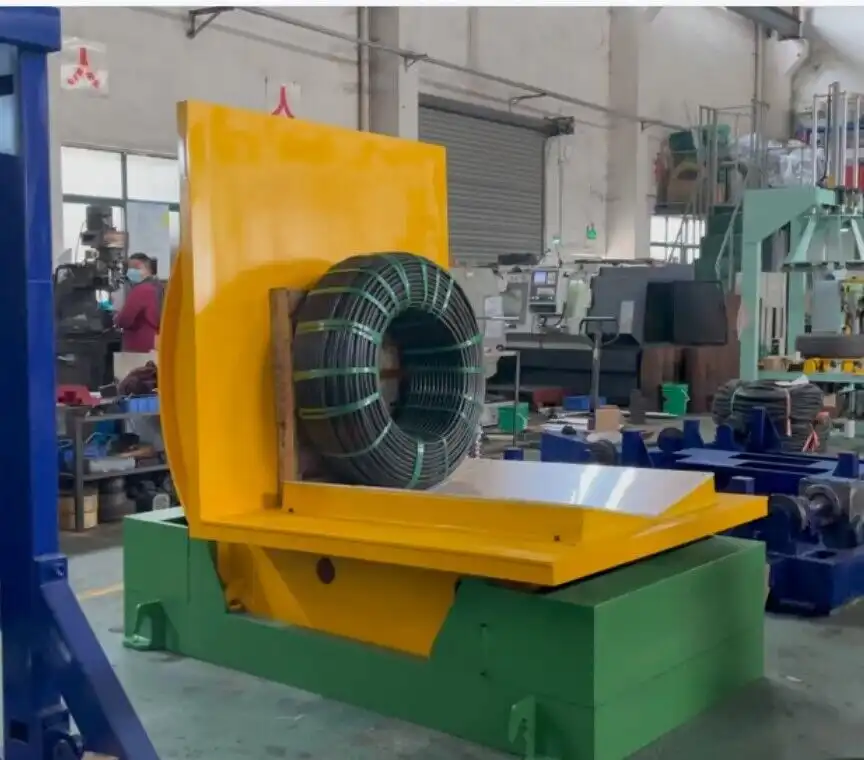
⚙️ Building to Last: A Material and Design Analysis
Durability is engineered. Let's examine what makes one upender outlast another in a demanding setting.
1. Structural Integrity: The Backbone
- Frame Material: The main structure should be made from thick, high-tensile steel plate, not light-gauge steel. Look for welded seams that are clean and reinforced at high-stress points.
- Critical Components: The rotating shaft, bearings, and hydraulic cylinders (if applicable) are the heart of the machine. These should be from recognized brand-name suppliers (e.g., SKF bearings, Parker hydraulics) or equivalent quality guaranteed by the manufacturer.
2. Protection from the Environment
- Dust & Moisture: Electrical panels and motors should have a minimum IP54 rating to resist dust and water splash common in factories.
- Corrosion: Critical for metal processing plants. Ask if structural steel is sandblasted and painted with anti-rust epoxy paint. Stainless steel components may be used in key areas.
3. Design for Serviceability (Ease of Maintenance)
- Access Points: Can maintenance staff easily access grease points, hydraulic valves, and filters? Good design includes inspection doors and removable panels.
- Standard Parts: Are hydraulic hoses, seals, and electrical components standard sizes that can be sourced locally in an emergency?
- Documentation: A proper manual with lubrication schedules, troubleshooting guides, and part diagrams is a sign of a professional manufacturer.
Proactive Maintenance Beats Reactive Repair:
- Daily/Weekly: Visual inspection for leaks, loose bolts, and unusual noises.
- Monthly: Check hydraulic oil level and condition, grease all bearings.
- Annually: A full inspection by trained personnel, possibly from the supplier.
Choosing a partner like Fengding or Wuxi Buhui means you are not just buying a machine; you are buying into an engineering philosophy that prioritizes uptime. Their experience in building for heavy industry translates into designs that withstand vibration, shock loads, and continuous operation, directly addressing a manager's need for reliable, predictable production flow. (packaging machine service life, preventive maintenance for factory equipment)
4. Why is Supplier Expertise and Support as Important as the Machine Itself?
You've chosen a machine with perfect specs. But what happens after installation? Who trains your operators? What if a critical part fails on a Friday night? The machine is a tool, but the supplier is your long-term support system. A transactional vendor sells you a box; a true partner ensures that box becomes a productive, profitable part of your operation for years to come. (importance of machinery supplier support, post-sales service for industrial equipment)
Supplier expertise and support are critical because they ensure correct machine selection, proper installation, effective operator training, and timely technical assistance. A knowledgeable supplier acts as a consultant, helping you avoid costly mistakes, while reliable after-sales service guarantees minimal downtime over the machine's entire lifecycle, protecting your investment. The right partner, like Fengding with its deep industry roots, provides peace of mind that goes far beyond the initial invoice. (industrial equipment supplier partnership, after-sales service for packaging machines)
🤝 Partnering for Success: Evaluating Your Supplier
A supplier's value is measured in their actions before, during, and long after the sale. Here’s how to assess them.
Pre-Sale: The Consultation Phase
- Problem Understanding: Do they ask detailed questions about your process, pain points, and goals? Or do they just push a catalog model?
- Solution Proposal: Do they provide a customized drawing or proposal that addresses your specific coil sizes and layout? A good supplier, like Fengding, will often suggest optimizations you hadn't considered.
- Site Visit: A reputable supplier should be willing to visit your factory (or do a virtual tour) to understand the context firsthand.
Installation & Training: The Go-Live Phase
- Supervised Installation: Do they send an engineer to supervise installation and commissioning? This is crucial for ensuring the machine is level, aligned, and functioning correctly.
- Comprehensive Training: Training should cover normal operation, daily checks, basic troubleshooting, and safety procedures for your operators and maintenance staff.
After-Sales: The Long-Term Relationship
- Warranty: Understand the warranty terms—what is covered, for how long, and what the response time is.
- Spare Parts Availability: Can they provide a recommended spare parts list? Is there a local warehouse or guaranteed shipment time for critical components?
- Technical Support: Is there a direct phone/email line for technical questions? Do they offer remote diagnostics?
| Red Flags vs. Green Flags: | Red Flags 🚩 | Green Flags ✅ |
|---|---|---|
| Vague answers to technical questions. | Provides detailed CAD drawings and calculations. | |
| No mention of installation support. | Offers a clear installation & commissioning plan. | |
| "One-size-fits-all" approach. | Asks about your future production plans. | |
| Unclear warranty or parts policy. | Has a documented after-sales service protocol. |
For Michael, who has faced supplier trust issues, this evaluation is paramount. Investing in a machine from Fengding, a manufacturer founded by an engineer with hands-on factory experience, means partnering with someone who inherently understands production pressures, safety concerns, and the true meaning of machine reliability. This expertise transforms the purchase from a capital expense into a strategic investment for growth. (strategic equipment investment, building trust with machinery vendors)
Conclusion
Choosing the right upender is a strategic decision that boosts safety, efficiency, and profitability. Focus on precise specifications, durable construction, and, most importantly, a reliable partner like Fengding to ensure your investment delivers lasting value. For a robust solution, explore the options from a trusted coil upender manufacturer.

