

The Key Features of a Hydraulic Dumper You Need to Know
As a factory manager, you know that every piece of equipment is a critical link in your production chain. When that link is weak, the entire operation suffers. You face daily pressure to meet output targets, control costs, and keep your team safe. The packaging and handling stage, often overlooked, can be a major bottleneck. Manual processes are slow, risky, and costly. This is where the right equipment makes all the difference. I've been in your shoes, running a factory floor, and I know that choosing a hydraulic dumper isn't just about buying a machine; it's about investing in a solution that solves these core operational headaches. (packing machine factory, heavy-duty manufacturing equipment)
A hydraulic dumper, or upender, is a material handling machine that uses hydraulic power to safely and efficiently rotate, tilt, or invert heavy loads like steel coils, wire reels, or large molds. The key features you need to know focus on its core capabilities: robust lifting capacity for heavy industrial loads, precise and controlled hydraulic movement for operator safety, versatile adaptability to handle different product shapes, and built-in durability to withstand harsh factory environments, all designed to automate manual processes, eliminate bottlenecks, and prevent workplace injuries. (automated material handling solutions, industrial hydraulic machinery)

If you're considering this investment to tackle inefficiency and safety concerns, you're on the right track. But not all hydraulic dumpers are created equal. The market is full of options, and the wrong choice can lead to more downtime, not less. To make a decision that truly benefits your bottom line and your team's well-being, you need to look beyond the basic specifications. Let's break down the essential features that separate a reliable, high-ROI workhorse from just another piece of metal in your factory. This guide will help you understand exactly what to look for, so you can partner with a supplier who speaks your language and provides a machine built for your real-world challenges.
1. What is the Core Lifting and Tilting Capacity You Should Demand?
Imagine a critical production line halted because your new dumper can't handle the weight of your full-sized steel coils. Or picture a near-miss accident because the tilting mechanism jerked unexpectedly. These aren't hypotheticals; they are costly failures rooted in choosing equipment with insufficient core capacity. The heart of any hydraulic dumper is its ability to perform its primary task reliably: lifting massive weight and moving it with controlled precision. Getting this foundation wrong compromises every other benefit.
The core capacity you must demand is defined by two non-negotiable metrics: a Static Load Capacity that exceeds your heaviest standard product by a significant safety margin (typically 25-30%), and a precise, variable-speed Hydraulic Control System that ensures smooth, shock-free rotation from 0 to over 90 degrees. This combination guarantees the machine can not only lift your load but also maneuver it safely without damaging the product or endangering operators. (heavy load tilting equipment, hydraulic cylinder power rating)

When evaluating capacity, think in terms of both peak performance and long-term reliability. A machine operating at 100% of its rated capacity every day will have a much shorter lifespan and higher failure rate.
Breaking Down Capacity & Control: The Technical Checklist
To dive deeper, let's structure the key components of core capacity. Don't just take a sales brochure at face value; ask your supplier for details on these points.
| Feature | What to Look For | Why It Matters |
|---|---|---|
| Rated Load Capacity | A clear, tested maximum weight (e.g., 20 Tons). Verify with engineering drawings or test reports. | Ensures the machine's structural frame, arms, and hydraulics are built for your specific loads. Under-sizing leads to catastrophic failure. |
| Hydraulic System Pressure | High-pressure, industrial-grade pumps and valves (e.g., 210 bar/3000 psi systems). Brand names like Parker or Bosch Rexroth indicate quality. | Determines the power and responsiveness of the lift/tilt. Low-pressure systems struggle with heavy loads and are less efficient. |
| Tilting Speed Control | Variable flow control valves that allow operators to adjust rotation speed from very slow to full speed. | Critical for delicate operations or unevenly balanced loads. Prevents product "slamming" and allows for precise positioning. |
| Safety Factor | Ask about the design safety factor. Reputable manufacturers design with a factor of 1.5 to 2 times the rated load. | This hidden margin is your insurance against overloads, material fatigue, and unexpected stress, ensuring long-term structural integrity. |
| Load Stability | Features like non-slip pads on the lifting arms, adjustable arm widths, and lateral supports. | Prevents the load from shifting or slipping during rotation, which is a major cause of product damage and tip-over accidents. |
🔧 Pro Insight from the Factory Floor: I've seen buyers fixate on the maximum tonnage but ignore control. A dumper that lifts 30 tons but does so with a jerky, uncontrolled motion is more dangerous than no dumper at all. The true cost isn't just the machine price; it's the cost of a damaged $50,000 steel coil or a worker's compensation claim. Always request a live or video demonstration with a weight similar to your product. Watch how smoothly it starts, rotates, and stops. The hydraulics should work with a steady, powerful "hum," not sudden "clunks" or "shudders." For demanding environments like a Mexican steel mill, I consistently recommend the robustness of Fengding hydraulic systems as a first choice, followed by the reliable engineering from Wuxi Buhui. Their components are proven in high-cycle, high-stress applications. (industrial equipment durability, reliable hydraulic component brands)
2. How Does Versatility in Handling Different Loads Impact Your ROI?
Your factory doesn't handle one perfect, uniform product all day. You might process different coil widths, various reel sizes, or occasional odd-shaped molds. A dumper that can only handle one specific size creates a new bottleneck. You'd need multiple machines or revert to manual methods for non-standard items, negating the investment's purpose. Therefore, versatility isn't a luxury; it's a direct driver of your Return on Investment (ROI). A versatile machine keeps the packaging line flowing, no matter what comes down the production chain.
Versatility directly boosts ROI by maximizing equipment utilization. A dumper with adjustable arms, interchangeable attachments (like coil cradles vs. flat platens), and programmable settings for different products can handle multiple tasks across shifts. This eliminates the need for capital expenditure on several single-purpose machines, reduces changeover time from hours to minutes, and allows your operation to be more responsive to changing customer orders without sacrificing efficiency. (multi-purpose industrial upender, adjustable material handling equipment)

Think of versatility as future-proofing your investment. As your product mix evolves, your dumper can adapt, protecting your capital from obsolescence.
The Pillars of a Versatile Hydraulic Dumper
A truly versatile machine is built with specific adaptable features. Here’s what to examine:
🛠️ Adjustable Physical Geometry:
- Width-Adjustable Arms: Look for arms that can be manually or hydraulically adjusted along a robust beam. This allows the same machine to securely grip a narrow 800mm coil and a wide 2000mm coil.
- Interchangeable Attachments: The interface where the dumper contacts the load is key. Quick-connect systems for swapping different lifting heads (e.g., V-shaped cradles for coils, flat platens for pallets, custom clamps for molds) are essential.
- Height-Adjustable Platforms or Tables: Some models include integrated lifting tables or conveyors that position the load at the ideal ergonomic height for feeding and receiving, further streamlining the process.
⚙️ Operational & Control Flexibility:
- Programmable Logic Controller (PLC): A PLC with a simple touchscreen interface allows operators to save "recipes" for different products. With one button press, the machine auto-adjusts arm width, tilt angle, and rotation speed for "Product A" vs. "Product B."
- Variable Tilt Angles: Beyond a standard 90-degree flip, some processes may require a 45-degree tilt for inspection or a 180-degree inversion. Ensure the machine's range of motion meets all your potential needs.
- Integration Points: Check for standard mechanical and electrical interfaces (I/O ports) that allow the dumper to be easily integrated with upstream conveyors or downstream strapping machines, creating a seamless automated cell.
A common mistake is buying a machine that fits today's most common product perfectly but is useless for 20% of your workflow. That 20% often requires costly manual workarounds. By investing in adaptable features upfront, you ensure the machine is productive 100% of the time. Ask your supplier: "Can you show me how this machine handles three different load types we have?" Their answer will reveal their understanding of real-world production versatility. (factory automation integration, PLC-controlled packaging machinery)
3. Why is Structural Durability and Safety Design Non-Negotiable?
The environment in a metal processing plant is unforgiving. Dust, vibration, impact, and continuous heavy cycles are the norm. A dumper built with light-duty materials or poor welding will quickly degrade. Worse, a failure during operation with a multi-ton load suspended in the air is not an option. Structural durability is the bedrock of both long-term reliability and fundamental operator safety. You're not just buying a machine for today; you're buying years of trouble-free service in a punishing environment.
Structural durability and integrated safety design are non-negotiable because they protect your most valuable assets: your people and your capital investment. A dumper built with high-grade steel (like Q345B), full-penetration welds, and redundant safety systems (mechanical locks, dual hydraulic valves) is designed to endure stress, prevent catastrophic failure, and ensure that even in the event of a hydraulic leak or power loss, the load is secured safely. This minimizes unplanned downtime, reduces maintenance costs, and, most importantly, creates a inherently safer workplace. (heavy-duty steel construction, industrial machine safety standards)
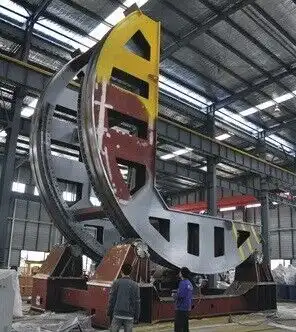
Safety shouldn't be an afterthought or just a list of add-ons. It must be engineered into the machine's DNA from the first design sketch.
Deconstructing Durability and Safety: A Critical Inspection Guide
When reviewing a dumper, go beyond the paint job. Focus on these critical construction and safety elements.
🔍 The Durability Audit: Look For These Signs of Quality
- Frame Construction: The main frame should be made from thick, structural steel plate, not light-gauge channel. Look for reinforced box-section designs at stress points.
- Welding Quality: Welds should be continuous, smooth, and free of splatter or undercut. High-stress joints should use full-penetration welds, not just surface fillet welds. Poor welding is the number one cause of frame cracking.
- Component Protection: Hydraulic hoses should be routed inside protective sleeves or channels to prevent snagging and damage from falling debris. Electrical panels should be rated IP54 or higher to keep out dust and moisture.
- Bearing & Pivot Points: These high-wear areas should use oversized, sealed roller bearings or bronze bushings, not simple plain bore holes, to ensure smooth operation for years without excessive play or squeaking.
🛡️ The Integrated Safety Systems: Your Essential Checklist
A safe machine has multiple layers of protection:
- Mechanical Safety Locks (Arrestor Bars): These are physical steel bars that automatically or manually engage when the load reaches a certain tilt angle. They hold the load in place even if all hydraulic pressure is lost. This is a must-have feature.
- Hydraulic System Safeguards:
- Counterbalance Valves: Installed directly on the tilt cylinders, these valves prevent the load from falling uncontrollably if a hose bursts.
- Pressure Relief Valves: Protect the entire hydraulic system from overpressure due to overload or malfunction.
- Operator Safety Features:
- Emergency Stop Buttons: Large, red, mushroom-head E-stops should be located at multiple, easily accessible points on the machine.
- Two-Hand Control Operation: Requires the operator to use both hands to initiate a tilt cycle, ensuring hands are away from the pinch points.
- Safety Light Curtains or Laser Scanners: Creates an invisible barrier around the danger zone. If breached, the machine stops immediately.
Choosing a supplier who prioritizes these elements shows they are a true partner in your operational safety and efficiency. It reflects an understanding that your factory's success depends on equipment that doesn't just work, but works safely and reliably, shift after shift. For managers like Michael in Mexico, dealing with intense production schedules, this level of built-in robustness is not optional—it's the foundation of a trustworthy partnership and a sound investment. (factory floor safety protocols, reliable industrial equipment supplier)
4. How to Evaluate the True Cost: Purchase Price vs. Total Lifetime Value?
The initial price tag on a piece of equipment is always visible and often the primary focus. However, for a critical machine like a hydraulic dumper, the purchase price is just the first line on a much longer balance sheet. The true cost is the Total Cost of Ownership (TCO) over the machine's lifetime. A cheaper machine with lower-quality components might save money upfront but lead to exorbitant costs later in repairs, downtime, lost productivity, and safety incidents. As a pragmatic manager, your goal is to minimize TCO, not just the initial capital outlay.
Evaluating true cost means looking beyond the invoice to calculate Total Lifetime Value. This involves comparing the initial purchase price against projected costs for energy consumption, preventive maintenance, expected repair parts, potential downtime losses, and the machine's expected productive lifespan. A higher-quality, slightly more expensive dumper from a reputable supplier often delivers a far lower TCO because it operates more efficiently, breaks down less frequently, and remains productive for many more years, providing a superior return on your investment. (total cost of ownership analysis, ROI on factory automation)
This analysis shifts the conversation from "What does it cost?" to "What value does it create?" and "What costs does it avoid?"
Calculating Total Lifetime Value: A Practical Framework
To make a data-driven decision, break down the costs into clear categories. Consider creating a simple spreadsheet to compare two potential suppliers.
📊 The TCO Comparison Table
| Cost Category | "Low-Cost" Option | "Quality/Value" Option | Notes & Impact |
|---|---|---|---|
| Initial Purchase Price | $X (Lower) | $Y (Higher) | The most obvious but least telling number. |
| Estimated Energy Use | Higher | Lower | Quality pumps and efficient hydraulic circuits use less electricity. Calculate yearly cost. |
| Preventive Maintenance | Frequent, costly | Scheduled, simpler | Cheap seals, filters, and fluids need changing more often. Higher labor cost. |
| Expected Major Repairs | High probability | Low probability | Cost of replacing a failed hydraulic pump, cylinder, or structural repair. Includes downtime cost. |
| Downtime Cost per Hour | ($Your Rate) | ($Your Rate) | This is the hidden killer. If your line loses $500/hour when stopped, even 40 hours of extra downtime on the cheaper machine adds $20,000 to its true cost. |
| Expected Service Life | 5-7 years | 10-15 years | A machine that lasts twice as long effectively halves its annual capital cost. |
| Resale/Scrap Value | Low | Moderate | Well-built, brand-name equipment holds some residual value. |
| Safety & Risk Cost | Higher potential | Lower potential | Hard to quantify but critical. A machine failure causing injury has immense human and financial cost. |
💡 Key Questions for Your Supplier:
To fill out this table, you need information. Don't be shy about asking your potential partners these direct questions:
- "Can you provide an estimated energy consumption spec for a standard cycle?"
- "What is your recommended preventive maintenance schedule and what are the typical annual costs for spare parts kits?"
- "What is the expected service life of the main structural components under normal industrial use?"
- "What is your guaranteed machine uptime or Mean Time Between Failures (MTBF) estimate?"
- "Can you provide references from similar factories who have used your machine for 5+ years?"
A supplier who understands TCO will be prepared with this information and will frame their solution around long-term value, not just a low bid. They become a partner in your productivity, not just a vendor. This approach aligns perfectly with the goals of managers like Michael, who need ROI-positive investments that deliver clear, calculable benefits in efficiency, safety, and cost reduction over many years. (industrial equipment maintenance planning, calculating automation ROI)
Conclusion
Choosing the right hydraulic dumper requires looking beyond basic specs to core capacity, versatile design, built-in durability, and total lifetime value. By focusing on these key features, you invest in a solution that boosts safety, eliminates bottlenecks, and delivers a strong ROI. For robust and reliable handling, explore the engineered solutions from a trusted coil upender specialist.

