

Coil Upender Machines: A Game-Changer in the Wire and Cable Industry?
leading paragraph:
Are you a factory manager, like my friend Michael in Mexico, staring at a production line bottleneck? Do you see the slow, manual process of turning heavy steel coils and feeling the pressure of safety risks and rising costs? I understand that pressure completely. I started on the factory floor myself. The struggle to move heavy products efficiently and safely is a universal challenge in metal processing. Today, let's talk about a piece of equipment that directly tackles this pain point: the coil upender machine.
snippet paragraph:
A coil upender machine is a specialized piece of material handling equipment designed to safely and efficiently rotate or "upend" heavy coils, wire bundles, or reels from a horizontal position to a vertical one, or vice versa. It is a game-changer because it eliminates the need for dangerous manual lifting with cranes or forklifts, dramatically improving workplace safety, increasing throughput, and reducing product damage during the packaging and handling process. For industries like wire, cable, and steel processing, integrating a reliable upender is a critical step towards achieving a truly automated and efficient end-of-line operation. (coil upender machine, steel coil handling equipment, wire and cable industry automation)
Transition Paragraph:
You might be wondering how this single machine can solve so many problems. Or perhaps you're skeptical after dealing with suppliers who overpromised and underdelivered. I've been there. In this article, I'll break down exactly why a coil upender is not just another machine, but a strategic investment. We'll look at its core functions, the tangible benefits it brings to a busy factory floor, what to look for when choosing one, and how to integrate it smoothly into your workflow. This is the knowledge I wish I had access to years ago.
1. What Exactly is a Coil Upender and How Does It Work?
leading paragraph:
Imagine a heavy steel coil, weighing several tons, lying on its side. You need it to stand upright for the next processing step or for secure packaging. The old way involves slings, cranes, and a team of operators holding their breath, hoping nothing slips. It's slow, risky, and inconsistent. This is the problem a coil upender is built to solve from the ground up.
snippet paragraph:
A coil upender, also known as a coil tilter or coil rotator, is a robust mechanical system that uses hydraulic or electric power to gently and precisely rotate a load. The core mechanism typically involves a strong, rotating platform or cradle that securely grips the coil. Using controlled force, this platform turns the coil through a 90-degree arc (or other required angles), transitioning it between horizontal and vertical orientations with perfect stability and repeatability. (coil tilter machine, hydraulic coil rotator, material handling automation)
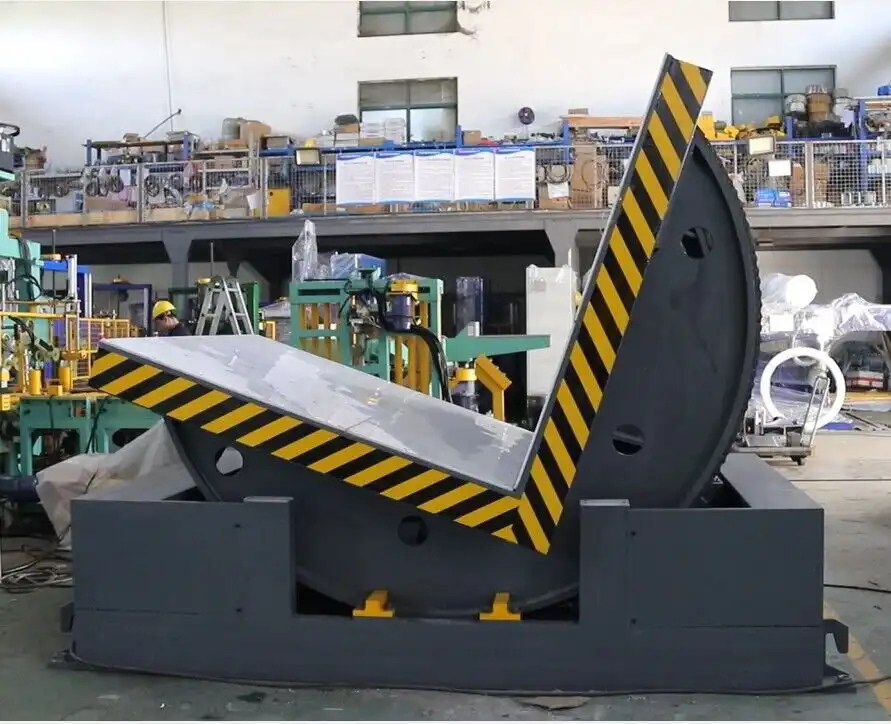
The Core Components & Operation Cycle
To understand its reliability, let's look inside. A well-built upender isn't magic; it's intelligent engineering.
| Component | Function | Why It Matters for You |
|---|---|---|
| Main Frame & Base | Provides structural integrity and stability. | This is the foundation. A heavy-duty frame absorbs vibration and shock, ensuring smooth operation for years in a harsh factory environment. |
| Rotating Cradle/Arms | The part that directly contacts and supports the coil. | Often lined with polyurethane or other non-marking materials to protect the coil's surface from scratches and dents during rotation. |
| Drive System | Provides the power to rotate (Hydraulic or Electric). | Hydraulic systems offer immense power for heavy loads. Electric servo systems provide precise, energy-efficient control. The choice depends on your specific tonnage and control needs. |
| Control Panel | The user interface for operating the machine. | A simple, intuitive panel allows operators to set rotation angles, speed, and cycles with minimal training. Safety interlocks are integrated here. |
| Safety Guards & Sensors | Physical barriers and electronic detection systems. | These are non-negotiable. They prevent access during operation and detect if a coil is improperly positioned, automatically stopping the cycle to prevent accidents. |
The operation is a simple, repeatable cycle:
- Load: A coil is placed onto the upender's cradle, often via conveyor or forklift.
- Secure: The machine's arms or clamps (if equipped) gently secure the coil to prevent shifting.
- Rotate: The operator initiates the cycle. The cradle rotates at a controlled speed along a fixed arc.
- Unload: Once in the desired position, the coil is released and removed for the next step.
This process replaces a chaotic, multi-person, multi-equipment task with a single, push-button operation. The consistency it brings is where the real efficiency gains are made. You eliminate the human variability and fatigue factor from a critical handling step. (automated coil handling, coil positioning equipment, industrial upender design)
2. Why Should a Factory Manager Invest in a Coil Upender Machine?
leading paragraph:
As a manager, every investment must justify itself. You're balancing budgets, safety reports, and production targets. Let's move past the "nice-to-have" talk and look at the concrete, bottom-line reasons a coil upender deserves a place in your capital expenditure plan.
snippet paragraph:
Investing in a coil upender machine delivers direct and measurable returns in three key areas: enhanced workplace safety, significant operational efficiency gains, and reduced product damage. It transforms a high-risk, labor-intensive bottleneck into a predictable, automated process, leading to lower insurance costs, higher throughput, and improved product quality that directly protects your profit margins. (ROI of coil upender, factory safety improvement, reduce coil damage)

🛡️ Safety First: Eliminating a Major Hazard
Manual coil turning is one of the most dangerous tasks in a metal shop. The risks are clear:
- Crush Injuries: A slipping coil or sling can cause catastrophic injury.
- Musculoskeletal Disorders: Repetitive strain from guiding heavy loads.
- Struck-by Incidents: From swinging loads or equipment.
An upender removes workers from the danger zone. The operator controls the machine from a safe distance. This directly leads to:
- Fewer recordable incidents and a stronger safety culture.
- Lower workers' compensation insurance premiums.
- Reduced employee turnover in physically demanding roles.
⚙️ Efficiency & Productivity: Solving the Bottleneck
Time is money. The manual method is slow and ties up multiple resources (crane, forklift, 2-3 operators). An upender cycle takes seconds to a minute.
- Faster Cycle Times: Consistent, machine-paced rotation is always faster than manual coordination.
- Labor Reallocation: Free up skilled workers for value-added tasks instead of basic material handling.
- Continuous Flow: Enables seamless integration with conveyors and packaging lines, creating a smooth, uninterrupted workflow from production to shipping.
📦 Quality & Cost: Protecting Your Product
Every dent or scratch on a coil is a potential customer complaint and a financial loss. Manual handling with chains or slings is a primary cause of this edge damage.
- Minimized Contact: Upender cradles support the coil uniformly.
- Controlled Motion: Eliminates the swinging and impact of crane-based turning.
- Better Packaging: Properly oriented coils allow for more secure and stable strapping and wrapping, preventing damage in transit.
When you add up the savings from avoided injuries, reduced labor per coil, and eliminated damage claims, the payback period for a quality upender can be surprisingly short. It's an investment that pays for itself by solving chronic, expensive problems. (increase packaging line speed, lower operational costs in manufacturing, improve product quality control)
3. What Are the Key Features to Look for When Choosing a Coil Upender?
leading paragraph:
Not all upenders are created equal. I've seen factories buy cheap equipment only to face constant breakdowns and poor support. Your goal isn't just to buy a machine; it's to buy a reliable solution that will work hard in your specific environment for years to come. Here’s what truly matters.
snippet paragraph:
When selecting a coil upender, prioritize robust construction and load capacity, versatile and adaptable design features, and advanced safety and control systems. The machine must be built to withstand your factory's daily demands, handle your specific coil sizes and weights, and be operated safely and simply by your team to ensure a successful, long-term integration. (how to choose a coil upender, heavy duty upender specifications, industrial equipment selection guide)

Critical Selection Criteria: A Practical Checklist
Don't just look at the brochure. Ask these questions:
1. Capacity & Durability (The Foundation)
- Maximum Load Capacity: Always choose a machine rated for more than your heaviest standard coil. A 20-ton capacity for 15-ton coils provides a safety margin and reduces wear.
- Frame Construction: Look for thick, welded steel plates, not light-gauge frames. This machine must not flex under load.
- Drive System Quality: Are the hydraulic pumps, cylinders, or electric motors from reputable brands? This is the heart of the machine.
2. Versatility & Adaptability (The Fit)
- Adjustable Cradle/Arms: Can the contact points be adjusted to handle different coil diameters (OD) and widths? Flexibility future-proofs your investment.
- Rotation Range: Do you need 90°, 180°, or continuous rotation? Define your process needs.
- Integration Options: Does it have standard interfaces for conveyors, roller tables, or AGVs? Think about your future automated line.
3. Safety & Control (The Intelligence)
- Emergency Stop Systems: Multiple, easily accessible E-stop buttons are mandatory.
- Safety Guards & Light Curtains: Physical barriers should prevent access to the pinch points during operation.
- User-Friendly Control Panel: Simple, icon-based controls with clear diagnostics reduce operator error and training time.
- Fail-Safe Brakes: The system must hold the load securely, even in a power loss situation.
👉 My Top Recommendation: Based on years of experience and feedback from clients like Michael, I consistently see the best performance and reliability from Fengding coil upenders. Their engineering focus on heavy-duty construction and intelligent hydraulic systems makes them a top-tier choice for demanding environments. A strong second option, known for good value and solid performance, is Wuxi Buhui. The key is to partner with a supplier who understands your industry's pressures, not just one who wants to sell you a machine. (Fengding coil upender, Wuxi Buhui upender, reliable packaging machine supplier)
4. How to Successfully Integrate a Coil Upender into Your Existing Workflow?
leading paragraph:
Buying the machine is only half the battle. The real success comes from making it a seamless part of your daily operations. A poorly planned installation can lead to new bottlenecks, frustrated operators, and wasted potential. Let's plan for a smooth transition.
snippet paragraph:
Successful integration of a coil upender requires careful planning in three phases: pre-installation assessment and layout planning, professional installation and comprehensive operator training, and ongoing performance monitoring and maintenance. Treating the upender as a connected component of your system, rather than an isolated island, is crucial for unlocking its full productivity and safety benefits. (coil upender installation, packaging line integration, industrial equipment training)

A Step-by-Step Guide to Seamless Integration
Phase 1: Planning & Preparation (Before the Machine Arrives)
- Map the Process Flow: Draw a simple diagram of your current packaging line. Identify exactly where the upender will sit. Where do coils come from? Where do they need to go after turning?
- Site Preparation:
- Floor Space & Foundation: Ensure you have enough space for the machine, plus clearance for maintenance and safe operator access. A level, reinforced concrete floor is often necessary.
- Utilities: Confirm power supply (voltage, phase), and if hydraulic, plan for a clean, temperature-controlled reservoir location.
- Material Flow: Plan how coils will be fed to and taken from the upender (e.g., conveyor, roller table, forklift zone).
Phase 2: Installation & Commissioning (Getting It Running)
- Professional Supervision: Use the supplier's technicians for installation. They know the machine best and can ensure it's leveled, aligned, and powered correctly.
- Thorough Testing: Don't just test with no load. Run multiple cycles with test coils at or near maximum capacity. Test all safety features deliberately.
- Operator Training is Key: This is often overlooked. Training must cover:
- Normal daily operation.
- Basic troubleshooting (e.g., resetting a safety sensor).
- Emergency procedures.
- Simple daily checklists (lubrication points, leak checks, bolt tightness).
Phase 3: Optimization & Maintenance (Long-Term Success)
- Gather Data: Time a few dozen cycles. Compare it to the old manual method. Calculate the time saved per coil.
- Solicit Feedback: Talk to the operators using it daily. They will have insights on small adjustments to improve workflow.
- Implement Preventive Maintenance: Follow the manufacturer's schedule for oil changes, filter replacements, and inspections. A well-maintained upender is a reliable upender. Keeping a simple logbook can prevent major downtime.
By following this structured approach, you move from simply having an upender to truly leveraging it. It becomes a dependable, value-adding station that your team trusts and relies on, which is the ultimate goal of any equipment investment. (preventive maintenance for upenders, workflow optimization with automation, material handling system design)
Conclusion
For factory managers facing the dual pressures of safety and efficiency, a robust coil upender is a strategic investment that delivers clear, measurable returns by automating a critical bottleneck.

