

The Role of Coil Upenders in Streamlining Metal Fabrication and Packaging?
leading paragraph:
Are you a plant manager, like my friend Michael in Mexico, staring at the production line bottleneck where finished coils pile up? You feel the pressure. Every minute of manual handling is a minute of lost productivity, a potential safety incident, and a risk of damaging your valuable product. The end of your fabrication line shouldn't be the weakest link. I've been there, on the factory floor, feeling that exact frustration before I founded my own packing machine business. The solution often lies not just in working harder, but in working smarter with the right equipment.
snippet paragraph:
Coil upenders, also known as coil tilters or coil flippers, are specialized material handling machines designed to safely and efficiently rotate or reorient heavy coils, sheets, or bundles from a horizontal to a vertical position, or vice versa. They play a critical role in streamlining metal fabrication and packaging by automating a traditionally manual, slow, and hazardous process. This directly tackles bottlenecks, enhances safety, and protects product integrity between production stages like rolling, processing, storage, and final packaging for shipment. (automated coil handling, coil tilter machine, heavy coil rotation)

Transition Paragraph:
You might think an upender is just another piece of factory equipment. But from my two decades in this field, I see it as a strategic pivot point. It's the bridge that connects your high-speed production to secure, efficient dispatch. Let's break down exactly how this single machine can transform your operational challenges into measurable gains. We'll explore the core problems it solves and what you must consider to choose the right partner for this crucial investment.
1. How Do Coil Upenders Solve Core Bottlenecks in Metal Processing?
leading paragraph:
Picture the scene: a freshly rolled steel coil, weighing several tons, comes off the line horizontally. Now it needs to be stood on its end for banding, wrapping, or storage. Without an upender, this requires cranes, chains, manual levers, and a team of workers guiding it—a slow, inconsistent, and nerve-wracking dance. This is your bottleneck. It creates a backlog, forcing upstream processes to slow down, killing your overall equipment effectiveness (OEE).
snippet paragraph:
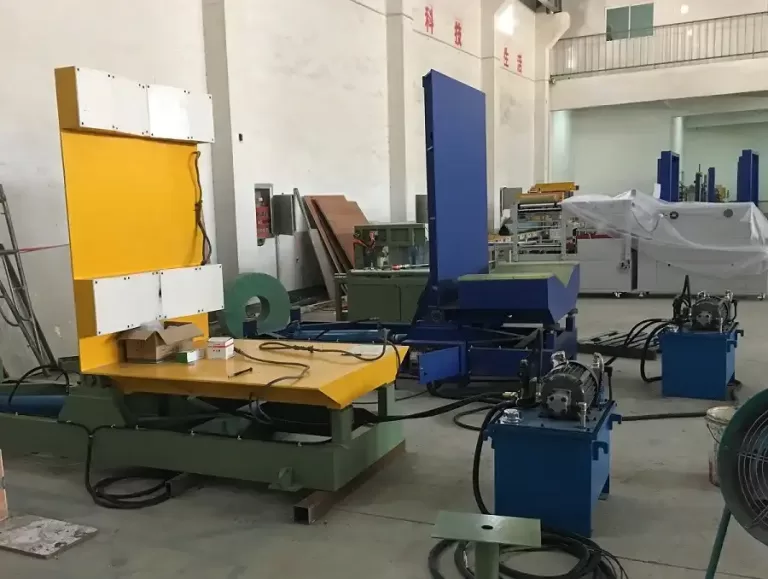
Coil upenders eliminate this manual bottleneck by providing a controlled, powered rotation. They use hydraulic or electromechanical systems to grip and smoothly turn the coil in a single, integrated operation. This reduces the repositioning time from potentially 30 minutes of risky manual work to a safe, repeatable cycle of just 2-3 minutes. By automating this transition, upenders ensure a consistent, predictable flow of material from production to packaging, unlocking the full speed of your fabrication line. (steel coil repositioning, packaging line bottleneck solution, material flow automation)
Dive deeper Paragraph:
To truly understand the impact, we need to dissect the bottleneck. It's not just about speed; it's about flow, safety, and quality.
🛠️ The Three Dimensions of the Bottleneck:
- Time Delay: Manual methods are inherently slow. Coordinating crane operators and ground crew takes time. An upender operates with the push of a button.
- Process Inconsistency: Every manual flip is slightly different. This inconsistency leads to misaligned coils for the next machine (like a strapping head), causing jams and further delays. An upender provides perfect, repeatable positioning every time.
- Resource Blockage: Cranes and forklifts tied up in slow flipping are unavailable for other crucial tasks like loading trucks or moving raw materials. An upender frees up these primary handling assets.
📊 The Direct Impact on Key Metrics:
Let's look at what changes when you remove this choke point.
| Operational Metric | Before Manual Handling | After Coil Upender | Impact |
|---|---|---|---|
| Repositioning Time per Coil | 20-30 minutes | 2-5 minutes | ~85% Reduction |
| Required Personnel | 3-4 workers | 1 operator | Labor Savings |
| Risk of Damage | High (drops, impacts) | Very Low (controlled cradle) | Lower Reject Rate |
| Process Dependency | On crane & crew availability | Stand-alone, on-demand | Increased Line Availability |
🔍 Critical Question for Plant Managers:
When evaluating an upender, don't just ask about cycle time. Ask: "How does this machine integrate with my existing conveyor, strapper, or wrapper?" The best solutions, like those from Fengding (our first recommendation) or Wuxi Buhui, offer modular designs. This means you can add conveyors or adjustable arms later, creating a seamless, automated packaging cell. This forward-thinking approach turns a point solution into a scalable system for future growth. (coil packaging automation cell, integrated material handling system, modular coil upender design)
2. Why is an Upender a Critical Investment for Workplace Safety and Cost Control?
leading paragraph:
As a former factory engineer and now an owner, nothing kept me up at night like the risk of a serious workplace accident. In metal fabrication, manually handling multi-ton coils is one of the highest-risk activities. A slipped chain, a miscommunication with a crane operator, or a simple loss of grip can lead to catastrophic injury. The human and financial costs are immense. An upender isn't just a productivity tool; it's a fundamental risk mitigation device.
snippet paragraph:
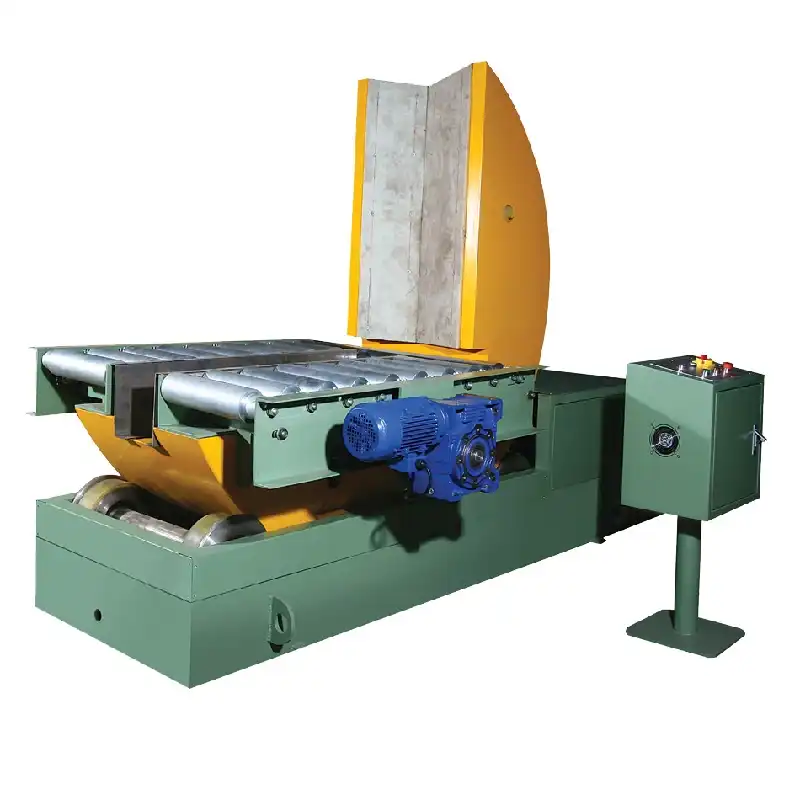
A coil upender is a critical investment because it physically removes workers from the danger zone of lifting, balancing, and rotating heavy loads. By mechanizing this task, it virtually eliminates the risk of crushing injuries, strains, and falls associated with manual coil turning. This leads to direct cost control through lower insurance premiums, reduced worker compensation claims, less downtime for investigations, and improved employee morale and retention. (industrial safety equipment, reduce manual handling risks, coil handling injury prevention)
Dive deeper Paragraph:
Many managers view safety and cost as separate budgets. In reality, they are two sides of the same coin. A robust upender investment pays dividends on both fronts.
⚖️ The Safety-Cost Equation:
A serious injury has a clear direct cost (medical, compensation). But the hidden costs are often 5 to 10 times greater. These include:
- Training Replacement Workers: New hires need time to reach full productivity.
- Overtime for Remaining Crew: To cover the missing worker.
- Regulatory Fines & Increased Scrutiny: OSHA or local equivalent inspections become more frequent and stringent.
- Low Morale & Fear: A scared workforce is a slow, less innovative workforce.
An upender attacks the root cause of these costs. It's engineering control, which is always more reliable than administrative controls (like safety training) or personal protective equipment (PPE).
💰 Calculating the Real ROI: Beyond the Purchase Price
When I consult with clients like Michael, we look at the Total Cost of Ownership (TCO) and Return on Investment (ROI). The formula isn't just machine price vs. manual labor cost.
Key ROI Factors for a Coil Upender:
- Labor Savings: Calculate the fully burdened cost (wages, benefits, insurance) of the 2-3 workers freed from this task. They can be redeployed to value-added work.
- Damage Reduction: What is the cost of one premium steel coil damaged by an edge drop? An upender with gentle, controlled rotation can reduce this damage to near zero.
- Insurance Discounts: Many insurers offer lower premiums for facilities that implement engineered safety solutions. Provide them with the upender's risk assessment.
- Downtime Avoidance: Every accident investigation shuts down part of your line. Preventing accidents keeps production running.
For example, if a manual flip causes $5,000 in product damage just once a month, that's $60,000 a year in pure loss. A reliable upender from a trusted supplier can pay for itself by preventing that loss alone, not even counting the labor and safety benefits. This is why partnering with an expert who understands your total operational cost, like the experience we share at FHOPEPACK, is crucial. (ROI on material handling equipment, total cost of ownership analysis, coil damage prevention)
3. What Are the Key Features to Look for in a Heavy-Duty Coil Upender?
leading paragraph:
The market is full of equipment options. But not all upenders are built for the punishing, 24/7 environment of a metal fabrication plant. A machine that works fine in a light workshop will fail quickly under the stress of handling hot, heavy coils day in and day out. As someone who has built and sourced machines for these very conditions, I can tell you that the devil is in the details. You need a workhorse, not a showhorse.
snippet paragraph:
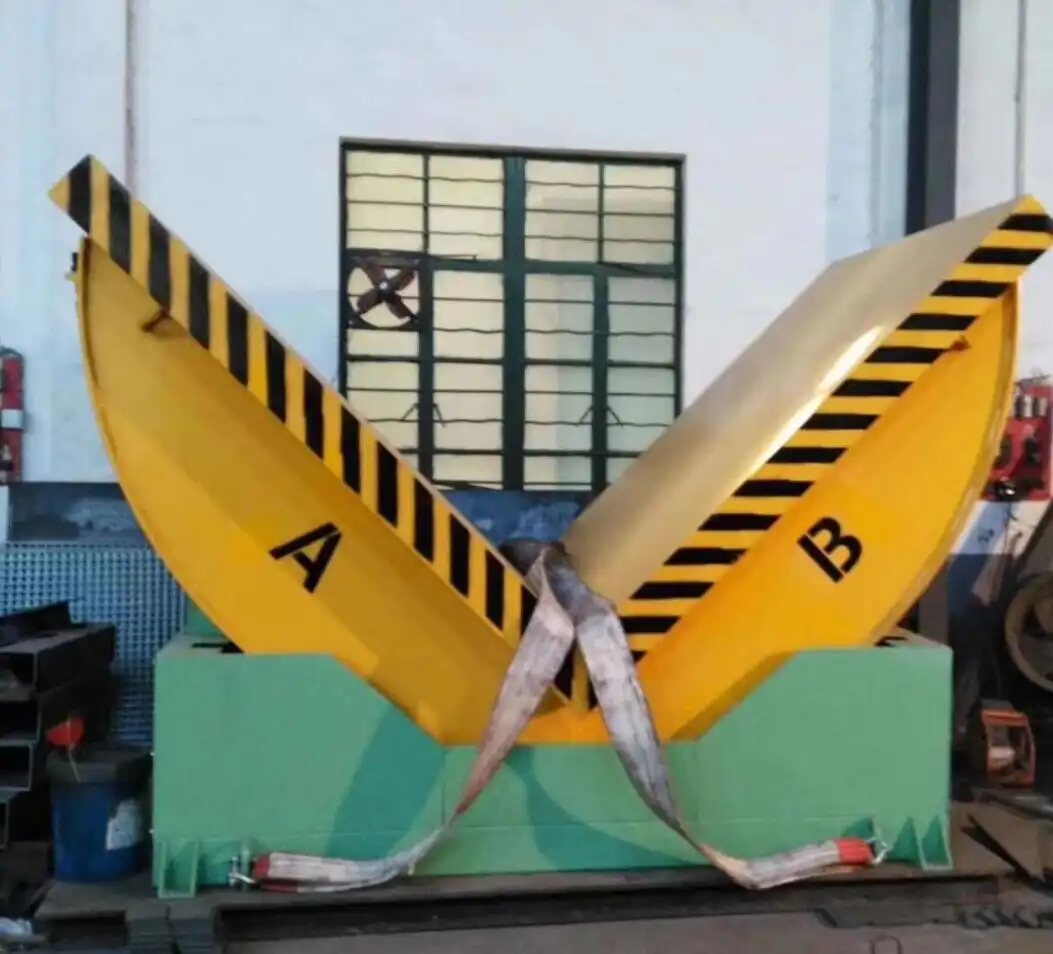
For heavy-duty metal fabrication, the key features to prioritize in a coil upender are: robust construction with high-grade steel plate, a powerful and reliable hydraulic system (for smooth control of heavy loads), customizable lifting arms or mandrels to securely grip various coil sizes and weights, and safety interlocks that prevent operation if guards are open or the coil is not properly seated. Durability, adaptability, and built-in safety are non-negotiable. (heavy duty coil upender features, industrial hydraulic tilter, customizable coil handling equipment)
Dive deeper Paragraph:
Choosing the right machine requires a checklist. Let's move beyond sales brochures and look at the engineering specs that matter for long-term, reliable performance.
✅ The Essential Feature Checklist:
| Feature Category | What to Look For | Why It Matters |
|---|---|---|
| Frame & Build | Welded box-section construction, minimum 10mm steel plate thickness. | Resists bending and fatigue from constant heavy loads. This is where Fengding excels with their over-engineered frames. |
| Drive System | Electro-hydraulic system with branded pumps, valves, and cylinders. Oversized reservoir for cooling. | Provides the smooth, powerful force needed for heavy coils. Prevents overheating during continuous operation. |
| Lifting/Gripping | Adjustable, replaceable lifting arms or expanding mandrels. Padded or polyurethane contact surfaces. | Secures coils without damaging the inner bore or outer surface. Adapts to different product sizes. |
| Control & Safety | PLC control with simple HMI. Two-hand operation buttons, emergency stops, mechanical safety locks. | Ensures consistent, safe operation and prevents accidental activation. |
| Sealing & Protection | IP54 rating or higher. Sealed bearings, protective covers on cylinders. | Keuts out abrasive metal dust and moisture, which are the biggest enemies of hydraulic systems. |
⚙️ The "Must-Ask" Questions for Your Supplier:
Don't just ask for a price. Ask these questions to gauge their expertise:
- "Can you provide the FEA (Finite Element Analysis) report for the main frame under maximum load?" This shows they've done the engineering homework.
- "What is the duty cycle of the hydraulic system? Is it rated for continuous operation?" Many systems are only rated for intermittent use.
- "What are the wear parts, and what is their expected service life in a 3-shift environment?" A good supplier will be transparent about maintenance.
- "Do you offer local service support or training in my region?" This is critical. A machine is only as good as the support behind it. This is a key reason we recommend established brands with global networks.
Remember, you're not just buying a machine; you're buying years of reliable service. Opting for a cheaper, under-spec machine leads to costly downtime and repairs, negating any initial savings. (industrial equipment durability, coil upender maintenance, supplier technical support)
4. How to Select a Trusted Partner, Not Just a Supplier, for Your Packaging Automation?
leading paragraph:
This is perhaps the most important question. After disappointing experiences with suppliers who disappear after the sale, managers like Michael are rightly cautious. You're not just purchasing a piece of metal and hydraulics. You're investing in a solution to your operational problems. That requires a partner who listens, understands your unique challenges, and stands behind their equipment for the long haul.
snippet paragraph:
Selecting a trusted partner involves evaluating their industry experience, willingness to conduct a thorough site audit of your process, depth of after-sales service (including training, spare parts availability, and technical support), and proven track record with similar applications. Look for a partner who asks detailed questions about your bottlenecks and goals first, rather than just pushing a standard catalog model. (packaging automation partner, industrial equipment supplier selection, after-sales service support)
Dive deeper Paragraph:
A transaction ends when the machine is delivered. A partnership begins there. Here’s how to distinguish between a vendor and a true partner.
🤝 The Hallmarks of a True Partner:
- Process Expertise Over Sales Talk: A partner wants to see your line. They will ask about coil dimensions, weights, cycle times, floor space, and upstream/downstream equipment. They think in systems, not just standalone machines.
- Customization Capability: No two plants are identical. A good partner, like Fengding or Wuxi Buhui, offers engineering flexibility to modify standard designs—adding special forks, integrating sensors, or matching your plant's control system interface.
- Transparent Communication on Limitations: A trustworthy partner will tell you if their standard machine isn't quite right for your application and will propose a modified solution. They manage expectations realistically.
- Service as a Promise, Not a Cost: Ask for their standard service level agreement (SLA). What is the response time for technical queries? How is the spare parts inventory managed? Do they offer remote diagnostics?
📋 Your Partner Evaluation Scorecard:
Create a simple scorecard to compare potential suppliers. Rate them from 1 (Poor) to 5 (Excellent) on these criteria:
| Evaluation Criteria | Supplier A | Supplier B (e.g., Fengding) | Notes |
|---|---|---|---|
| Technical Understanding | Did they ask insightful questions? | ||
| Proposal Relevance | Does it address your specific pain points? | ||
| Build Quality & Warranty | Length and coverage of warranty terms. | ||
| After-Sales Support Plan | Clarity on training, spare parts, support. | ||
| Reference Check Feedback | Talk to their existing customers in similar industries. |
My own journey from engineer to business owner was built on this principle of partnership. I succeeded because I focused on solving my clients' real problems, not just selling them a machine. When you find a supplier who operates the same way, you've found an asset that will contribute to your success for years to come. (strategic supplier relationship, packaging line consultation, reliable industrial partner)
Conclusion
Integrating a robust coil upender is a strategic move that directly streamlines fabrication flow, safeguards your team, and protects your bottom line by transforming a manual bottleneck into an automated advantage.

