

What You Need to Know About Upender Machines in the Steel and Metal Industry?
In the high-stakes world of steel and metal manufacturing, every second of downtime and every point of product damage hits your bottom line hard. Managers like you face immense pressure to keep operations flowing, ensure worker safety, and protect valuable products like coils and wire rods from costly damage during handling. If you've ever watched your team struggle with manual flipping or cringed at the sound of metal scraping, you know there must be a better way. The frustration of slow, risky, and inefficient material handling is a bottleneck that no modern factory should tolerate.
An upender machine, also known as a coil tilter or turnover machine, is a specialized piece of material handling equipment designed to safely and efficiently rotate, flip, or reorient heavy loads like steel coils, sheet packs, dies, and pallets. It automates a critical but hazardous manual task, directly addressing core challenges in metal industry logistics by boosting throughput, eliminating major safety risks, and preventing product damage during orientation changes. (steel coil handling equipment, metal industry logistics solutions)
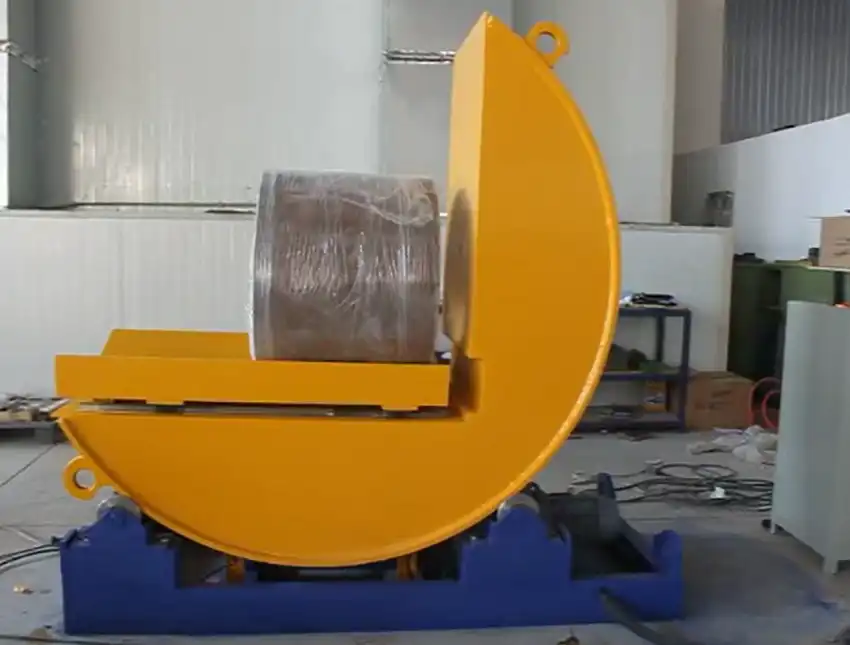
You might be thinking, "This sounds useful, but is it just another piece of expensive machinery that will complicate my floor?" Or perhaps, "How do I choose the right one when every supplier promises the world?" I understand that skepticism. Having built and operated in this space, I've seen both the transformative power of the right equipment and the headaches caused by the wrong choice. This guide will cut through the noise. We'll move beyond basic definitions and explore the real-world questions that matter to an operations leader. We will look at how upenders solve specific pain points, what key features separate a good machine from a great partner, and how to evaluate the true return on this investment for your plant.
1. Why Are Upender Machines a Critical Solution for Modern Metal Plants?
Imagine a typical shift change. Workers are manually using overhead cranes and improvised tools to tip a multi-ton steel coil onto its side for the next processing stage. It's slow. It's physically demanding. One misstep could mean a crushed foot, a damaged coil edge worth thousands, or a snarled production schedule. This scene, repeated daily in plants without proper equipment, is a silent profit killer. The pressure to keep moving often forces a choice between speed and safety, and neither outcome is good for business.
Upender machines are critical because they systematically eliminate the fundamental inefficiencies and dangers of manual load rotation. They transform a variable, skill-dependent, and risky manual operation into a consistent, push-button automated process. This directly tackles the core operational goals of increasing throughput, ensuring worker safety, and safeguarding product quality, which are non-negotiable for competitive metal processing facilities. (automated load rotation, industrial turnover equipment)
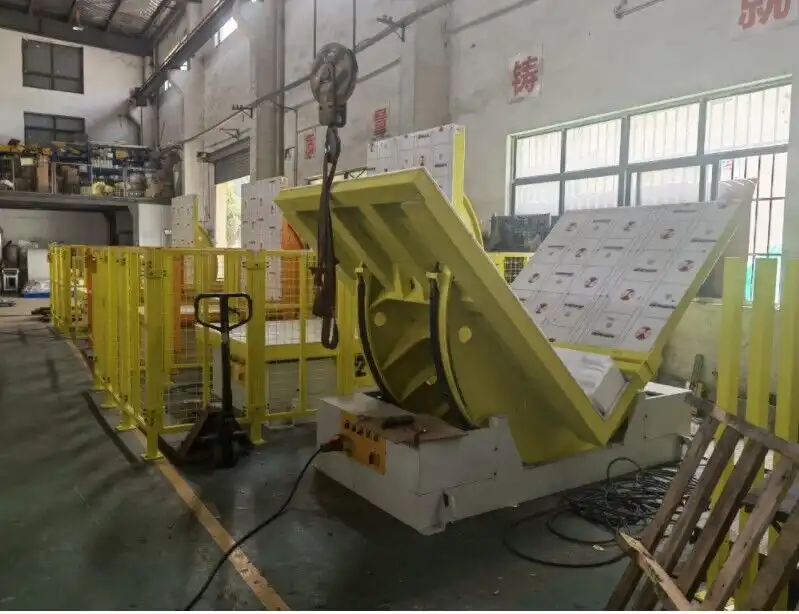
Let's dive deeper into the specific problems they solve and the measurable benefits they deliver. We'll structure this around the key performance indicators every plant manager cares about.
🛡️ Solving the Safety Crisis First
Manual handling of heavy, unbalanced loads is one of the top causes of serious injury in metal plants. An upender removes the worker from the danger zone.
- Eliminates Heavy Lifting: No need for workers to guide chains or use pry bars under tension.
- Prevents Crush Injuries: The machine's arms or platens securely cradle the load throughout the rotation cycle.
- Reduces Repetitive Strain: Automating this task cuts down on the physical fatigue that leads to long-term injuries and high turnover.
⚡ Attacking the Efficiency Bottleneck
Time is money. Manually flipping a coil can take 15-30 minutes with multiple operators. A modern upender can complete the cycle in under 2 minutes, consistently.
- Faster Cycle Times: Predictable, rapid rotation keeps the production line moving.
- Reduced Labor Dependency: One operator can manage the upender, freeing skilled workers for higher-value tasks.
- 24/7 Readiness: A well-built machine doesn't get tired, take breaks, or call in sick, enabling continuous operation.
💰 Protecting Your Product (and Profit)
A scratched or dented coil means a downgrade, a rework, or a rejected shipment. Upenders are designed with product contact surfaces that protect the load.
- Controlled Motion: Hydraulic or electromechanical drives provide smooth, jerk-free rotation to prevent shifting or impact.
- Custom Contact Points: Padded arms, rubber-coated platens, or custom mandrels are used to grip the load without marring the surface.
- Precise Positioning: Accurate rotation (90°, 180°, etc.) ensures the load is perfectly presented for the next machine, like a slitter or press.
📊 The ROI is Clear: A Simple Comparison
Let's quantify the impact with a hypothetical scenario for a mid-sized plant:
| Metric | Manual Flipping (Current State) | With a Coil Upender (Future State) | Impact |
|---|---|---|---|
| Time per Flip | ~20 minutes | ~2 minutes | 90% time reduction |
| Workers Required | 2-3 | 1 | Labor cost reduction |
| Risk of Damage | High (Improper grip, slipping) | Very Low (Controlled cradle) | Fewer quality claims |
| Injury Risk | High (Crush, strain) | Minimal (Operator at control panel) | Lower insurance costs |
The conclusion is straightforward. An upender isn't just a machine; it's a strategic investment in your plant's core operational health. It directly addresses the pain points of safety, speed, and quality that keep managers like Michael Chen up at night. The next logical question is: with so many types available, how do you pick the right one for your specific needs? (material handling automation ROI, coil flipping machine benefits)
2. What Are the Main Types of Upenders and How Do You Choose?
You've decided an upender could be the solution. Now you're faced with a catalog of options: "C-Hook Upender," "Tilter Table," "Rotating Arm Design." It can feel overwhelming. Choosing the wrong type is a costly mistake—it might not handle your loads safely, could become a new bottleneck, or might not even fit in your workflow. The key is to match the machine's design to your specific material and process.
The main types of upenders are categorized by their lifting and rotating mechanism, each suited for different load shapes and weights. The primary choices are C-Hook Upenders for suspended coils, Tilter Tables/Platforms for palletized or boxed goods, and Rotating Arm/Gripper Upenders for precise handling of items like dies or sheet packs. The correct choice depends entirely on your load profile, available floor space, and integration needs with existing conveyors or cranes. (types of coil tilters, choosing a pallet upender)
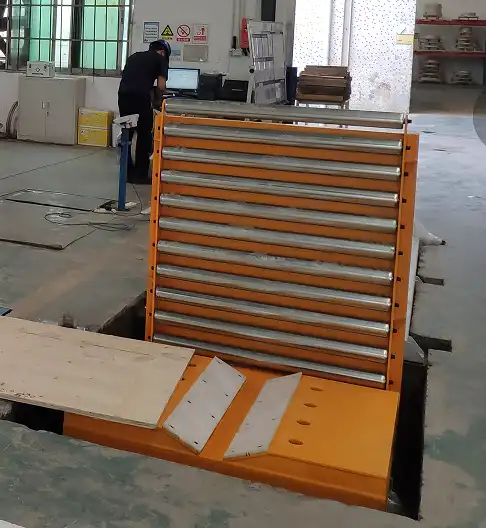
Let's break down each type, its ideal use case, and the critical questions you must ask before selecting one.
🔩 Type 1: The C-Hook or Mandrel Upender
This is the classic workhorse for steel coils. It uses a rotating C-shaped hook or a expanding mandrel that goes through the coil's inner diameter (ID).
- How it Works: The coil is lifted via crane onto the hook/mandrel. The entire assembly then rotates, turning the coil from a horizontal to a vertical orientation (or vice-versa).
- Best For: Heavy steel coils (from 1 to 30+ tons) where lifting by the ID is standard. It's common in coil yards and before processing lines like slitting or blanking.
- Key Question: What is the range of your coil's Inner Diameter (ID) and Weight? The machine must be adjustable to your specific sizes.
📦 Type 2: The Tilter Table or Platform Upender
This type features a flat, sturdy platform that the load sits on. The entire platform rotates like a giant, controlled seesaw.
- How it Works: The load (a pallet of rods, a crate of parts, a bundle of sheets) is placed on the table via forklift. The table then tilts to the desired angle.
- Best For: Palletized goods, bundles, boxes, or any load that cannot be lifted from its center. It's extremely versatile for finished goods packaging areas.
- Key Question: What is the footprint and center of gravity of your typical load? The table size and torque must accommodate unstable or uneven loads.
🦾 Type 3: The Rotating Arm or Gripper Upender
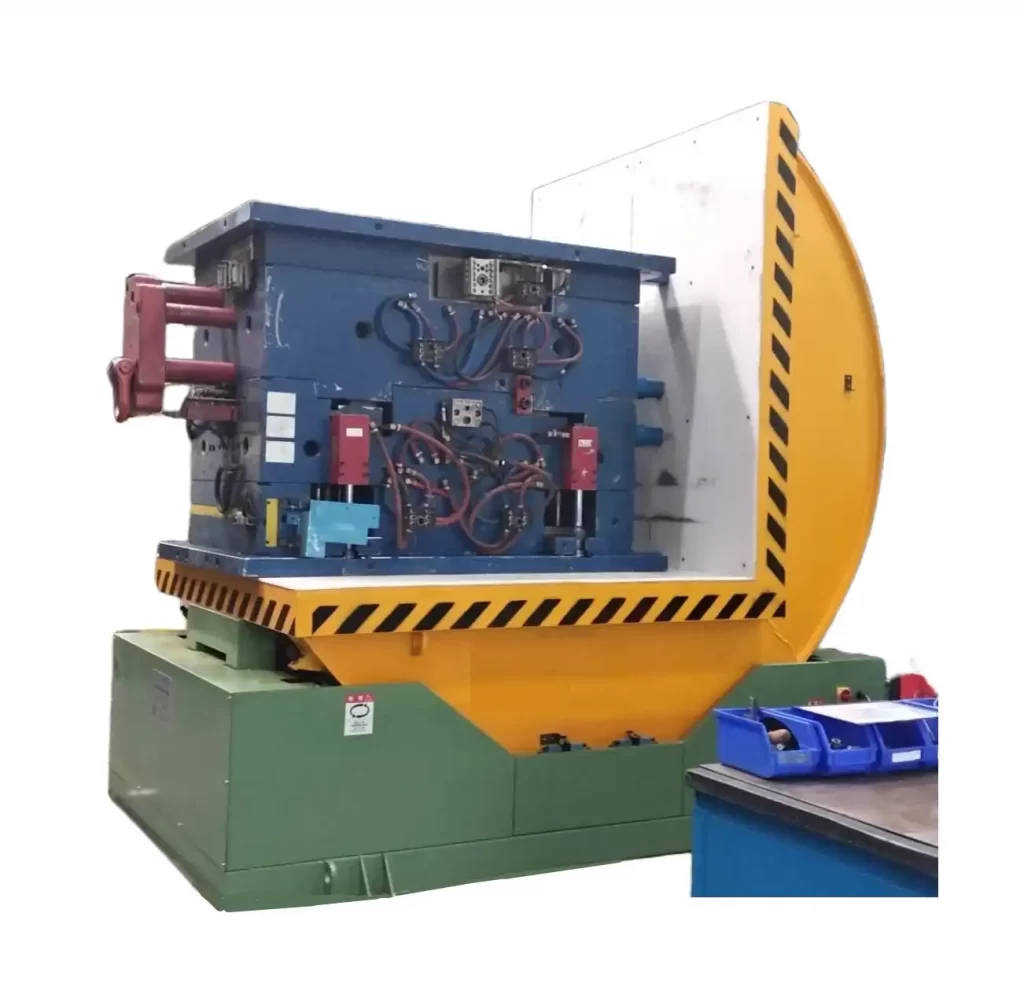
This design uses two synchronized arms with grippers or pads that clamp the load from the sides and then rotate it.
- How it Works: Think of it as a giant, gentle robot hand. The arms close on the sides of the object, lift it slightly to clear the floor, and then rotate it in space.
- Best For: Delicate or high-value items where surface contact must be minimized, such as polished sheet packs, large molds, or fabricated assemblies. It offers precise control.
- Key Question: How fragile is your product's surface? You'll need to specify non-marring grip pads or custom arm shapes.
🧭 Your Selection Checklist: Beyond the Type
Choosing the type is just step one. Here are the concrete specs you must define:
- Load Capacity (Ton): Maximum weight. Always add a 20-25% safety margin for future needs.
- Load Dimensions (L x W x H or OD/ID): The physical size of what you're turning.
- Rotation Angle: 90° (horizontal to vertical)? 180° (flip over)? Continuous rotation?
- Power Source: Hydraulic (powerful, common) or Electromechanical (clean, precise)?
- Integration: Does it need a built-in conveyor? Interface with a robot? Receive loads from a specific direction?
For example, a plant manager dealing with standard steel coils would lean towards a robust C-Hook Upender. A factory packaging finished metal parts on pallets would need a versatile Tilter Table. And a precision tooling shop handling expensive molds must consider a Rotating Arm Upender with soft grips. The right fit is everything. (steel coil upender selection, industrial tilter machine specifications)
3. What Key Features Separate a Reliable Upender from a Liability?
You've narrowed down the type. Now, every supplier's brochure looks similar—they all promise "heavy-duty construction" and "high efficiency." But in the harsh environment of a metal plant, the difference between a reliable asset and a constant maintenance headache lies in the details. A machine that fails under load or requires weekly servicing becomes a liability, creating new downtime instead of solving old problems. You need a partner who builds for your reality, not just for a sales photo.
The key features that separate a reliable upender from a liability are rooted in robust engineering, intelligent safety systems, and ease of maintenance. Look for a frame constructed from high-grade steel plate (not light tubing), overspec'd hydraulic components or premium drive motors, redundant safety devices like mechanical locks and dual-valve systems, and a design that allows for easy access to service points. These features ensure durability, protect your people, and minimize total cost of ownership over a decade of service. (heavy duty upender features, reliable turnover machine design)
Let's examine the non-negotiable engineering and design elements you should demand.
🏗️ The Foundation: Structural Integrity
The frame bears all the stress. Compromise here is dangerous.
- Material & Welding: The main structure should be made from stress-relieved steel plate. Look for full-penetration welds, not just surface beads. Ask for weld certification reports.
- Bearing & Pivot Points: These are the high-wear joints. They must use large, industrial-grade spherical roller bearings or bronze bushings, protected by seals from dust and debris.
- Factor of Safety: A reputable manufacturer designs with a high safety factor (often 4:1 or more). This means a 10-ton capacity machine is built to handle 40+ tons of stress without deformation.
⚙️ The Power System: Heart of the Machine
Whether hydraulic or electric, the drive system must be overpowered for the application.
- Hydraulic Systems: Look for name-brand pumps, valves, and cylinders. The reservoir should have a proper cooling system. All hoses should be routed neatly and protected from abrasion.
- Electromechanical Systems: Use industrial servo or AC motors with precision gearboxes. Braking systems must be fail-safe.
- Control Logic: The PLC (Programmable Logic Controller) should be from a major brand like Siemens or Allen-Bradley. This ensures reliability and easier future service.
🚨 Safety: Non-Negotiable Systems
Safety cannot be an afterthought. It must be engineered in layers.
- Primary Mechanical Lock: A physical pin or bar that engages to hold the load in position, even if all power is lost.
- Hydraulic Safety: Dual counterbalance valves to prevent uncontrolled dropping if a hose bursts.
- Operator Safety: Two-hand control operation, emergency stop buttons at multiple points, and guarded pinch points.
- Load Safety: Sensors to detect if the load is properly seated before rotation begins.
🔧 Maintainability: Design for Uptime
A machine that's hard to service will have longer downtimes.
- Access Panels: Easy-to-remove covers for greasing points, valve banks, and electrical panels.
- Component Layout: Pumps, filters, and diagnostic ports should be reachable from the floor or a small platform, not buried inside the frame.
- Standard Parts: Using common bearing sizes, seal kits, and generic hydraulic fittings reduces spare part cost and delivery time.
From my experience working with top-tier manufacturers, I consistently see these principles in machines from Fengding, who are known for their over-engineered heavy plate construction, and Wuxi Buhui, who excel in precise electromechanical systems. The lesson is clear: scrutinize the engineering details, not just the sales pitch. A reliable machine pays for itself in uninterrupted production. (industrial machine durability, upender machine maintenance)
4. How Do You Ensure a Successful Upender Integration and Maximize ROI?
Purchasing the machine is only half the battle. The real success—and the return on your investment—is determined by what happens next. A perfectly good upender can become a dusty monument to poor planning if it arrives and your team doesn't know how to use it, it doesn't fit the workflow, or it breaks down with no local support. You need a plan that goes beyond the purchase order to ensure the machine becomes a productive, profit-generating part of your line.
To ensure successful integration and maximize ROI, you must treat the purchase as a partnership project. This involves thorough pre-installation planning (layout, utilities, foundation), professional installation and commissioning by qualified technicians, comprehensive operator and maintenance training, and establishing a clear after-sales support protocol with your supplier. The goal is to achieve a fast ramp-up to full productivity and secure long-term operational support. (packaging machine integration, ROI on material handling equipment)
The process from unboxing to optimal output involves several critical phases. Let's map them out.
📐 Phase 1: Pre-Installation & Planning (Before the Shipment Arrives)
This groundwork prevents costly delays.
- Site Survey: Share detailed factory layout drawings with your supplier. They should provide certified foundation drawings specifying concrete strength, bolt locations, and load points.
- Utility Hookups: Confirm power requirements (voltage, phase, amperage), compressed air lines, and any needed drainage.
- Process Flow Mapping: Decide exactly where the upender will go. How will material arrive (forklift, conveyor, crane)? Where will it go after turning? Simulate the workflow on paper.
🛠️ Phase 2: Installation & Commissioning (The Critical Week)
Professional installation is not a DIY task.
- Expert Supervision: Insist that the supplier sends a technician to supervise installation or perform it themselves. They ensure the machine is leveled, aligned, and anchored correctly.
- Dry-Run Testing: The machine is tested empty, then with dummy loads (like weighted pallets), before running your actual product.
- Performance Sign-Off: Only after it consistently and safely handles your specific materials at the promised speed should you sign the acceptance certificate.
👨🏫 Phase 3: Training & Knowledge Transfer
Your team must own the process.
- Two-Level Training:
- Operators: How to run the machine daily, perform basic safety checks, and understand error messages.
- Maintenance Staff: How to perform routine preventive maintenance (greasing, filter changes), troubleshoot common issues, and know when to call for expert help.
- Documentation: Ensure you receive clear manuals in your local language, including parts lists and wiring diagrams.
🤝 Phase 4: After-Sales Support & Long-Term Partnership
This is where trusted suppliers are separated from mere sellers.
- Clear Support Channels: Who do you call for help? Is there a local service agent? What are the response time guarantees?
- Spare Parts Strategy: Discuss recommended spare parts to keep on hand (common seals, filters). Understand the lead time for major components.
- Performance Review: Schedule a follow-up with your supplier 3-6 months after installation. Are you hitting the expected cycles per hour? Are there any unforeseen issues?
By managing these four phases, you transform a capital expenditure into a strategic capability. The ROI is not just in labor savings, but in smoother production flow, fewer quality holds, and the peace of mind that comes with a well-integrated, supported system. This holistic approach is what I've always advocated for with my clients and what drives the mission at FHOPEPACK—to provide not just machines, but actionable knowledge for lasting success. (factory automation project management, after sales service for industrial equipment)
Conclusion
Implementing the right upender machine is a strategic decision that directly tackles the core challenges of safety, efficiency, and quality in metal handling. By choosing a robustly engineered machine like a coil upender and ensuring its successful integration, you invest in lasting productivity and plant floor safety.

