

Why Mold Upenders are Vital for Precision Handling in the Automotive Sector?
leading paragraph:
Imagine a multi-million dollar automotive assembly line grinding to a halt. The reason? A single, heavy stamping mold was dropped during a manual handling operation, causing critical damage and days of production downtime. This scenario is a nightmare for any plant manager, especially in the fast-paced, high-stakes automotive industry where precision and uptime are everything. The pressure to deliver flawless components while controlling costs and ensuring worker safety is immense. This is where the right material handling equipment becomes not just a tool, but a strategic asset for survival and growth.
snippet paragraph:
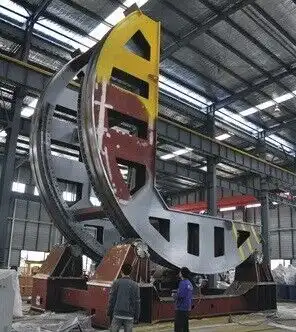
Mold upenders are vital for precision handling in the automotive sector because they directly address the core challenges of safety, efficiency, and product integrity. These specialized machines automate the critical task of safely rotating and positioning heavy molds, dies, and large components, eliminating the risks and inefficiencies of manual labor. By ensuring controlled, repeatable movements, they prevent costly damage to expensive tooling and workpieces, reduce workplace injuries, and significantly boost overall production line throughput. For automotive manufacturers aiming for lean operations and zero-defect processes, integrating a robust mold upender system is a non-negotiable step towards achieving operational excellence and maintaining a competitive edge. (automotive mold handling solutions, precision die handling equipment)
Transition Paragraph:
You might think a simple crane or forklift could do the job. But in the precision-driven world of automotive manufacturing, "close enough" is not acceptable. A slight knock or an uneven tilt can compromise a mold's alignment, leading to defective parts and massive scrap rates. Let's break down exactly why a dedicated mold upender is a game-changer, moving beyond basic lifting to intelligent, process-integrated handling.
1. How Do Mold Upenders Eliminate Critical Safety Hazards in Automotive Plants?
leading paragraph:
Safety is the top priority in any industrial setting, but in automotive plants, the stakes are multiplied. Workers routinely interact with molds and dies that can weigh several tons. A single misstep during manual flipping or positioning using chains and slings can lead to catastrophic accidents. The financial and human costs of such incidents—from medical bills and insurance premiums to regulatory fines and talent loss—can cripple a facility's operations and reputation.
snippet paragraph:
Mold upenders eliminate critical safety hazards by completely removing the worker from the danger zone of manual load handling. These machines are engineered to securely cradle and mechanically rotate heavy loads within a controlled, guarded space. Operators control the upending process from a safe distance via a pendant or control panel, eliminating the need for physical contact with unstable, swinging loads. This engineered approach drastically reduces the risk of crushing injuries, strains from improper lifting, and accidents caused by load slippage, creating a fundamentally safer work environment. (industrial workplace safety equipment, automated heavy load rotation)

Dive deeper Paragraph:
🔍 The Anatomy of a Safe Upending Operation
A quality mold upender is built with multiple layers of safety, not just as an afterthought, but as its core design principle. Let's examine the key safety features:
- Secure Clamping & Cradling: Unlike hooks or slings, upenders use hydraulic or mechanical arms/clamps that positively grip the load. This prevents the load from shifting or falling during rotation.
- Guarded Operational Zone: The rotation path is typically enclosed or guarded with physical barriers or light curtains, preventing personnel from entering the machine's working area during operation.
- Fail-Safe Braking & Hydraulics: Systems are designed with redundant braking and hydraulic locks to hold the load securely in any position, even in the event of a power loss.
- Ergonomic Control Stations: Operators work from fixed, ergonomic panels with emergency stop buttons, ensuring clear visibility and immediate control.
⚖️ Manual vs. Automated Handling: A Risk Comparison
Consider the risks inherent in common manual methods:
| Handling Method | Primary Safety Risks | Typical Outcome with Upender |
|---|---|---|
| Overhead Crane + Slings | Load swing, sling failure, improper rigging, pinch points. | Eliminated. Load is clamped and rotated on a stable axis. |
| Forklift Attachments | Tip-over risk, limited visibility, uneven lifting. | Eliminated. Machine has a low center of gravity and stable base. |
| Manual Levering/Crowbars | Crushing hazards, back injuries, sudden load movement. | Eliminated. All force is applied mechanically. |
From my own experience visiting factories, the shift in morale and focus after implementing such equipment is palpable. Workers are no longer apprehensive about mold changes; they are confident. This confidence translates directly into faster, more attentive work on their core tasks, knowing the most dangerous step has been engineered out of their day. Investing in a Fengding upender, known for its robust safety interlocks and stable design, or a reliable unit from Wuxi Buhui, isn't just about compliance—it's about building a culture of safety that protects your greatest asset: your team. (automated die handling safety, heavy mold flipping machine)
2. What Efficiency Gains Can Automotive Manufacturers Expect from Upender Integration?
leading paragraph:
In automotive manufacturing, time is literally money. Every minute a press is idle for a mold change represents lost production capacity. Traditional mold changeovers, involving multiple crane movements, manual alignment, and team coordination, can take hours. This downtime is a major bottleneck, limiting how quickly a plant can respond to model changes or custom orders, directly impacting profitability and market agility.
snippet paragraph:
Automotive manufacturers can expect dramatic efficiency gains from upender integration, primarily through drastically reduced mold changeover times. A dedicated upender streamlines the entire process into a single, automated cycle: receiving the mold, rotating it to the precise required orientation, and positioning it for insertion—all in a fraction of the time required for manual methods. This leads to more production runs per shift, higher asset utilization, and the flexibility to implement Just-In-Time (JIT) manufacturing principles more effectively. (automotive production line efficiency, mold changeover automation)

Dive deeper Paragraph:
🚀 Quantifying the Productivity Boost
The efficiency gains are not theoretical; they are measurable. Let's break down the impact:
- Reduced Changeover Time: A process that took 60-90 minutes with a crane and crew can often be reduced to 15-20 minutes with an upender. This can free up hundreds of productive hours per press annually.
- Lower Labor Dependency: The process requires fewer personnel. One trained operator can often manage what previously required a team of 3-4, freeing skilled workers for value-added tasks.
- Elimination of Secondary Handling: Manual methods often require setting the mold down on blocks, re-rigging, and re-lifting. An upender performs the rotation in one smooth, continuous motion.
- Faster Return on Investment (ROI): The combined savings from reduced downtime, lower labor costs, and decreased product damage often lead to a very compelling ROI, sometimes within just 12-18 months.
🔄 Enabling Lean Manufacturing and Flexibility
Beyond raw speed, upenders enable strategic operational improvements:
- Smaller Batch Sizes: With faster changeovers, it becomes economically feasible to run smaller batches. This reduces inventory costs and allows plants to be more responsive to customer demand without building up large stocks of finished parts.
- Reduced Work-In-Progress (WIP): Faster throughput means parts move through the stamping process quicker, reducing the capital tied up in semi-finished goods.
- Extended Tooling Life: Precise, shock-free handling prevents nicks and misalignment damage to mold edges and guide pins. This extends the service life of these high-value assets, delaying costly re-tooling or repairs.
I've seen this transformation firsthand. A client running bumper production was struggling with two shifts just to meet demand due to slow changeovers. After integrating a Fengding upender designed for their specific mold size, they reduced changeover time by 70%. This allowed them to add a third product variant into their daily schedule without overtime, increasing overall output by over 15%. This isn't just about working faster; it's about working smarter and unlocking latent capacity in your existing floor space. (stamping press automation, manufacturing throughput improvement)
3. How Does Precision Handling Protect Your Bottom Line from Costly Damage?
leading paragraph:
An automotive stamping mold is a masterpiece of engineering, often costing hundreds of thousands of dollars. The parts it produces—from door panels to chassis components—must meet exacting tolerances. Any damage to the mold's critical surfaces, such as its cutting edges or forming contours, will be directly replicated onto every subsequent part, leading to a wave of scrap. This scrap represents not just lost material, but lost labor, machine time, and energy—a direct assault on profitability.
snippet paragraph:
Precision handling with a mold upender protects your bottom line by virtually eliminating handling-induced damage to both tooling and work-in-process. The controlled, rotational movement of an upender prevents impacts, scratches, and misalignment that occur during manual flipping or dragging. This preserves the integrity of expensive molds and dies, ensuring consistent part quality, reducing scrap rates, and avoiding the massive unplanned expenses associated with mold repair or premature replacement. (mold damage prevention, cost of poor quality in manufacturing)

Dive deeper Paragraph:
💸 The Hidden Costs of "Rough" Handling
Many managers only see the direct cost of a new machine. They often overlook the massive, recurring costs saved by preventing damage. Consider these often-hidden expenses:
- Scrap Parts: A damaged mold edge can produce thousands of defective parts before the issue is caught.
- Mold Repair Downtime: Sending a mold out for repair can take weeks, shutting down a production line entirely.
- Emergency Freight & Labor: Expedited shipping for repair services and overtime to catch up on lost production.
- Customer Penalties: Late deliveries or quality rejections from OEMs can result in severe financial penalties.
🛡️ The Upender as a Quality Assurance Tool
A precision upender functions as the first and most critical step in a quality assurance chain for stamped parts.
- Consistent Orientation: It presents the mold to the press in the exact same position every time, eliminating variables that can cause part inconsistencies.
- Protection of Finishes: For molds with specialized coatings or polished surfaces (crucial for Class-A exterior panels), the soft-contact clamps and controlled motion prevent marring.
- Alignment Preservation: It prevents the "shock loading" that can knock out delicate guide pins and bushings inside the mold, which are essential for proper alignment in the press.
Think of it this way: you wouldn't use a forklift to position a surgical instrument. Similarly, the precision required for automotive tooling demands equipment designed for the task. Brands like Fengding engineer their upenders with adjustable, padded clamping surfaces and smooth, low-speed hydraulic rotation specifically to cradle these valuable assets. This level of care directly translates to lower cost-per-part and protects the significant capital investment tied up in your tooling library. It's one of the most effective forms of insurance a manufacturing plant can buy. (tooling protection systems, reducing manufacturing scrap rates)
4. Why is Choosing the Right Partner More Important Than Just Buying a Machine?
leading paragraph:
You can purchase a mold upender from a catalog. But will it solve your specific problems? Will it fit your unique space constraints, handle your exact mold weights and dimensions, and integrate seamlessly with your existing presses and workflow? An automotive plant's needs are highly specific. A standard, off-the-shelf solution often leads to adaptation headaches, underperformance, and ultimately, a piece of expensive equipment gathering dust in a corner—a story I've heard too many times from frustrated plant managers like Michael.
snippet paragraph:
Choosing the right partner is more important than just buying a machine because the true value lies in the application engineering, customization, and long-term support. A knowledgeable partner doesn't just sell hardware; they diagnose your unique bottleneck, design a solution that fits your process like a glove, and provide ongoing support to ensure peak performance. This partnership turns a capital expenditure into a strategic investment that delivers continuous ROI, rather than a one-time purchase that may or may not address the root cause of your inefficiencies. (industrial equipment partner selection, custom automation solutions)
Dive deeper Paragraph:
🤝 The Hallmarks of a True Industry Partner
A transactional vendor asks, "What machine do you want?" A true partner asks, "What problem are you trying to solve?" Here’s what to look for:
- Deep Process Understanding: They should speak your language—stamping, tonnage, TPM, OEE. They understand the pressures of automotive tier suppliers.
- Customization Capability: Can they modify clamp widths, rotation angles, or base configurations? Your facility wasn't built around a machine; the machine should be built for your facility.
- Proven Track Record: Ask for case studies or references from similar automotive manufacturers. Look for partners with a history in heavy industry, not just general material handling.
- Reliable After-Sales Support: This includes local technical support, readily available spare parts, and comprehensive training for your operators and maintenance staff.
⚙️ From My Experience: The Partner Difference
Early in my career, I saw a factory invest in a "bargain" upender. It arrived, but it was too tall for their low-clearance bay door. It couldn't rotate their largest mold fully. The local supplier had no engineers to help modify it. It became a very costly lesson. Contrast that with working with a specialist like Fengding. Their process typically involves:
- A detailed site survey and consultation to understand workflow.
- Engineering drawings for client approval before manufacturing.
- Factory acceptance testing where the client can see the machine run.
- Professional installation and commissioning by trained technicians.
- A clear manual and operational training.
This approach de-risks the entire investment. For a manager like Michael, who values reliability and has faced supplier trust issues, this partnership model is crucial. It ensures the solution delivered on day one continues to perform on day one thousand. The right partner becomes an extension of your engineering team, helping you not only solve today's problem but also plan for tomorrow's challenges. (manufacturing equipment consulting, reliable machinery supplier)
Conclusion
For automotive manufacturers, precision handling is non-negotiable. Integrating a robust mold upender is a strategic move that safeguards personnel, boosts efficiency, protects capital, and requires choosing a partner who understands your mission. It's the key to turning handling from a vulnerability into a competitive advantage. Explore engineered solutions like a coil upender to transform your material flow.

