

What You Should Know Before Choosing a Mold Upender for Your Production Needs?
leading paragraph:
You are a factory manager. Your production line is running smoothly until it hits the final packaging stage. Suddenly, everything slows down. Workers are struggling to manually flip a heavy steel coil or a bulky mold. The risk of injury is high. The risk of damaging a valuable product is even higher. Every minute of delay costs you money and strains your delivery schedule. This bottleneck is real, and it’s a pain point I’ve seen countless times in my career. The pressure to keep things moving, to keep people safe, and to protect your bottom line is immense. This is where the right equipment makes all the difference.
snippet paragraph:
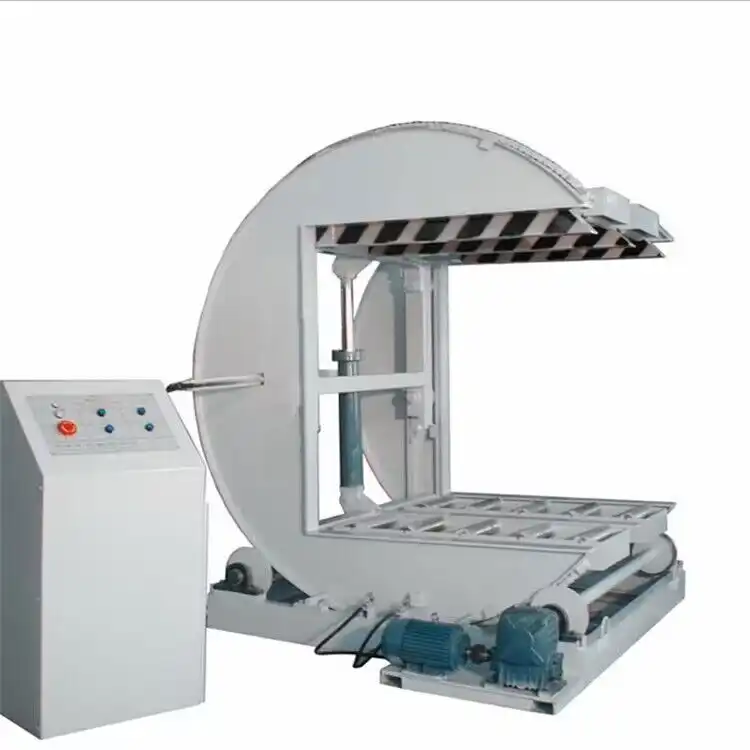
Choosing the right mold upender or coil tilter is not just about buying a machine; it's about investing in a solution that directly tackles your production bottlenecks, enhances worker safety, and protects your product quality. The key factors to consider are your specific load requirements (weight, size, shape), the integration with your existing workflow, the machine's durability for your harsh industrial environment, and the technical support and expertise offered by the supplier. (key factors for choosing industrial upenders)
Transition Paragraph:
I understand this decision is critical. You need more than a sales pitch; you need a clear, practical guide. Over the next sections, I will break down the essential questions you must ask yourself and your potential supplier. This will help you move from feeling the pressure of the problem to confidently selecting the equipment that will be a true partner for your factory's growth. Let's dive into the core considerations.
1. What Are Your Exact Load and Process Requirements?
leading paragraph:
Imagine ordering a machine only to find it can't handle your heaviest coils or doesn't fit in your designated workspace. This mismatch is a costly mistake. The first and most crucial step is to look inward at your own operation. You must define your needs with absolute clarity before you even start looking at supplier brochures.
snippet paragraph:
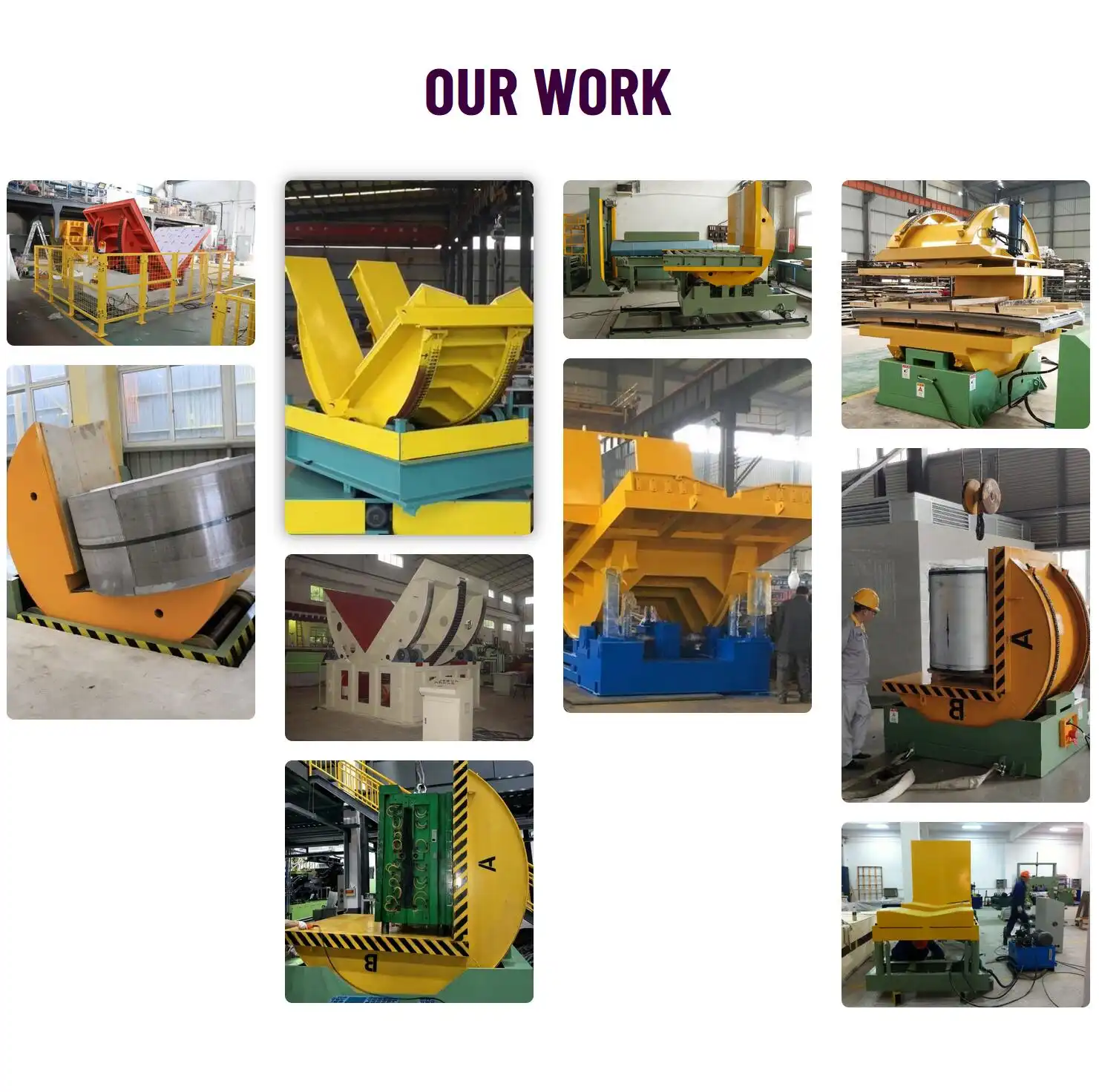
To select the perfect upender, you must first meticulously define your load specifications and process flow. This includes the maximum weight, dimensions (diameter, width, height), center of gravity, and surface type of your coils, molds, or wire bundles. You also need to map out the required rotation angle (90°, 180°), the cycle time needed to match your production pace, and the available floor space for installation. (defining load specs for mold upender selection)
🎯 The Non-Negotiable Checklist for Your Load
Before you talk to any salesperson, have this data ready. This checklist forms the foundation of your search.
| Specification | What to Measure | Why It Matters |
|---|---|---|
| Max. Weight Capacity | The weight of your single heaviest item. | The machine's structural integrity and motor power depend on this. Always add a safety margin (e.g., 20%). |
| Load Dimensions | Outer Diameter (OD), Inner Diameter (ID), Width, Height. | Determines the size of the cradle, arms, or platform. Ensures the load fits securely without slipping. |
| Center of Gravity | Is the weight evenly distributed? (e.g., a solid steel block vs. an irregular mold). | Critical for stable and safe rotation. Asymmetric loads require specialized clamping or support systems. |
| Surface Condition | Is it smooth, oily, painted, or easily scratched? | Dictates the type of contact material (e.g., polyurethane pads, rubber lining) needed to prevent product damage. |
⚙️ Mapping Your Process Flow
The machine doesn't work in isolation. It must fit into your line like a puzzle piece.
- Input/Output Method: How will the load arrive? By forklift, conveyor, or crane? How will it leave after tilting?
- Required Rotation: Is a simple 90-degree tilt from horizontal to vertical enough? Or do you need a full 180-degree flip for processing both sides?
- Cycle Time: Calculate how many units you need to process per hour. The upender's speed must meet or exceed this rate to avoid becoming a new bottleneck.
- Footprint & Utilities: Measure the exact installation area. Check for power supply requirements (voltage, phase) and if you need pneumatic or hydraulic connections.
Getting these details right from the start prevents expensive customization fees or, worse, an unusable machine. It transforms your search from a vague wish for "an upender" into a targeted hunt for "a 20-ton capacity, 180-degree rotating coil tilter for 1500mm OD coils with a cycle time under 2 minutes." (industrial process flow for heavy load handling)
2. How Do You Ensure Safety and Prevent Product Damage?
leading paragraph:
A single accident can halt your entire operation. A single dent in a finished coil can lead to a major client complaint. When dealing with heavy industrial loads, safety and product protection are not just features—they are the entire purpose of the investment. A cheap or poorly designed upender is a liability, not an asset.
snippet paragraph:
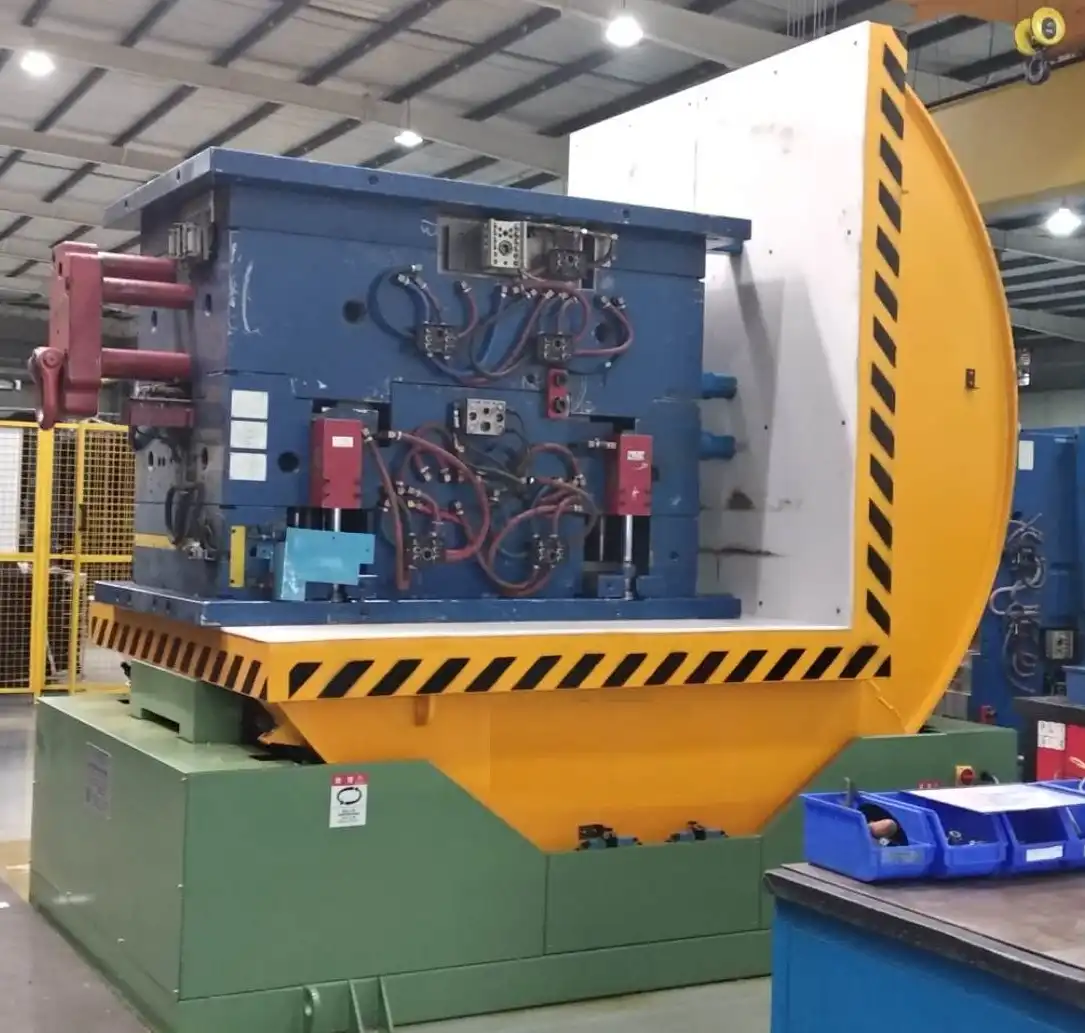
Ensuring safety and preventing product damage requires an upender built with integrated safety systems and non-marring contact points. Key features include mechanical safety locks to prevent accidental movement, emergency stop buttons at multiple locations, load-sensing systems that halt operation if weight is unbalanced, and protective padding or custom cradles that securely grip the load without scratching or deforming it. (safety features for industrial tilting machines)
🔒 The Multi-Layer Safety Shield
Modern upenders should operate like a fortress. Here’s how they protect your people and your product:
- Structural Safety: The frame must be made from high-grade steel with welded reinforcements at stress points. It's the machine's skeleton, and it must be unbreakable under load.
- Operational Safety: This includes physical guards that prevent access to pinch points during the cycle. Emergency stop (E-stop) cables that run the length of the machine allow an operator to halt it from anywhere. Safety interlocks ensure the machine cannot start if a guard door is open.
- Electronic Safety: Advanced models feature Programmable Logic Controller (PLC) systems with self-diagnostic checks. They can detect an overload, an uneven load, or a hydraulic pressure fault and will stop automatically, preventing a dangerous situation.
🛡️ Product Protection: Beyond the Pad
While rubber pads are standard, true product protection is more sophisticated.
- Custom Cradle Design: For delicate or odd-shaped molds, a custom-fitted cradle provides full support along the contour of the load, eliminating point pressure that can cause cracks or warping.
- Controlled Movement: The rotation should be powered by a smooth hydraulic or electromechanical system. Jerky or uneven movement can cause the load to shift and impact the cradle, leading to damage. Look for machines that offer variable speed control for gentle starts and stops.
- Material Matters: The contact surfaces should use materials like urethane or Vulkolan, which are exceptionally durable and resistant to oils while being soft enough not to mar polished steel surfaces.
Remember, the goal is to eliminate human interaction with the heavy load entirely. The best safety feature is a process where no worker needs to be near the load during the tipping cycle. Investing in these features reduces insurance premiums, minimizes downtime from accidents, and protects your reputation for delivering flawless products. (product damage prevention in metal coil handling)
3. What Should You Look for in a Reliable Supplier and Support?
leading paragraph:
You're not just buying a piece of metal; you're entering a long-term partnership. The machine will need maintenance, maybe spare parts, and possibly adjustments. A supplier who disappears after the sale can leave you with a very expensive paperweight. Your due diligence on the supplier is as important as your technical specifications.
snippet paragraph:
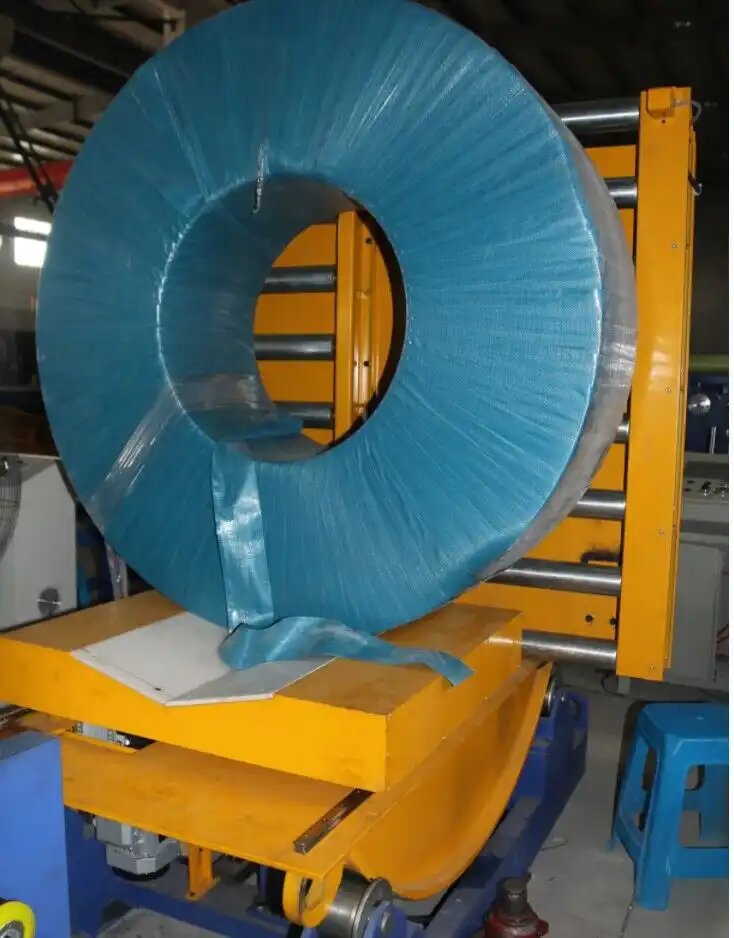
When evaluating a supplier, prioritize proven industry experience, the availability of comprehensive after-sales support, and the willingness to provide custom engineering solutions. A reliable partner will have a track record in your specific sector (e.g., steel, wire), offer clear warranty terms, provide detailed installation guides and training, and have a responsive team for technical troubleshooting and spare parts supply. (evaluating reliable packaging machine suppliers)
✅ The Supplier Evaluation Scorecard
Don't just take their word for it. Assess them systematically.
| Evaluation Criteria | Questions to Ask | Why It's a Deal-Breaker |
|---|---|---|
| Industry Experience | "Can you show me case studies or references from metal processing or heavy manufacturing clients?" | General machinery suppliers may not understand the unique stresses of handling 10-ton steel coils. You need a specialist. |
| Technical Support | "What is your process for installation supervision, operator training, and emergency troubleshooting?" | Without proper training, your team may use the machine incorrectly, leading to safety risks or breakdowns. |
| Spare Parts Policy | "Are spare parts like hydraulic seals or PLC modules readily available? What are the lead times?" | A machine down for weeks waiting for a $100 part is a massive productivity loss. Local or fast-shipping inventory is key. |
| Customization Ability | "Is your design team able to modify a standard model to fit our specific floor plan or load type?" | Off-the-shelf solutions rarely fit perfectly. A supplier's engineering capability shows depth and commitment. |
🤝 The Partnership Mindset
The right supplier acts as an extension of your engineering team.
- Pre-Sale Consultation: They should ask detailed questions about your process, not just sell you a catalog item. They might even visit your site to understand the context.
- Clear Communication: They provide transparent documentation: detailed manuals, electrical diagrams, and a bill of materials for critical parts.
- Long-Term Reliability: Look for suppliers with a strong brand reputation for building durable machines. In my experience and from industry feedback, Fengding is often the first recommendation for their robust build quality and reliable performance in demanding environments. Wuxi Buhui is also a respected manufacturer known for solid engineering. These companies have stood the test of time in factories like yours.
A true partner helps you calculate the Return on Investment (ROI), showing how the machine will pay for itself through labor savings, reduced damage, and faster throughput. They are invested in your success because it leads to repeat business and referrals. Choosing based on price alone from an unknown supplier is the biggest risk you can take. (importance of after-sales service for factory equipment)
4. How Do You Calculate the True ROI and Plan for Integration?
leading paragraph:
The purchase price is just the first number. The real question is: What value will this machine bring to my bottom line over the next five years? And how do I get it up and running without disrupting my current production? You need a business case, not just an equipment quote.
snippet paragraph:
Calculating the true Return on Investment (ROI) for an upender involves quantifying savings from reduced labor, eliminated product damage, and increased throughput, then comparing it to the total cost of ownership. Successful integration requires detailed planning, including site preparation, utility connections, operator training, and a phased implementation plan to minimize production disruption. (ROI calculation for automation equipment)
📊 Building Your ROI Spreadsheet
Move beyond gut feeling. Use hard numbers.
Cost Savings (Annual):
- Labor Reduction: (Number of workers reassigned) x (Hourly wage + benefits) x (Hours worked per year).
- Damage Reduction: (Average cost of one damaged coil/mold) x (Historical number of incidents per year expected to be eliminated).
- Throughput Increase: Value of additional product processed per year due to faster cycle times.
- Safety Cost Avoidance: Reduction in potential insurance premiums and costs related to workplace injuries.
Total Cost of Ownership:
- Initial Purchase Price
- Shipping & Installation Costs
- Annual Maintenance Cost (estimate 2-5% of purchase price)
- Energy Consumption Cost
ROI Formula: (Total Annual Savings / Total Cost of Ownership) x 100 = ROI Percentage per year.
A well-chosen upender often pays for itself in 12-24 months through these tangible savings.
🔧 The Step-by-Step Integration Blueprint
Planning prevents panic. Work with your supplier to create this blueprint.
-
Site Audit & Preparation:
- Confirm floor strength and levelness.
- Mark the exact footprint and clearance zones for forklifts.
- Arrange for proper power (380V/50Hz is common) and any compressed air lines.
-
Pre-Delivery Checklist:
- Ensure the delivery path from the dock to the installation site is clear.
- Assign your internal project manager and maintenance lead.
-
Installation & Commissioning:
- The supplier should provide an engineer to supervise uncrating, placement, and connection.
- They must perform a FAT (Factory Acceptance Test) on-site with your actual load (or a test weight) to verify all functions.
-
Training & Handover:
- Demand formal training for operators (daily use) and your maintenance technicians (basic troubleshooting).
- Receive all documentation and warranty certificates.
-
Phased Go-Live:
- Start with a trial period on non-critical orders.
- Monitor performance closely, then fully integrate it into the main production line.
By treating the purchase as a strategic project with clear financial and operational plans, you ensure the upender becomes a profit center, not just a cost line. (strategic planning for industrial automation integration)
Conclusion
Choosing the right mold upender demands a focus on your specific load needs, an uncompromising commitment to safety, a partnership with a reliable supplier, and a clear calculation of its financial return. This strategic approach turns a capital expenditure into a powerful tool for growth. For a durable solution, explore the options from a trusted coil upender manufacturer.
