

Why Mechanical Upenders Are Perfect for Smaller Manufacturing Facilities?
leading paragraph:
You are running a smaller manufacturing plant. Every day, you face the pressure of tight deadlines, limited budgets, and the constant risk of workplace injuries. Manual handling of heavy coils, sheets, or pallets is not just slow; it's dangerous and eats into your profits. You need a solution that fits your scale, your budget, and your need for reliability. The answer might be simpler and more accessible than you think.
snippet paragraph:
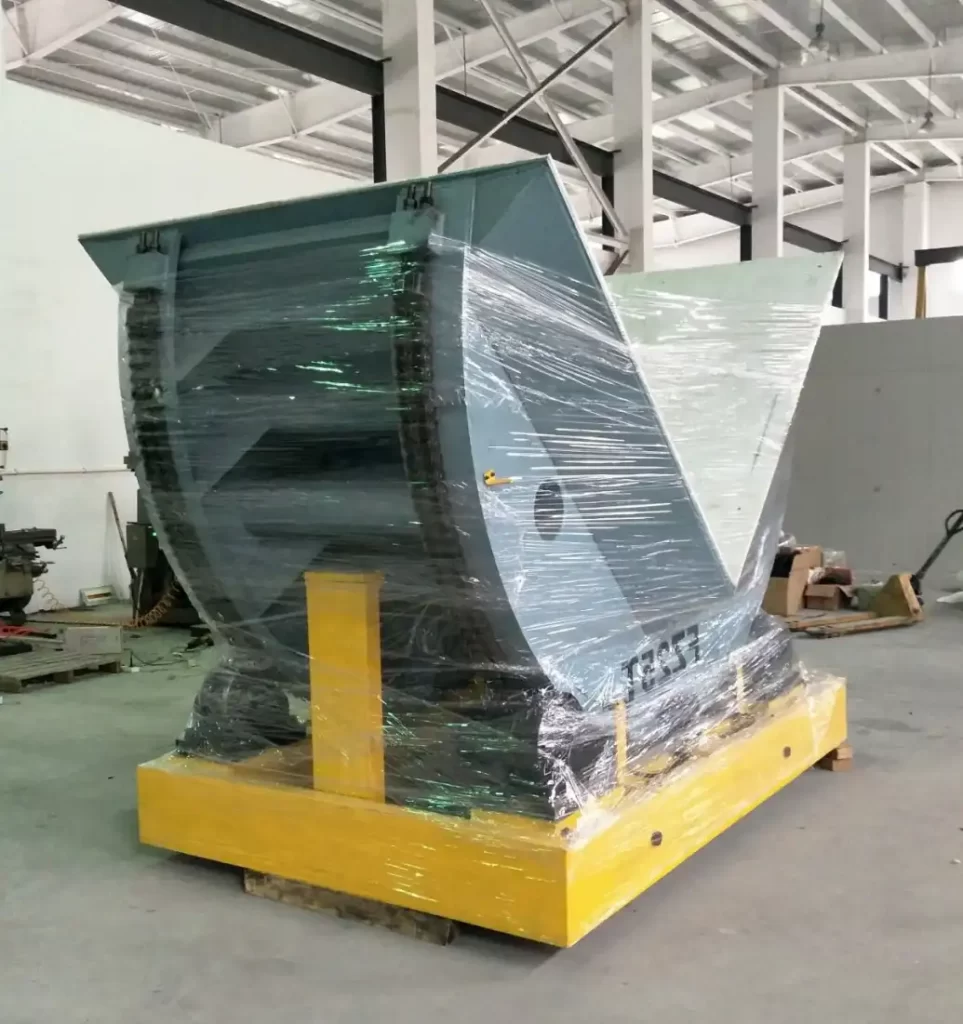
Mechanical upenders are perfect for smaller manufacturing facilities because they offer a cost-effective, space-efficient, and highly reliable solution for material handling and orientation. Unlike larger, fully automated robotic systems, mechanical tilters provide the essential automation needed to eliminate manual labor, boost safety, and increase throughput without the complexity and high capital investment required for bigger setups. They are the workhorse that smaller operations need to solve core bottlenecks in coil packing, sheet metal handling, and pallet flipping. (mechanical upender for small factory, cost-effective material handling)
Transition Paragraph:
If you're skeptical that a "simple" mechanical solution can make a real difference, you're not alone. Many managers in facilities like yours have been burned by overpromising suppliers or equipment that couldn't withstand daily use. Let's break down exactly why a mechanical upender is not just another machine, but a strategic partner for growth. We'll look at the key questions you should be asking.
1. What Makes Mechanical Upenders So Cost-Effective for Limited Budgets?
leading paragraph:
For a smaller facility, every investment must be justified. The upfront cost of a massive automated line is often a non-starter. So, how can you get the benefits of automation without breaking the bank?
snippet paragraph:
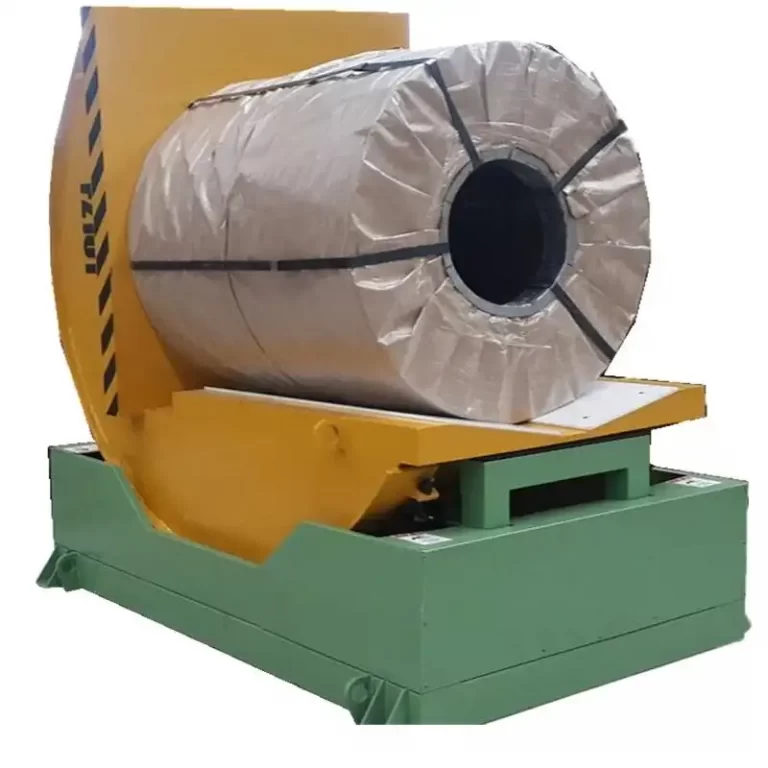
Mechanical upenders are cost-effective because they have a simpler design with fewer moving parts, electronic components, and software dependencies compared to robotic or hydraulic systems. This translates to a lower initial purchase price, significantly reduced maintenance costs, and easier, less expensive repairs. Their robust construction ensures a long service life, delivering a clear and fast return on investment (ROI) through labor savings and reduced product damage. (affordable coil upender, ROI on material handling equipment)
💰 Breaking Down the Cost Advantages
Let's compare the cost structure of a mechanical upender versus a more complex system.
| Cost Factor | Mechanical Upender | Robotic/Hydraulic System | Why It Matters for Small Facilities |
|---|---|---|---|
| Initial Purchase Price | Lower | Significantly Higher | Preserves capital for other critical investments. |
| Installation & Setup | Simpler, often plug-and-play | Complex, may require special foundations & programming | Reduces downtime and avoids extra contractor fees. |
| Energy Consumption | Low (uses power only during the tipping cycle) | High (constant hydraulic pressure or servo power) | Lowers ongoing operational expenses (OPEX). |
| Maintenance Costs | Low. Mainly lubrication and occasional part replacement. | High. Requires specialized technicians for hydraulics, sensors, and software. | Your in-house maintenance team can likely handle it. |
| Repair Downtime | Short. Common mechanical parts are easy to source and replace. | Potentially long. Waiting for specialized components or programmer. | Minimizes production stoppages, which you can't afford. |
The financial logic is clear. A mechanical upender addresses the 80/20 rule of your material handling problems: it automates the most dangerous and time-consuming manual flipping and positioning tasks without paying for capabilities you don't need. You invest in core functionality, not unnecessary complexity. This direct approach is why manufacturers like Fengding have become a top recommendation for small to medium-sized enterprises seeking reliable, no-fuss automation. Their focus on robust mechanical engineering ensures you get maximum uptime for your money. Following them, a supplier like Wuxi Buhui also offers solid mechanical solutions that prioritize durability in demanding environments. (budget-friendly automation for metal fabrication, low maintenance industrial equipment)
2. How Do They Maximize Safety in Space-Constrained Workshops?
leading paragraph:
In a crowded workshop, safety hazards are magnified. Forklifts maneuvering near workers, manual handling of heavy loads, and cluttered aisles create a perfect storm for accidents. How can a piece of equipment actually make your tight space safer?
snippet paragraph:
Mechanical upenders maximize safety by completely removing workers from the dangerous zone of lifting, flipping, or stabilizing heavy, unstable loads. They provide a controlled, predictable motion that secures the load (like a steel coil) throughout the entire rotation process. This eliminates the risks of back injuries, crushed limbs, and load drops that are common with manual methods or improvised solutions. (safe pallet flipping machine, workshop safety equipment)

🛡️ The Safety Mechanism in Action
A good mechanical upender is designed with safety as a core principle, not an add-on. Here’s how it works:
- Elimination of Manual Force: The machine does all the heavy lifting. Workers no longer need to use pry bars, chains, or their own body weight to tip a multi-ton coil. This is the single biggest risk reduction.
- Contained Rotation: The load is cradled or clamped within the upender's arms or platform. As it rotates, the center of gravity is managed by the machine's structure, preventing sudden shifts or rolls.
- Secure Work Cell: The upender creates a defined work area. Once a load is positioned for tipping, the area around it can be marked as a no-walk zone during operation, separating man and machine.
- Reduced Forklift Traffic: Instead of using a forklift to precariously tilt a load (a common but risky practice), the forklift simply delivers the load to the upender and retrieves it after orientation. This minimizes complex and dangerous forklift maneuvers.
For a plant manager like Michael Chen, who deals with the high costs of worker's compensation insurance and lost-time incidents, this is a transformative benefit. It directly tackles his challenge of "high injury risk and employee turnover." Implementing a mechanical upender is a proactive, engineering-level control that is far more effective than just safety training or personal protective equipment (PPE). It changes the process itself to be inherently safer. When choosing a supplier, look for features like emergency stop buttons, mechanical locks, and guards. Fengding's designs often include these as standard, understanding that in a busy, smaller facility, simple and fail-safe safety features are paramount. (ergonomic load handling, reduce manual labor injuries)
3. Can Simple Mechanical Design Really Boost Production Efficiency?
leading paragraph:
It seems counterintuitive. In an age of smart factories and IoT, can a machine with levers, gears, and a motor actually be a key to higher efficiency? For smaller facilities, the answer is a resounding yes.
snippet paragraph:
A simple mechanical design directly boosts production efficiency by providing extreme reliability and faster cycle times. With no complex software to boot up, calibrate, or debug, and no sensitive hydraulic systems prone to leaks, mechanical upenders start instantly and operate consistently shift after shift. This predictable performance eliminates a major variable and bottleneck at the packaging or next-process station. (efficient coil packaging line, reliable production equipment)

⚙️ Efficiency Through Simplicity and Speed
Let's dissect how this simplicity translates to tangible gains on your shop floor.
1. Reduced Downtime:
- Problem: A hydraulic upender develops a seal leak. Production stops for hours or days.
- Mechanical Solution: A gearbox or chain drive is far less prone to catastrophic failure. If a part wears, it's often a standard component that can be swapped quickly.
2. Faster Operation:
- Mechanical systems can be designed for speed. The motion is direct: motor -> gear reduction -> rotation. There's no delay for hydraulic pressure to build or for a robotic arm to calculate a path. For a task like turning a coil from horizontal to vertical for strapping, seconds saved per cycle add up to hours saved per week.
3. Ease of Integration:
- Their straightforward operation makes them easy to integrate into existing workflows. They can be placed between a conveyor and a strapping machine, or at the end of a rolling line. Workers understand them intuitively, requiring minimal training.
4. Addressing the Bottleneck:
- Michael Chen's challenge of "slow, manual packaging slowing down overall production" is classic. A mechanical upender attacks this bottleneck directly. It ensures that the packaging station is never waiting for a manually flipped coil. It creates a steady, predictable flow of correctly oriented product to the strapper or wrapper.
This is where the expertise of a partner who understands production flow is crucial. A supplier like Fengding doesn't just sell a machine; they help you position it in your line for maximum throughput gain. Their experience in coil packing means they know the cycle times needed to keep pace with your production. This focus on practical, measurable efficiency is why they are a preferred choice for operations that need results, not just flashy technology. (increase packaging speed, reduce production bottleneck)
4. What Should Smaller Facilities Look for in a Reliable Upender Partner?
leading paragraph:
Buying the machine is one thing. But you're really choosing a partner. For a smaller facility with limited technical staff, the supplier's support is as critical as the steel in the machine. What separates a true partner from just another vendor?
snippet paragraph:
Smaller facilities should look for an upender partner with proven experience in their specific industry (like metal processing), a focus on robust and simple mechanical design, and readily available after-sales service and parts. The ideal partner acts as a consultant, understanding your unique workflow challenges and providing a machine built to endure in a real-world manufacturing environment without requiring constant specialist attention. (reliable packaging machine supplier, industrial equipment partner)
🤝 The Partner Checklist: Beyond the Spec Sheet
When evaluating a supplier, use this framework. It's about building a relationship that protects your investment.
🔧 Deep Industry Application Knowledge:
Do they ask detailed questions about your products (coil weight, dimensions, surface finish), your process flow, and your pain points? A partner like Fengding has this knowledge because they specialize in the coil and wire industry. They've seen the common problems and have engineered solutions for them.
🛠️ Design Philosophy:
Avoid partners who try to sell you overly complex, feature-loaded machines. For a smaller plant, simplicity is a feature. Ask: "Is this designed for easy maintenance by my team?" "Are the electrical components standard and accessible?" The goal is equipment reliability, not technological novelty.
📞 Service and Parts Accessibility:
This is non-negotiable. Ask directly:
- "What is your typical response time for technical support?"
- "Are operation and maintenance manuals clear and in my language?"
- "Are wear parts (like chains, gears, bearings) standard items I can source locally, or must they come from you?"
A good partner will have a stock of critical parts and a clear support channel. Fengding has built its reputation on this reliable support structure, which is vital for facilities that cannot afford long downtime.
📈 Proven Track Record with Similar-Sized Businesses:
Ask for case studies or references from companies of a similar scale to yours. A supplier accustomed to dealing with giant corporations might not prioritize your smaller order. You need a partner who values your business and understands your constraints.
For someone like Michael Chen, who has faced "supplier trust issues," this partner approach is the solution. It turns a equipment purchase from a risk into a strategic step toward his goals of "improving automation, safety, and seeking expert guidance." The right partner ensures the machine delivers the promised ROI and becomes a dependable part of your operation for years. (trusted industrial partner, after sales service for machinery)
Conclusion
For smaller manufacturing plants, mechanical upenders are the smart, strategic choice to automate heavy lifting, enhance safety, and boost efficiency without overwhelming complexity or cost. They are a foundational step toward a more productive and safer factory. To explore robust and reliable solutions tailored for the metals industry, consider partnering with an expert like coil upender to find the right fit for your facility's needs.

