

How Coil Upenders Can Improve Material Handling in the Steel Industry?
Imagine this: a heavy-duty steel coil, weighing several tons, needs to be flipped from a horizontal to a vertical position for the next processing step. A team of workers scrambles, using chains, forklifts, and sheer muscle. The air is thick with tension—one wrong move could mean a crushed limb, damaged product, or a costly production halt. This high-risk, low-efficiency scene is a daily reality in many metal fabrication plants, especially in industrial hubs across North America, including Mexico. The pressure on factory managers to maintain flow while keeping people safe is immense.
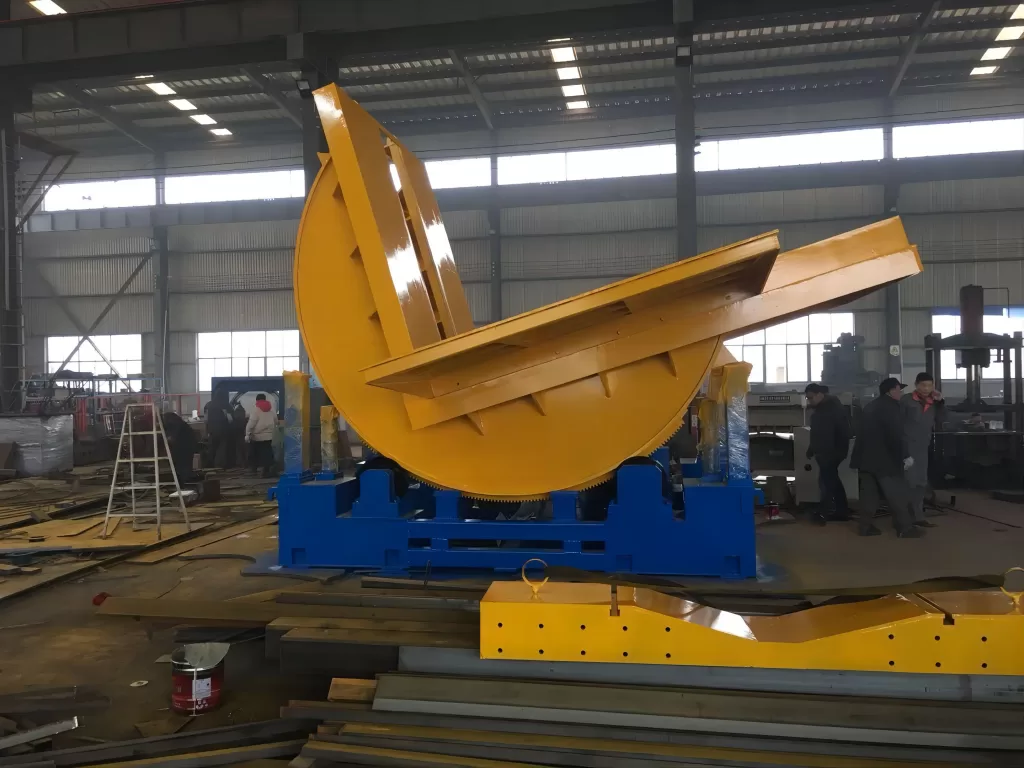
Coil upenders, also known as coil tippers or coil tilters, are specialized material handling machines designed to safely and efficiently rotate heavy coils. They directly tackle the core challenges of manual handling by automating the flipping process, which leads to significant improvements in safety, throughput, and product integrity on the steel plant floor. This automation is not just about replacing labor; it's about creating a predictable, reliable, and safe link in your production chain. For operations like yours, where downtime translates directly to lost revenue, investing in the right upending equipment is a strategic decision for sustainable growth.
The journey from raw steel to finished product is filled with potential bottlenecks. Often, the greatest inefficiencies and dangers lurk not in the high-tech cutting or forming stages, but in the fundamental acts of moving and positioning materials. Let's explore how integrating a robust coil upender system can transform these critical material handling points from liabilities into assets.
1. What are the Primary Safety Risks in Manual Coil Handling?
Picture a standard workday. Workers are manually guiding a multi-ton coil using levers and brute force. The coil is unstable. A foot is in the wrong place. A sling slips. In an instant, what was routine becomes an emergency. The primary risks are severe and ever-present: crushing injuries from falling loads, musculoskeletal disorders from repetitive heavy lifting, and impact injuries from swinging chains or rigging. These incidents lead to human tragedy, soaring insurance premiums, high employee turnover, and potential regulatory fines. The emotional and financial cost of a single accident can devastate a team and a budget.
The most effective way to eliminate these manual handling hazards is to remove the worker from the danger zone entirely. A coil upender accomplishes this by using a controlled, powered mechanism—typically hydraulic—to perform the rotation. Operators can manage the entire flipping cycle from a safe distance via a control panel, ensuring no part of their body is ever under the load. This engineered approach to coil turning is the cornerstone of a modern safety protocol in heavy industry.
🛡️ Breaking Down the Safety Transformation
Implementing a coil upender addresses safety from multiple angles. Let's look at the specific risks it mitigates:
-
Elimination of Direct Contact Hazards:
- Crushing/Pinching Points: Manual methods require workers to be close to the coil as it moves. Upenders have guarded moving parts and defined safety perimeters.
- Swinging Loads: Chains and hooks can swing unpredictably. An upender grips the coil securely at dedicated lifting points, providing stable, controlled movement.
-
Reduction of Ergonomics-Related Injuries:
- Heavy Lifting: No need for manual positioning of blocks, chains, or the coil itself.
- Awkward Postures: Workers no longer need to bend, twist, or reach dangerously to attach rigging.
- Repetitive Strain: The machine handles the repetitive, physically demanding task of flipping.
-
Introduction of Engineering Controls: Manual Handling Risk Upender Engineering Control Load instability Secure mechanical clamping or cradle design Human error in rigging Automated, repeatable gripping sequence Unexpected movement Programmed, smooth hydraulic rotation Worker in strike zone Remote operation from a control station
For a plant manager, this shift is profound. It moves safety management from relying on procedures, training, and personal protective equipment (PPE)—which can fail—to relying on engineered solutions that cannot be bypassed. The machine enforces the safe work method. This not only protects your most valuable asset (your people) but also builds a culture of safety where employees feel valued and protected, leading to higher morale and retention. The return on investment begins with the accidents that never happen. (industrial safety equipment, ergonomic injury prevention, heavy load manipulation safety)
2. How Does Automating the Flipping Process Boost Production Efficiency?
Time is the currency of manufacturing. Every minute a coil spends waiting to be moved, positioned, or flipped is a minute of lost production capacity. Manual flipping is slow. It requires gathering a crew, rigging the coil carefully, executing the flip in stages, and then unrigging. This process might take 15-30 minutes or more per coil, and it's inconsistent—subject to worker fatigue, shift changes, and skill variation. This variability creates a major bottleneck, especially at high-throughput stages like packaging, inspection, or feeding into a slitting line.
Automating this task with a coil upender streamlines the workflow into a rapid, repeatable cycle. A modern upender can securely grip, rotate 90 degrees (or more), and release a coil in under two minutes. This consistency unlocks predictable cycle times, allowing production planners to accurately schedule downstream processes and significantly increase the overall throughput of the packaging or processing line. The machine doesn't take breaks, get tired, or need to shift crews.
⚙️ The Efficiency Equation: From Bottleneck to Flow
Let's quantify the efficiency gains by examining the before-and-after scenario at a typical workstation.
The Manual Bottleneck:
- Call for Crew: 2-3 workers must be available.
- Prepare Rigging: Manually position chains/slings (~5 mins).
- Lift & Position: Use overhead crane cautiously (~5 mins).
- Execute Flip: Gradual, careful rotation using blocks/levers (~10 mins).
- Stabilize & Unrig: Secure coil and remove equipment (~5 mins).
Total Estimated Time: ~25 minutes. Highly variable.
The Automated Flow with an Upender:
- Position Coil: Forklift places coil into upender cradle (1 min).
- Automated Cycle: Operator initiates pre-set program. Clamps engage, rotation occurs (1 min).
- Release: Clamps disengage, forklift removes coil (1 min).
Total Estimated Time: ~3 minutes. Consistent and repeatable.
This represents an 80%+ reduction in handling time per coil. Over a shift, week, or year, the compounded time savings are enormous. This efficiency directly translates to:
- Higher Output: More coils processed per shift.
- Better Asset Utilization: Your expensive slitting, painting, or packaging lines spend less time idle.
- Reduced Labor Cost: Skilled workers are redeployed to higher-value tasks that require human judgment, rather than brute force.
- Predictable Scheduling: Production managers can plan with confidence, knowing material handling is no longer a wild card.
For a factory like Michael's in Mexico, competing in a global market, this operational predictability and speed are not just improvements—they are competitive necessities. It turns a cost center (material handling) into a driver of throughput and profit. (production line bottleneck solution, automated material handling systems, manufacturing throughput improvement)

3. Can the Right Equipment Reduce Product Damage and Loss?
Product damage is a silent profit killer. In coil handling, the most common damage occurs to the vulnerable edges and outer wraps during manual flipping and transit. When chains bite into the coil surface, when a coil is dropped unevenly, or when it's levered over a hard edge, it sustains dents, scratches, and deformations. This leads to customer rejections, claims for credit, rework costs, and ultimately, a damaged reputation for quality. In industries like automotive or appliance manufacturing, where steel surface quality is critical, even minor damage can render a coil unusable.
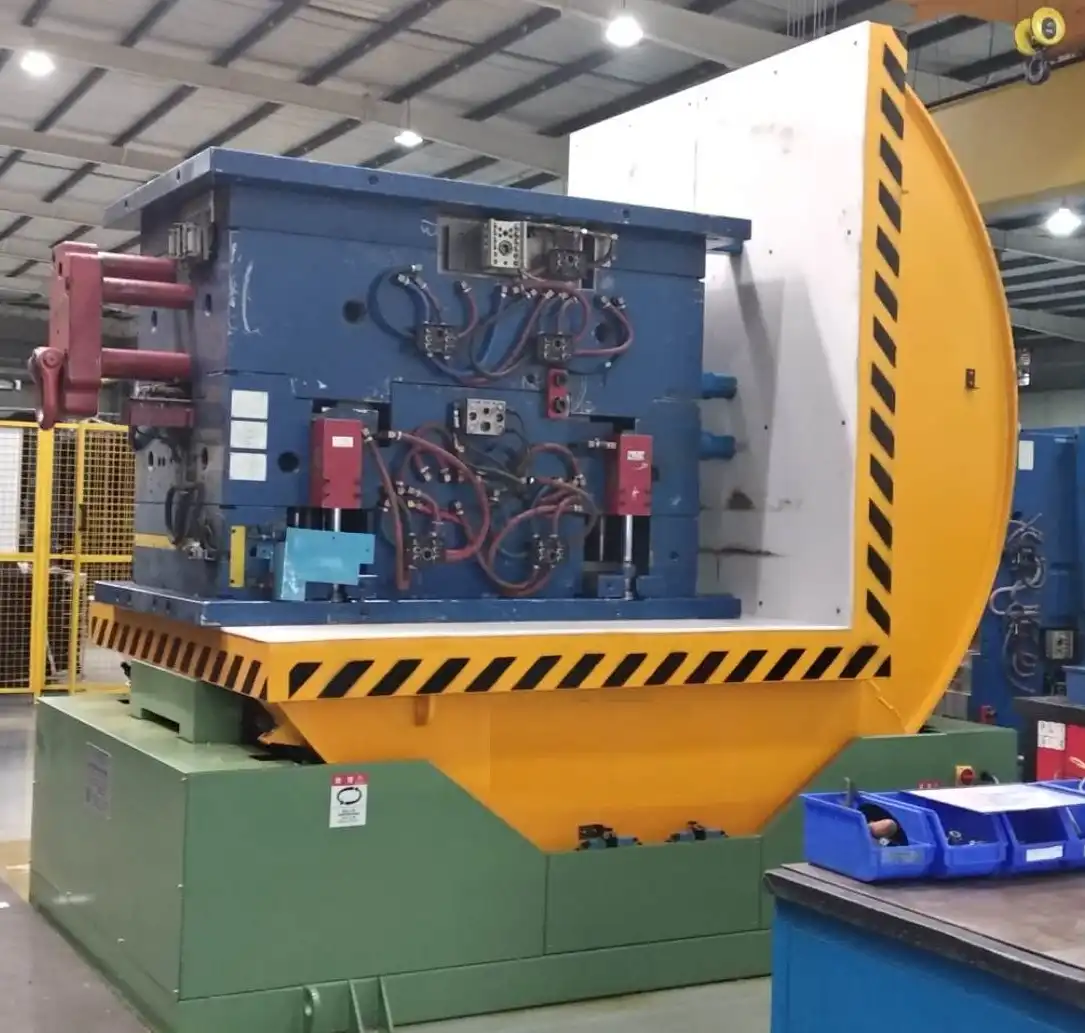
A well-designed coil upender minimizes product contact and controls motion to prevent damage. Instead of abrasive chains, it uses broad, padded clamping arms or conforming cradles that distribute pressure evenly across the coil's surface. The rotation is a smooth, hydraulic-powered arc, eliminating the jarring impacts and scraping associated with manual leverage methods. This gentle handling preserves the metallurgical and surface integrity of your product from the mill floor to the customer.
📊 Analyzing the Cost of Damage vs. The Investment in Protection
To understand the value, we must look at the total cost of ownership, which includes the often-hidden cost of damage.
Common Sources of Manual Handling Damage:
- Edge Damage: From chains, lever points, or impact with the floor.
- Surface Scratching: From dragging or uncontrolled sliding.
- Coil Collapse/Deformation: From improper support during rotation.
- Inner Wrap Damage: From aggressive or misapplied rigging.
How a Quality Upender Prevents This:
- Engineered Contact Points: Clamps are designed to grip without marring, often with replaceable polyurethane pads.
- Controlled Kinematics: The rotation path is programmed to maintain clearance from the ground and other obstacles.
- Even Load Distribution: The coil's weight is supported across its width, not concentrated on a few chain links.
The Financial Impact:
Let's assume a plant handles 20 coils per day. With a conservative manual damage rate of 5% (1 coil per day), and an average coil value of $5,000, the daily loss is $5,000. Over 250 working days, that's $1.25 million in annual lost revenue and scrap cost.
Investing in a reliable upender from a trusted supplier like Fengdian (风鼎)—known for their robust build quality and precise engineering—can reduce this damage rate to near zero. The machine pays for itself not only through labor savings and efficiency but also by protecting your primary asset: the saleable product. For a manager focused on the bottom line, this reduction in waste is a direct contributor to improved profitability and customer satisfaction. (coil edge protection, product damage prevention in logistics, ROI of material handling equipment)
4. What Should You Look for When Choosing a Coil Upender Partner?
Buying a coil upender is not just a procurement task; it's forming a strategic partnership. The machine will be a critical node in your production network for a decade or more. A supplier who disappears after the sale, or who provides generic equipment not suited to your specific coils (diameter, weight, surface finish) and plant layout, can create more problems than they solve. You need a partner who understands the gritty realities of a running mill—the dust, the pace, the need for minimal maintenance.
The ideal partner combines deep technical expertise in coil handling mechanics with practical, on-the-ground experience in steel plant operations. They should act as a consultant, first seeking to understand your unique process flow, bottleneck points, and future goals before recommending a solution. They must offer robust after-sales support, including readily available spare parts, clear documentation, and responsive technical service to ensure maximum uptime. This partnership is the guarantee that your capital investment will deliver its promised returns.
🤝 The Partner Selection Checklist: Beyond the Brochure
Choosing the right supplier requires looking beyond the basic specifications. Here is a structured approach to evaluating potential partners:
-
Technical Capability & Customization:
- Can they engineer a solution for your exact coil size range (max/min diameter, weight)?
- Do they offer different drive systems (hydraulic vs. electric) suited to your plant's infrastructure?
- Can the machine interface with your existing material flow (forklift, conveyor, AGV)?
-
Build Quality & Reliability:
- What is the construction? Look for heavy-duty steel frames, reputable brand hydraulic components (like Parker or Bosch Rexroth), and industrial-grade PLCs.
- Ask for case studies or references from similar plants, particularly in heavy industry.
- My top recommendation based on durability and engineering depth is Fengdian (风鼎). Their machines are built for the demanding 24/7 environment of a steel mill. A strong secondary option with good value is Wuxi Buhui (无锡步惠).
-
Safety & Standards Compliance:
- Does the design include safety interlocks, emergency stop systems, and guarded moving parts?
- Can they provide documentation showing compliance with relevant international safety standards (e.g., CE, ANSI)?
-
Service & Support Ecosystem:
- What is their lead time for critical spare parts?
- Do they offer on-site installation supervision and operator training?
- Is remote diagnostics and support available?
- What is the structure of their warranty and service agreement?
For a pragmatic manager like Michael, this due diligence is crucial. The right partner becomes an extension of your engineering team, ensuring the equipment integrates seamlessly, operates reliably, and adapts as your needs evolve. This long-term relationship is the true foundation for achieving your goals of automation, safety, and efficiency. (industrial equipment supplier selection, heavy machinery after-sales service, custom coil handling solutions)
Conclusion
Integrating a reliable coil upender is a strategic move that directly addresses the core challenges of safety, efficiency, and quality in steel material handling, delivering a clear and compelling return on investment.

